

Alabama rewards curious travelers with Gulf Coast beaches, soulful cities, Civil Rights history, and off the radar small towns. Like anywhere in the United States, it is generally safe for visitors who use basic precautions and pay attention to their surroundings. At the same time, crime patterns, severe weather, and traffic risks mean it pays to be prepared. These seven smart strategies will help you enjoy Alabama confidently, whether you are road tripping, visiting family, or flying in for the first time.
Understand Alabama’s Real Risk Profile
Alabama attracts millions of visitors each year, from college football fans in Tuscaloosa to families headed for Gulf Shores and Orange Beach. For most travelers, trips pass without incident. Yet Alabama’s violent crime and firearm death rates are among the higher tiers nationally, especially in certain neighborhoods of Birmingham, Montgomery, Mobile, and some smaller cities. That does not mean you should avoid the state, but it does mean you should approach trip planning with the same situational awareness you would bring to any large American city.
Crime in Alabama is not spread evenly. Downtown revitalization areas, historic districts, university zones, and major tourist corridors often see a strong police and security presence, while some outlying blocks and late night nightlife strips can experience higher rates of assaults, robberies, and car break ins. Before you travel, check recent local news in the city you plan to visit and ask your hotel which areas are best explored on foot and which are better reached by car or rideshare, especially after dark.
It is also important to distinguish between headline grabbing incidents and everyday risk. A single high profile shooting, such as the mass shooting in downtown Montgomery in October 2025, generates justified concern but does not necessarily reflect the experience of the average visitor walking to dinner or exploring museums. Focus on patterns instead of isolated events. If you are attending large festivals, college games, or concerts, remember that crowds can attract opportunistic crime and plan accordingly with a charged phone, a meeting point, and a way to leave quickly if necessary.
Compared with many international destinations, Alabama’s infrastructure, healthcare, and emergency response systems are solid. Dialing 911 connects you quickly to police, fire, and medical services almost anywhere in the state. Hospitals in metro areas are accustomed to treating both residents and visitors. The safest approach is to assume that help is available but to travel in a way that lowers the chances you will ever need it.
Stay Street Smart in Alabama’s Cities and Towns
Whether you are walking around Birmingham’s Uptown district, exploring Montgomery’s riverfront, or catching live music in Mobile, the same urban safety habits apply. Walk with confidence, avoid displaying large amounts of cash or expensive jewelry, and keep phones and cameras secured when not in use. In busier nightlife zones, alcohol related disorder can be more of a risk than targeted crime, especially close to closing time; if a street feels rowdy or tense, trust your instincts and move on.
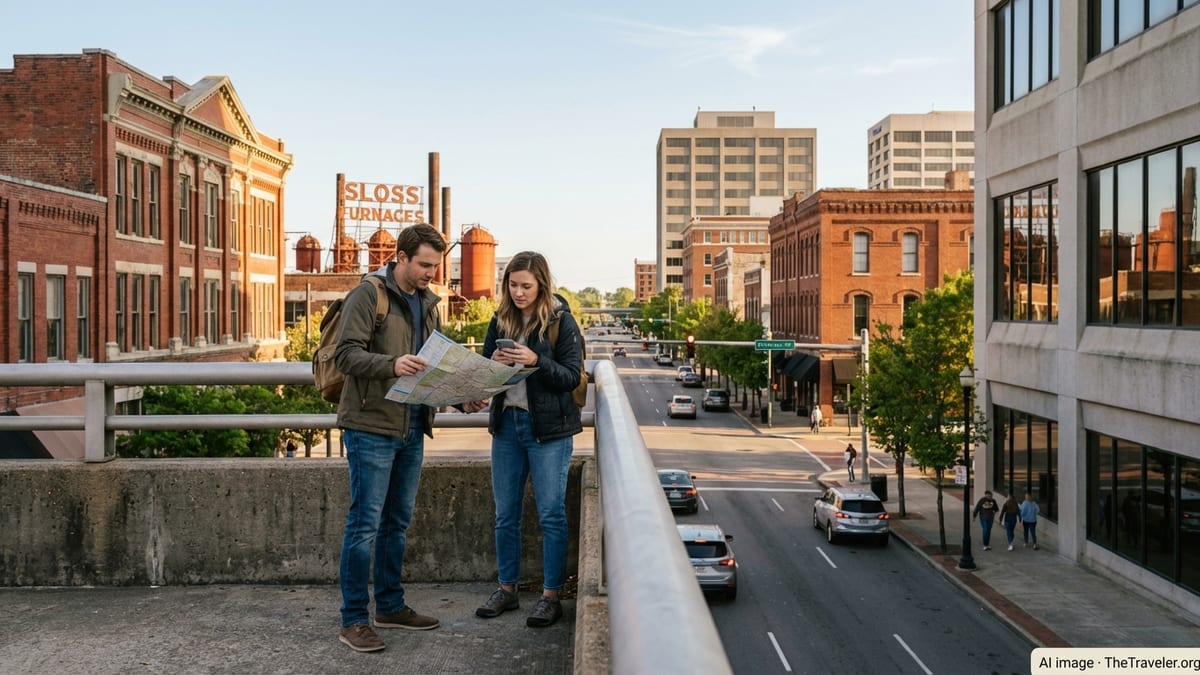
Plan your routes before leaving your hotel so you are not constantly checking maps on street corners. If you need to reorient, step inside a lobby, shop, or restaurant to do so. Stick to well lit, populated streets at night and think in terms of “main corridors” that connect hotels, attractions, and parking areas. Locals are often happy to point you toward safer routes, especially staff at reputable hotels and visitor centers. Avoid cutting through alleys, isolated parks, or empty parking lots late at night, even if navigation apps suggest them as the fastest path.
Pickpocketing is less of a problem in Alabama than in some major international cities, but bag snatching and car break ins do occur, particularly around busy events and in poorly lit lots. Use cross body bags or money belts, and keep wallets in front pockets rather than back pockets. In crowded bars and festivals, keep your drink with you and do not accept opened beverages from strangers. If someone is pressing you for money or making you uncomfortable, move toward other people or into a business and, if needed, call for help.
Solo travelers, especially women, can and do enjoy Alabama safely with extra awareness. Let someone at home know your basic itinerary, check in periodically, and share your live location with a trusted contact when meeting new people or taking late night rideshares. If you feel unsure about a situation, step away and trust your judgment, even if it feels impolite. In practice, most Alabamians are warm and welcoming, and the same courtesy that makes the state hospitable to visitors also means you will usually find someone willing to help if you ask.
Drive Defensively and Respect Rural Roads
Road trips are one of the best ways to see Alabama, from the Appalachian foothills in the northeast to farmland, pine forest, and coastal marsh. Yet driving is also one of the greatest safety risks travelers face. State and local agencies have focused heavily on reducing crashes involving speeding, distracted driving, and impaired drivers, but collision and fatality rates remain a concern, particularly on rural highways and late at night. Visitors who adopt defensive driving habits significantly reduce their exposure to danger.
On interstates like I 65, I 20, and I 85, traffic can move fast, and some drivers exceed posted limits. Maintain a safe following distance, stay out of the left lane except to pass, and avoid engaging with aggressive drivers. If someone is tailgating or weaving, let them pass instead of escalating. Fatigue is another serious risk. Distances in Alabama can be longer than they look on the map, and driving after a long flight or late night out increases the chance of mistakes. Build rest breaks into your itinerary, share the driving when possible, and avoid long overnight hauls.
Rural routes and county roads require special care, especially after dark or in bad weather. Lighting is limited, and you may encounter wildlife, slow moving farm equipment, or unexpected curves. Keep your speed moderate, use high beams when appropriate, and never assume the road ahead is empty, even if you see no other headlights. In remote areas of the Black Belt or along sparsely populated coastal stretches, cell coverage can be patchy, so download offline maps in advance and carry a paper backup for longer drives.
Parking safety also matters. In cities and larger towns, seek out well lit public garages, hotel lots, or areas with visible security rather than isolated side streets. Do not leave valuables in view inside your car; lock bags and electronics in the trunk before you reach your parking spot, not after you arrive. At trailheads, boat launches, and rural attractions, remove anything tempting from the cabin and lock up. These simple steps reduce the likelihood of becoming a target for opportunistic theft.
Plan Around Weather, Storms, and Seasonal Risks
Alabama’s subtropical climate is part of its appeal, but it comes with seasonal hazards that travelers should respect. Hot, humid summers can create heat stress risks, particularly for visitors not used to high temperatures. From roughly late May through September, plan outdoor sightseeing for mornings and evenings, drink water regularly, wear light clothing, and take breaks in air conditioning. Do not underestimate how quickly heat and humidity can sap your energy, especially on walking tours or hikes.
The state is also vulnerable to severe thunderstorms, tornadoes, and tropical systems. Spring and late fall can bring strong storms and occasional tornado outbreaks, while late summer and early fall are peak months for tropical storms impacting the Gulf Coast. Local officials, meteorologists, and emergency managers take these threats seriously, and warnings are widely broadcast on television, radio, and smartphone alerts. Before your trip, familiarize yourself with basic weather terminology such as watch versus warning so you know when to seek shelter immediately.
In hotels and vacation rentals, take a moment on arrival to note emergency exits and to ask staff where guests should go in the event of a tornado warning or hurricane evacuation order. Many properties along the Gulf Coast and in tornado prone regions have clear procedures and designated safe areas. If a warning is issued, follow local instructions promptly rather than trying to “wait it out” or watch the storm. Outdoors, avoid high ground, open fields, and waterside locations when thunderstorms are in the area.
Beach destinations like Gulf Shores and Orange Beach add coastal specific considerations. Check local flags and signage for rip current risks before swimming, and do not enter the water if lifeguards or officials advise against it. Storm surge and high surf ahead of or after tropical systems can be deceptively dangerous even under seemingly clear skies. During spring break and holiday periods, crowds can increase traffic, drinking, and risk taking behavior, so factor that into your timing and choice of accommodation if you prefer a calmer, family focused environment.
Protect Your Belongings and Digital Life
Most visitors to Alabama never experience theft, but travelers who appear distracted or carry obvious valuables can attract attention, just as they would in any destination. Start with a “less to lose” mindset. Bring only what you truly need each day and leave passports, extra credit cards, and backup cash locked in your hotel safe or a secure place. When you are out exploring, split payment methods between pockets or bags so a lost wallet does not strand you.
Use small, practical layers of security rather than relying on a single measure. Zippered bags worn across your body are harder to snatch than open totes. Compact cable locks can secure backpacks in rental cars or hotel rooms. At beaches or lakes, avoid leaving a pile of electronics and wallets on the sand while everyone swims. Instead, rotate who stays with the bags, use a simple waterproof pouch for one phone and a card, or rent a locker where available.
Digital safety matters just as much as physical security. Be cautious when joining public Wi Fi networks in hotels, cafes, airports, and vacation rentals. Avoid accessing sensitive financial accounts on open networks or consider using a reputable virtual private network if you rely on public connections frequently. Keep your phone and laptop updated with the latest security patches, and use screen locks and device tracking features in case of loss or theft.
Before your trip, scan or photograph important documents such as IDs, insurance cards, and prescriptions, and store them securely in the cloud or an encrypted app. If a wallet or bag goes missing, having copies of these details speeds up replacement and support. Make a simple contact list that includes your bank’s international fraud line, your travel insurance provider, and any key contacts at home, and keep it separate from your primary phone in case of battery loss or technical issues.
Use Local Resources and Common Sense for Personal Safety
Alabama’s hospitality industry, universities, and local governments have sharpened their safety practices in recent years, especially in busy downtowns and around major events. You will notice visible law enforcement and security at football games, concerts, and festival sites, along with cameras and controlled entry points. These measures aim to deter crime and help authorities respond quickly when something does occur. As a visitor, cooperating with bag checks, metal detectors, and posted rules makes these systems work more smoothly for everyone.
Do not hesitate to use local knowledge. Hotel staff, park rangers, visitor center employees, and long time residents can give practical, street level advice you are unlikely to find in guidebooks. Ask which neighborhoods are best for an evening stroll, what areas to avoid late at night, and how they would get back to the hotel after a concert or game. Framing questions around “what would you do?” rather than “is it safe?” often yields more nuanced, useful responses.
If you find yourself in an uncomfortable situation, such as a heated argument in a bar, an increasingly aggressive stranger, or a crowd that suddenly feels tense, your priority is to create distance. Move toward exits, step inside a business with staff present, or cross the street into a busier area. In Alabama’s cities and towns, help is usually close by, whether in the form of uniformed officers, campus security, or simply more people. Trust your instincts: feeling uneasy is a valid signal, not something to dismiss.
For emergencies, dialing 911 connects you to dispatchers anywhere in the state. Speak calmly, give your location as clearly as possible, and describe what is happening. If you are an international visitor, practice saying key phrases in advance so you are comfortable using them under stress. For non emergency issues such as noise, minor disturbances, or suspicious activity that is not urgent, local police departments and campus security offices often publish non emergency numbers that hotels can share with you.
The Takeaway
Traveling safely in Alabama is about balance. It means acknowledging that crime, hazardous weather, and traffic risks exist, while also recognizing that millions of people work, study, and vacation in the state every year without incident. For visitors who plan ahead, pay attention to their surroundings, and make conservative choices when something feels off, Alabama’s rewards far outweigh its risks.
By understanding local patterns rather than headlines, staying street smart in cities and towns, driving defensively on highways and rural roads, respecting the power of Southern weather, protecting your belongings and digital footprint, and making use of local knowledge and emergency services, you position yourself for a smooth, memorable trip. Safety is not about fear; it is about making confident, informed decisions so you can focus on why you came in the first place.
From tracing Civil Rights history in Montgomery and Birmingham to savoring seafood on the Gulf Coast or hiking forested trails in the north, Alabama offers rich experiences to travelers who treat the state with the same respect and caution they would bring to any other destination. With a few smart habits, you can explore with peace of mind and leave with stories you are eager to share.
FAQ
Q1. Is Alabama safe for tourists overall?
Alabama is generally safe for tourists who use common sense precautions, especially in cities and during large events. Most trips are trouble free, but it pays to stay aware of your surroundings.
Q2. Which areas of Alabama should I be more cautious in?
Exercise extra caution in certain neighborhoods of larger cities such as Birmingham, Montgomery, and Mobile, particularly late at night. Ask locals or hotel staff which areas they recommend for walking, dining, and nightlife.
Q3. Is it safe to walk around Alabama cities at night?
Many downtown and entertainment districts are fine for walking in the evening if you stay on well lit, busy streets, avoid excessive alcohol, and use rideshares or taxis instead of walking through deserted areas.
Q4. How risky is driving in Alabama for visitors?
Driving is the main way to get around and is usually straightforward, but speeding, distracted driving, and rural roads at night can increase risk. Drive defensively, rest frequently, and slow down on unfamiliar routes.
Q5. What should I do if severe weather is forecast during my trip?
Monitor local forecasts, enable weather alerts on your phone, and follow instructions from local authorities or hotel staff. If a tornado or hurricane warning is issued, seek designated shelter promptly.
Q6. Are Alabama’s beaches safe for families?
Yes, Alabama’s Gulf Coast beaches are popular with families. Check flag systems and lifeguard advice before swimming, watch children closely, and be cautious of rip currents and rough surf during stormy periods.
Q7. How can I protect my belongings while traveling in Alabama?
Carry only what you need each day, use cross body bags or money belts, keep valuables out of sight in cars, and store passports and spare cards in a hotel safe or other secure place.
Q8. What number do I call in an emergency in Alabama?
Dial 911 from any phone to reach police, fire, or medical services. Stay calm, describe the situation clearly, and give your exact location as best you can.
Q9. Is it safe to travel solo in Alabama?
Solo travelers regularly visit Alabama safely. Share your itinerary with someone you trust, check in periodically, avoid risky areas late at night, and trust your instincts if a situation feels uncomfortable.
Q10. Do I need any special vaccinations or health precautions for Alabama?
No special vaccinations are typically required beyond routine immunizations. In warmer months, use sunscreen and insect repellent, stay hydrated, and seek medical care promptly if you feel unwell.