

For many travelers, Turkish food begins and ends with kebabs sizzling on skewers. Yet across Istanbul’s backstreets and Anatolia’s small-town kitchens, an entire world of flavors unfolds that has nothing to do with grilled meat. From slow-cooked vegetables steeped in olive oil to doughy dumplings drowned in garlicky yogurt, these are the dishes locals actually crave on a weeknight, at a long family lunch or during late-night street food runs. Here are seven Turkish foods that go far beyond kebabs and reveal the soul of the country’s cuisine.
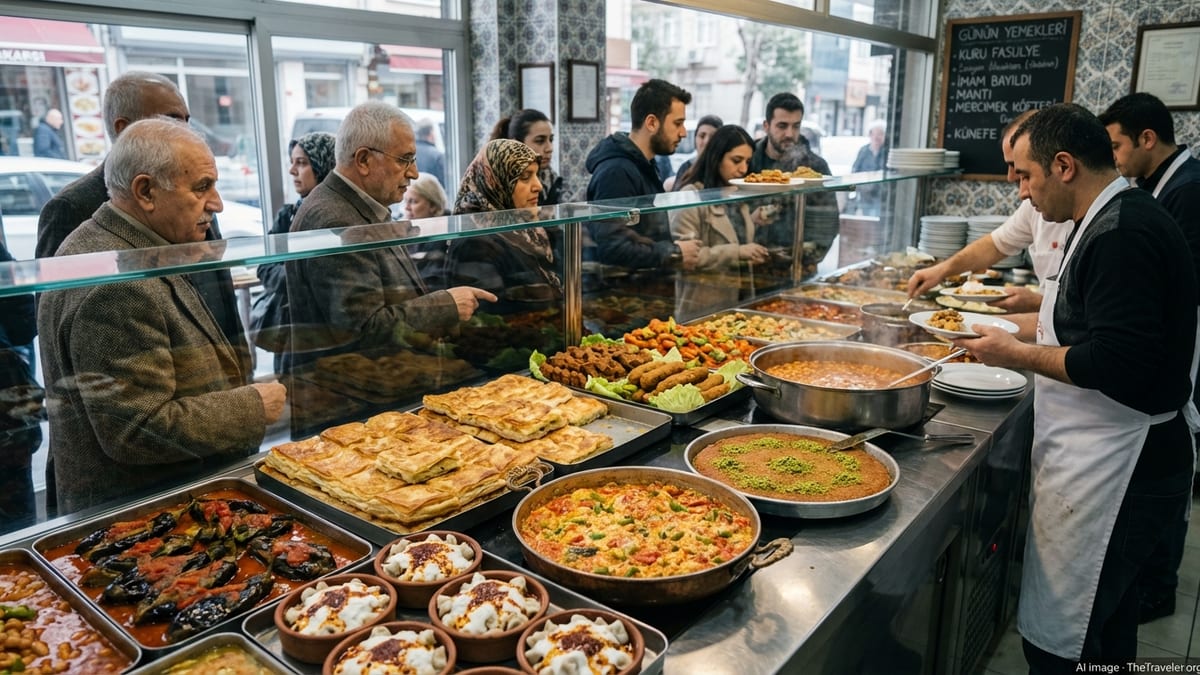
Imam Bayıldı: The Eggplant Dish That Made a Preacher Faint
Visit any traditional lokanta, or casual eatery, at lunchtime and you are likely to spot a tray of glossy, collapsed eggplants swimming in tomato-rich olive oil. This is imam bayıldı, a classic of the zeytinyağlı style of cooking, which focuses on vegetables gently stewed in olive oil and served at room temperature. The name loosely translates to “the imam fainted,” and various stories claim a religious leader swooned when he tasted how delicious or how extravagantly oily the dish was.
At its heart, imam bayıldı is a celebration of eggplant, a vegetable that appears on almost every Turkish table. Whole aubergines are slit, fried or baked until their flesh becomes silky and smoky. Then they are stuffed with a sweet-savory mix of onions, garlic, and tomatoes, sometimes with a hint of green pepper, and braised with generous olive oil until everything melds together. The finished dish is typically served cool with a sprinkle of parsley and a wedge of lemon.
Although it contains no meat, imam bayıldı is rich and satisfying enough to stand as a main course, particularly during long, hot summers when locals gravitate toward lighter olive-oil dishes. Travelers will often encounter it in home-style restaurants, meyhane taverns as part of a spread of meze, or behind glass counters at self-service canteens. Paired with rice pilaf and a spoonful of thick yogurt, it offers an indulgent, plant-forward portrait of Turkish home cooking.
For visitors used to thinking of Turkish cuisine as heavy and meat-centric, imam bayıldı is a revelation. It shows how Ottoman-era cooking developed a refined repertoire of vegetable dishes that could easily fit into modern vegetarian and Mediterranean diets. When you find it, do as locals do and enjoy it at room temperature, letting the flavors of the olive oil and slow-cooked vegetables fully open.
Mantı: Tiny Dumplings Packed With Comfort
Mantı might just be the coziest dish in Turkey. These tiny dumplings, traditionally associated with the central Anatolian city of Kayseri, are a labor of love. Cooks roll and cut dough into small squares, then fill them with a pinch of seasoned minced meat before folding each one into a tight little bundle. In some households the dumplings are so small that it is said a single spoon should hold at least 40.
Once boiled, mantı is typically served in a deep plate or shallow bowl and smothered in tangy strained yogurt, followed by a drizzle of melted butter colored with red pepper flakes or paprika. Many cooks add dried mint or a sprinkle of sumac. The result is a layered interplay of cool yogurt, warm dumplings and gently spicy butter, with each mouthful offering softness and richness rather than the charred intensity of grilled meats.
Regional variations abound across Turkey. In Kayseri, mantı tends to be smaller and more delicate, reflecting the city’s pride in meticulous craftsmanship. In other regions, dumplings might be larger, baked instead of boiled, or served with a tomato-based sauce. Vegetarian versions, filled with chickpeas or lentils, are also emerging in modern urban kitchens, reflecting changing tastes without losing the dish’s essential character.
For travelers, mantı is an ideal entry point into the everyday cooking of Turkish families. It appears in humble esnaf lokantası restaurants that cater to workers at lunchtime, as well as in more polished eateries showcasing regional Anatolian cuisine. Eating mantı in Turkey is not just about savoring a comforting bowl of dumplings. It is also about appreciating the hours of folding and the tradition of neighbors gathering around a table to prepare the dish together before freezing portions for the winter months.
Menemen: Breakfast Scrambled With the Spirit of the Aegean
Turkish breakfast has a well-earned reputation as a feast, laden with cheeses, olives, breads and jams. At the heart of many of these spreads is menemen, a soft scramble of eggs cooked with ripe tomatoes, green peppers and olive oil. The dish takes its name from a coastal town near İzmir and epitomizes the fresh, sun-drenched flavors of the Aegean region.
Menemen begins with onions and peppers gently sautéed in olive oil, though some purists insist on skipping the onion entirely. Grated or chopped tomatoes are added next and simmered until they concentrate into a chunky sauce. Finally, eggs are stirred in and cooked just until barely set, producing a creamy, spoonable mixture. Some cooks enrich the dish with white cheese, sucuk sausage or herbs, but the core is always the trio of eggs, tomatoes and peppers.
The dish is served bubbling hot in a shallow pan placed in the center of the table, alongside baskets of crusty bread for dipping. Locals linger over it with endless glasses of tea, tearing off pieces of bread to scoop up the soft mixture rather than eating it with a fork. The experience is social and leisurely, the opposite of a rushed morning snack grabbed on the go.
Menemen also sparks one of the friendliest culinary debates in Turkey: onion or no onion. In Istanbul cafes you will hear customers teasingly take sides while ordering, and many menus offer both versions. For visiting travelers, this simple egg dish becomes a window into contemporary Turkish food culture, where regional traditions, strong opinions and a love of fresh ingredients come together at the breakfast table.
Börek: Flaky Layers From Street Stalls to Palace Kitchens
While grilled meat has captured global attention, pastry is every bit as central to Turkish food culture. Börek is the umbrella term for a family of savory pastries made with yufka or phyllo-style dough, carefully layered or rolled around fillings and baked or fried until crisp. Its history stretches back through the Ottoman Empire, where variations of börek were served in palaces and roadside inns alike.
Today, travelers are likely to encounter börek in two main forms. Su böreği, or “water börek,” features sheets of dough that are briefly boiled, layered with cheese or minced meat, and baked into a soft, almost lasagna-like pie. Sigara böreği, by contrast, are slim, cigar-shaped rolls filled with white cheese and parsley, fried until the outside shatters at the first bite. Around the country, cooks adapt fillings to local tastes, adding spinach, potatoes, seasonal greens or combinations of herbs and cheese.
Beyond its variety, börek is woven into the daily rhythm of Turkish life. City dwellers pick up slices from corner bakeries on their way to work, while intercity bus travelers buy still-warm pieces at highway rest stops. During holidays and family gatherings, huge trays are assembled at home, filling kitchens with the smell of butter and baking dough. For many locals, a midmorning tea without börek feels incomplete.
Trying börek on the road also offers practical advantages for travelers. It is inexpensive, filling and easy to eat by hand, making it ideal picnic fare while exploring Istanbul’s neighborhoods or wandering around the ruins of an Anatolian caravanserai. Whether you choose a delicate, layered version cut into tidy squares or a rustic spiral filled with salty cheese, you will taste a tradition that long predates the modern kebab shop.
Çiğ Köfte and Mercimek Köftesi: Spice, Street Life and a Modern Makeover
Few dishes capture the spirit of Turkish street food like çiğ köfte, originally a specialty of southeastern cities such as Şanlıurfa and Adıyaman. Traditionally, it consisted of finely ground raw beef or lamb kneaded for a long time with fine bulgur, tomato and pepper pastes, onions, spices and plenty of hot chili. The mixture was shaped into small, ridged patties and served wrapped in lettuce leaves with lemon, often alongside ayran yogurt drink to soften the chili’s heat.
In recent years, food safety regulations and changing tastes have reshaped çiğ köfte. Across much of Turkey, commercially sold versions are now meatless by law, relying instead on bulgur, tomato and pepper pastes, and aromatic spices to recreate the dish’s distinctive flavor. Dedicated chains and small neighborhood shops serve these vegetarian patties as quick, affordable snacks, rolled into thin flatbreads with lettuce, parsley, pomegranate molasses and pickles. For many urban Turks, this meatless reinvention has become the default, and it happens to suit vegetarian travelers particularly well.
Closely related is mercimek köftesi, or red lentil patties, which highlight another beloved Anatolian ingredient. Cooked red lentils are mixed with fine bulgur, tomato paste, green onions, parsley and spices before being hand-shaped into small oblongs. Typically served at room temperature on crisp lettuce leaves, they appear at everything from casual home gatherings to engagement parties and afternoon tea tables. This dish is often linked with hospitality, reflecting how hosts in many regions lay out generous plates of lentil patties for guests.
Tasting çiğ köfte and mercimek köftesi side by side shows how Turkish cooking continuously balances tradition and innovation. One began as a raw meat specialty and evolved into a plant-based street snack, while the other has long been a vegetarian favorite at social occasions. Both rely on the satisfying chew of bulgur, the brightness of fresh herbs and the assertive warmth of Chile-based spices, offering flavors that feel vivid and modern despite their deep regional roots.
Kuru Fasulye: The Humble Bean Stew With Cult Status
Ask a Turkish friend about their favorite comfort food, and there is a good chance they will name kuru fasulye, a simple white bean stew that achieves near-mythical status in local food writing. At first glance it may look unremarkable: plump beans simmered in a tomato-based sauce with onions and oil, sometimes enriched with pastırma cured beef or small pieces of meat. Yet done well, it is deeply savory, smooth and soothing, and it has quietly nourished generations.
Kuru fasulye is the backbone of many no-frills eateries near bus terminals, universities and construction sites, where workers line up at lunch for plates of beans, rice pilaf and pickles. Some Istanbul establishments are famous almost entirely for their take on the dish, attracting daily queues and loyal regulars. The stew is usually served in small bowls with a separate plate of buttery rice, inviting diners to mix the two to their preferred ratio.
Part of kuru fasulye’s appeal lies in its adaptability. Home cooks adjust seasoning and texture according to family taste, using different varieties of beans, varying the amount of tomato or adding green peppers and chili for extra heat. In some regions, the dish is made with olive oil and served at room temperature as a lighter zeytinyağlı option. In colder parts of the country, a more robust version with meat appears on winter tables, eaten with crusty bread and raw onions.
For travelers, seeking out kuru fasulye offers insight into Turkey’s everyday dining culture beyond kebab skewers and meze platters. It highlights how a modest pot of beans can become an object of pride and nostalgia, discussed and compared with the same enthusiasm that food lovers elsewhere reserve for barbecue joints or noodle shops. Taking the time to try it, especially in a place that specializes in the dish, reveals a side of Turkish cuisine that is less flashy but just as beloved as grilled meat.
Künefe and the Sweet Side of Turkish Cheese
No exploration of Turkish food beyond kebabs would be complete without dessert, and künefe might be the most theatrical choice. Originating in the southeastern city of Antakya and popular throughout the eastern Mediterranean, this dessert layers shredded pastry called kadayıf around a stretchy, unsalted cheese. The whole thing is cooked in a shallow metal pan with butter until the pastry crisps and the cheese melts, then drenched in hot syrup and topped with crushed pistachios.
Served straight from the pan while still piping hot, künefe delivers a contrast of textures that surprises many first-time tasters. The exterior is crisp and caramelized, while the interior is gooey and slightly salty, balanced by fragrant sugar syrup often scented with lemon. It is typically enjoyed in the evening at specialized dessert shops where pans emerge from ovens in a near-constant rotation, or in restaurants that pride themselves on their Antakya-style sweets.
Cheese-based desserts may seem unusual to some visitors, but they have a long tradition in the region. Similar sweets appear in neighboring cuisines, yet Turkey has developed its own regional interpretations, using local cheeses and nuts. Alongside künefe, travelers might encounter other syrup-soaked pastries, milk puddings and rice desserts that round out a meal in a distinctly Turkish way.
Sharing a portion of künefe is also a social experience. Groups of friends often order it to split after a night out, lingering over tea as they carve wedges from the pan. For anyone who associates Turkish sweets only with lokum or baklava, this sizzling dessert offers a dramatic and indulgent detour.
The Takeaway
Spending time in Turkey quickly reveals that kebabs are just one chapter in a much larger culinary story. Vegetable-forward olive-oil dishes, intricate pastries, hearty bean stews, delicate dumplings and inventive street snacks all play starring roles on local tables. For every skewer of grilled meat, there is an eggplant dish that has simmered for hours, a tray of börek layered by hand or a pot of beans quietly bubbling on a back burner.
For travelers, seeking out foods like imam bayıldı, mantı, menemen, börek, çiğ köfte, mercimek köftesi, kuru fasulye and künefe unlocks a richer understanding of everyday life in Turkey. These dishes appear in modest canteens, family-run bakeries, breakfast cafes and specialist dessert shops that many visitors overlook in favor of more familiar grilled fare. By ordering what the locals eat when they are not thinking about kebabs, you enter the real conversation around Turkish food.
On your next trip, let kebabs take a supporting role. Wander into that crowded lokanta with steamed-up windows, point at the trays of beans and vegetables, or follow your nose to a bakery perfumed with butter and toasted dough. The most memorable meals may well be the ones where no skewer is in sight, just the deep, layered flavors of a cuisine that extends far beyond the grill.
FAQ
Q1. Is it easy to find vegetarian Turkish dishes beyond kebabs?
Yes. Many classic Turkish dishes, from imam bayıldı and mercimek köftesi to börek with cheese or spinach and a wide range of olive-oil vegetables, are naturally vegetarian and widely available.
Q2. Where should I go to try authentic mantı and other regional specialties?
Central Anatolian cities such as Kayseri are famous for mantı, while towns like Antakya are known for künefe. In major cities, look for restaurants that highlight specific regions in their names or menus.
Q3. Are dishes like çiğ köfte safe to eat if they used to contain raw meat?
In most modern shops across Turkey, commercially sold çiğ köfte is now made without meat and relies on bulgur and spices instead, which greatly improves food safety for travelers.
Q4. What is the best time of day to order menemen?
Menemen is most commonly eaten at breakfast or brunch, but many cafes and some restaurants serve it all day, especially in tourist areas and lively neighborhoods.
Q5. Does börek always contain meat?
No. While meat-filled börek is popular, cheese, spinach, potato and mixed-herb versions are at least as common, making it a flexible choice for different diets.
Q6. How spicy are dishes like çiğ köfte and mercimek köftesi?
They do have a noticeable chili warmth, especially çiğ köfte, but most versions are moderate rather than overwhelming. You can often ask vendors to adjust the spice level.
Q7. Is kuru fasulye considered a main course or a side dish?
Kuru fasulye is usually enjoyed as a main course, typically paired with rice pilaf and pickles. Together, they form a complete, filling meal in many homes and canteens.
Q8. Can I find these non-kebab dishes in tourist-heavy areas like Istanbul’s historic center?
Yes. Even in very touristy districts, local workers need lunch, so you will often find lokanta-style restaurants and small eateries serving bean stews, vegetable dishes and börek alongside kebabs.
Q9. Are cheese-based desserts like künefe suitable for people who do not like very sweet pastries?
Künefe is sweet, but the mild, stretchy cheese and occasional hint of salt help balance the syrup. If you find it too rich, sharing a portion and sipping unsweetened tea can help.
Q10. How can I order these dishes if I do not speak Turkish?
Pointing works very well in Turkey. In places with display counters, you can simply gesture to the dishes you want, and in sit-down restaurants many servers know basic English food terms, especially in popular travel hubs.