

More news on this day
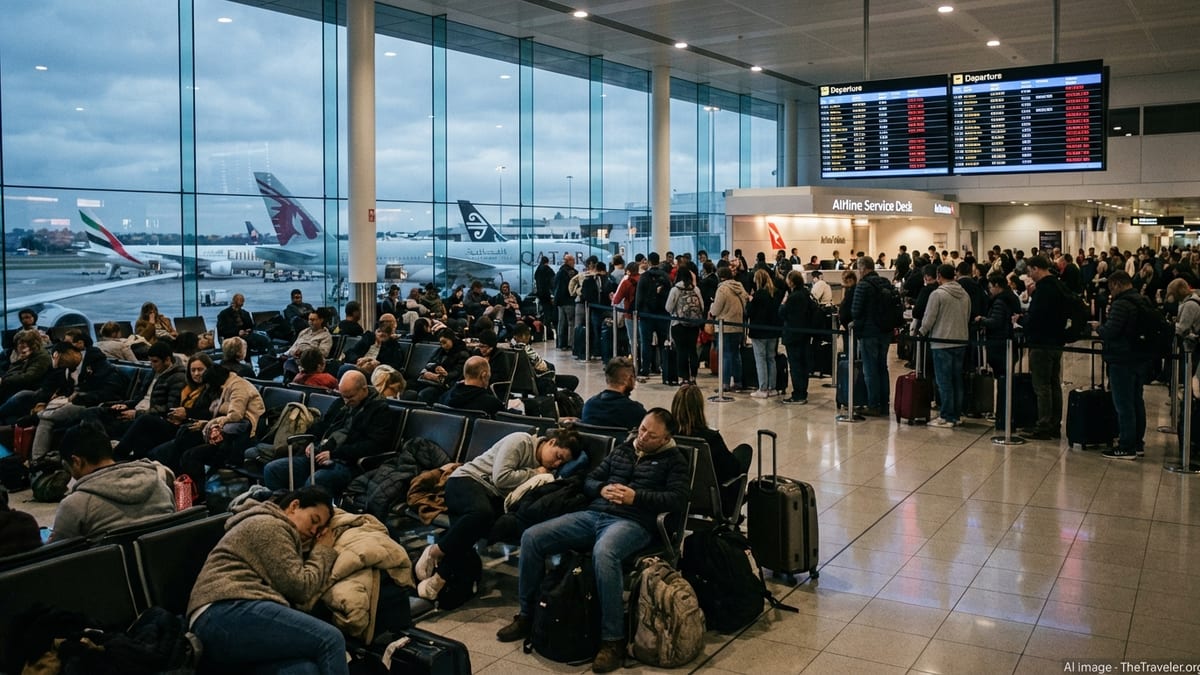
Hundreds of passengers traveling between Australia and New Zealand are facing significant disruption as publicly available data points to 704 delayed flights and 22 cancellations affecting major carriers across Melbourne, Sydney, Auckland, Wellington and other key airports.
Get the latest news straight to your inbox!
Major Carriers Hit Across Trans Tasman Network
The disruption spans both domestic and international services, with impact concentrated on the busy trans Tasman corridor linking Australia and New Zealand. Reports indicate that flights operated by Jetstar, British Airways, Qantas and Air New Zealand, along with several regional and codeshare partners, have been affected by the current wave of delays and cancellations.
Melbourne and Sydney, the two largest aviation hubs in Australia, are among the hardest hit on the Australian side. On the New Zealand side, Auckland and Wellington have reported knock on effects as delayed aircraft and crew rotations ripple through tightly timed schedules. The pattern reflects how a relatively small number of initial schedule disruptions can propagate across an interconnected network during peak travel periods.
The 704 recorded delays range from short schedule slips of under an hour to multi hour disruptions that force missed connections and late night arrivals. The 22 cancellations add a further layer of complexity for travelers who must seek rebooking options in markets where many peak time flights already operate close to capacity.
Publicly available coverage suggests that both full service and low cost operators are contending with the same systemic pressures, despite different business models. Jetstar and Qantas on the Australian side, and Air New Zealand on the New Zealand side, appear prominently in delay tallies due to their large share of traffic on key city pairs such as Sydney to Auckland and Melbourne to Wellington.
Airports From Melbourne To Wellington See Knock On Effects
The impact is being felt across a broad geography, from major hubs to secondary airports that depend heavily on a limited number of daily services. Melbourne and Sydney continue to function as primary nodes for domestic and international connections, meaning an early morning delay on a trunk route can cascade into missed slots and late aircraft positioning for the rest of the day.
Auckland and Wellington, key gateways for New Zealand domestic and international travel, are experiencing similar ripple effects. When aircraft arrive late from Australian cities, turn around times for onward services can be compressed or missed entirely, resulting in rolling delays through the afternoon and evening. This is particularly acute on routes where only a handful of flights operate each day, leaving little slack in the system.
Additional congestion has been reported at other airports feeding the trans Tasman network, including Brisbane and Christchurch. These airports often serve as alternates or connection points, so delays on one leg can leave travelers stranded mid journey, waiting for available seats on subsequent departures. Terminal crowds, longer queues at check in counters and pressure on customer service desks are common secondary impacts in this type of event.
Operational data and media coverage from the region highlight that even when weather conditions are stable, a combination of technical checks, staffing constraints and air traffic control flow restrictions can create bottlenecks that quickly magnify into network wide disruption.
Operational Pressures And Seasonal Demand Under Scrutiny
While specific causes vary from flight to flight, analysts observing the situation point to a mix of operational and seasonal factors. Periods of high leisure and business demand on the Australia to New Zealand corridor typically leave airlines with limited spare capacity, so an aircraft taken out of rotation for technical inspection or a crew duty time limitation can trigger a domino effect across multiple routes.
In recent travel seasons, airlines across the region have also contended with tight labor markets in specialist roles such as licensed engineers, air traffic controllers and ground handling staff. When rosters are stretched, any unexpected absence or last minute change can reduce the ability of carriers and airports to absorb disruption without visible impact on the public schedule.
Published on time performance reports for Australasian airlines in recent years show that low cost carriers such as Jetstar, as well as full service brands including Qantas and Air New Zealand, have all experienced elevated levels of delays on some routes. Aviation observers note that airlines are working within infrastructure and regulatory constraints that limit runway and airspace capacity during peak hours, which can make schedule recovery more difficult once delays start to accumulate.
Seasonal weather patterns, including low cloud, high winds and fog at coastal airports, can further reduce operational flexibility. Even when conditions later improve, aircraft and crew may already be out of position, complicating efforts to return to normal operations before the end of the day.
What The Disruption Means For Affected Passengers
For travelers caught up in the latest wave of delays and cancellations, the practical consequences range from missed family events and business meetings to unexpected overnight stays. With 22 flights removed from the schedule and hundreds more operating behind time, many passengers are facing long waits in terminals, last minute accommodation searches and the challenge of rearranging onward travel.
Consumer advocates in Australia and New Zealand consistently emphasize the importance of understanding each airline's conditions of carriage, including compensation or rebooking options when delays or cancellations occur. Policies can differ between carriers and depend on the cause of the disruption, as well as whether a journey is domestic or international and whether it was booked on a single ticket.
Travel planners note that passengers with tightly timed connections, particularly those linking a trans Tasman service with long haul flights to North America, Asia or Europe, are especially vulnerable when large scale delays occur. Even a moderate delay on a feeder leg from Wellington or Christchurch into a hub like Sydney or Auckland can leave insufficient time for international check in and security procedures.
As a result, frequent travelers in the region often build longer connection windows into itineraries that pass through busy hubs during historically congested periods. This approach can reduce the risk of misconnection, though it may add waiting time during normal operations and is not always practical for shorter trips.
Guidance For Travellers Navigating Ongoing Disruptions
With delays and cancellations continuing to affect services across Melbourne, Sydney, Auckland, Wellington and additional airports, publicly available guidance from aviation and consumer organizations highlights several practical steps for travelers. The most consistent recommendation is to monitor flight status closely in the 24 hours before departure through official airline channels and airport information boards.
Travel experts also suggest allowing additional time at the airport, particularly at peak hours when check in, bag drop and security queues can be longer than usual. Arriving earlier can offer more flexibility if same day rebooking becomes necessary, as passengers who are already checked in and present at the gate may have more options for seat allocation on alternative services.
For those with critical time sensitive plans, flexible booking options such as changeable or refundable fares, as well as comprehensive travel insurance that covers delays and missed connections, can offer added protection. While these options often involve higher upfront cost, they may reduce out of pocket expenses if disruption affects accommodation, event tickets or onward transport.
As airlines and airports across Australia and New Zealand work to stabilize schedules after the reported 704 delays and 22 cancellations, travelers on the trans Tasman corridor are likely to remain alert to potential volatility. The current situation underscores how closely the region's aviation network is interconnected, and how disruptions in one hub can quickly reverberate across Melbourne, Sydney, Auckland, Wellington and beyond.