

More news on this day
Hartsfield-Jackson Atlanta International Airport, the world’s busiest hub and Delta Air Lines’ primary base, faced at least 79 flight disruptions on Easter Saturday as severe weather and heavy holiday demand converged on one of the peak travel days of the spring season.
Get the latest news straight to your inbox!
Weather Systems And Holiday Crowds Converge Over Atlanta
Publicly available aviation data for Saturday, April 4, indicate that at least 79 flights connected to Atlanta were either delayed or canceled, concentrating disruption at Delta’s largest hub as Easter weekend traffic surged. The tally reflects a mix of departures and arrivals affected during the core of the travel day, coinciding with unsettled spring weather across the Southeast and strong holiday demand.
Delta, which dominates operations at Hartsfield-Jackson, has been operating into a backdrop of broader national turbulence. A system of thunderstorms across large swaths of the eastern United States led major carriers to publish weather advisories and flexible travel waivers, including for Atlanta, for ticketed customers whose journeys intersected the storm track. These measures signaled an expectation of rolling schedule adjustments at the hub throughout the holiday weekend.
The latest disruption spike arrives as Atlanta’s airport prepares for one of its busiest Aprils on record. Forecasts from local and national outlets in recent days have pointed to passenger volumes at or above pre-pandemic levels, with security agencies bracing for elevated screening loads and airport managers warning travelers to plan for longer lines during peak departure banks. That backdrop left little margin when weather began to interfere with flight operations.
Travel industry coverage shows that the 79 affected flights at Atlanta are part of a wider pattern of early April volatility across the nation’s aviation network. Nationwide counts for this weekend already run into several hundred cancellations and several thousand delays, highlighting how quickly storms and congestion at a handful of key hubs can cascade outward to secondary cities and regional airports.
Delta Hub Bears The Brunt Of Schedule Strain
Because Delta Air Lines controls a dominant share of takeoff and landing slots at Atlanta, any operational stress at the airport tends to show up most clearly in that carrier’s schedule. Reports from flight tracking services on Easter Saturday show clusters of delayed departures from Delta gates, particularly on short-haul routes across the Southeast and East Coast, where aircraft and crews are cycled rapidly throughout the day.
Operational analysts note that the hub-and-spoke model magnifies the impact of local slowdowns. When weather, air traffic control initiatives or ramp congestion reduce Atlanta arrival and departure rates, aircraft and crews frequently miss planned connections, forcing schedule planners to shuffle equipment across multiple banks. Even a relatively modest wave of disruptions, such as the 79 recorded events, can ripple across several hours of flights through the hub.
Recent history has also put a spotlight on Delta’s resilience under stress. Industry commentary over the past two years has cited a combination of staffing constraints, strong demand and technology vulnerabilities as factors that can slow the carrier’s recovery after a disruption. While Easter Saturday’s problems at Atlanta appear tied primarily to weather and holiday congestion, the episode adds another data point to the ongoing scrutiny of how quickly large hub operations can be stabilized once they begin to unravel.
For passengers, the concentration of delays at a single mega-hub translates into missed connections, late-night arrivals and, in some cases, rebookings into Easter Sunday and beyond. Social media posts from travelers moving through Atlanta on Saturday referenced crowded gate areas and rolling departure time changes, consistent with a hub under steady but not catastrophic strain.
Easter Saturday Marks Another Test In A Busy Spring
The timing of the latest disruptions is particularly sensitive for Atlanta and Delta. The Easter holiday weekend arrives at the front end of a spring travel period that already includes heavy spring break flows, major sporting events and large conventions, all of which channel significant passenger volume through the city. Local business coverage in Atlanta has highlighted expectations for millions of travelers to use the airport in April, stretching facilities from curbside to concourses.
Transportation analysts point out that holiday Saturdays can be especially vulnerable to weather complications. Carriers often schedule dense banks of leisure-focused flights to beach destinations and family hubs, leaving fewer spare aircraft and crew on the ground when storms materialize. As showers and thunderstorms passed through parts of the Southeast, flights into and out of Atlanta were subject to metering and spacing requirements, creating the conditions for the 79 logged disruptions.
Nationally, early April has already produced several days of above-average flight trouble, according to aviation data that track delays and cancellations across major U.S. airports. Reports covering the broader network describe hundreds of cancellations and thousands of delays tied to storm systems sweeping through Texas and the Southeast, as well as weather concerns over parts of the Midwest. Against that backdrop, Atlanta’s Easter Saturday surge fits into a wider narrative of spring instability for air travel.
The cumulative effect for travelers is a sense that any single trip may encounter friction, even when severe local weather is not obvious from the terminal windows. Consumer advocates have continued to urge passengers to build additional buffer time into connections at large hubs such as Atlanta, especially on peak weekends when even isolated ground stops or temporary runway closures can push later flights off schedule.
Airport Operations Struggle To Keep Passenger Flows Smooth
Inside Hartsfield-Jackson, the operational challenge on Easter Saturday extended beyond the tarmac. As disruptions accumulated, passenger flows through ticketing, security and the airport’s internal train system faced additional pressure. Published coverage of recent weeks shows that the airport and local media have been closely tracking security wait times after earlier episodes of long lines drew national attention and prompted airlines to offer travel flexibility.
By Saturday, updated messaging from the airport and transportation agencies had been stressing more targeted arrival windows for passengers, attempting to discourage travelers from showing up excessively early and clogging checkpoints. Still, reports and traveler accounts suggested that lines at certain checkpoints periodically lengthened during the busiest departure pulses, especially for domestic Delta flights departing midmorning and late afternoon.
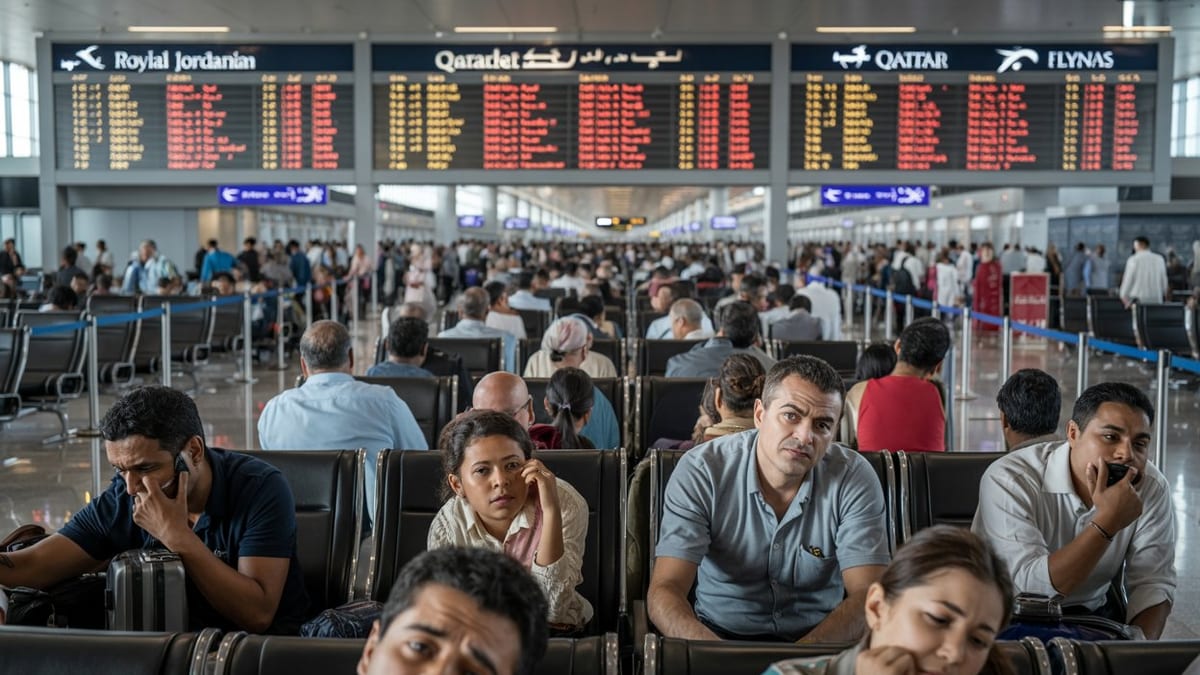
Once through security, crowds pushed into gate holds and food courts, where delayed departures translated into longer dwell times. Live camera feeds and social media images shared from inside the concourses showed packed seating areas and passengers standing in aisles near heavily delayed flights. While operations appeared to remain orderly, the atmosphere underscored how quickly Atlanta’s vast terminal complex can feel strained when irregular operations intersect with a holiday rush.
Ground transport links around the airport also absorbed added volume as some passengers opted to abandon disrupted itineraries or divert to nearby cities by road. Ride-hailing pickup zones and rental car centers typically see spikes in activity during disruption events, and Easter Saturday’s pattern appeared consistent with previous episodes of weather-related schedule problems at major hubs.
What Travelers Can Expect For The Remainder Of The Weekend
Looking ahead to the rest of the Easter weekend, publicly available forecasts suggest that weather over parts of the eastern United States will remain unsettled, though not uniformly severe. Airlines, including Delta, have maintained weather-related travel advisories covering multiple affected cities, signaling that schedule adjustments and rolling delays may persist into Sunday and Monday for some routes touching Atlanta.
Historical patterns from previous spring disruption waves indicate that recovery at large hubs often lags the clearing of the last storms by at least one or two scheduling banks. Aircraft and crews displaced on Saturday may require repositioning before early morning departures can operate normally on Sunday, raising the possibility of additional short-notice cancellations or equipment swaps on already busy flights.
For travelers still set to pass through Hartsfield-Jackson over the coming days, aviation experts recommend a focus on flexibility. Same-day schedule changes, mobile rebooking tools and proactive monitoring of flight status are likely to remain important, particularly for passengers relying on tight connections or traveling with checked baggage. Those steps can help mitigate the residual effects of the 79 disruptions that marked Easter Saturday at the nation’s largest hub.
Even with recent infrastructure investments and improved data tools, the events at Atlanta emphasize that spring remains one of the most challenging seasons for U.S. air travel. For Delta and its customers, keeping the hub running smoothly through the remainder of April will depend on a combination of cooperative weather, resilient staffing and careful coordination across the broader national network.