

Fringed by tall pines, wrapped around the calm waters of Lake Raven, and edged by the Sam Houston National Forest, Huntsville State Park in East Texas is a compact but activity-packed escape.
Just off Interstate 45, roughly an hour north of Houston, this Texas Parks and Wildlife site gives visitors a classic Pineywoods experience with modern amenities, a family-friendly campground, and plenty of room to explore. Whether you are planning a weekend of camping or a quick day trip, the park’s mix of water, woods, and wildlife offers far more to do than you can fit into a single visit.
Getting to Know Huntsville State Park
Before you pick your activities, it helps to understand the layout and character of Huntsville State Park. The park centers on 210 acre Lake Raven, a quiet reservoir ringed by loblolly and shortleaf pine, sweetgum, and water oak. The water is the heart of the park, but a surprisingly extensive trail system lets you explore drier ground and connect with the surrounding national forest. Facilities include developed campgrounds, screened shelters, a park store, boat ramp, fishing piers, playgrounds, and picnic areas, making the park accessible to both first time campers and seasoned outdoor enthusiasts.
The park is also a living habitat. White tailed deer, raccoons, armadillos, and fox squirrels are common, more than 200 bird species have been recorded in the area, and American alligators are permanent residents of Lake Raven. Park staff and signage emphasize that visitors are guests in this environment. Basic outdoor etiquette and a bit of planning go a long way toward keeping both people and wildlife safe while you enjoy the park’s many activities.
Planning Your Visit and Park Logistics
Because Huntsville State Park is close to major population centers, it can be busy on pleasant weekends and holiday periods. The Texas Parks and Wildlife Department strongly encourages visitors to purchase day use passes and campsite reservations online in advance, especially in spring and fall when demand peaks. Entry fees are modest, and children under 13 are typically admitted free, which helps keep a family visit affordable.
Within the park, a simple paved loop road provides access to campgrounds, trailheads, and lakeside facilities. Cell service is intermittent, so it is wise to download maps or pick up a paper map at headquarters. Summer heat and humidity can be intense, with afternoon thunderstorms possible, while winters are usually mild but can swing from T shirt weather to chilly and damp in the space of a day. Shoulder seasons in March through May and October through early December often provide the most comfortable conditions for hiking and camping.
Understanding Alligator and Water Safety
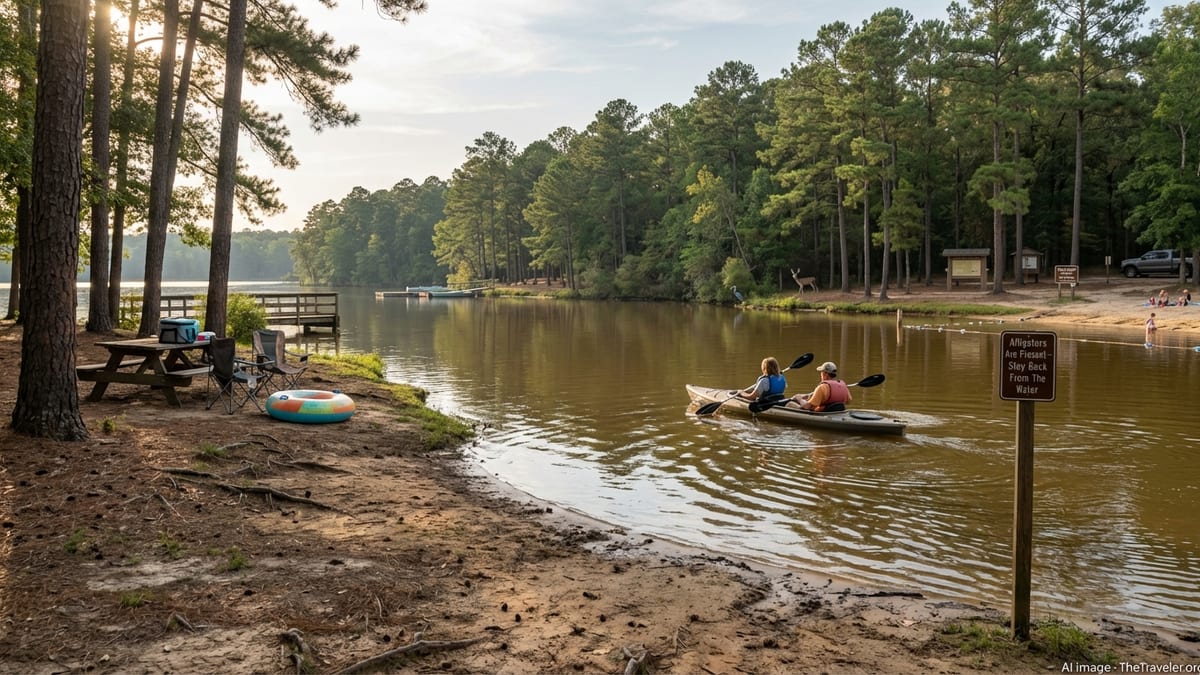
One reality of recreating at Lake Raven is sharing the water with alligators. These reptiles are native to the region and normally avoid close contact with humans, but they are powerful animals that deserve respect. The park follows statewide alligator safety guidelines, which stress keeping a minimum distance of about 30 feet, never feeding or enticing alligators, and swimming only in designated areas when open and posted as safe. The swimming area has at times been temporarily closed in response to alligator behavior or changing lake conditions; visitors should always check current advisories at the entrance station or on the official park information channels before planning to swim.
While alligator incidents are rare, Lake Raven has occasionally been in the news after swimmers encountered large alligators near piers or platforms. In each case, park staff removed swimmers from the water and evaluated conditions before reopening. These episodes underline the importance of heeding posted signs, supervising children closely near the water, and reporting any unusual wildlife behavior to rangers. For boating and paddling, personal flotation devices are required for each person on board, and life jackets are strongly recommended for swimmers of all ages when they are enjoying the lake.
Hiking and Biking Through the Pineywoods
Huntsville State Park’s trail network is one of its most appealing features, especially for visitors who want to experience the Pineywoods on foot or by bike. More than 20 miles of trails thread through pine uplands, low lying hardwoods, and lakeshore habitat, with loops that range from short family friendly strolls to longer circuits that push toward the edge of the Sam Houston National Forest. Trails are generally well marked, and surfaces vary from packed earth to sandy and occasionally muddy stretches after rain.
The park caters to both hikers and mountain bikers, with certain trails shared between user groups and others reserved for foot traffic. Because temperatures and humidity climb quickly on sunny days, especially in summer, starting early and carrying sufficient water is vital. Long pants and insect repellent are helpful during warmer months when mosquitoes and ticks are active.
Sampling Signature Trails
Several named trails give visitors a representative taste of the park’s terrain. Lakeshore paths offer frequent glimpses of Lake Raven, with opportunities to spot wading birds and basking turtles, while interior loops wind through tall pine stands where woodpeckers and songbirds are common. Some routes are relatively flat, making them accessible for families and casual walkers, while others add rolling sections that appeal to trail runners and more experienced hikers.
One of the park’s strengths is the ability to link shorter trails into half day or full day outings. By combining segments, you can build a custom loop that matches your fitness level and the time you have available. At junctions, trail maps posted on kiosks and colored blazes help keep navigation straightforward, but photographing the trail map at the headquarters or bringing a printed copy is still a good idea.
Mountain Biking on Forest Loops
For cyclists, Huntsville State Park offers miles of shared use trails with gentle elevation changes that are ideal for cross country style riding rather than technical downhill challenges. The surface is typically a mix of hard packed soil and loose sand, with roots and occasional muddy patches that keep riders alert. These conditions provide a fun progression for riders who want more variety than a paved greenway without committing to extreme terrain.
Riders should yield appropriately on multiuse paths, announce when passing hikers, and avoid skidding or cutting corners, which can damage trail surfaces. Because sudden thunderstorms are common, especially in warm seasons, checking the forecast before a long ride is sensible, and avoiding excessively muddy trails after heavy rain helps maintain them for everyone’s enjoyment.
Boating and Paddling on Lake Raven
With its sheltered waters and scenic tree lined shores, Lake Raven is a natural focal point for boating and paddling at Huntsville State Park. The lake is large enough to explore for several hours yet small enough to remain calm in all but the windiest conditions. Motorboats are permitted at idle speed, preserving a quiet atmosphere for canoeists, kayakers, and anglers. For visitors without their own gear, boat rentals are often available seasonally through park concessions, including canoes, kayaks, and paddle craft suited to beginners.
Because alligators share the lake with paddlers, the park urges visitors to keep a respectful distance from wildlife and avoid approaching or crowding any animals seen in the water or on shore. Observing from afar with binoculars is the preferred way to appreciate Lake Raven’s inhabitants. Always wear a properly fitted life jacket when on the lake, regardless of swimming ability or distance from shore.
Exploring Quiet Coves by Kayak or Canoe
From the main boat ramp, paddlers can hug the shoreline and slip into inlets that feel far removed from the sounds of the campground. The calm, flat water makes Lake Raven particularly welcoming to those new to kayaking or canoeing, including families with older children. Early mornings often provide glassy conditions and a symphony of bird calls, while late afternoons can bring dramatic light across the water as the sun drops behind the pine canopy.
Kayaks and canoes also offer a prime vantage point for birdwatching. Great blue herons, egrets, and kingfishers are frequent sightings, and migratory ducks may dot the open water in cooler months. Paddlers should avoid tight corners near overhanging vegetation where they cannot see clearly ahead, since unexpected wildlife may be resting or moving along the banks.
Boat Ramps and Boating Etiquette
A concrete boat ramp and adjacent parking area allow easy launching for small motorboats, fishing boats, and trailerable craft within the lake’s speed restrictions. Because the lake is relatively small and management prioritizes a tranquil environment, water skiing and high speed operation are not features here. Instead, visitors cruise slowly to fishing spots or drift along the shoreline.
At busy times, especially weekend mornings, sharing the ramp courteously is important. Have gear organized before backing down the ramp, move vehicles promptly after launching or retrieving, and avoid blocking access while adjusting equipment. Observing no wake zones near docks, swimming areas when open, and shorelines helps protect both wildlife and other visitors enjoying the water from canoes, kayaks, or the bank.
Swimming and Lakeside Relaxation
When conditions allow and the designated area is open, swimming at Huntsville State Park is a refreshing way to escape Texas heat. The park’s sandy beach entry and roped swim area on Lake Raven create a family friendly space with shallow water close to shore and deeper sections farther out. There is no lifeguard on duty, so swimming is always at your own risk, and adult supervision of children is mandatory.
Because Lake Raven is natural habitat, including for alligators, the park occasionally restricts swimming if wildlife behavior, water levels, or safety concerns warrant a temporary closure. Swimmers should always read posted signs upon arrival and follow ranger guidance. Even when swimming is off limits, the beach and lakeside picnic areas remain inviting spots to relax, play in the sand, and enjoy views across the water.
Making the Most of the Beach Area
On hot days, the swim beach can feel like a small lakeside resort, with families spreading blankets under shade trees and children splashing in the shallow zone. Inflatable tubes and small floats are popular, but strong currents are not usually a factor in this contained lake environment. Still, everyone in the water should stay within designated boundaries and avoid swimming near docks, boats, or vegetated shorelines where alligators or other wildlife might be present.
Between swims, visitors build sandcastles, read in camp chairs, or picnic at tables set back from the water. To help avoid attracting wildlife, it is important to keep food stored securely, dispose of trash in designated receptacles, and never leave scraps in or near the water. In the past, improper food disposal has contributed to nuisance alligators associating the swim area with an easy meal, prompting closures. By cleaning up thoroughly, visitors help keep this amenity available and safe.
Water Safety Basics for Families
Even in calm lakes, accidents can happen quickly. The park recommends that weak swimmers and children wear life jackets while in or near the water. Adults should stay within arm’s reach of young children and designate at least one person as a dedicated water watcher who is not distracted by phones or books. Swimming is safest during daylight hours, when visibility is good and wildlife is more easily seen.
Weather is another consideration. Thunderstorms can develop rapidly in East Texas, especially in warm months. At the first sound of thunder or sight of lightning, all swimmers and paddlers should exit the water and move away from tall isolated trees until the storm has clearly passed. Planning swim sessions in the morning or earlier in the day can often avoid the most active storm period.
Fishing for Bass, Catfish, and More
Lake Raven is widely regarded as one of Huntsville State Park’s best attractions for anglers. The lake holds healthy populations of largemouth bass, catfish, crappie, and various sunfish, and Texas Parks and Wildlife periodically manages stocking and habitat improvements to maintain its productivity. The relative quiet of no wake boating and the lack of heavy development along the shoreline combine to create a relaxed, natural fishing atmosphere.
One major perk of fishing inside a Texas state park is that anyone may fish from shore or from a pier within park boundaries without purchasing a separate state fishing license, subject to current regulations. This exception makes Huntsville State Park a low barrier place for beginners to try fishing for the first time and for families to introduce children to the sport.
Where and How to Fish Lake Raven
Anglers can choose from several access options. Fishing piers provide stable platforms with railings, making them suitable for families with children. Shoreline access near the campground and day use areas offers additional spots to cast. Those with boats or kayaks can explore deeper sections, submerged structure, and sheltered coves where fish often hold.
Typical tackle for Lake Raven includes medium spinning or baitcasting outfits. Soft plastic worms and lures are popular among bass anglers, while bottom rigs with bait such as cut fish or prepared baits are effective for catfish. Light tackle with small hooks and floats can keep younger anglers engaged as they catch sunfish. During warm months, early morning and late afternoon are often the most productive and comfortable times to fish.
Responsible Angling and Wildlife Awareness
Because alligators are present, anglers should avoid letting fish stringers trail in the water unattended and should not continue fishing near an alligator that shows interest in their catch or bait. If an alligator begins approaching a line or lingering nearby, the safest course is to move to a different spot. Disposing of fish remains in designated trash containers rather than tossing them in the lake is critical, since food scraps can train alligators to associate anglers with easy meals.
As with all fishing, adherence to current length and bag limits is essential to sustain the resource. Anglers planning to keep fish should bring a cooler with ice and handle catches humanely. Those practicing catch and release can improve survival by using barbless hooks when possible, minimizing handling time, and supporting fish gently in the water until they swim away strongly.
Camping Under the Pines
For many visitors, the best way to experience Huntsville State Park is to stay overnight and let the forest’s sounds replace city noise. The park offers multiple camping loops with water and electric hookups for RVs and car campers, as well as more primitive walk in sites and screened shelters that provide a hybrid between tenting and cabin comfort. Sites are tucked among tall pines and hardwoods near the lake, offering shade and a sense of immersion in nature.
Because the park is popular, especially on mild weather weekends, reservations are highly recommended. Campsite options vary in size and level of privacy, so reviewing site descriptions and maps ahead of time helps match your setup and expectations. Quiet hours help maintain a peaceful atmosphere, and campground hosts and rangers circulate to answer questions and ensure rules are followed.
Choosing the Right Campsite
RVers will find back in and pull through sites with standard hookups, suitable for a range of rig sizes. Tent campers can choose lake adjacent sites for easy access to fishing and sunrise views or more interior locations that may be slightly quieter at busy times. Screened shelters, typically equipped with basic furnishings and access to nearby restrooms, are a good option for those who prefer solid walls and a roof but still want a campfire and picnic table just outside.
When selecting a site, consider proximity to restrooms, playgrounds, and the lake. Families with young children may appreciate being close to facilities and amenities, while campers seeking deeper quiet might prefer more distant loops. Insects can be active, especially in warmer months, so bringing screens, repellents, and closed food storage is wise regardless of accommodation type.
Campfire Culture and Nighttime Experiences
Evenings in Huntsville State Park often revolve around campfires, when conditions and burn bans permit. Visitors gather to cook simple meals, roast marshmallows, and watch sparks float toward the canopy of stars. Fire safety is paramount. Fires must be confined to provided rings or grills, never left unattended, and fully extinguished with water before turning in for the night.
After dark, the park reveals a different personality. Owls call from the treetops, crickets and frogs provide a constant chorus, and the silhouettes of pines stand out against the sky. Short nighttime walks within the campground, using red filtered lights to minimize disruption, can be rewarding, but venturing onto remote trails after dark without specific nighttime programs or guides is not recommended. Storing food securely, keeping a tidy campsite, and respecting quiet hours all contribute to a restful night and harmonious stay with neighbors.
Wildlife Watching and Nature Study
Huntsville State Park doubles as an outdoor classroom for anyone interested in native Texas ecosystems. Its mix of pine forest, hardwood lowlands, and open water supports a remarkable diversity of birds, mammals, reptiles, and plants. Interpretive displays at the nature center and trailheads introduce visitors to common species, while observation blinds and boardwalks provide low impact ways to observe animals without disturbing them.
Patience and quiet movement often reward observers with encounters that casual visitors might miss. Dawn and dusk are particularly lively periods, when deer feed at the forest edge, water birds start or end their day on Lake Raven, and smaller woodland creatures emerge from cover.
Birding Highlights
Birdwatchers will find Huntsville State Park part of a broader regional wildlife trail system, reflecting its importance as a bird habitat. Woodpeckers, including pileated and red headed species, can be heard drumming and seen flitting among mature pines. In spring and fall, warblers and other songbirds pass through, adding bursts of color and song to the understory. Along the lakeshore, great blue herons, great egrets, and night herons stalk the shallows, while swallows and chimney swifts harvest insects overhead.
Bringing binoculars and a field guide or birding app enhances the experience. Many visitors enjoy maintaining a checklist of species spotted during their stay. Respecting sensitive areas, staying on trails, and using existing blinds rather than approaching nests or roosts help protect the birds that make Huntsville State Park so vibrant.
Respectful Wildlife Viewing
Beyond birds, sightings of white tailed deer, armadillos, raccoons, and squirrels are common on trails and near campsites, especially in the early morning and evening. Alligators, turtles, and various fish are often visible from piers and lakeside vantage points. While the temptation to approach for a closer photo can be strong, maintaining safe distances and letting animals move freely is essential for their well being and your safety.
Feeding wildlife, intentionally or accidentally, disrupts natural behavior and can lead to aggressive encounters. Storing food securely, cleaning up thoroughly after meals, and packing out or disposing of trash properly are key steps every visitor can take. With thoughtful behavior, Huntsville State Park remains a place where humans and wildlife coexist, and where future visitors can enjoy similarly rich encounters.
Family Friendly Activities and Park Programs
Huntsville State Park is tailored to families looking for an approachable introduction to the outdoors. In addition to marquee activities such as hiking, boating, and swimming, the park offers smaller scale diversions that keep children engaged. Playgrounds, open grassy areas, and short nature trails provide variety between bigger adventures, and seasonal ranger led programs introduce kids to local ecology, outdoor skills, and conservation values.
Because schedules and offerings evolve, visitors should check current park information for program calendars. Typical events might include guided hikes, junior ranger activities, wildlife talks, or themed weekends that celebrate fishing, camping, or other outdoor pursuits.
Playgrounds, Picnics, and Easy Walks
Near main day use areas, playgrounds with swings and climbing structures give younger visitors a place to burn off energy while parents relax at nearby picnic tables. Shaded pavilions can often be reserved for group gatherings, birthdays, or reunions, allowing families to combine social events with time on the lake or trails.
Short, relatively flat paths close to the lake are ideal for strollers and small children taking their first steps into nature. These walks let families look for turtles sunning on logs, listen for woodpeckers, or identify simple plant species using interpretive signage. By layering in small discoveries, parents can nurture kids’ curiosity without overtaxing their patience or stamina.
Junior Ranger Style Learning
Inspired by broader park systems, many Texas parks encourage children to engage in structured learning activities such as completing checklists, attending brief talks, or participating in hands on demonstrations. At Huntsville State Park, these might include exploring animal tracks, learning basic fishing skills, or discussing how to keep wildlife wild. Children often earn certificates or small tokens in recognition of their efforts, which can become meaningful souvenirs of a first camping trip or hike.
For parents, these programs add depth to a visit, helping children connect the fun of being outside with a deeper understanding of the environment. They also reinforce critical safety messages, from hydration and sun protection to alligator awareness and responsible behavior around campfires and wildlife.
The Takeaway
Huntsville State Park succeeds by balancing accessibility with a genuine sense of wildness. It is easy to reach yet feels a world away from the urban sprawl of Houston and the interstate nearby. Within a relatively compact footprint, the park manages to offer a full slate of classic Texas outdoor experiences: hiking through fragrant pines, paddling quiet waters, casting for bass at sunrise, watching herons stalk the shallows, and falling asleep to a chorus of frogs and crickets.
For first time visitors, a weekend that blends a few hours on the trails, time at the lake, and an evening around the campfire will reveal why the park remains a favored escape for families, college students, and road trippers alike. Returning guests often use Huntsville as a home base to explore deeper into the Sam Houston National Forest or to refine their skills in camping, paddling, or birdwatching. In every season, the park rewards those who slow down, respect the land and its wildlife, and embrace the simple rhythm of days shaped by the sun and the trees.
FAQ
Q1: Do I need a fishing license to fish at Huntsville State Park?
Within Texas state parks, including Huntsville State Park, visitors may fish from shore, piers, or boats on park waters without purchasing a separate state fishing license, although all current size and bag limits still apply.
Q2: Are alligators common in Lake Raven, and is it safe to visit?
American alligators are resident in Lake Raven and are regularly seen, but they usually avoid people. The park follows strict safety protocols, posts warning signs, and may temporarily restrict swimming or certain activities if needed. By following rules, keeping a safe distance, and never feeding wildlife, most visitors enjoy the park safely.
Q3: Is there a designated swimming area, and is it always open?
Huntsville State Park maintains a designated swim beach with a roped swimming area on Lake Raven, but openings depend on current conditions. Wildlife behavior, lake levels, or other safety concerns can lead to temporary closures, so visitors should always confirm the status of swimming areas on arrival or through official park information before planning to swim.
Q4: What kinds of boats are allowed on Lake Raven?
Lake Raven welcomes non motorized craft such as canoes, kayaks, and paddle craft, as well as motorboats that operate at idle speed only. This no wake policy keeps the lake quieter and safer for paddlers, swimmers when areas are open, anglers, and wildlife.
Q5: How many miles of trails are in Huntsville State Park, and are they suitable for beginners?
The park offers more than 20 miles of interconnected trails, ranging from short lakeside walks to longer forest loops. Many routes are relatively flat and well marked, making them accessible for beginners and families, while more extended loops appeal to experienced hikers and mountain bikers.
Q6: Can I camp with an RV, and are hookups available?
Yes. Huntsville State Park has developed campgrounds with water and electric hookups suitable for RVs and travel trailers, along with tent sites and screened shelters. Reservations are strongly recommended, especially on weekends and during spring and fall.
Q7: Are pets allowed in the park and on the trails?
Leashed pets are generally welcome in most outdoor areas of Huntsville State Park, including many trails and campsites, but they must be kept on a short leash, under control, and away from the water’s edge in alligator habitat. Owners are responsible for cleaning up after their pets and observing any posted restrictions.
Q8: What is the best time of year to visit Huntsville State Park?
While the park is open year round, many visitors prefer spring and fall for milder temperatures and lower humidity. Summer offers vibrant lake activities but can be hot and crowded, while winter provides quieter trails and crisp evenings that are pleasant for camping when properly prepared.
Q9: Are there ranger led programs or activities for children?
Seasonally, Huntsville State Park offers ranger led programs such as guided hikes, wildlife talks, and junior ranger style activities that are tailored to children and families. Program schedules vary by time of year, so visitors should check current listings with park staff or posted information upon arrival.
Q10: How far in advance should I reserve campsites or day passes?
Because of the park’s popularity and proximity to major cities, it is wise to reserve campsites and, during peak periods, day use permits several weeks ahead, especially for weekends, holidays, and school breaks. Weekdays and off season dates may offer more flexibility but can still benefit from advance planning.