

Few countries live their calendar as vividly as Spain. From solemn candlelit processions to all-night street parties and surreal tomato battles, Spain’s annual events are experiences that can define an entire trip. Planning your visit around one of these celebrations is not just about ticking off a festival; it is a way to understand the country’s rhythms, rituals and regional identities. Here are eight of the most compelling annual events worth centering a Spanish itinerary around, plus practical context to help you choose the one that fits your style.
Semana Santa: Spain’s Most Moving Holy Week
Holy Week, or Semana Santa, is arguably the most emotionally charged event on the Spanish calendar. In cities such as Seville, Málaga and Valladolid, ornate floats carrying statues of Christ and the Virgin Mary are borne slowly through packed streets, accompanied by brass bands and cloaked penitents. The atmosphere is reverent and intense rather than festive, especially on Maundy Thursday and Good Friday, when crowds fall almost silent as the processions pass. For many visitors, it is a powerful introduction to the deep Catholic traditions that still shape public life across much of Spain.
The dates shift each year because they are tied to Easter, but Semana Santa always falls between late March and late April. In 2026, for example, Holy Week runs from Palm Sunday on April 5 to Easter Sunday on April 12. Planning early matters: accommodation in major Semana Santa cities sells out months ahead, and prices rise sharply near key procession routes. If you want to witness processions but avoid the densest crowds, consider secondary cities such as León, Cuenca or Murcia, where the observances are still elaborate but slightly less overwhelmed by visitors.
Experiencing Semana Santa requires a different travel mindset than a typical city break. Streets are often closed, public transport can be disrupted, and restaurant hours may change. The payoff is a chance to watch entire communities turn their historic centers into open-air theatres of faith and pageantry. Dress modestly, be patient with the inevitable delays, and treat processions as living religious rituals rather than spectacles staged purely for tourists.
Weather during Semana Santa can be unpredictable, ranging from warm spring sunshine to heavy rain that occasionally forces last-minute cancellations. It is wise to build some flexibility into your schedule, allowing extra nights in case key processions are postponed. Even if the weather intervenes, the buildup of rehearsals, band practices and church events in the days before Easter ensures there is still plenty to absorb.
Feria de Abril in Seville: Andalusia’s Week of Pure Fiesta
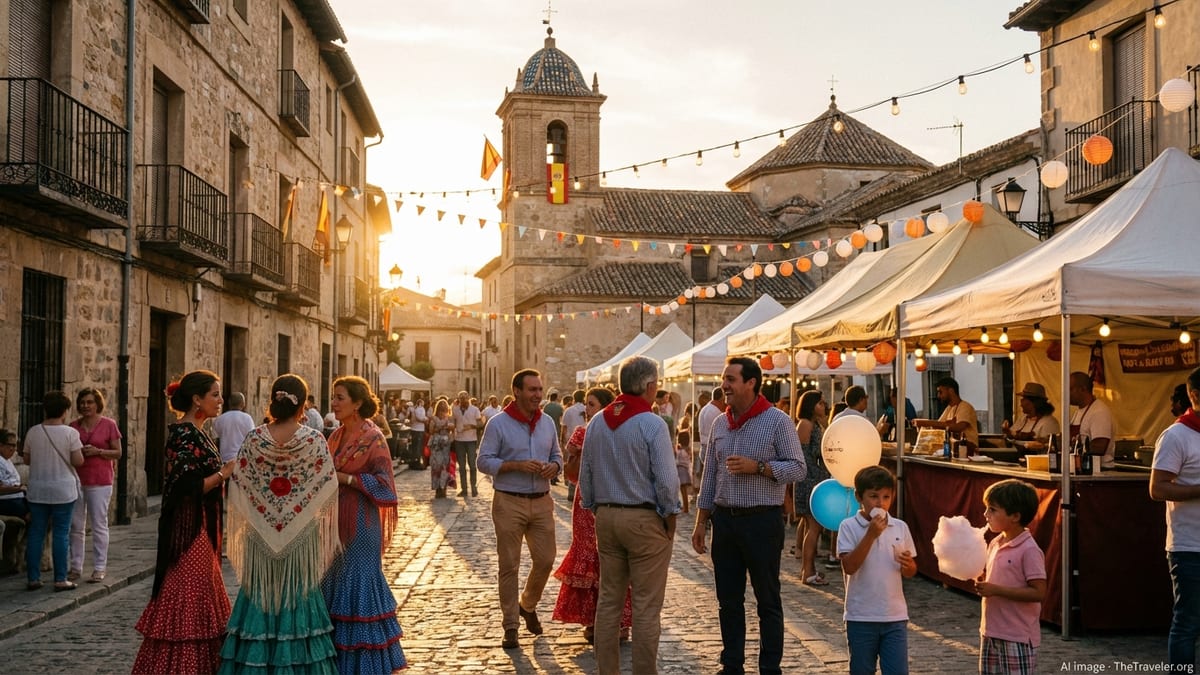
Two weeks after Semana Santa, Seville switches from solemnity to pure celebration with the Feria de Abril, or April Fair, one of Spain’s most iconic annual parties. For six days, a temporary city of striped canvas tents called casetas rises on the fairground by the Guadalquivir River. Inside, locals in traditional dress gather to dance sevillanas, share tapas and sherry, and socialize late into the night. Outside, horse-drawn carriages, fairground rides and glowing lanterns turn the site into a kaleidoscope of color and sound.
The Seville Fair typically begins two weeks after Easter Sunday, placing it in late April or early May. In 2026, for instance, the official dates run from April 21 to April 26. This timing makes the fair especially attractive for travelers who want spring warmth without peak-summer heat. Daytime temperatures can already reach the mid-20s Celsius, so lightweight clothing and sun protection are important, but evenings remain pleasant for walking the fairground or crossing the river back toward the historic center.
Although many casetas are private and invitation-only, recent editions of the fair have increased the number of public tents, where anyone can sip rebujito (a local sherry-and-soda mix), order fried fish and watch locals dance. For visitors, limiting alcohol, pacing the late nights and learning the basic rhythm of sevillanas will make the experience more enjoyable. The fairground is busiest from late afternoon onward, while the midday horse-and-carriage parades and family focus make early visits more relaxed.
Because Feria de Abril coincides with a broader spring travel season, Seville’s hotels and apartments fill quickly. Booking months in advance is wise if you want to stay within walking distance of the historic center or along the riverfront. Expect road closures, crowded buses and long taxi waits during peak evening hours, and consider using the metro or simply walking back across the bridges when the fair winds down in the early morning.
Carnival of Santa Cruz de Tenerife: Spain’s Island Extravaganza
While many Spanish cities celebrate Carnival, the island capital of Santa Cruz de Tenerife hosts the country’s most spectacular version and one of the world’s most famous. Held annually in the weeks around Lent, this carnival combines vast parades, live music, outdoor dances and an over-the-top queen contest where competitors appear in towering, glittering costumes that can weigh more than many participants. For visitors, it feels like an extended street party, with locals and tourists of all ages joining in.
The Carnival of Santa Cruz de Tenerife begins roughly two weeks before Ash Wednesday and typically ends the weekend afterward, placing it between February and early March depending on the year. That makes it an appealing winter escape, with the Canary Islands’ mild subtropical climate offering comfortable daytime temperatures when much of Europe is still cold. In years when Carnival falls later, such as late February, the weather can feel almost summery in the sun, though evenings remain cooler.
Key events include the Carnival Queen gala, the main daytime parade and the satirical burial of the sardine, which marks the symbolic end of festivities. The mood in Santa Cruz is inclusive and exuberant, and costumes are not mandatory but strongly encouraged if you want to blend in. Simple accessories such as wigs, masks and glitter go a long way. Because official schedules change slightly each year, it is worth checking the city’s announcements closer to your travel dates to time your visit for the biggest parades.
Logistically, Carnival requires a bit of planning. Santa Cruz is compact, but the busiest nights bring large crowds, especially in the streets around Plaza de España and the port. Booking central accommodation helps you avoid late-night transport issues, and packing comfortable shoes is essential for long hours on your feet. For a quieter base, some visitors stay in nearby resort areas such as Puerto de la Cruz and commute into Santa Cruz for major events, though this adds travel time and reduces spontaneity.
San Fermín in Pamplona: Tradition and Adrenaline in July
San Fermín, held each July in Pamplona, is one of the world’s best-known Spanish festivals, largely due to the running of the bulls. For eight days, from July 6 to July 14, the city’s compact old town becomes the stage for morning bull runs, evening bullfights, round-the-clock street parties and traditional ceremonies. For many visitors, the allure lies as much in the atmosphere of white-and-red-clad crowds and brass bands as in the infamous runs themselves.
The event opens on July 6 at noon with the chupinazo, a ceremonial rocket launched from the town hall balcony that signals the official start of festivities. Each morning at 8am, bulls are released to charge along a fenced-off route through the old town to the bullring. Watching safely from a balcony or barricade is the recommended option for most travelers. Running is inherently dangerous and best left to experienced participants who understand the risks and rules. Regardless of how you view it, planning ahead is crucial: reputable balconies, central rooms and even basic hostel beds are reserved well in advance.
Beyond the bull runs, San Fermín offers parades of traditional giant figures, open-air concerts, fireworks and a continuous social swirl in the streets and squares. Families with older teenagers may find the festival manageable during daylight hours, especially at the parades, while the extremely crowded late-night drinking scene is better suited to adults comfortable with dense, noisy crowds. Wearing the traditional white clothing with a red scarf is not obligatory, but it contributes to the sense of shared celebration and makes you less conspicuous as an outsider.
Weather during San Fermín is typically warm to hot, with July highs in Pamplona often above 25 degrees Celsius. Hydration, sun protection and regular breaks from the crowds are important. Because many businesses adjust hours or close entirely, it is sensible to plan meals a bit earlier than usual and to carry snacks and water. Travelers seeking a quieter experience might base themselves in smaller Navarrese towns and visit Pamplona only on selected days of the festival.
La Tomatina in Buñol: The World’s Messiest Fiesta
La Tomatina, held in the small town of Buñol in the Valencia region, is the world’s most famous tomato fight. On the last Wednesday of August each year, thousands of participants cram into the town center for a one-hour burst of pure, messy chaos as truckloads of ripe tomatoes are dumped into the streets and hurled back and forth. The result is a red river underfoot and an unforgettable sensory overload for anyone willing to embrace the absurdity.
The festival has its roots in informal mid-20th century food fights between locals, but it has evolved into a tightly managed event. Since 2013, participation has been limited through a ticket system to control crowd numbers and ease pressure on Buñol’s infrastructure. The basic structure remains the same: in the late morning, after a playful attempt to climb a greased pole for a ham, the trucks roll in, horns sound and the tomato battle begins. Exactly one hour later, another signal marks the end, and water hoses begin the long process of washing down participants and streets.
For travelers, La Tomatina works best as part of a broader Valencia-region itinerary rather than a standalone trip. Many visitors base themselves in Valencia city and travel to Buñol by train or organized coach on the day of the event. Protective goggles, old clothes and secure footwear are essential, as is waterproof storage for valuables or leaving them behind altogether. The tomatoes are softened beforehand to reduce injuries, but the streets become very slippery and collisions are inevitable in the crush.
Because the festival takes place in high summer, late August temperatures are often hot, and the combination of sun, crowds and exertion can be tiring. Booking tickets early, confirming reliable transport and allowing a recovery day on the coast afterward will make the experience more enjoyable. For those who prefer to witness the absurdity without joining the central melee, limited balcony viewpoints and peripheral vantage points can offer a slightly cleaner perspective.
Las Fallas in Valencia: Fire, Art and Controlled Chaos
Each March, Valencia stages Las Fallas, a unique fusion of artistic creativity, pyrotechnics and neighborhood pride. Over several days, districts across the city display towering sculptures called fallas, often satirical or political in tone, crafted from materials such as wood, polystyrene and papier-mâché. These intricate works can rise several stories high and require months of planning and construction by local associations. The climax comes on the night of La Cremà, when almost all of the fallas are burned in a choreographed blaze that lights up the city.
Las Fallas typically builds from early March, with a daily midday firecracker display known as the mascletà in Plaza del Ayuntamiento, and peaks between March 15 and March 19, the feast of Saint Joseph. During those final days, the city streets fill with parades, brass bands, floral offerings to the Virgin Mary and constant fireworks. Noise levels can be intense, especially for visitors unaccustomed to firecrackers being set off at virtually any hour. Earplugs are helpful for sleep, and choosing accommodation slightly away from the noisiest central streets can make nights more restful.
The visual impact of Las Fallas is extraordinary, particularly after dark when the sculptures are illuminated and neighborhoods compete in elaborate street-lighting displays. For photographers, this is one of Spain’s most rewarding festivals, with countless opportunities to capture candid scenes of local life and artistry. It is also an event where wandering without a fixed plan works well: many of the most memorable encounters happen while turning corners to find unexpected fallas or stumbling upon a neighborhood paella cookout.
Given the combination of large crowds and open flames, safety planning is thorough, but common-sense precautions still matter. Follow instructions from stewards during La Cremà, avoid standing in tightly packed dead ends, and wear closed shoes to protect your feet from stray embers and firecracker remnants. Booking trains and flights early is advisable, as Las Fallas attracts visitors from across Spain and beyond, and transport demand surges around the main nights of the festival.
Magdalena Festival in Castellón: Nine Days of Local Tradition
Less internationally famous than some Spanish festivals but deeply rooted in local history, the Magdalena Festival in Castellón de la Plana offers a rich mix of tradition, fireworks and community celebration. The event commemorates the 13th century relocation of the town from a hilltop to its present coastal plain and lasts for nine days. It begins each year on the third Saturday of Lent, placing it between late February and late March, depending on the date of Easter. In 2026, the festival is scheduled to start on March 7.
The Magdalena Festival features parades, religious acts, concerts and daily pyrotechnic displays, including the mascletàs that thunder through the city’s plazas. One of the signature events is the romeria, a pilgrimage walk from the city center to the hilltop hermitage of Magdalena, where residents pay homage to their origins. Traditional dress, local music and gastronomy all play prominent roles, making the festival a window into the identity of this medium-sized Valencian Community city.
Compared with the overwhelming scale of events such as Las Fallas or San Fermín, the Magdalena Festival feels more approachable for visitors seeking an authentic but less crowded experience. Accommodation is typically easier to secure, prices are more moderate and moving around the city is simpler. That said, central streets can still be very busy at peak moments, and firecracker noise is a constant presence during the core days of celebration.
Because the festival unfolds across multiple days and locations, it rewards travelers who stay several nights rather than dropping in for a single event. This allows time to join the romeria, watch a mascletà, sample local rice dishes and soak up the broader ambiance of a city in full celebration. Layered clothing helps with variable late winter and early spring weather, which can swing from bright sunshine to cool, damp conditions in a single day.
Pilgrimage to Candelaria: A Different Kind of August Gathering
Not all of Spain’s significant annual events are raucous street parties. The Pilgrimage to Candelaria on Tenerife, in the Canary Islands, is a large religious gathering that takes place each August around the feast of the Virgin of Candelaria, patroness of the archipelago. Beginning on August 13 or 14, pilgrims from across Tenerife and other islands walk to the coastal town of Candelaria, converging on the basilica that houses the revered image of the Virgin. By August 15, tens of thousands of people have arrived, filling the town and waterfront with a mix of devotion and quiet festivity.
For visitors, the pilgrimage offers insight into the spiritual life of the Canary Islands and contrasts sharply with the secular revelry of Carnival in Santa Cruz, which takes place earlier in the year. Many locals walk overnight along well-known routes, some lit only by headlamps and sporadic streetlights, in order to reach Candelaria by dawn. Others arrive by bus or car and focus on the religious services, open-air events and traditional dances held around the basilica square.
Participating as an outsider requires sensitivity. Modest clothing, respectful behavior in and around the basilica, and an awareness that the primary focus is religious rather than touristic are all important. If you choose to join part of the walk, proper footwear, water and sun protection are essential, as even night-time temperatures can remain relatively warm and the August sun is strong once it rises. The town can become very crowded on August 14 and 15, so booking accommodation early or planning a day trip from larger centers such as Santa Cruz de Tenerife is advisable.
Because the pilgrimage falls in the height of the Canary Islands’ summer season, combining it with time on the nearby beaches or in the island’s volcanic interior can make for a well-rounded trip. The event itself, however, is the kind of experience that is best approached with patience, open-mindedness and a willingness to blend into the background rather than seeking the perfect photo opportunity.
The Takeaway
Spain’s annual events are as varied as its landscapes, from the green hills of Navarre and the urban bustle of Valencia to the volcanic slopes of Tenerife. Choosing which festival to build a trip around depends less on ranking them and more on matching them to your travel style. If you are drawn to solemn rituals and centuries-old traditions, Semana Santa or the Pilgrimage to Candelaria may resonate most. If high-energy street parties appeal, Carnival in Santa Cruz or Feria de Abril in Seville deliver long nights of music and dance. For those seeking singular, almost surreal experiences, Las Fallas, La Tomatina or San Fermín offer stories you will tell for years.
Whatever you choose, planning ahead is essential. Accommodation and transport around major dates sell out early, schedules can shift slightly from year to year, and local infrastructure strains under the influx of visitors. Building flexibility into your itinerary, researching the latest official dates, and preparing for crowds and noise will all pay off. In return, you gain a front-row seat to the moments when Spain’s cities and towns reveal their most expressive selves, turning ordinary streets into stages for collective memory, identity and celebration.
FAQ
Q1. When is the best time of year to visit Spain for festivals?
The richest concentration of major events runs from February through August, spanning Carnival, Las Fallas, Semana Santa, spring ferias and high-summer celebrations like San Fermín and La Tomatina.
Q2. Which Spanish festival is most suitable for families with children?
Carnival in Santa Cruz de Tenerife and the Magdalena Festival in Castellón are among the most family-friendly, with daytime parades, music and activities that children tend to enjoy.
Q3. How far in advance should I book accommodation for big events like San Fermín or Las Fallas?
For headline festivals, aim to reserve at least six months ahead, and earlier if you want central locations or balcony access to major processions and parades.
Q4. Is it safe to participate in the running of the bulls in Pamplona?
Running is inherently risky and results in injuries most years. Observing from secure vantage points is significantly safer and still allows you to experience the atmosphere.
Q5. Do I need tickets for La Tomatina in Buñol?
Yes. The tomato fight has been ticketed for years to control numbers, so you must purchase an official entry ticket and arrange transport well in advance.
Q6. Are Spanish festivals accessible for travelers who do not speak Spanish?
Yes, but English is more widely spoken in larger cities and tourist-focused events. Learning a few basic Spanish phrases helps with logistics and shows respect for local culture.
Q7. What should I pack if I am attending a firework-heavy festival like Las Fallas?
Bring comfortable closed shoes, earplugs, layers for cool evenings, and older clothing that you will not mind exposing to smoke, ash and firecracker debris.
Q8. Can I experience Semana Santa without staying in the biggest cities?
Absolutely. Many smaller cities and towns hold deeply felt Holy Week processions, often with fewer crowds and easier accommodation than Seville or Málaga.
Q9. How do crowds and prices compare between famous festivals and more local events?
Headline events draw larger crowds and higher prices for rooms and transport, while regional festivals like the Magdalena Festival often feel more relaxed and better value.
Q10. Are there dress codes for attending these events?
There are no strict dress codes for most festivals, but modest clothing is recommended for religious ceremonies, and comfortable, weather-appropriate outfits are essential everywhere.