

Turkey’s calendar is crowded with festivals that blend deep tradition, vibrant ritual and contemporary creativity. From Ottoman-era sporting contests on Thracian fields to hot-air balloons drifting above Cappadocia’s surreal valleys, certain annual events shape the rhythm of the year and can transform an ordinary trip into a truly memorable journey. Planning your visit to coincide with one or more of these occasions offers an immersive window into local life well beyond the usual sightseeing circuit.
Istanbul Tulip Festival: A City in Bloom Each Spring
Every spring, Istanbul marks the arrival of warmer days with a month-long celebration of tulips, a flower that has been closely associated with Ottoman culture for centuries. Millions of bulbs are planted across the city’s parks, avenues and traffic islands, turning familiar sights into temporary gardens. Displays are especially dense in historic quarters, where carpets of color appear against the backdrop of domes and minarets.
The festival typically runs through April, though the exact peak of the bloom depends on that year’s weather. Municipal gardeners prepare for months, laying out geometric beds and whimsical patterns that reveal themselves from higher vantage points. Emirgan Park on the European side usually serves as the unofficial heart of the celebration, with winding paths flanked by tulip beds and restored wooden mansions that host cultural exhibits and craft demonstrations.
Visitors can also find elaborate plantings in Gülhane Park near the old city, on steep Yıldız Park above the Bosphorus, and around major landmarks such as Sultanahmet Square. Concerts, exhibitions and occasional street performances add to the atmosphere, but much of the pleasure comes from wandering with no fixed plan, turning corners to find yet another pocket of color. If your heart is set on the flowers at their best, aim for early to mid-April but stay flexible in case a cool or warm spring shifts the timing.
Because the festival is spread across the city, it rarely feels overwhelmingly crowded in any one place. Early mornings offer softer light for photography and quieter paths, while late afternoons bring warm tones over the water and more of a local crowd. Planning an Istanbul stay around the tulip festival allows you to combine classic sightseeing with one of the city’s most photogenic periods of the year.
Cappadocia Hot Air Balloon Festival: Lanterns Over a Lunar Landscape
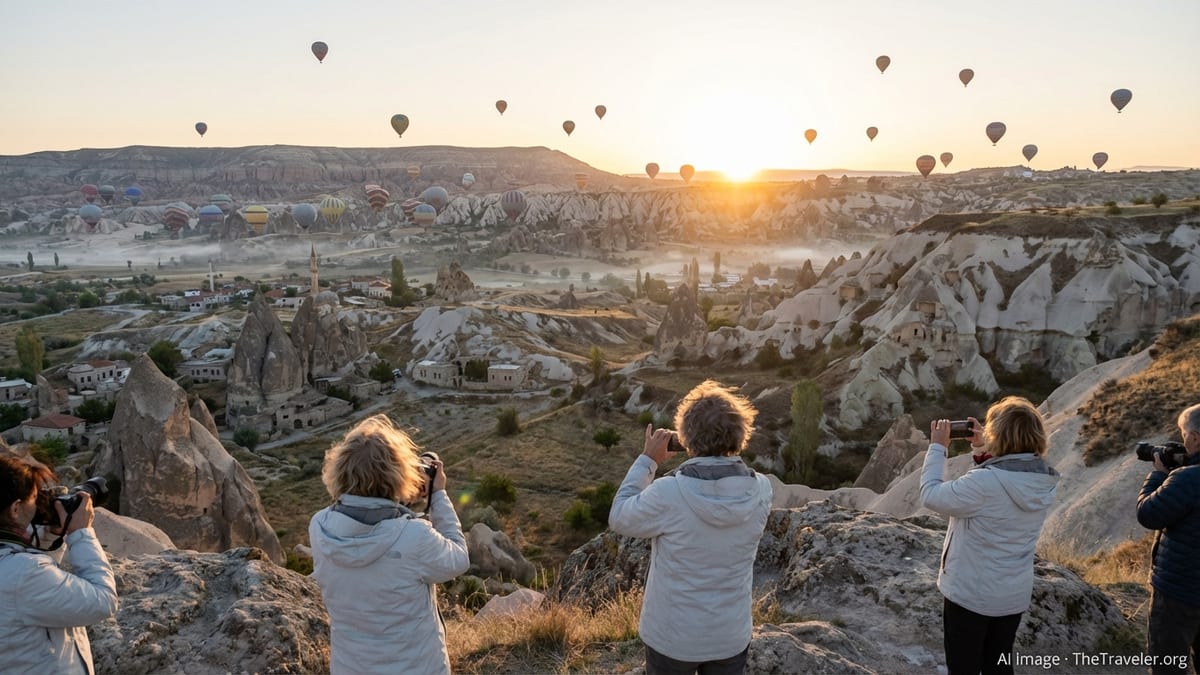
Hot air ballooning over Cappadocia’s valleys has long been a signature Turkish travel experience, but in recent years a dedicated hot air balloon festival has added a more communal sense of occasion. Usually held in high summer, when skies are generally clear, the event brings together colorful balloons from Turkey and abroad for several days of dawn flights and evening shows. The spectacle is heightened by Cappadocia’s already dramatic terrain of fairy chimneys, rock spires and honeycombed cliffs.
At sunrise, dozens of balloons lift almost simultaneously, drifting over vineyard‑lined valleys and rock‑cut churches as the first light hits the stone in soft pink and gold. During festival days there may also be tethered balloon displays, night glow events where balloons light up against the dark sky, and cultural performances in nearby towns. Local municipalities often use the occasion to showcase regional crafts, cuisine and music, turning village squares into open‑air stages.
Because hot air ballooning is highly weather dependent, even during a festival no operator can guarantee flights every morning. Winds and visibility are closely monitored and authorities approve launches at short notice, so visitors should plan several days in the area rather than banking on a single sunrise. It is also wise to book with reputable, licensed companies that prioritize safety and maintain clear communication about conditions and procedures.
Outside festival dates, regular balloon operations continue most of the year, with spring and autumn generally offering the most stable conditions. A festival visit, however, emphasizes the communal excitement of watching the sky fill with even more color than usual. Whether you choose to fly or simply watch from a vantage point in Göreme or Uçhisar, aligning your Cappadocia stay with the balloon festival delivers some of Turkey’s most memorable travel images.
Kırkpınar Oil Wrestling Festival: Centuries of Ritual in Edirne
On the fields outside Edirne in Thrace, the Kırkpınar Oil Wrestling Festival unfolds each year as one of the world’s oldest continuously held sporting events. Originating in the 14th century, it has grown into a multi-day celebration that blends competition, pageantry and local pride. Wrestlers, or pehlivans, clad in heavy leather trousers called kispet, are doused in olive oil before stepping onto the grass to grapple in a discipline that demands strength, balance and patience.
The festival is traditionally held in early summer and spans several days of bouts, parades and ceremonies. Proceedings often open with a procession through Edirne, accompanied by drummers and zurna players, as officials and athletes make their way toward the stadium. In the main arena, matches progress through weight and experience categories until the elite division, where the title of başpehlivan, or chief wrestler, is contested. The winner earns a coveted golden belt along with national recognition.
For visitors, Kırkpınar is as much about atmosphere as it is about sport. Families gather on the grass around the stadium, vendors sell sunflower seeds, grilled meats and sweets, and local folk groups perform between matches. The mix of solemn rituals, such as visits to the cemetery of past champions, with the informality of a regional fair gives the event a distinctive character. Spectators unfamiliar with the detailed rules quickly pick up the basics as they watch wrestlers seek leverage on the slick surface.
Edirne itself, once an Ottoman capital, offers several mosques and historic bridges worth exploring before or after the matches. Accommodation in town can book out quickly during festival dates, so early reservations are advisable. A trip timed for Kırkpınar offers a chance to see a living tradition recognized as part of Turkey’s cultural heritage, set against the city’s layered architectural backdrop.
Ramadan and Eid in Istanbul: Sacred Rhythm and Festive Nights
Although the dates shift each year in line with the lunar calendar, the month of Ramadan and the following Eid al‑Fitr holiday remain some of the most atmospheric times to experience Turkey, particularly in Istanbul. From pre‑dawn meals to late‑night strolls, daily life takes on a different cadence as many residents fast from sunrise to sunset. Historic mosques, including the Blue Mosque and Süleymaniye, are strung with illuminated messages between their minarets, known as mahya, which glow above the city after dark.
As sunset approaches, public squares and waterfront promenades come alive with people gathering to break the fast at iftar. Long communal tables may be laid out by municipalities, while families spread picnic cloths on park lawns. Traditional dishes such as lentil soup, pide bread and sweet desserts appear alongside dates and tea. Even travelers who are not fasting can observe the ritual from nearby cafes or join set-menu iftar meals at restaurants, which are especially popular during the season.
Throughout Ramadan, cultural programs often extend late into the night. Street performers, storytellers and musicians appear in older districts, and temporary fairgrounds pop up with food stalls and children’s rides. The usual rush of daytime sightseeing is replaced by a softer, slower rhythm, with many attractions staying open but some businesses adjusting their hours. Respectful behavior, such as avoiding eating or drinking conspicuously in very public spaces during daylight, is appreciated.
Eid al‑Fitr, known locally as Ramazan Bayramı, begins with morning prayers and continues with several days of family visits, sweets and small gifts for children. Some city dwellers travel to their home regions, so Istanbul can feel quieter in certain neighborhoods. For visitors, it is a chance to encounter the warm hospitality that marks Turkish holiday traditions, from offers of homemade desserts to conversations about how different families celebrate.
International Istanbul Music and Jazz Events: A Cosmopolitan Soundtrack
Music lovers have several reasons to time a trip to Turkey around Istanbul’s concert calendar, which features a cluster of established international festivals. Chief among them is the Istanbul Music Festival, usually held in late spring or early summer, which brings classical performances to venues ranging from grand concert halls to historic churches and courtyards. The program often combines major international orchestras and soloists with rising local talents, and commissions new works that draw on regional themes.
Later in the season, the Istanbul Jazz Festival adds another dimension, with open‑air stages on the Bosphorus, club gigs in Beyoğlu and experimental sets in more intimate spaces. Jazz here is interpreted broadly, encompassing everything from traditional swing and modern improvisation to world‑music crossovers and electronic‑infused projects. Festival organizers frequently schedule free or low‑cost events alongside headline concerts, encouraging casual listeners and seasoned fans alike to explore new sounds.
These music festivals tend to publish their programs several months in advance, allowing travelers to build an itinerary around must‑see performances. Tickets for popular acts can sell quickly, particularly when they are staged in atmospheric heritage venues with limited capacity. Planning ahead also helps with choosing accommodation close to key venues or ferry routes, which can make evening returns smoother after late shows.
Beyond the big-name festivals, Istanbul’s year‑round live‑music scene means that almost any visit can include a concert, from traditional Turkish art music to contemporary indie bands. However, visiting when the city is hosting one of its flagship music events amplifies the sense of cultural energy. Combine a daytime wander through historic quarters with an evening performance, and you will experience a city that prides itself on balancing old and new.
Izmir International Fair and Festival Season on the Aegean Coast
On Turkey’s Aegean shore, Izmir has built its identity around trade, culture and an outward‑looking spirit. This comes into focus each year with the Izmir International Fair, one of the country’s oldest and best-known trade fairs, accompanied by a broad slate of concerts and cultural programming. Held in late summer in Kültürpark near the city center, the fair showcases products and innovations while turning the surrounding park into a lively nighttime hub.
During fair days, exhibition halls host stands from domestic and international companies, while outdoor areas fill with food vendors, amusement rides and stages. For travelers, even those not focused on business, the fair offers an easy way to see how Turkey presents itself to both local and foreign visitors. Evening concerts often feature well-known Turkish pop, rock and folk acts, and crowds from across the region come into the city for the festivities.
Izmir’s broader festival season extends beyond the fair itself. Nearby towns such as Çeşme, Urla and Seferihisar host their own annual events focused on jazz, local gastronomy and slow‑food initiatives. These smaller-scale festivals typically emphasize regional products, from olives and wines to artichokes and grapes, and draw a mix of locals and visitors from Istanbul and Ankara seeking a relaxed coastal escape.
Aligning your trip with the Izmir International Fair or neighboring Aegean festivals allows you to pair days swimming or visiting ancient sites like Ephesus with evenings spent listening to music under the trees. Transportation links between Izmir and surrounding resort towns are good, making it easy to base yourself in the city and make day trips, or vice versa. As with many Turkish events, accommodation sells quickly for the most popular weekends, so early planning pays off.
Antalya and the Turquoise Coast: Film, Culture and Sports Events
The Mediterranean city of Antalya, gateway to the so‑called Turquoise Coast, combines resort life with a busy annual schedule of cultural and sporting events. Among the most prominent is a longstanding film festival that typically takes place in autumn, drawing Turkish and international cinema figures for premieres, screenings and discussions. Red‑carpet moments unfold at modern venues, yet many screenings are also held in open‑air theaters where sea breezes and cicadas become part of the soundtrack.
Alongside cinema, Antalya and surrounding districts regularly host marathons, triathlons and cycling events that make good use of the region’s sunny climate and varied terrain. Athletes race along coastal roads lined with palm trees, through old town streets, or past archaeological sites. For spectators, these competitions can be a memorable add‑on to a holiday, whether cheering from a cafe table or volunteering at support stations.
Smaller towns along the coast contribute their own entries to the calendar. Alanya has held international sports tournaments and cultural gatherings, while Kaş and Kalkan lean toward more intimate music and arts events. Yacht regattas, open‑water swims and beach volleyball tournaments appear throughout the season, especially from late spring to early autumn when sea conditions are favorable.
Planning a Turquoise Coast trip around one of these events offers contrast between daytime swims or boat trips and evenings in festival atmospheres. The region’s infrastructure is geared to tourism, with extensive accommodation choices at different price points, but the most popular festival and holiday weeks see higher demand. Checking event dates early and securing rooms and transport in advance helps ensure a smooth visit.
Local Harvest and Gastronomy Festivals Across Anatolia
Beyond the headline cultural and sporting events, many of Turkey’s most rewarding annual gatherings are rooted in agriculture and local food traditions. Across Anatolia, towns celebrate harvests of olives, cherries, apricots, pistachios and grapes with weekend festivals that bring producers, chefs and visitors together. Dates and exact formats vary from year to year, but the core idea remains the same: to honor the crop that sustains the local economy and identity.
On the Aegean, districts known for olives and olive oil host tasting events, cooking demonstrations and markets where small producers sell directly to the public. In central and eastern regions, apricot and grape festivals coincide with the late spring and summer harvest, often accompanied by folk dancing, concerts and competitions. Some communities stage reenactments of traditional processing methods, from stone‑pressing olives to drying fruits on rooftop terraces.
While these festivals rarely make international headlines, they offer rich opportunities for travelers interested in regional cuisines and everyday life beyond big cities. Attending may require some flexibility, as programs can be confirmed relatively late and may only be advertised in Turkish. However, local tourism offices and small guesthouses are typically happy to point visitors toward upcoming events, and word of mouth goes a long way.
Because these gatherings are closely tied to the agricultural calendar, they also provide insights into seasonal eating in Turkey. Menus in local restaurants often echo what is being celebrated, with special dishes featuring the star ingredient. Planning a road trip through Anatolia with time to detour into a village harvest festival can yield some of the most personal and flavorful memories of a visit.
The Takeaway
Choosing when to visit Turkey can matter as much as choosing where to go. The country’s recurring festivals and events add layers of meaning to familiar landscapes, whether that means watching tulips bloom beside centuries‑old mosques, waking before dawn for a balloon launch, or sharing sunflower seeds with families at a traditional wrestling match. Many of these occasions blend performance and participation, inviting travelers not just to observe but to join in the rhythm of local life.
Because dates and details can shift from year to year, particularly for events tied to religious or agricultural calendars, it is wise to confirm current information as your trip approaches. Booking accommodation and key tickets early for peak weekends helps avoid disappointment. With thoughtful planning, aligning your itinerary with one or more annual events can turn a standard holiday into a series of vivid, grounded experiences that linger long after you return home.
FAQ
Q1. When is the best time of year to visit Turkey for festivals in general?
Many major cultural and music festivals cluster between April and October, spanning spring blooms, summer outdoor events and early autumn performances, though some winter events also exist.
Q2. How far in advance should I book hotels for big events like Kırkpınar or the Istanbul Tulip Festival?
For high‑profile events it is sensible to book accommodation several months ahead, especially if you want centrally located options or specific room types.
Q3. Is it difficult to attend the Kırkpınar Oil Wrestling Festival as an independent traveler?
Independent visits are very possible; with advance research on dates and ticketing, plus early hotel reservations in Edirne, most travelers can attend without joining a tour.
Q4. Are hot air balloon rides in Cappadocia safe during the balloon festival?
Licensed operators follow strict regulations and monitor weather closely, but all ballooning carries some risk, so choosing reputable companies and following safety briefings is important.
Q5. How does Ramadan affect travel plans for non‑Muslim visitors in Turkey?
Most tourist services keep operating, but meal times, opening hours and daily rhythms shift, so allow for quieter days, later evenings and be respectful of those who are fasting.
Q6. Do I need to buy tickets in advance for Istanbul’s music and jazz festivals?
Advance purchase is strongly recommended for popular or small‑venue performances, while some larger outdoor or public events may offer tickets on the day or free entry.
Q7. Are local food and harvest festivals suitable for families with children?
Yes, most are relaxed community events with open spaces, music and food stalls, and they can be a gentle, engaging way for children to experience local culture.
Q8. What should I wear to traditional events like Kırkpınar or village festivals?
Comfortable, modest clothing suited to the weather is usually sufficient; consider sun protection, a hat and footwear you do not mind getting dusty or grassy.
Q9. Will language be a barrier at smaller regional festivals?
English may be limited outside major cities, but basic phrases, translation apps and the generally welcoming attitude of locals usually help visitors navigate comfortably.
Q10. How can I find out exact dates for next year’s festivals in Turkey?
Checking close to your travel time with local tourism offices, municipal announcements and up‑to‑date event listings is the most reliable way to confirm dates and details.