

Endicott Arm is one of Southeast Alaska’s most spectacular fjords, a narrow wilderness corridor of sheer granite cliffs, drifting ice, waterfalls and tidewater glaciers that feels both remote and surprisingly accessible. Most visitors arrive on expedition ships or large cruise lines, but no matter how you approach it, this 30 mile long waterway offers a rare chance to watch a living glacier reshape the landscape, spot wildlife on every shoreline and experience the quiet power of Alaska’s Inside Passage.
1. Take in the Dawes Glacier Panorama From the Water
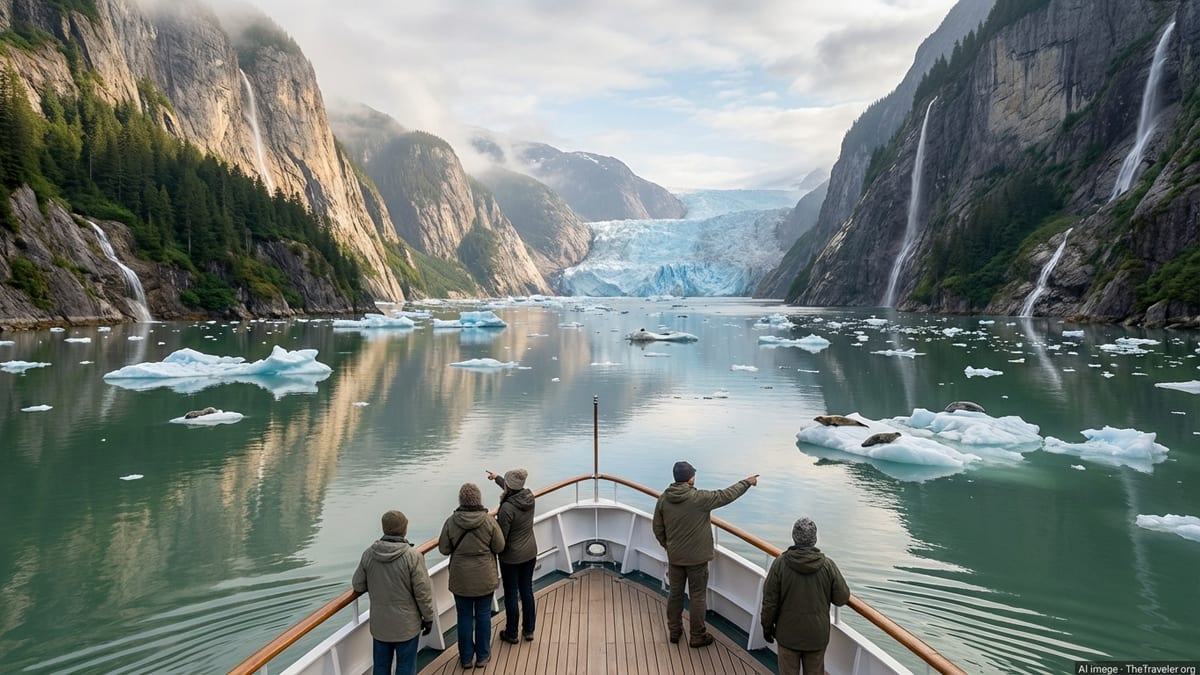
For many travelers, the defining Endicott Arm experience is the slow approach to Dawes Glacier, the active tidewater glacier that terminates at the head of the fjord. Ships and small boats edge carefully along iceberg dotted water as the walls of ice rise hundreds of feet above the surface, streaked with deep blue crevasses and bands of ancient compressed snow. Even on days when low clouds hang over the peaks, the glacier stands out in vivid color against the rock, and the scale of the ice becomes more dramatic with every nautical mile.
Most cruise itineraries treat this as a scenic cruising day, giving passengers several hours to watch the landscape transition from open passage to enclosed fjord and finally to the amphitheater like basin where Dawes Glacier dominates the view. The air temperature drops noticeably as you get closer, and even from the deck you can hear distant rumbles inside the ice. Guides and naturalists on many ships use this time to explain how the glacier has retreated and advanced over the years, why the ice appears blue and how the fjord itself was carved by the slow movement of earlier ice sheets.
Once the captain has maneuvered as close as ice conditions and regulations allow, the entire ship often falls into an attentive hush. Engines idle, and you can pick out individual crackles, pops and thunderous crashes as blocks of ice calve off the glacier’s face and plunge into the sea. It can be tempting to watch it all through a camera lens, but it is worth putting the phone or camera down for a few minutes to absorb the soundscape and the rare feeling of being in a frozen amphitheater far from roads or towns.
If you are sailing on a larger cruise ship, arriving on deck early helps secure a spot at the rail, but you can also find good vantage points on forward facing lounges or open bow areas where windshields cut the breeze. On smaller expedition vessels, the experience is more intimate by default, with fewer people lining the decks and more opportunities to shift from one side of the ship to the other as the boat slowly turns to give everyone a full sweep of the glacier.
2. Glide Past Icebergs and Waterfalls on a Scenic Cruise
Long before you reach Dawes Glacier, Endicott Arm delivers classic fjord scenery at a gentler pace. As your ship leaves Stephens Passage and turns into Holkham Bay, the water narrows and the first floating ice appears as small chunks scattered across the surface. Deeper into the fjord, these grow into larger bergy bits and glassy blue blocks, some sculpted into improbable shapes by melting and rolling. Captains weave through these ice fields with care, often throttling back to allow passengers to photograph particularly striking pieces as they drift past.
The fjord’s granite walls rise steeply on both sides, streaked with lichens and pockets of vegetation. In the peak melt season, dozens of thin waterfalls stream down from snowfields and side valleys, some dropping hundreds of feet in a single shimmering ribbon. On calm days the water is mirror like, reflecting both falls and cliffs and giving the impression of sailing through a double walled canyon. Cloudy conditions create an entirely different mood, with low clouds clinging to the rock faces and waterfalls emerging briefly from the mist before disappearing again.
Because Endicott Arm is within the Tracy Arm Fords Terror Wilderness of the Tongass National Forest, there are no settlements along its length, and boat traffic is generally limited to a handful of cruise ships, smaller expedition vessels and day boats. That relative quiet makes the scenic transit feel surprisingly tranquil. When engines slow, you can hear the soft clink of ice against the hull and the distant calls of seabirds echoing between the walls.
Whether you travel on a large ship or a small day boat from Juneau, the scenic flow of the journey is similar. The most dramatic light often arrives early in the morning or late in the evening during the main cruise season, when low sun angles bring rich colors to the rock and meltwater streams. Packing a warm, windproof layer lets you stay out on deck longer to watch the fjord change around every bend instead of retreating indoors when the air chills.
3. Kayak Among Ice Floes for a Closer Look at the Fjord
For those seeking a more active way to experience Endicott Arm, guided kayaking excursions offer an entirely different perspective on the fjord. Several small ship operators and adventure outfitters deploy kayaks from sheltered coves along Endicott Arm, typically well away from the hazardous zone near Dawes Glacier itself. From water level, the icebergs that looked modest from the ship suddenly loom large, and even smaller chunks reveal intricate textures, compressed bubbles and bands of crystalline blue.
Paddling in these cold, protected waters is usually done in stable sea kayaks, often with guests outfitted in dry suits or waterproof gear provided by the operator. Guides lead small groups through fields of floating ice, keeping a safe distance from larger bergs that might roll without warning. Progress is unhurried, with frequent stops to listen to the gentle tinkling of ice against the hull or to sit quietly while a waterfall thunders nearby. Because kayaks move almost silently, wildlife tends to tolerate them well, and it is not uncommon to find yourself drifting near seabirds resting on ice or seals surfacing at a respectful distance.
The sense of scale shifts dramatically in a kayak. Cliffs seem even higher, waterfalls more imposing, and the surface of the water feels alive with shifting pieces of ice and ripples from distant calving events. You will be paddling far from the glacier’s active face, but you still hear dull booms echoing down the fjord when larger pieces of ice break away. That sound, combined with the cold air and the low angle of your viewpoint, makes the fjord feel both intimate and immense at once.
Kayak outings in Endicott Arm are highly weather dependent, and operators adjust durations and routes based on wind, ice density and passenger experience. Even short paddles can be remarkably rewarding, especially if you combine them with time on the ship’s deck before and after to compare the different vantage points. If kayaking is important to you, look for itineraries that specifically mention paddle time in Endicott Arm or adjacent bays and be sure to confirm seasonal availability, as early season ice can sometimes limit where small craft can safely operate.
4. Join a Small Boat Excursion for Wildlife Spotting
While wildlife is visible from large cruise ships, small boat excursions give you a more flexible platform for spotting and lingering near animals. Some cruise lines and independent operators offer catamaran or covered jet boat trips that either replace the big ship’s entry into Endicott Arm or complement it, shuttling guests deeper into the fjord or to adjacent coves if ice conditions limit access. These vessels generally sit lower to the water and can pivot quickly when wildlife appears, which often means more time observing and less time waiting for the ship to turn.
Harbor seals are the signature mammals of Endicott Arm. They commonly haul out on low ice floes, especially in late spring and early summer when mothers use the ice as safe nursery platforms for young pups. Regulations require boats to maintain distance from designated pupping areas to avoid disturbance, so your view will likely be through binoculars or a zoom lens. Even at range, though, you can see seals rolling into the water, jostling for space on crowded floes and occasionally stretching or scratching in the weak sunshine.
Beyond seals, the broader Endicott Arm and nearby Holkham Bay region supports a variety of marine life. Humpback whales are often seen in the nearby passages during the cruise season, surfacing to feed or traveling in loose groups. Captains may adjust course if whales are spotted ahead, slowing engines so guests can watch blows, dorsal fins and flukes without feeling rushed. Orcas are less predictable but do pass through the area at times, and lucky guests on small boats occasionally report close but respectful views as pods travel along the fjord or across adjacent waters.
Birdlife rounds out the wildlife watching experience. Bald eagles perch in tall trees along the shore or soar overhead, scanning for fish or carrion on the tideline. Kittiwakes and other gulls circle near waterfalls and the glacier face, while various seabirds work the currents along the cliffs. Naturalist guides on many small boats are adept at spotting movement and will often call out sightings long before guests notice them. For keen observers, the combination of seals, occasional whales and abundant birdlife turns a scenic cruise into a full day of wildlife discovery.
5. Scan the Cliffs and Shores for Bears and Mountain Goats
Not all of Endicott Arm’s wildlife is in the water. The steep slopes and forested shorelines that frame the fjord also provide habitat for mountain goats and, in some areas, brown and black bears. Spotting them requires patience and a bit of practice, but with binoculars in hand and a willingness to scan slowly, you have a reasonable chance of seeing animals that many visitors never notice at first glance.
Mountain goats typically appear as small, bright white shapes against darker rock or vegetation. They favor high ledges and steep, broken terrain where their sure footed climbing skills give them an advantage. Look up rather than down, especially near cliffs that offer a mix of open rock and patches of greenery. On calm days you may even be able to see kids following adults along narrow ledges, stopping occasionally to graze.
Bears are more often seen near lower slopes and along beaches exposed at lower tides. In late spring and summer, they may forage on sedges and intertidal plants near the water’s edge or patrol small streams where salmon begin to appear later in the season. From a moving ship or boat, a bear can be easy to mistake for a dark rock, so experienced guides constantly scan the shoreline, pointing out movement that might otherwise be missed. All viewing is from the water, at distances that minimize any disturbance and prioritize safety for both people and wildlife.
Because these sightings depend heavily on season, time of day and simple chance, it helps to think of land mammal watching in Endicott Arm as a bonus rather than a guarantee. Even so, keeping an eye on the cliffs and beaches throughout the fjord adds a layer of anticipation to the cruise. Many travelers find that they begin the journey focused only on the glacier, but end it with lasting memories of an unexpected glimpse of a goat high on a ledge or a bear pacing a distant shoreline.
6. Experience the Fjord’s Silence and Changing Light on Deck
In an era of busy itineraries and constant digital connection, one of the underrated pleasures of Endicott Arm is the chance to simply stand outside and soak in a rare kind of quiet. As ships slow to navigate ice and narrow passages, the background hum of engines softens, and other sounds take over: the splash of small bergs against the hull, the drip of meltwater from overhead ice, the wingbeats of birds crossing from cliff to cliff.
Spending extended time on deck turns the fjord into a continuous unfolding rather than a series of brief visits to lookout points. Early risers can catch the first light filtering down the fjord, tinting peaks and clouds and sometimes revealing low lying fog in the distance. Later in the morning, as the sun climbs higher, waterfalls stand out more clearly and the subtle greens of the forested slopes deepen. By afternoon, if the sky clears, reflections on the water become sharper, and individual chunks of ice glow in shades of turquoise and white.
Weather in Southeast Alaska is famously changeable, and watching Endicott Arm through those shifts is part of the experience. A day that begins in drizzle and flat gray can brighten unexpectedly, revealing peaks that were hidden an hour before. Conversely, a sunny start may give way to low clouds that wrap the fjord in a moody, monochrome palette. There is no “perfect” weather here so much as a succession of moods, each with its own rewards for those who stay outside long enough to watch the changes unfold.
If your ship offers hot beverages or blankets on deck, take advantage of them to remain comfortable in the cold microclimate near the glacier. Even in midsummer, temperatures can feel brisk when combined with wind over the water. Dressing in layers, covering your head and hands and wearing shoes with good grip will help you move confidently between railings and higher observation decks as the ship slowly rotates to showcase different views.
7. Learn from Onboard Naturalists and Local Experts
A visit to Endicott Arm becomes richer when you understand the processes shaping the landscape and the human history tied to these waters. Many cruise lines and small ship operators bring naturalists, historians or local cultural interpreters onboard to provide commentary as the ship enters the fjord and approaches Dawes Glacier. These experts explain how the Tracy Arm Fords Terror Wilderness was designated to protect this region, outline the basics of glaciology and share stories about early exploration, Indigenous presence and more recent tourism.
Presentations often begin the day before or the morning of the fjord entry, using maps, photos and satellite images to help guests orient themselves. Once the ship is within Endicott Arm, narration moves outside or to public lounges with wide windows. Guides call attention to features that might otherwise be overlooked, such as distinctive rock formations, hanging valleys carved by smaller glaciers and fresh landslide scars that hint at ongoing erosion.
These interpretive programs also highlight the regulations and best practices that vessels must follow to minimize their impact. You may hear about voluntary speed reductions around marine mammals, distance limits near harbor seal pupping areas and waste management rules in sensitive waters. Understanding these behind the scenes efforts can make the experience feel more thoughtful and less like a simple sightseeing outing.
Even informal conversations with crew members can yield insights. Many have transited Endicott Arm numerous times over multiple seasons and can speak anecdotally about years with heavy ice, rare wildlife sightings or dramatic calving events they have witnessed. Taking the time to attend talks and ask questions transforms the cruise from passive viewing into a more engaged journey through a living, changing landscape.
8. Capture Responsible, Memorable Photography
Endicott Arm is a dream for photographers, from casual smartphone users to dedicated hobbyists with long lenses. The combination of ice, rock, water and shifting light offers almost endless compositions, but conditions can be challenging. Bright ice against darker cliffs can fool camera meters, moving boats introduce motion blur and cold temperatures sap battery life more quickly than usual. Preparing for these realities helps ensure that you come away with images that reflect what you saw and felt.
On large ships, space at the rail can be limited near peak viewpoints, so it is wise to scout multiple decks and vantage points early in the day. Sometimes a slightly higher position or a spot farther aft provides cleaner sightlines to both sides of the fjord. When photographing Dawes Glacier, consider alternating between wide shots that capture the full sweep of the ice face and tighter frames that show details like crevasses, seracs and calving action. Keeping your shutter speed reasonably high helps freeze both the motion of the ship and any sudden movement from falling ice or surfacing wildlife.
Wildlife photography in Endicott Arm works best with patience and respect. Zoom lenses allow you to keep your distance while still filling the frame with seals, birds or distant bears. Captains and naturalists will usually position the vessel to give good viewing without crowding animals, and it is important for guests to follow instructions about staying quiet or avoiding sudden movement near open viewing platforms. Flash is unnecessary and can be disruptive in low light conditions, so turning it off is a simple step toward more considerate observation.
For many travelers, the most meaningful photographs from Endicott Arm are not just dramatic glacier close ups but also small details and quiet moments: ice patterns near the bow, reflections of cliffs in still water, or a companion silhouetted against the fjord’s walls. Balancing time with the camera and time without it ensures that you leave with both strong images and clear memories.
The Takeaway
Endicott Arm offers a rare blend of accessibility and remoteness. In a single day, you can travel from a bustling cruise port into a wilderness fjord where the only sounds are ice, water and distant wildlife. The experience is more than a quick glacier photo stop; it is a gradual immersion in a landscape that is still being reshaped by ice and weather. Whether you spend your time on the main ship’s decks, venture out in a kayak or join a small boat excursion, each way of exploring reveals different facets of the same dramatic corridor.
Planning for cool, changeable weather, allowing plenty of time outdoors and approaching the trip with a flexible, observant mindset will help you make the most of this unique destination. From towering Dawes Glacier to the smallest harbor seal pup on a drifting floe, the true reward of Endicott Arm lies in paying attention to both the grand and the subtle. For many visitors, that combination of big scenery and intimate detail makes this fjord one of the most memorable highlights of an Alaska journey.
FAQ
Q1. Where is Endicott Arm and how do most visitors get there?
Endicott Arm is a fjord in Southeast Alaska, branching off from Holkham Bay south of Juneau within the Tongass National Forest. Most visitors reach it on cruise itineraries or small ship expeditions that include a day of scenic cruising into the fjord and up toward Dawes Glacier.
Q2. What is the best time of year to visit Endicott Arm?
The primary season runs from late spring through early fall, when cruise ships and small boats operate regularly and daylight hours are long. Wildlife activity, including harbor seal pupping and humpback whale sightings in nearby passages, typically peaks from late spring into mid summer, though timing can vary slightly year to year.
Q3. Can ships always reach Dawes Glacier at the head of Endicott Arm?
Access to the immediate area in front of Dawes Glacier depends on ice conditions, weather and operating guidelines. In many seasons, ships can approach relatively close, but in years with heavy ice or poor visibility captains may choose to stop farther down the fjord for safety. Even when that happens, the journey through Endicott Arm remains scenic and rewarding.
Q4. What wildlife am I most likely to see in Endicott Arm?
Harbor seals are commonly seen resting on ice floes, especially in late spring and early summer. Bald eagles, various seabirds and occasionally mountain goats on the cliffs are also typical sightings. Humpback whales are more often spotted in the nearby open passages, but some itineraries include time in those waters the same day as Endicott Arm.
Q5. Is kayaking in Endicott Arm suitable for beginners?
Many guided kayaking experiences in Endicott Arm are designed with beginners in mind and use stable sea kayaks, with guides providing basic instruction and safety briefings. Conditions can be cold and occasionally choppy, however, so comfortable layering, a willingness to follow guide instructions and a reasonable level of mobility are important.
Q6. How cold does it feel near Dawes Glacier?
Even in midsummer, the air near the glacier can feel markedly cooler than in nearby ports, with temperatures often in the single digits to low teens Celsius and an added chill from wind over the water. Dressing in layers, including a warm hat, gloves and windproof outer shell, helps you stay comfortable on deck for extended viewing.
Q7. Do I need special equipment for wildlife viewing and photography?
You do not need specialized gear, but binoculars and a camera with some zoom capability make a noticeable difference, especially for viewing seals, birds and distant bears. Extra batteries, lens cloths and weather protection for electronics are sensible additions in this damp, cool environment.
Q8. Are there any hiking opportunities in Endicott Arm itself?
Endicott Arm is primarily a water based destination, with steep, roadless terrain and protected wilderness limiting land access. Most itineraries focus on shipboard viewing, small boat excursions and kayaking rather than onshore hiking. Travelers seeking hikes often combine an Endicott Arm visit with time ashore in ports like Juneau or Skagway.
Q9. How can I minimize my environmental impact while visiting?
Following crew instructions, avoiding litter, using reusable bottles and mugs and keeping noise low around wildlife all help reduce your individual footprint. Choosing operators that highlight responsible practices, such as respecting distance guidelines around seals and whales, further supports conservation efforts in this sensitive fjord.
Q10. What should I pack specifically for a day in Endicott Arm?
In addition to your usual cruise clothing, plan on a warm hat, gloves, layered clothing, a waterproof outer shell, non slip shoes, sunscreen and sunglasses. A small day pack for camera gear, binoculars and an extra layer makes it easy to move between indoor and outdoor spaces as conditions change.