

Milwaukee is a city shaped by water, industry, and waves of immigration, and you feel that legacy the moment you step onto its lakefront or wander its historic streets. From sleek modern museums fronting Lake Michigan to 19th century warehouse districts reborn as creative hubs, this Great Lakes city layers old and new in a way that rewards slow exploration. Whether you are here for a weekend or a full week, these are ten of the best things to do in Milwaukee, stretching from the shoreline to some of its most atmospheric historic neighborhoods.
Stroll the Lakefront and Lakeshore State Park
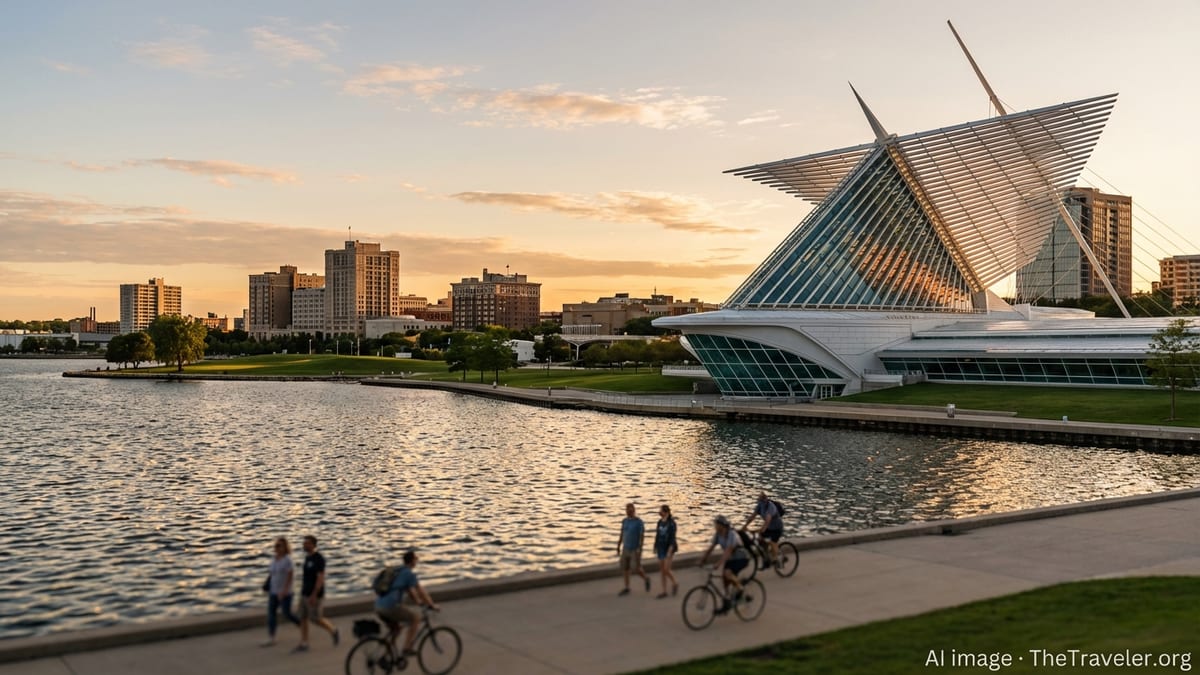
Milwaukee’s relationship with Lake Michigan is central to the city’s identity, and the lakefront is where many visitors fall for the city. A sweep of shoreline paths, green space, and cultural institutions gives you multiple ways to experience the water, whether you are walking, cycling, or simply sitting on a bench watching sailboats move across the horizon. The light here changes constantly, with soft pastels at sunrise, bold blues at midday, and fiery skies on clear evenings.
One of the best vantage points is Lakeshore State Park, a compact 22 acre urban state park set on a man made peninsula just offshore from downtown. The park’s paved trails curve around restored prairie plantings and a small pebble beach, offering sweeping views back to the skyline and north along the coast. Because it is relatively small and surrounded by water, it feels like a quiet retreat even when the nearby city is busy with events and traffic.
Plan at least an hour to wander the shoreline paths, take photos of the city framed by the lake, and watch locals jogging, fishing, or commuting by bike. In summer, the lakefront hosts major festivals and fireworks, while in winter the same spaces feel spare and atmospheric, with ice forming along the rocks and cold waves rolling in from the east. Dress for the wind in any season, because the breeze coming off Lake Michigan can feel noticeably cooler than temperatures a few blocks inland.
If you enjoy combining nature with city views, time your walk to coincide with sunrise or sunset. Early mornings tend to be quiet, with dog walkers and runners sharing the paths, while evenings can feel festive, especially on weekends. From here you can easily connect to other waterfront highlights, including the Milwaukee Art Museum, Discovery World, and the gateway to the Historic Third Ward.
Admire the Milwaukee Art Museum and Signature Architecture
Few buildings define modern Milwaukee as powerfully as the Milwaukee Art Museum, which sits like a gleaming white sculpture on the lakefront. The museum’s Quadracci Pavilion, designed by Santiago Calatrava, is instantly recognizable for its winglike movable sunscreen that stretches out over a glass atrium. Seen from the lake or from the shoreline paths, it gives Milwaukee a strikingly contemporary profile that contrasts with the city’s brick industrial heritage.
Inside, the museum holds a broad collection that ranges from European and American paintings to decorative arts and contemporary works, plus a respected photography collection. Even casual museum goers tend to be drawn in by the bright, airy interiors and the way natural light filters through the glass. You can spend an entire afternoon moving between galleries, pausing for views back out to Lake Michigan, or simply buy a ticket to explore the building itself if you are short on time.
Architecture fans will find more to appreciate beyond the main pavilion. Bridges and walkways connect the museum complex to the rest of downtown, offering framed views of both the building and the water. Nearby, the War Memorial Center and other mid 20th century structures create an interesting dialogue between concrete modernism and Calatrava’s expressive curves. Walking the grounds gives you a close look at how the museum anchors this stretch of the lakefront.
For photographers, mid morning and late afternoon usually provide the most flattering light on the building’s white surfaces. If you happen to visit when the museum’s movable “wings” are in motion, the experience becomes even more memorable. Even if your trip to Milwaukee is brief, carving out time for at least an exterior visit to the art museum is one of the best ways to understand how the city has reinvented its waterfront.
Follow the Milwaukee Riverwalk Through the Heart of the City
Linking the lakefront to several historic neighborhoods, the Milwaukee Riverwalk is one of the most enjoyable ways to experience the city at street level. This continuous pedestrian path traces the Milwaukee River as it curves through downtown, with sections that feel alternately urban, residential, and quietly scenic. Along the way you pass outdoor art, pocket parks, cafes, and boat docks, all set against the backdrop of historic buildings that reflect the city’s industrial past.
Originally conceived in the 1990s and extended over the years, the Riverwalk now stretches from the Historic Third Ward north toward Brady Street and south toward the Menomonee Valley. It also connects to trails leading to Lakeshore State Park and other lakefront destinations. The effect is a kind of linear park that invites wandering and spontaneous stops, whether you are drawn to a riverside patio, a small gallery, or the bronze sculptures that line parts of the route.
Daytime walks showcase activity on the water, with kayakers, tour boats, and pleasure craft passing beneath low bridges. At night, building lights reflect in the river, and the atmosphere shifts toward cozy and intimate, especially in stretches lined with restaurants and bars. Benches and overlooks provide places to pause and watch the city move around you, making the Riverwalk a good choice for families, couples, and solo travelers alike.
Because the Riverwalk intersects with several major streets, it is easy to use it as a spine for exploring nearby attractions. You can start near the lakefront, follow the path into downtown, detour into the Old World Third Street area for a taste of Milwaukee’s German heritage, then continue on toward the Historic Third Ward or north toward more residential neighborhoods. Comfortable shoes and a flexible schedule are all you need.
Explore the Historic Third Ward: Warehouses to Creative Hub
South of downtown and adjacent to the lakefront, the Historic Third Ward has transformed from a 19th century warehouse and industrial zone into one of Milwaukee’s liveliest neighborhoods. Brick buildings that once stored wholesale groceries and manufactured goods now house art galleries, boutiques, lofts, theaters, and some of the city’s most talked about restaurants. Walking its streets provides a compact lesson in urban renewal, with restored facades and cobbled alleys that still feel connected to the district’s working past.
The neighborhood’s evolution into an arts and fashion district is evident in the storefronts lining Broadway, Menomonee, and St. Paul. Independent designers share blocks with long standing local businesses and national brands, while galleries open their doors for evening events and neighborhood festivals. In warm weather, outdoor patios fill with diners and shoppers, and public art and seasonal decorations add to the sense of energy.
At the heart of the district sits the Milwaukee Public Market, a glass fronted building that brings together local food vendors under one roof. Inside, you can sample everything from fresh seafood and baked goods to Wisconsin cheeses, chocolates, and global street foods. The market has become both a lunch stop for office workers and a destination in its own right, especially for visitors who want a quick survey of the region’s flavors.
Give yourself several hours in the Historic Third Ward to wander side streets, step into galleries, and linger over a coffee or drink. The neighborhood’s easy walkability, combined with its proximity to the lakefront and Riverwalk, makes it an ideal base for a stay in Milwaukee or a natural focal point for a day of exploring. If you enjoy photography, the contrast of red brick buildings, painted signs, and modern design details offers countless compositions.
Discover Old World Third Street and Milwaukee’s German Heritage
Northwest of the river’s main downtown crossings, Old World Third Street preserves a stretch of 19th century commercial buildings that once anchored Milwaukee’s German business district. Many facades here date back to the Victorian era, with cream city brick, decorative cornices, and narrow, tall profiles that give the street a distinctly European feel. Today the area blends historic architecture with restaurants, specialty shops, and bars that nod to the city’s German roots.
Walking this historic district, you will notice details like carved window lintels, brickwork patterns, and painted signage that hint at the businesses that once operated here. While the tenants have changed over time, the overall scale and rhythm of the street has remained remarkably intact. That continuity gives Old World Third Street a slightly time capsule quality, especially in contrast to the larger modern buildings and sports venues that now surround it.
The neighborhood remains one of the best places in Milwaukee to experience traditional German inspired dining and culture, from long running restaurants serving classic dishes to shops specializing in sausages and long established brands associated with the city’s brewing history. Even if you are not sitting down for a full meal, it is worth stopping in for a pastry, a pretzel, or a beer to soak up the atmosphere.
Thanks to its central location, Old World Third Street pairs easily with other downtown stops, including the Riverwalk, the Fiserv Forum area, and the Brewery District housed in former Pabst brewery buildings uphill to the west. Visit by day for architectural detail and quieter streets, or return in the evening when the district’s bars and restaurants are at their busiest and the old brick facades glow under warm lighting.
Tour Milwaukee’s Brewery District and Celebrate Beer Culture
Milwaukee’s reputation as “Brew City” is rooted in the major 19th century breweries that once lined its riverbanks and industrial corridors. That legacy is on vivid display in the Brewery District, a redeveloped neighborhood on the historic Pabst Brewing Company campus just northwest of downtown. Here, restored brewhouses, bottling plants, and offices have been converted into apartments, hotels, university space, event venues, and modern breweries, creating a compact district where the past is visible at every turn.
Wandering the streets of the Brewery District, you move between stout brick buildings with ornate details and contemporary infill architecture that respects the original industrial character. Many structures carry dates and old company names in their masonry, providing context as you explore. Interpretive signs, murals, and public art installations help tell the story of how beer production shaped Milwaukee’s growth and how adaptive reuse has given these structures new life.
For visitors, the appeal of the Brewery District lies both in its atmospheric streetscape and in its current mix of businesses. Craft breweries and taprooms pour everything from experimental ales to classic lagers. Restaurants and bars often occupy former brewing spaces, letting you sip or dine beneath high ceilings and exposed beams that once supported industrial equipment. With the nearby Deer District and sports arena drawing crowds for games and concerts, the Brewery District has become part of a larger walkable entertainment zone.
If you are particularly interested in beer history, consider pairing a visit here with tours of other local breweries elsewhere in the city, including long established operations and newer craft producers. Many offer guided tours that explain brewing processes, highlight sustainability initiatives, and explore how Milwaukee’s beer scene continues to evolve. Remember to plan transportation accordingly if you intend to sample widely.
Experience Walker’s Point and the Evolution of a Working Class Neighborhood
Just south of downtown across the Menomonee River, Walker’s Point is one of Milwaukee’s oldest neighborhoods and a place where historic housing, former factories, and contemporary restaurants stand side by side. This mixed use district developed in the 19th century as a working class community anchored by industry, including breweries, tanneries, and warehouses. Much of that historic fabric remains intact, which has helped Walker’s Point earn recognition for its architectural cohesion and sense of place.
Today, the area is known for its dynamic dining scene and creative businesses, many of which have moved into renovated industrial buildings and storefronts. You can walk blocks lined with modest workers’ cottages, turn a corner, and find yourself in front of a former factory now housing offices, a distillery, or a design studio. The juxtaposition of old and new gives Walker’s Point a slightly edgy, exploratory feel that appeals to travelers who like neighborhoods with a bit of grit alongside their charm.
The neighborhood’s long history of immigration, including German, Polish, and later Latin American communities, is reflected in its churches, cultural institutions, and restaurants. Murals and public art along major streets add color and tell stories of activism, labor, and community pride. If you enjoy understanding cities through their everyday spaces rather than just marquee attractions, Walker’s Point offers an excellent window into how Milwaukee has changed and how it continues to reinvent itself.
Walker’s Point is close enough to downtown that you can reach it on foot from the Historic Third Ward or the lakefront, especially in good weather. Once there, explore side streets without a strict plan, stopping at cafes, shops, or breweries that catch your eye. As with many transitioning neighborhoods, the pace can feel different block to block, so give yourself time to adjust and appreciate the area’s layered history.
Soak Up Festival Culture at Henry Maier Festival Park
Few American cities embrace festivals with the enthusiasm of Milwaukee, and the heart of that culture is Henry Maier Festival Park on the lakefront. Best known as the home of Summerfest, a major multi day music festival held annually, the park also hosts a series of ethnic and cultural festivals throughout the warmer months. When events are underway, the grounds fill with stages, food vendors, and crowds that reflect Milwaukee’s diverse communities and love of live performance.
The park’s location along Lake Michigan adds to the appeal. Even during busy events, you can often find spots with open views of the water, especially along the outer edges of the grounds. Breezes off the lake help keep summer temperatures more comfortable, and sunsets here can be spectacular, especially when paired with live music in the background. When the schedule is less full, portions of the park are quieter, giving you a chance to appreciate the infrastructure that makes such large gatherings possible.
If your visit to Milwaukee coincides with one of the major festivals, it is worth checking the current lineup, admission policies, and hours before you go, as these details can change from year to year. Ticketing for headlining concerts, bag policies, and public transit options are all factors to consider. On high demand dates, local hotels can book up quickly, so planning well in advance is wise if attending a specific event is a priority.
Even if you do not enter the park itself, walking the adjacent lakefront and nearby neighborhoods during festival season offers a sense of the city’s celebratory atmosphere. You may hear music drifting over the water, see boats anchored offshore to listen from a distance, or encounter food trucks and pop up events around the perimeter. For many locals, the festival season marks the highlight of the year, and visitors are readily welcomed into that tradition.
The Takeaway
Milwaukee rewards travelers who are willing to look beyond quick stereotypes of an industrial “brew city” and spend time along its waterfront and in its historic neighborhoods. From the broad sweep of Lake Michigan and the sculptural presence of the Milwaukee Art Museum to the brick streets of the Historic Third Ward, Old World Third Street, Walker’s Point, and the Brewery District, the city reveals itself as a place that values both preservation and reinvention.
Exploring on foot is one of the best ways to absorb that character, especially along the Riverwalk and the lakefront paths that connect major attractions. Between stretches of walking, you can experience a thriving food and drink scene, from traditional German and Central European fare to global cuisines and cutting edge breweries. Seasonal festivals at Henry Maier Festival Park and neighborhood events add another layer, showcasing the community spirit that keeps locals engaged year round.
Whether you are visiting for a weekend getaway, a business trip with spare hours, or a longer stay, anchoring your plans around these ten experiences will give you a strong first introduction to Milwaukee. You will come away with a sense of the city’s maritime setting, immigrant histories, and creative present, plus a list of reasons to return. Many visitors find that once they have walked the lakefront and wandered through the historic districts, Milwaukee feels less like a discovery and more like a city they are eager to get to know better.
FAQ
Q1. When is the best time of year to visit Milwaukee for lakefront activities?
The most popular months for lakefront walks, outdoor dining, and festivals are typically late May through September, when temperatures are mild to warm and many seasonal events are scheduled.
Q2. Can I explore Milwaukee’s lakefront and historic districts without a car?
Yes. The lakefront, Riverwalk, Historic Third Ward, Old World Third Street, and parts of Walker’s Point and the Brewery District are all walkable from downtown, and local transit or rideshares can fill any gaps.
Q3. How much time should I plan for the Milwaukee Art Museum?
Many visitors are satisfied with two to three hours, which allows time to appreciate the architecture and see selected galleries. Art enthusiasts may prefer a half day to explore more thoroughly.
Q4. Is the Milwaukee Riverwalk suitable for families with children?
The Riverwalk is generally family friendly, with wide paths, railings in most sections, and frequent access points. As with any waterfront area, adults should keep a close eye on young children near the water’s edge.
Q5. What should I know before visiting the Historic Third Ward?
Expect a lively mix of shops, galleries, and restaurants in converted warehouses. Weekends and evenings can be busy, so consider making dining reservations and allowing extra time for parking if you are driving.
Q6. Are there guided tours of Milwaukee’s brewery heritage?
Several breweries and tour operators offer guided experiences that cover both historic facilities and modern craft producers. Schedules and offerings change periodically, so it is wise to check current options before your trip.
Q7. Is Walker’s Point safe to visit for out of town travelers?
Walker’s Point is a popular dining and nightlife area that attracts both locals and visitors. As in any urban neighborhood, staying aware of your surroundings, sticking to well traveled streets, and using common sense at night are good practices.
Q8. Do I need tickets in advance for events at Henry Maier Festival Park?
Advance tickets are strongly recommended for large festivals and headlining concerts, as popular dates can sell out. Smaller events sometimes offer same day admission, but checking the latest details before you go is important.
Q9. What should I pack for a visit to Milwaukee’s lakefront?
Layers are useful in most seasons, since temperatures near Lake Michigan can feel cooler than inland. Comfortable walking shoes, a light jacket or windbreaker, and sun protection are all practical choices.
Q10. How many days do I need to experience the highlights covered here?
A two to three day stay allows enough time to see the lakefront, visit the art museum, walk the Riverwalk, and explore one or two historic districts. With four or more days, you can move at a more relaxed pace and delve deeper into specific neighborhoods.