

New England’s food culture is shaped by cold Atlantic waters, rocky soil, Native American traditions, and waves of immigrant influence. The result is a regional cuisine that is hearty, resourceful, and deeply tied to place. Whether you are road‑tripping the coast or visiting for a weekend, these eight classic New England foods will give you a true taste of the region’s history and daily life.
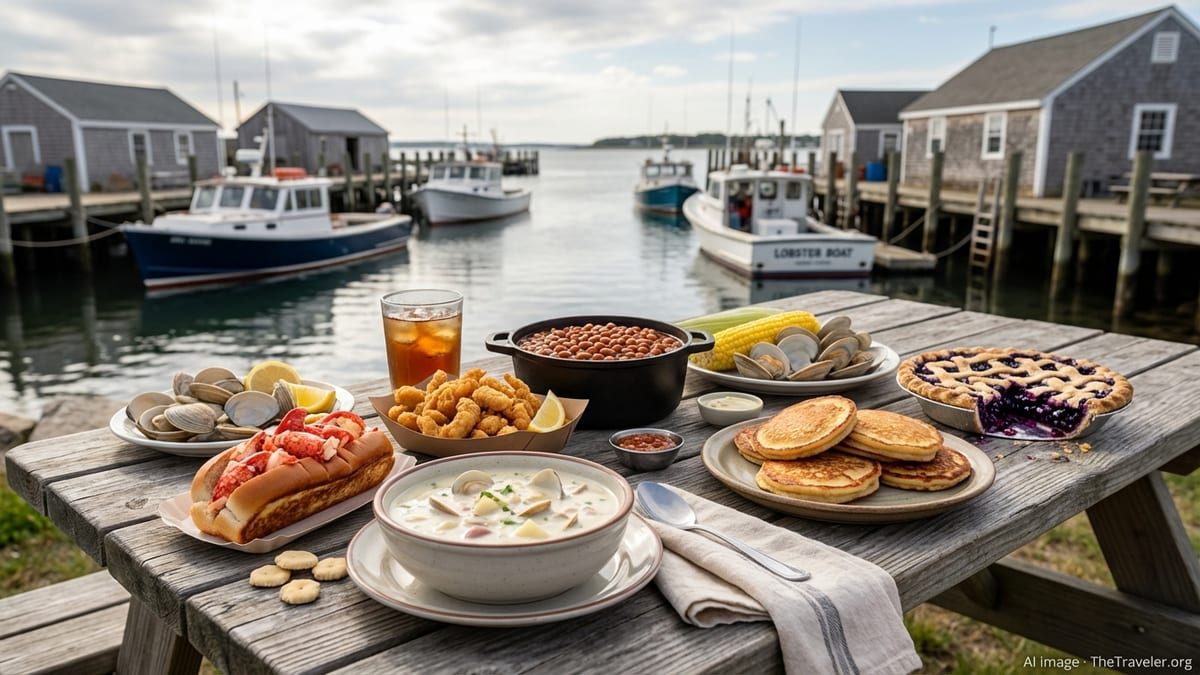
1. Creamy New England Clam Chowder
If there is one dish that captures the flavor of coastal New England, it is a steaming bowl of New England clam chowder. Unlike the tomato-based Manhattan version, New England chowder is thick and creamy, built on a base of milk or cream, potatoes, onions, and chopped clams. Many versions also include salt pork or bacon for a smoky depth that pairs naturally with the briny clams.
You will see chowder on menus from roadside clam shacks in Maine to white‑tablecloth seafood houses in Boston and Newport. Styles vary slightly by state: some kitchens favor an ultra‑thick, almost stew‑like chowder, while others keep it looser and more brothy. In parts of Rhode Island, clear clam chowder made with clam broth instead of milk is still traditional, and some restaurants offer both creamy and clear versions.
Locals usually order a cup as a starter or a bowl as a full meal, often with oyster crackers scattered on top. In winter, it is comfort in a cup after a cold harbor walk; in summer, it is classic fare alongside fried clams and lobster rolls. If you are sensitive to richness, ask whether the chowder is cream‑ or milk‑based and whether it includes bacon, as recipes differ from one kitchen to another.
2. The Iconic Lobster Roll
No New England food tour feels complete without a lobster roll. Sweet chunks of lobster, usually claw and knuckle meat, are piled into a split‑top New England hot dog bun that has been buttered and toasted. The sandwich is simple by design, created to showcase the natural sweetness of the lobster rather than bury it under heavy sauces.
The biggest choice you will face is style. In much of Maine, the lobster is chilled and lightly dressed with mayonnaise, sometimes with a hint of celery or lemon. In parts of Connecticut and coastal Massachusetts, you will find warm lobster tossed with melted butter and served in the same toasted bun. Both are considered authentic, and locals argue passionately about which is better; many visitors end up trying one of each.
You will pay more for a lobster roll than for most sandwiches, since lobster itself is a premium ingredient, and prices can fluctuate with the catch. To make the splurge count, look for places that advertise using fresh, locally landed lobster rather than pre‑packaged meat. Expect to eat your roll outside at a picnic table overlooking a harbor or marina, quite possibly with seagulls circling hopefully and a side of coleslaw or potato chips on the tray.
3. Boston Baked Beans and Brown Bread
Boston’s nickname, “Beantown,” is rooted in a dish that dates back to colonial times: Boston baked beans. Early New Englanders adapted Native American cooking methods, slow‑baking beans in covered pots. Over time, the dish evolved into navy beans baked gently with molasses, salt pork, and mustard. Long, slow cooking transforms the beans into something silky, slightly sweet, and deeply savory.
Traditional recipes were often prepared on Saturdays and left to cook slowly so families would have a hearty meal ready without working on Sundays. Today, you will still find Boston baked beans at old‑school restaurants, neighborhood diners, and community suppers. They are commonly served alongside hot dogs, ham, or roast beef, and they also appear on breakfast plates in some parts of New England.
A classic pairing for baked beans is New England brown bread, a dense, slightly sweet loaf made with rye, whole wheat, and cornmeal. It is often steamed rather than baked, sometimes even sold in cans, resulting in a moist, almost cake‑like texture. Slices are typically served warm with butter and a scoop of beans on the side, offering a glimpse into the thrifty, filling meals that sustained families through long winters.
4. Fried Clams and Seaside Shack Culture
Fried clams are another staple of New England’s shoreline. Soft‑shell clams, often called “steamers,” are dipped in a light batter or breading and fried until crisp, then served with lemon wedges and tartar sauce. The result is a mix of crunch and briny sweetness that tastes best within sight of the ocean.
The modern fried clam is widely associated with early 20th‑century clam shacks in coastal Massachusetts, and the tradition has spread all along the New England seaboard. Today, you can order fried whole‑belly clams, which include the flavorful belly, or clam strips, which are made from sliced surf clams and have a milder flavor and firmer texture. Whole‑bellies are prized by purists, while strips can be a gentler introduction for first‑timers.
Part of the appeal is the setting. Many beloved clam spots are unpretentious roadside stands with walk‑up windows, picnic tables, and views of tidal marshes or fishing piers. Lines can be long on summer weekends, especially at places that have built reputations over decades. For the most authentic experience, time your visit for a sunny afternoon, order a plate of fried clams with a side of fries or onion rings, and eat outdoors with a sea breeze at your back.
5. Rhode Island Johnnycakes
While many New England classics are seafood‑centric, Rhode Island is famous for a humble cornmeal griddlecake known as the johnnycake. The recipe has Native American roots and typically uses stone‑ground white flint cornmeal, water or milk, and salt. The batter is cooked on a hot griddle until the edges crisp and the center stays tender.
Johnnycakes are deceptively simple, yet fiercely debated. Across Rhode Island, you will find regional variations in thickness, sweetness, and whether milk or water is used. In some coastal areas, the cakes are thinner and crispier, while in other parts of the state they are thicker and almost biscuit‑like. Historic societies and local festivals still celebrate the dish, underscoring its role as a symbol of Rhode Island’s culinary heritage.
Today, johnnycakes are most often served for breakfast or brunch with butter and maple syrup, though historically they accompanied savory dishes like baked beans. If you are curious to taste them at their best, seek out diners and family‑run restaurants that highlight local cornmeal and list johnnycakes by name on the menu. The combination of nutty corn flavor and griddle‑seared crust offers a distinct contrast to fluffy wheat‑based pancakes.
6. New England Boiled Dinner and Yankee Thrift
New England boiled dinner is a hearty, one‑pot meal that reflects the region’s resourcefulness and strong ties to Irish and other European immigrant traditions. At its core, it is a platter of corned beef simmered with root vegetables such as potatoes, carrots, turnips, and cabbage until everything is tender and infused with the meat’s salty richness.
This is classic cold‑weather fare, often served around St. Patrick’s Day but eaten throughout the year in many homes and diners. The cooking liquid is sometimes reserved for making soups, and leftovers are famously turned into red flannel hash, where chopped corned beef and vegetables, often with beets for color, are crisped in a skillet for breakfast the next day. This secondary dish underscores how New England cooks historically stretched ingredients to feed large families.
On a menu, you will typically see New England boiled dinner described straightforwardly, sometimes with side condiments like mustard, horseradish, or vinegar. Portions tend to be generous, so it can be a good choice to share. If you enjoy pot roast or other slow‑cooked comfort food, this dish offers a similar sense of warmth, with the subtle sweetness of long‑simmered vegetables balancing the saltiness of the corned beef.
7. Wild Blueberry Pie and Maple‑Sweet Desserts
After all the chowder and seafood, dessert in New England often leans on two signature ingredients: wild blueberries and maple syrup. In Maine and parts of northern New England, wild lowbush blueberries thrive in the cool climate and acidic soil. They are smaller and often more intensely flavored than cultivated berries, which makes them ideal for baking into pies and crisps.
A classic wild blueberry pie usually features a flaky, buttery crust, a filling of berries lightly sweetened and thickened, and sometimes a lattice top. Served warm with a scoop of vanilla ice cream, it is a highlight of many summer menus and roadside farm stands. While exact harvest times vary year to year, local bakeries and cafes typically feature wild blueberry pies and muffins during the peak season, then rely on frozen berries for off‑season baking.
Maple syrup, produced from the sap of sugar maples in late winter and early spring, also shapes the region’s sweets. Beyond pancakes and waffles, maple is used to flavor candies, frostings, and baked goods, and appears in savory dishes as a subtle glaze. Visiting a sugarhouse during sugaring season can offer a deeper look at how this staple is made, and many operations sell maple candy, maple cream, and maple‑sweetened treats to take home as edible souvenirs.
8. New England Clambake Experience
More than a single dish, the New England clambake is a full culinary event that showcases the region’s connection to the sea. Traditionally held on a beach, a clambake involves heating stones over a wood fire, lining a pit with seaweed, and layering in shellfish such as clams, mussels, and lobsters along with corn on the cob, potatoes, and sometimes sausages or eggs. Everything is covered with more seaweed and tarps, then left to steam.
While true pit‑style clambakes are less common in everyday restaurant service, the tradition remains strong at coastal resorts, seasonal festivals, community fundraisers, and catered events. Many restaurants offer a “clambake” platter that mimics the ingredients and flavors, swapping the beach pit for large steam pots in the kitchen. The result is a feast where guests crack their own lobsters, peel back ears of corn, and share platters of shellfish at picnic tables or long communal tables.
For travelers, joining a clambake can be a memorable way to meet locals and experience regional hospitality. The format encourages a relaxed pace and plenty of conversation, and there is usually a range of sides such as coleslaw, rolls, and seasonal desserts. If you see a clambake advertised during your visit, booking ahead is wise, as these events often sell out, especially in the height of summer.
The Takeaway
Tasting New England’s classic foods is as much about understanding the region’s history as it is about satisfying your appetite. From Native American corn traditions in Rhode Island johnnycakes to Irish‑influenced boiled dinners and seafood‑rich chowders along the coast, each dish reveals how people adapted to the land and sea over centuries.
Seek out independent diners, clam shacks, bakeries, and community events where these recipes are still made with care. Menus evolve and chefs put their own spin on tradition, but the core flavors remain familiar: briny clams, sweet lobster, slow‑cooked beans, fresh cornmeal, and bright wild blueberries. With just a few well‑chosen meals, you can experience a cross‑section of New England life, one plate at a time.
FAQ
Q1. What is the difference between New England and Manhattan clam chowder?
New England clam chowder is cream‑based and usually thick, with milk or cream, potatoes, and clams. Manhattan clam chowder has a tomato‑based broth and is generally lighter.
Q2. Is there a best season to visit New England for food?
Seafood, including lobster rolls and fried clams, is widely available in warmer months, while maple products and boiled dinners feel especially fitting in late winter and early spring. Summer and early fall offer the broadest range of seasonal ingredients.
Q3. Are lobster rolls always expensive?
Lobster rolls are typically a premium item because lobster itself is costly, and prices can change with supply. You can sometimes find smaller portions or off‑peak specials, but it is wise to budget a bit extra for this regional treat.
Q4. What should I order if I do not like seafood?
Look for New England boiled dinner, Yankee pot roast, baked beans with brown bread, johnnycakes, and maple‑ or blueberry‑based desserts. Many diners and taverns feature these non‑seafood classics.
Q5. Are Rhode Island johnnycakes gluten‑free?
Traditional johnnycakes are made primarily from cornmeal and do not rely on wheat flour, but recipes vary. If you need to avoid gluten, confirm ingredients with the restaurant before ordering.
Q6. How can I find an authentic clambake as a visitor?
During summer, coastal towns often host ticketed clambake events through resorts, local organizations, and tour operators. Visitor centers and hotel concierges are useful resources for current options.
Q7. Is New England cuisine suitable for vegetarians?
Many signature dishes feature seafood or meat, but vegetarians can usually find options such as baked beans, brown bread, salads, vegetable sides, and desserts like blueberry pie. Some restaurants also offer meat‑free chowders or hearty grain dishes.
Q8. What is the difference between wild and cultivated blueberries in pies?
Wild blueberries common in northern New England are smaller and often more intensely flavored, leading to a slightly denser, more vivid pie filling than pies made with larger cultivated berries.
Q9. Do I need to tip at clam shacks and casual seafood stands?
Customs vary. Many counter‑service places have tip jars or digital tipping options. Leaving a modest tip is appreciated, especially at busy seasonal businesses, but you can follow local norms and posted guidance.
Q10. Can I bring these foods home as souvenirs?
Certain products travel well, such as canned clam chowder, maple syrup, maple candy, cornmeal mixes, and packaged blueberry jams. Fresh seafood and prepared hot dishes are more difficult to transport safely, so check local shops for shelf‑stable regional specialties.