

Nanaimo, perched on the east coast of Vancouver Island, is far more than a ferry gateway. This harbour city and its surroundings deliver a mix of Indigenous culture, marine wildlife, creative food, and mossy old-growth forests within easy reach of downtown.
Whether you are in town for a weekend or building a longer Vancouver Island itinerary, these eight experiences and activities in Nanaimo and nearby will help you see the region at its best.
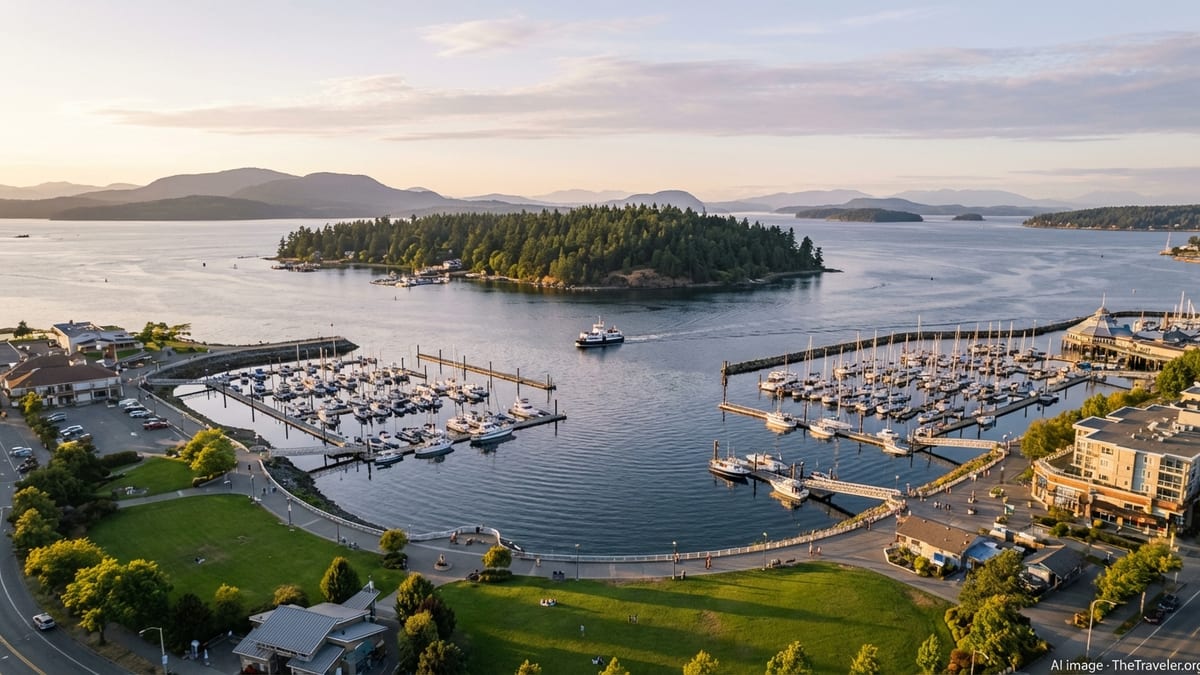
1. Explore the Working Harbour and Waterfront Parks
Nanaimo’s waterfront is the city’s living room, a place where floatplanes skim the harbor, fishing boats unload their catch, and locals stroll seaside paths at sunset. Start your visit here to get a sense of place, then branch out to nearby islands and viewpoints.
Stroll the Harbourfront Walkway
The Harbourfront Walkway traces the shoreline past marinas, public art, and pocket parks, with views across to coastal mountains on the mainland. It is an easy, largely flat walk that works well on arrival day, especially if you have just stepped off a ferry or seaplane and want to stretch your legs.
Plan to wander between Maffeo Sutton Park and the downtown piers, detouring for coffee, ice cream, or a classic Nanaimo bar from one of the cafes along the way. Benches and grassy knolls make it simple to pause and watch harbor life unfold, from tugs moving log booms to kayakers slipping past under a changing sky.
Relax in Maffeo Sutton Park
Maffeo Sutton Park, a short walk from downtown, is Nanaimo’s main waterfront green space and a natural gathering point for families. Children’s playgrounds, open lawns, and a small swimming beach give it the feel of a neighborhood park, while regular festivals, concerts, and community events add energy through the warmer months.
The park is also the departure point for the small passenger ferry to Saysutshun (Newcastle Island), so it is an ideal place to combine a picnic, a harbor walk, and an island excursion in a single day. Arrive early in peak summer to secure parking and a shady spot.
2. Experience Snuneymuxw Culture on Saysutshun (Newcastle Island)
Across a narrow channel from downtown, Saysutshun, also known as Newcastle Island, is a marine provincial park and a place of deep cultural significance for the Snuneymuxw First Nation. Visiting the island adds depth to any Nanaimo trip, pairing coastal scenery with stories that long predate the city’s colonial history.
Join a Cultural Interpretive Walking Tour
Guided cultural walking tours led by Snuneymuxw guides introduce visitors to sacred village sites, oral traditions, and traditional plant knowledge on Saysutshun. These small-group experiences typically follow easy forest and shoreline trails, pausing at sites where carvings, middens, and medicines reveal a much older Nanaimo than the modern harbor suggests.
On a typical tour, you might learn about the significance of certain coves and clearings, hear teachings passed down through generations, and gain context for regional landmarks you will see later in your travels. Advance booking is essential, as tours operate seasonally and depend on guide availability.
Hike, Cycle, or Paddle Around the Island
Outside of guided tours, Saysutshun offers a network of gentle trails that loop around beaches, bluffs, and second-growth forest. A well-known route circles the island’s perimeter, with views back to Nanaimo’s skyline and north toward the coastal mountains. The paths are suitable for most fitness levels and are especially atmospheric in early morning or late afternoon light.
Bikes and kayaks can often be rented in Nanaimo, allowing you to combine a short ferry crossing with a self-guided circuit. After your outing, pause at the island’s day-use areas or seasonal bistro for simple fare before returning across the channel.
3. Go Whale Watching and Marine Wildlife Spotting
The waters off Nanaimo sit within the wider Salish Sea, one of the richest marine ecosystems on the planet. Booking a whale watching or wildlife tour from the city places you in the middle of this dynamic environment, where orcas, humpback whales, and sea lions share the stage with seabirds and rugged coastline.
Join a Salish Sea Whale Watching Tour
Nanaimo-based whale watching operators run regular tours in season, typically from spring through fall, with some companies now offering trips year-round. Excursions generally last three to five hours and head into channels and straits where whales are most often encountered.
Depending on conditions and recent sightings, you might see transient orcas on the hunt, humpback whales lunge-feeding, or gray whales on migration. Many operators employ marine naturalists who explain behavior, conservation challenges, and local research efforts while ensuring vessels comply with distance regulations designed to protect the animals.
Look for Seals and Seabirds Around Snake Island
Some wildlife tours and independent boat charters route toward Snake Island, a small rocky island northeast of Nanaimo known for its colony of harbor seals and nesting seabirds. In calm weather, boats can drift offshore while passengers watch seals porpoise through the water or haul out on wave-washed rocks.
Divers are especially drawn to the reefs and artificial wrecks not far from Nanaimo’s harbor, where cold, clear water supports anemones, rockfish, and cloud-like plumose anemones. Even if you stay topside, a cruise in this area highlights the rugged, low-profile Gulf Islands that define this stretch of coast.
4. Walk Through History and Indigenous Heritage in the City
Nanaimo’s compact downtown and southern neighborhoods hold glimpses of the region’s layered past, from Hudson’s Bay Company fortifications to coal mining relics and petroglyphs that are many centuries older. Dedicating a day to these sites provides valuable context for the landscapes you explore elsewhere on Vancouver Island.
Visit the Nanaimo Museum and the Bastion
The Nanaimo Museum, located near the harbor, presents exhibits on the area’s coal industry, maritime history, and the living culture of the Snuneymuxw First Nation. Interactive displays and a recreated coal mine tunnel help visitors understand how the industry shaped the early city, while artifacts and interpretive panels trace much deeper Indigenous connections to the land and sea.
A short walk away, the whitewashed Bastion, built by the Hudson’s Bay Company in 1853, stands on the waterfront as a reminder of Nanaimo’s fur trade and colonial past. Today it operates as a small seasonal museum, with interpretive materials and, in high season, demonstrations that bring the 19th century setting to life.
Contemplate Ancient Carvings at Petroglyph Provincial Park
South of downtown, Petroglyph Provincial Park protects one of the densest concentrations of rock carvings on Vancouver Island. A short forested path leads to sandstone panels carved with human figures, stylized sea creatures, and animals that reflect the spiritual and cultural heritage of Coast Salish and Snuneymuxw peoples.
Interpretive signs help visitors understand the significance of the designs and place them within regional oral traditions. The petroglyphs are fragile, so visitors are asked to look closely but avoid touching or making rubbings. Combined with a stop at the museum’s petroglyph exhibits, the park offers a thoughtful introduction to Indigenous history in and around Nanaimo.
Seek Out Coal Mining Relics at Morden Colliery Historic Provincial Park
A short drive south of Nanaimo leads to Morden Colliery Historic Provincial Park, where a restored 22.5-metre concrete headframe and tipple mark the site of a former coal mine. These structures, among the most complete above-ground mine remains on Vancouver Island, hint at the industry’s scale in the late 19th and early 20th centuries.
Simple walking paths and interpretive panels explain how coal was extracted and shipped from the Nanaimo area to markets up and down the coast. The site has a quiet, contemplative feel, and it pairs well with a visit to Petroglyph Provincial Park or a coastal walk nearby.
5. Immerse Yourself in Nanaimo’s Arts, Food, and Nightlife
After days spent on trails and boats, Nanaimo’s small but energetic cultural scene provides a welcoming contrast. From waterfront performance venues to locally focused restaurants and breweries, evenings here can be as active as your daylight hours on the water.
Catch a Performance at the Port Theatre
The Port Theatre, an 804-seat performing arts venue on the waterfront, hosts a varied calendar of concerts, dance performances, theatre, and community events throughout the year. It is home base for the Vancouver Island Symphony and a regular stage for touring Canadian and international artists.
Programming often highlights local creators and collaborations, including projects centered on reconciliation and Indigenous arts. Checking the schedule before your trip can help you plan a night out that matches your interests, whether that is jazz, classical music, or contemporary dance.
Savor Local Flavors and the Iconic Nanaimo Bar
Downtown Nanaimo’s dining scene leans toward relaxed, locally minded restaurants and cafes that showcase seafood, Vancouver Island produce, and craft beverages. Pub patios look onto the harbor, while side streets hide bakeries and brunch spots frequented by residents.
No visit is complete without tasting a Nanaimo bar, the no-bake dessert that layers a crumb base, custard-flavored filling, and chocolate topping. Many cafes put their own subtle spin on the classic, so it is worth trying more than one version as you explore the city on foot.
6. Hike Coastal Trails and Urban Nature Reserves
You do not need to leave the city limits to find quiet forests, wetlands, and sea cliffs. Nanaimo’s network of parks and trails provides easy access to West Coast nature, ideal for independent exploration or relaxed half-day outings between longer excursions.
Birdwatch at Buttertubs Marsh
Buttertubs Marsh, a 100-acre wetland and bird sanctuary near the center of Nanaimo, is encircled by an easy loop trail with several viewing platforms. The conservation area protects critical habitat for songbirds, waterfowl, and raptors, making it a favorite spot for local birders and photographers.
The walk usually takes about an hour at a gentle pace, with time to stop and scan the reeds and open water. Early morning and dusk are especially rewarding for wildlife sightings, while overcast days often yield soft, even light for photography.
Follow Forest Paths to the Sea on the Cable Bay Trail
South of Nanaimo, the Cable Bay Trail leads through mossy forest toward a rocky shoreline and narrow channel known for strong tidal currents and marine traffic. The woods here include pockets of Garry oak and Douglas fir, with ferns and salal lining the path.
At the coast, you may spot seals, porpoises, or even the dorsal fins of transient orcas following fish through the narrows. The trail’s moderate length and limited elevation change make it accessible to most walkers, though sturdy footwear is recommended, especially in wet weather.
Cycle or Walk the E&N Rail Trail
Nanaimo’s section of the E&N Rail Trail repurposes a former rail corridor into a paved multi-use path for cyclists, runners, and walkers. It threads through neighborhoods from Townsite Road northward, linking with other urban trails and offering a traffic-light alternative to exploring the city.
Recent extensions and gravel connectors continue to expand the network, making it increasingly feasible to move between districts and parks by bike. If you are traveling light, consider renting a bicycle for the day and using the trail as a spine for your own urban itinerary.
7. Take a Day Trip to Ancient Forests and Waterfalls
Within about an hour’s drive of Nanaimo, the central Vancouver Island interior delivers towering old-growth forests, thundering waterfalls, and character-filled roadside stops. Booking an organized day tour or self-driving loop into this region is one of the most rewarding ways to round out a Nanaimo-based stay.
Walk Among Giants at Cathedral Grove
Cathedral Grove, part of MacMillan Provincial Park, is one of Vancouver Island’s most famous stands of old-growth temperate rainforest. Trails on both sides of the highway lead through groves of Douglas fir and western red cedar, some estimated to be several centuries old.
Wooden boardwalks and well-maintained paths make the area accessible to most visitors, although it can be slippery after rain. Arriving early in the morning or later in the day is often the best way to experience the forest’s stillness, especially in peak summer when tour buses and road traffic increase.
Admire Little Qualicum Falls and Coombs Market
Many tours that include Cathedral Grove also stop at Little Qualicum Falls Provincial Park, where rivers plunge through a narrow gorge and smaller cascades fan over rock ledges. A series of short hiking loops follows the canyon rim, with several fenced viewpoints offering safe vantage points over the rushing water.
On the way back toward Nanaimo, a common detour leads to the village of Coombs, known for its eclectic market and sod-roofed buildings where goats often graze. It is a lighthearted addition to a day otherwise focused on forests and waterfalls, and it offers easy access to snacks and souvenirs.
8. Discover Island Life on Gabriola and the Gulf Islands
Just beyond Nanaimo’s harbor, a cluster of smaller islands provides a slower-paced counterpoint to the city. Ferries and boat tours make it simple to add at least one island to your itinerary, whether you are seeking art studios, quiet coves, or more opportunities to connect with local First Nations history.
Take the Ferry to Gabriola Island
Gabriola Island, reached by a short vehicle and passenger ferry from Nanaimo, blends pastoral landscapes with pocket beaches and an active arts community. Many visitors spend the day driving or cycling between viewpoints, galleries, and cafes, stopping at trailheads to explore sandstone shorelines.
The island is also home to S’ul-Hween X’pey (Elder Cedar) Community Park, where a loop trail passes through some of the remaining mature Douglas fir and cedar forest on the island. Interpretive signs highlight the park’s protection in partnership with the Snuneymuxw First Nation and conservation organizations.
Seek Out Petroglyphs and Sandstone Galleries
Gabriola’s petroglyph sites and the replicas at the local museum provide further opportunities to learn about Snuneymuxw rock carvings found across island territories. Joining a guided walk or visiting interpretive displays helps visitors appreciate both the age of these images and their deep cultural significance.
Nearby, the Malaspina Galleries, wave-shaped sandstone formations sculpted by centuries of wind and sea, are among the island’s most striking natural features. Visiting at low tide and in calm conditions allows for safer access along the rock shelves, and care should be taken to avoid damaging fragile formations.
The Takeaway
Nanaimo rewards travelers who slow down. Beyond the ferry terminal, a compact downtown, working harbor, and network of parks connect seamlessly to islands, wetlands, and forests that feel a world away from city streets. Taking time to engage with Snuneymuxw culture, join a whale watching excursion, and wander trails from Buttertubs Marsh to Cathedral Grove adds depth to any Vancouver Island journey.
Whether your style leans toward kayaking and coastal hikes, evenings at the theatre and local bistros, or quiet moments among cedar giants, the city and its surroundings offer ample ways to tailor an itinerary. Build a few of these eight experiences into your plans, leave room for unhurried walks on the waterfront, and you will see why many visitors treat Nanaimo as far more than a stop on the way somewhere else.
FAQ
Q1. When is the best time of year to visit Nanaimo for these activities?
The most popular months are late spring through early fall, roughly May to September, when whale watching tours run frequently, island ferries operate longer hours, and hiking trails are usually snow free. Winter visits can still be rewarding for storm watching, cultural attractions, and quieter city walks, but some tours and seasonal services operate on reduced schedules.
Q2. How many days should I plan to experience Nanaimo and nearby highlights?
A two to three day stay is enough for the harborfront, Saysutshun, and one or two nature outings. For whale watching, a full day trip to Cathedral Grove and Little Qualicum Falls, and a side trip to Gabriola Island, consider four to five days to avoid rushing.
Q3. Do I need a car to enjoy these eight experiences?
You can see a lot without a car by focusing on downtown, the harborfront, Saysutshun, and organized whale watching or nature tours that provide transportation. However, having a car or renting one makes it easier to reach sites such as Morden Colliery, Cable Bay Trail, Cathedral Grove, and Little Qualicum Falls on your own schedule.
Q4. Are these activities suitable for families with children?
Yes. The harborfront walkway, Maffeo Sutton Park, Buttertubs Marsh, and many beach stops are ideal for families. Whale watching and cultural tours on Saysutshun can be memorable for older children, though parents should consider sea conditions, tour length, and attention spans when booking.
Q5. What should I pack for outdoor activities around Nanaimo?
Weather on Vancouver Island can change quickly, so pack layered clothing, a waterproof jacket, and comfortable walking shoes with good grip. For hikes and coastal walks, bring water, snacks, and sun protection, and in cooler seasons add a warm hat and gloves for boat trips and windy viewpoints.
Q6. How do I respectfully experience Indigenous cultural sites and tours?
Book tours with Indigenous-led operators when possible, follow guide instructions closely, and ask permission before photographing people or sensitive sites. Treat petroglyphs, cultural landscapes, and artifacts with care, avoiding any climbing, touching, or rubbings that could damage them.
Q7. Is whale watching from Nanaimo ethical and environmentally responsible?
Reputable operators follow regional guidelines that dictate minimum approach distances, speed limits, and time spent near whales. Many also support marine research and conservation efforts. When booking, look for companies that emphasize education, small-group experiences, and clear environmental commitments.
Q8. Can I visit Cathedral Grove and Little Qualicum Falls in one day from Nanaimo?
Yes. The two sites are often combined in a half-day or full-day loop from Nanaimo, either on your own or with a guided tour that includes transportation. Allow extra time in peak summer for traffic and parking, and plan short walks at both locations to fully appreciate the scenery.
Q9. What are some easy hikes or walks close to downtown Nanaimo?
For quick outings, consider the Harborfront Walkway, Maffeo Sutton Park, sections of the E&N Rail Trail, and the loop around Buttertubs Marsh. These routes are generally flat, well marked, and suitable for most fitness levels, making them good options for arrival day or evenings.
Q10. Are there any safety considerations for coastal and forest hikes in the area?
Stay on marked trails, keep an eye on changing tides when near the shore, and be prepared for slippery roots and rocks in wet weather. Carry a basic map or offline navigation, let someone know your plans for longer hikes, and be bear aware by making noise, storing food properly, and giving wildlife plenty of space.