

French cuisine can feel intimidating from afar, but at street level in France it is deeply rooted in comfort, seasonality, and regional pride. Whether you are weaving through Parisian boulevards, road tripping in Provence, or exploring the medieval lanes of the southwest, certain dishes appear again and again on blackboards and menus. These eight iconic French foods are a gateway into that everyday culinary culture, and they belong on every traveler’s must-try list.
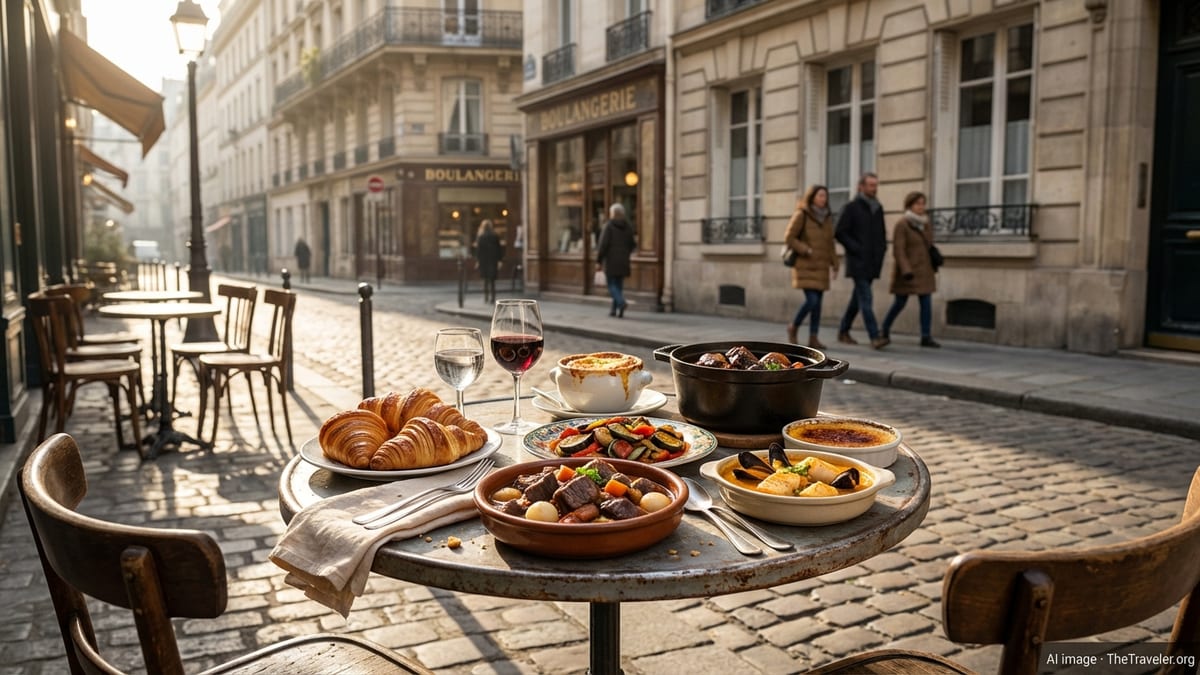
Coq au Vin: Burgundy’s Rustic Showpiece
Few dishes capture the soul of French home cooking quite like coq au vin. Originating in Burgundy, a region famous for its Pinot Noir, this slow-braised chicken in red wine is built on patient cooking rather than fancy technique. Traditionally made with an older rooster for extra flavor, modern versions typically use chicken pieces simmered with wine, stock, and aromatic vegetables until the meat relaxes into tenderness.
On the plate, coq au vin looks deceptively simple: dark, glossy sauce, chunks of chicken, mushrooms, smoky lardons of bacon, and small onions. The depth of flavor comes from the long simmer and the way the wine reduces into something rich and savory rather than boozy. Expect notes of cured pork, earthiness from mushrooms, sweetness from caramelized onions, and a gentle acidity that keeps everything in balance.
Travelers will find coq au vin in traditional bistros across France, but it is particularly at home in Burgundy and the bistro-style restaurants of Lyon. It tends to appear in cooler months, served with potatoes, buttered noodles, or a simple mound of puréed root vegetables. For visitors, it is an ideal introduction to how French cooks transform modest ingredients into something quietly luxurious.
If you are unsure when to order it, look for it on a set lunch or dinner menu, often labeled as a plat du jour. Portions are generous, the sauce begs to be mopped up with bread, and one serving can easily power you through an afternoon of wine tasting or museum visits.
Boeuf Bourguignon: The Winter Classic
Boeuf bourguignon, another cornerstone from Burgundy, is arguably France’s most famous beef stew. At its heart is a practical idea: take a tougher cut of beef, marinate or braise it slowly in red wine with stock and aromatics, and wait until time and low heat transform the meat into something spoon‑tender. Carrots, onions, garlic, and a bouquet of herbs build layers of flavor that feel especially satisfying in cold weather.
Served in deep bowls or rustic casseroles, boeuf bourguignon arrives cloaked in a thick, mahogany-colored sauce. You may notice nuggets of smoky bacon, pearl onions, and mushrooms that echo the flavors of the surrounding vineyards and forests. While recipes vary by region and chef, the best versions share a common trait: they taste like they have been simmering quietly all day in a family kitchen.
For travelers, this dish is made for long lunches in wine country or cozy evenings in a Paris bistro. It pairs naturally with red Burgundy, but many restaurants offer a glass chosen specifically to match their house recipe. If you are planning a vineyard tour, consider booking a lunch that includes boeuf bourguignon; tasting the wine in your glass alongside the wine in the sauce is a quintessential French experience.
Because of the long cooking time, boeuf bourguignon usually appears on fixed-price menus or as a signature plat at traditional eateries rather than ultra-modern restaurants. When you spot it on a blackboard in Burgundy or Alsace during the cooler months, it is almost always worth ordering.
Bouillabaisse: A Taste of the Mediterranean
Down on the southern coast, in and around Marseille, bouillabaisse tells a different story about France. This hearty fish stew began life as a fisherman’s dish, built from the unsold or bony fish left after the best of the catch went to market. Today, it has evolved into a signature of Provençal cuisine, prized for its aromatic broth scented with saffron, fennel, garlic, and orange zest.
Traditional bouillabaisse is more ritual than simple soup. In its classic form, the broth arrives first in a deep bowl, sometimes with a slice of toasted bread spread with rouille, a garlicky, chili‑tinted sauce that thickens and flavors the liquid. Then come the pieces of fish and shellfish, which might include firm white fish, local rockfish, mussels, or prawns, depending on what is in season and available. Every restaurant has its own mix, but the essence remains the same: the sea captured in one fragrant bowl.
For visitors to Marseille or nearby coastal towns, bouillabaisse is worth seeking out and often merits a dedicated meal. The best versions are not rushed; they are prepared to order and priced to reflect the quantity and quality of the seafood. This is not fast food, but rather an experience that can stretch over several leisurely courses with a bottle of Provençal rosé.
When choosing where to try it, look for restaurants that treat bouillabaisse as a specialty rather than a token item. Many will require you to order it for two people and may ask for advance notice. It is ideal for a languid lunch overlooking the harbor, when you can linger over the broth, the fish, and the conversation without watching the clock.
Cassoulet: Hearty Comfort from the Southwest
Head inland to the southwest, and you will encounter cassoulet, a dish that feels more like a feast than a single course. Originating around Castelnaudary and long associated with towns such as Toulouse and Carcassonne, cassoulet is a slow-baked casserole of white beans and assorted meats, often including duck or goose confit, pork shoulder, sausage, and sometimes lamb. It takes its name from the traditional earthenware dish, the cassole, in which it is cooked.
The defining pleasure of cassoulet is contrast. Under a golden, sometimes craggy crust, the beans turn silky and absorb the rendered fat and juices from the meats. Each spoonful offers a different combination: a piece of crisp-edged duck one moment, a chunk of sausage the next, all anchored by soft beans perfumed with garlic and herbs. It is serious comfort food, designed for cold evenings and hearty appetites.
Travelers exploring the medieval hill towns and vineyard landscapes of Languedoc will see cassoulet on menus especially in autumn and winter. Many restaurants in Castelnaudary, Toulouse, and Carcassonne claim to serve the most authentic version, and locals have strong opinions about which one is best. Portions are enormous, and even half an order can be more than enough after a day of sightseeing.
Because cassoulet is so rich, plan your day around it. A light breakfast, a long walk or bike ride beforehand, and perhaps a glass of local red wine with the meal will help you appreciate its full appeal. It is not the dish for a rushed pre‑train dinner, but as a leisurely centerpiece of a day in the southwest, it can become one of the most vivid food memories of your trip.
Ratatouille: Provençal Vegetables at Their Best
Ratatouille stands out among these dishes as a celebration of vegetables and sunshine. Born in Provence, it brings together eggplant, zucchini, bell peppers, onions, and tomatoes, cooked slowly in olive oil with herbs such as thyme and basil. The aim is not to keep the vegetables rigid and separate, but to let them soften and mingle while still preserving their individual character.
In restaurants across southern France, ratatouille might appear as a side dish, a vegetarian main, or part of a set lunch. Some chefs present it as a rustic stew, others in neatly layered slices, but in every case the flavors speak of summer markets piled high with produce. When the ingredients are in season, a good ratatouille tastes bright yet comforting, with sweetness from long-cooked tomatoes and a subtle floral note from olive oil and herbs.
For travelers, ratatouille is an approachable option if you are craving something lighter after days of rich stews and meat dishes. It pairs beautifully with grilled fish or roast chicken, and many bistros offer it as the vegetable element on a fixed-price menu. In coastal towns along the Mediterranean, you may find it served at room temperature, making it a refreshing choice on hot days.
If you visit a Provençal market apartment stay, you can also look out for takeaway versions in traiteurs and market stalls. Buying a container of ratatouille, a loaf of bread, and a wedge of local goat’s cheese makes for an easy picnic that feels deeply rooted in the region.
Croissant: The Breakfast Icon
No list of French foods would be complete without the croissant, the flaky, buttery pastry that has come to symbolize the French breakfast. Made from laminated dough that is repeatedly rolled and folded with butter, croissants bake into delicate, layered crescents that shatter slightly when you tear them apart. The best examples are crisp and almost crackling on the outside, tender and slightly chewy within, with a pronounced aroma of good butter.
For travelers, the croissant is often the first taste of France each day, eaten standing at a café counter with a coffee or carried out from a neighborhood boulangerie. In cities, you will find them everywhere, but quality varies. A simple way to spot a promising bakery is to look for a steady stream of locals in the morning and a display where the croissants look deeply golden rather than pale.
Many bakeries now offer variations, from almond-filled croissants to those layered with chocolate or pistachio paste, but it is worth starting with the classic version. When eaten still slightly warm, the buttery layers and faint hint of sweetness set the tone for a day of exploring. It is a small, affordable luxury that fits easily into any travel itinerary.
If you are sensitive to rich foods early in the day, consider sharing a croissant and pairing it with a piece of fruit or a simple yogurt. In France, breakfast is often light and fast, with the main culinary focus placed on lunch and dinner, so a single excellent croissant can be perfectly in step with local habits.
Crème Brûlée: A Spoonful of Indulgence
As evening falls and dessert menus appear, crème brûlée is one of the most reliable pleasures in French restaurants. At its simplest, it is a rich vanilla custard baked gently until set, then chilled and topped with a thin layer of sugar that is caramelized with a flame just before serving. The result is a contrast between silky cream and a brittle, glasslike top that shatters under the back of your spoon.
While you can find crème brûlée throughout Europe and beyond, tasting it in France reveals how much detail goes into seemingly simple desserts. The custard should be smooth and barely set, flavored with real vanilla rather than artificial notes. The caramelized sugar needs to be thin and freshly torched so it remains crisp. Temperature matters too: the dish is usually served cool, with a warm top from the melted sugar.
For travelers, crème brûlée is an easy, familiar option when you want something sweet but not overly heavy after a long meal. It appears on menus from neighborhood bistros to fine‑dining restaurants, often alongside regional pastries or seasonal fruit desserts. Some chefs play with flavors such as citrus, coffee, or local liqueurs, yet the classic vanilla version remains the benchmark.
If you are exploring wine regions, consider ending your meal with crème brûlée and a small glass of dessert wine or a fortified wine from the area. Sipped slowly, it extends the evening and ties dessert back to the local terroir, something French dining culture does particularly well.
Soupe à l’Oignon: Parisian Bistro Comfort
Soupe à l’oignon, often called French onion soup in English, is another dish that has traveled the world but tastes most evocative in its homeland. Traditionally served in Parisian bistros and late‑night brasseries, it was once a favorite of market workers and night owls looking for warmth at the end of a shift. The core ingredients are humble: onions slowly caramelized until sweet and deep brown, simmered with beef or veal stock, and finished with toasted bread and melted cheese.
What arrives at your table is more than the sum of those parts. A proper French onion soup is served in a heatproof crock, with the bread and cheese forming a gratinéed lid that hugs the rim. Underneath, the broth is rich but not muddy, with a balance of sweetness from the onions and savoriness from the stock. The first spoonful, dragging molten cheese and soft bread into the soup, is one of the great small pleasures of French dining.
Travelers will most often encounter soupe à l’oignon in Paris, especially in classic bistros and brasseries that serve food late into the night. It is particularly satisfying in colder months or after an evening walk along the Seine. Many locals treat it as a starter, but on its own it can be surprisingly filling, especially if the cheese layer is generous.
When you order it, be prepared for a brief wait, as the final gratiné step happens under a very hot grill or salamander. This is part of the experience. Served bubbling at the edges, the soup invites you to linger, letting both the dish and the surrounding dining room cool and quiet as the night wears on.
The Takeaway
These eight dishes barely scratch the surface of French cuisine, yet together they sketch a map across the country. From the wine‑rich stews of Burgundy to the bean casseroles of the southwest, from sunlit Provençal vegetables to the coastal abundance of bouillabaisse, each plate reflects a region’s landscape and history. Add in the everyday luxury of a fresh croissant and the cafe comfort of onion soup and crème brûlée, and you begin to understand why food is such a central part of traveling in France.
For visitors, the key is not to chase every famous dish in one trip, but to let local specialties guide your choices. Ask what a region is known for, read the blackboard menus, and do not hesitate to order the plat du jour that half the room seems to be eating. Often, that dish will be a classic like the ones described here, prepared in a way that feels rooted in place rather than designed for tourists.
Whether you are seated in a Michelin‑starred dining room or at a simple village bistro, approaching French food with curiosity rather than intimidation will reward you again and again. Start with these eight must‑try foods, pair them with local wines when you can, and allow enough time at the table for conversation and observation. In France, meals are not just about what is on the plate, but about the rhythm of daily life unfolding around you.
FAQ
Q1. Do I need to book in advance to try these classic French dishes?
In major cities and popular regions, it is wise to reserve, especially for well‑known bistros or weekends. Casual neighborhood spots may accept walk‑ins, but bookings reduce the chance of disappointment.
Q2. Are these traditional dishes available year‑round?
Many are, but stews like coq au vin, boeuf bourguignon, and cassoulet appear more often in cooler months, while ratatouille and bouillabaisse are especially common in warmer seasons when produce and seafood are at their best.
Q3. Can vegetarians find good options in traditional French cuisine?
Yes. Ratatouille, vegetable tarts, salads, and many cheeses are naturally meat‑free, though classic stews are meat‑focused. In larger cities, more restaurants now offer clearly labeled vegetarian and vegan dishes.
Q4. Is it acceptable to share dishes in French restaurants?
Sharing is increasingly common, particularly at informal bistros and wine bars. For set menus, each person usually orders their own, but splitting a starter, dessert, or a hearty main like cassoulet is generally fine if you ask politely.
Q5. How much should I budget for a meal featuring one of these specialties?
Prices vary by city and setting, but a classic dish like boeuf bourguignon or soupe à l’oignon in a mid‑range bistro typically falls in the moderate price range. High‑end dining and coastal seafood specialties can be significantly more expensive.
Q6. Do French restaurants cater to food allergies and intolerances?
Awareness has improved, especially in urban and tourist areas. It is important to mention any allergies clearly when you order, and many places can adapt dishes or suggest safer alternatives.
Q7. What is the best time of day to enjoy these dishes?
Heavier stews and cassoulet are often most enjoyable at lunch or early dinner, leaving time to walk afterward. Lighter options like croissants, ratatouille, and soupe à l’oignon fit naturally into breakfast, lunch, or a simple evening meal.
Q8. Will I find these dishes outside of France, or are they mainly local?
You can find versions of these classics in many countries, but the most authentic and varied experiences are still in France, where regional traditions, local wines, and seasonal ingredients shape how each dish is prepared.
Q9. How important is wine when ordering these foods?
Wine is a traditional companion, especially with dishes that use it in the sauce, but it is not mandatory. Many restaurants offer by‑the‑glass options, and staff can suggest pairings or non‑alcoholic alternatives if you prefer.
Q10. Do I need to speak French to order these dishes confidently?
No. In most visitor‑friendly areas, staff handle basic English food terms. Learning a few dish names and polite phrases helps, and pointing to a menu item or plat du jour is perfectly acceptable if pronunciation feels challenging.