

Montreal is a city where European charm meets North American energy, where centuries-old stone churches share the skyline with sleek glass towers and leafy Mount Royal rises above it all.
Whether you are here for a weekend or a full week, certain experiences capture the very essence of the city. From historic Old Montreal and monumental basilicas to beloved bagel bakeries and festival-filled parks, these are the iconic things to do in Montreal you should not miss.
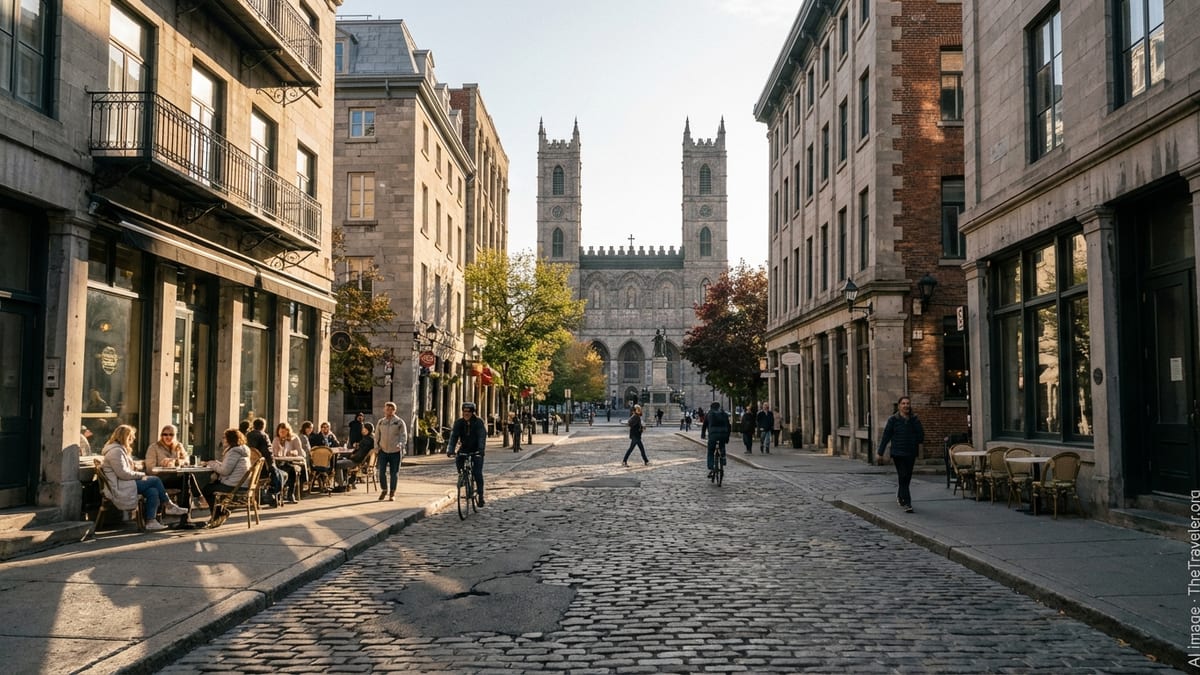
1. Wander the Cobblestone Streets of Old Montreal
Old Montreal is where the city began in the 17th century and remains its most atmospheric neighborhood today. With narrow cobblestone lanes, stately stone facades and the broad sweep of the Old Port along the St. Lawrence River, this historic quarter offers an easy introduction to Montreal’s French heritage and modern flair.
Old Port Promenade and the Waterfront
The Old Port stretches for several kilometers along the riverfront, with wide pedestrian promenades and open views across the St. Lawrence. It is one of the best places in the city for a leisurely stroll, especially around sunset when the light softens over the silos and distant islands.
In warmer months, cafes set out terraces and street performers appear around the main quays. The observation wheel, seasonal riverside activities and simple pleasures like sitting on a bench watching boats move along the channel all create that relaxed, holiday mood that keeps visitors lingering longer than planned.
Place Jacques-Cartier and the Surrounding Lanes
At the heart of Old Montreal, Place Jacques-Cartier slopes gently down toward the water, flanked by heritage buildings and packed patios. In summer the square fills with artists, flower sellers and buskers, while in winter it becomes a photogenic backdrop for twinkling lights and snowy facades.
From the square, explore nearby streets such as Rue Saint-Paul, one of the oldest commercial streets in North America. Here, former warehouses house galleries, boutiques and restaurants. The blend of preserved architecture and contemporary storefronts encapsulates how Montreal continuously reinterprets its past.
Historic Chapels and Hidden Museums
Beyond the main squares, Old Montreal rewards those who wander a little further. The Marguerite Bourgeoys Museum and Notre-Dame-de-Bon-Secours Chapel reveal stories of early settlers and religious pilgrims inside some of the city’s oldest surviving religious buildings. The small-scale exhibits and archaeological remains beneath the chapel offer a quiet counterpoint to the busier streets outside.
Spending a few unhurried hours in Old Montreal, stepping in and out of small museums, artisan shops and shaded courtyards, is one of the most memorable ways to arrive in the city’s story.
2. Experience Notre-Dame Basilica and the AURA Light Show
Notre-Dame Basilica is arguably Montreal’s single most iconic interior, a 19th-century Gothic Revival church whose deep blue vaults and gilded details impress even well-traveled visitors. Seeing the basilica by day is essential, but pairing it with the AURA immersive light and sound experience turns a visit into something unforgettable.
Admiring the Basilica by Day
During the day, visitors can walk the nave and side chapels at their own pace, taking in carved wooden details, stained glass windows and the richly colored altar. The interior draws inspiration from Paris’s Sainte-Chapelle yet feels distinctly North American in its scale and bold palette.
Guides and explanatory panels help visitors appreciate the role the church has played in major national events, from state funerals to high-profile weddings. The basilica is very popular, so planning a visit earlier in the morning or later in the afternoon often means calmer moments for photos and quiet reflection.
Seeing AURA, the Immersive Light Experience
AURA is an evening show that uses high-tech projections, orchestral music and lighting to transform the basilica’s interior into a moving artwork. After an initial period when visitors can walk among illuminated stations and admire details of the architecture, everyone takes a seat for a choreographed multi-act performance.
Projected imagery washes across the ceiling vaults, columns and altar, highlighting carvings you might easily overlook by day. The music and lighting are carefully timed to the building’s architecture, turning the entire space into a dynamic canvas. The show typically runs throughout the year on selected evenings, and advance reservations are strongly recommended, especially in peak travel seasons.
3. Climb Mount Royal for the Classic City View
No list of iconic Montreal experiences is complete without a visit to Mount Royal, the tree-covered hill that gives the city its name. Designed as an urban park in the 19th century by Frederick Law Olmsted, the landscape architect behind New York’s Central Park, it remains the city’s green heart and home to its most famous overlook.
The Kondiaronk Belvedere Lookout
The Kondiaronk Belvedere is the mountaintop terrace that frames the definitive postcard view of downtown Montreal. From here, the office towers and church steeples rise above the low-rise neighborhoods, with the St. Lawrence River and distant shorelines beyond.
The lookout is accessible by a network of forest trails and stairways from several directions, as well as by road and public transit routes that bring you close to the summit. On weekends you are likely to find buskers, local families, runners and cyclists all sharing the space, which gives the lookout a lively, communal feel rather than a purely touristic one.
Trails, Lakes and Seasonal Activities
Away from the main terrace, Mount Royal Park offers walking and jogging paths, small lakes and open lawns. In summer, locals gather for picnics, casual sports and the legendary tam-tam drum circles at the base of the mountain near Avenue du Parc. In winter, parts of the park host cross-country skiing, snowshoeing and skating, turning the same landscape into a snowy playground.
Whether you are climbing for sunrise, catching golden hour in the late afternoon, or simply getting a breath of fresh air between museum visits, Mount Royal is where many visitors realize just how much nature is woven into Montreal’s urban fabric.
4. Taste Montreal’s Signature Food Culture
Montreal’s culinary identity is as iconic as its skyline. Classics such as wood-fired bagels, smoked meat sandwiches and poutine sit alongside refined tasting menus and bustling neighborhood markets. Even a short stay should include a few key bites that locals hold dear.
Bagels from Mile End
In the Mile End neighborhood, hand-rolled bagels baked in wood-fired ovens have long been a point of pride. Compared with New York bagels, Montreal’s version is usually smaller, slightly sweeter and denser, with a pronounced chew and lightly blistered crust.
Visiting one of the traditional bakeries is an experience in itself: you can often watch staff rolling dough, shaping rings by hand and sliding long wooden paddles into the roaring oven. Ordering a sesame bagel still warm from the fire, perhaps with a simple smear of cream cheese, is a rite of passage for first-time visitors.
Smoked Meat and Classic Delis
Montreal-style smoked meat is another essential taste, made from beef brisket that is cured with spices and then smoked and steamed until tender. Sliced thick and piled high on rye bread with mustard, it is both a meal and a cultural institution.
The city’s historic delis have served this specialty for generations, and lunchtime lines can snake out the door. For many travelers, sharing a crowded table, chatting with staff and locals, and tackling a towering sandwich is one of the most memorable meals of their trip.
Poutine and Late-Night Comfort Food
Originating in Quebec, poutine has become a global phenomenon, but enjoying it in Montreal carries a special satisfaction. At its most traditional, the dish combines fries, fresh cheese curds and hot gravy, but menus across the city offer creative variations with extras such as smoked meat, mushrooms or different sauces.
Many poutine spots stay open late, drawing a mix of students, night-shift workers and festivalgoers looking for something hearty after a long night out. It is not health food, but it is undeniably part of the Montreal experience.
5. Explore the Mount Royal Plateau and Mile End Neighbourhoods
While Old Montreal showcases the city’s past, the Plateau and neighboring Mile End reveal how people live in Montreal today. These districts are known for colorful row houses, outdoor staircases, small parks, cafes and creative street life, and they are among the best areas to feel the day-to-day rhythm of the city.
Colorful Streets and Local Cafes
Walking the residential blocks of the Plateau, you will notice painted facades, wrought-iron balconies and the distinctive spiral staircases that curve down from second-floor apartments. Mature trees shade the sidewalks in summer, while in fall the foliage adds another layer of color to already photogenic streets.
Independent cafes punctuate the corners, each with its own personality. Many visitors find themselves lingering over a coffee, watching cyclists and pedestrians pass by, and realizing just how much of Montreal’s culture unfolds at street level rather than behind closed doors.
Street Art and Creative Spaces
Montreal has a strong reputation for street art, and murals appear across the Plateau and Mile End on the sides of apartment buildings, garages and commercial facades. Some are part of official festivals, while others are smaller, more spontaneous works that change over time.
Small galleries, studios and creative businesses occupy former industrial spaces throughout these neighborhoods. Browsing local design shops or attending a small venue concert can add a more personal, less scripted element to your itinerary, while still staying within reach of the city’s major landmarks.
Parks, Picnics and Easy Evenings
Parks like Lafontaine Park add generous green space to the Plateau. On warm days, lawns fill with picnickers and readers, and in the evening people gather with friends to talk until late. Picking up provisions from a local bakery or market and joining this relaxed scene is a low-cost but deeply satisfying way to experience Montreal like a local.
6. Dive into Culture at Key Museums and Quartier des Spectacles
Montreal’s cultural landscape extends well beyond historic churches. Major museums and a dedicated entertainment district give visitors a chance to engage with art, history and performance in depth. Even if you are only in town for a short stay, choosing one or two institutions or events adds another dimension to your experience.
Montreal Museum of Fine Arts
The Montreal Museum of Fine Arts is the city’s flagship art institution and one of the largest museums in Canada by gallery space. Spread across multiple interconnected pavilions, it houses collections that range from ancient objects to contemporary installations, along with extensive Quebec and Canadian art.
Recent years have seen renewed attention to outdoor sculpture and public spaces around the museum, making even a walk along the surrounding streets worthwhile. Inside, rotating exhibitions supplement the permanent collection, so repeat visitors often find something new. For travelers, a half day here can serve as a welcome counterpoint to outdoor sightseeing.
Espace pour la vie: Biodome, Insectarium, Botanical Garden and Planetarium
East of downtown, the Espace pour la vie complex brings together several of the city’s most popular nature-focused attractions. The Biodome recreates ecosystems such as a tropical rainforest and subpolar environments, allowing visitors to move from one climate to another within a single visit.
The Insectarium, redesigned in recent years, presents the world of insects in immersive ways, combining living collections with thoughtfully designed displays. Nearby, the expansive Botanical Garden offers themed gardens and greenhouses, which are particularly appealing in spring and summer but provide interest year-round.
Combined tickets and public transit connections make it practical to visit multiple sites in one day, but many travelers choose to focus on one or two places in more depth, especially when visiting with children.
Quartier des Spectacles and the Festival Scene
North of downtown’s main commercial strip, the Quartier des Spectacles acts as Montreal’s cultural commons, hosting major festivals, outdoor performances and illuminated public art throughout the year. In summer, large events turn streets and plazas into open-air venues, while in colder months, lighting installations and winter festivals keep the area lively.
Depending on your travel dates, you might encounter jazz concerts, comedy shows, film screenings or multi-day music festivals, many with at least some free programming. Checking the calendar ahead of your trip can help you time your visit to align with performances that interest you most.
7. Discover Parc Jean-Drapeau and Montreal’s Island Legacy
Across the St. Lawrence River from downtown, Parc Jean-Drapeau spreads across two islands that once hosted the Expo 67 world’s fair. Today the park combines traces of that international exhibition with modern attractions, leafy paths and some of the city’s biggest events.
Expo 67 Architecture and the Biosphere
Several structures from Expo 67 remain part of the park’s landscape. The most recognizable is the geodesic sphere that originally housed the United States pavilion, now home to an environmental museum known as the Biosphere. Its futuristic silhouette rises above the trees and is visible from many points along the riverfront.
Walking or cycling around the islands reveals more vestiges of the fair, along with interpretive panels describing how the event reshaped Montreal’s global profile. It is a destination that appeals both to architecture enthusiasts and to visitors interested in the city’s more recent history.
Lakes, Trails and Seasonal Attractions
Beyond Expo-era architecture, Parc Jean-Drapeau offers lakes, beaches, walking and cycling paths, and seasonal attractions such as an amusement park and aquatic facilities. In summer, residents come here to swim, picnic and bike with views of the downtown skyline, while in winter, designated trails welcome hardy walkers and cross-country skiers.
The park is large, so planning a rough route in advance helps you make the most of your time. Public transit connections make it relatively easy to reach from central Montreal, and the feeling of being surrounded by water and greenery provides a refreshing change of scene from the urban core.
Major Events and Festivals
Parc Jean-Drapeau regularly hosts major festivals and events, including large-scale music gatherings that attract international artists and audiences. On event days, the islands take on a distinctly celebratory atmosphere, with sound systems, food stalls and crowds converging on outdoor stages.
Even if you do not attend a festival, it is worth checking the park’s schedule before your visit. Knowing what is on can help you decide whether to join the festivities or plan a quieter day in another part of the city.
8. Visit Saint Joseph’s Oratory and Circle Back to Faith on the Mountain
Perched high on the slopes of Mount Royal, Saint Joseph’s Oratory is one of the city’s most recognizable landmarks, its domed silhouette visible from many neighborhoods. As Canada’s largest church and a National Historic Site, it draws both religious pilgrims and visitors interested in architecture, city views and quiet contemplation.
Architecture, Domes and Interior Spaces
Approaching the Oratory, visitors ascend a broad staircase that emphasizes the building’s monumental scale. The exterior combines granite and copper in a style that reflects mid-20th-century interpretations of classical and Renaissance forms, while the interior shifts toward cleaner lines and an almost austere Art Deco-influenced design.
The vast main basilica, smaller chapels and devotional spaces illustrate how the building evolved over decades, shaped by multiple architects and generations of worshippers. The dome ranks among the largest of its kind in the world, and ongoing conservation efforts ensure that future visitors will continue to experience it in full.
Views Over the City and Grounds
Because Saint Joseph’s Oratory rises above even the summit of Mount Royal, its terraces and windows offer impressive views toward downtown, the river and the surrounding neighborhoods. On a clear day, the panorama helps make sense of Montreal’s geography, from the river islands to the mountain and beyond.
The surrounding grounds include landscaped paths and gardens that invite quiet walks before or after visiting the interior. For many travelers, the combination of architecture, history and expansive views makes the Oratory a fitting bookend to a trip that may have begun down below in Old Montreal or around the waterfront.
The Takeaway
Montreal’s appeal lies in how naturally it weaves together old and new, French and English, urban bustle and green space. Exploring its icons reveals this balance: historic churches enlivened by modern light shows, 19th-century parks filled with contemporary festivals, traditional dishes served in evolving neighborhoods. Whether you focus on the core sights or wander into creative side streets, these eight experiences form a strong backbone for any visit. From the cobblestones of Old Montreal to the lookouts of Mount Royal, each moment adds a layer to your understanding of a city that rewards both first-time visitors and returning travelers.
FAQ
Q1. How many days do I need to see Montreal’s main attractions?
Most visitors find that three to four full days allows enough time to experience Old Montreal, Mount Royal, a couple of key museums, and some neighborhood exploring. With a week, you can add more festivals, day trips and slower-paced wandering.
Q2. What is the best time of year to visit Montreal for these iconic experiences?
Late spring through early fall offers the most outdoor activities, festivals and terrace dining, while winter brings its own charm with snow-covered parks, seasonal events and indoor cultural programming. Your choice depends on whether you prefer warm-weather street life or a cozier, winter-city feel.
Q3. Do I need to speak French to enjoy Montreal?
French is the primary language, but staff in hotels, restaurants and attractions in central areas commonly speak English as well. Learning a few basic French greetings is appreciated, yet you can comfortably visit most major sights without being fluent.
Q4. Is it necessary to book tickets in advance for Notre-Dame Basilica and AURA?
For standard daytime visits to the basilica, you can usually purchase admission on arrival, though busy weekends may involve short waits. For the AURA evening light show, advance bookings are strongly recommended, particularly during holidays and peak travel seasons.
Q5. How do I get to Mount Royal’s main lookout without a car?
Several public bus routes and walking paths connect surrounding neighborhoods to Mount Royal Park. A common approach is to ride public transit partway up and then follow marked trails or stairs to the Kondiaronk Belvedere lookout.
Q6. Are Montreal’s major museums family-friendly?
Yes, institutions such as the Montreal Museum of Fine Arts and the Biodome design many exhibits with families in mind and often provide interactive elements, family guides or special programming. Checking current exhibitions and activities before your visit helps you choose what best suits your group.
Q7. Where can I try classic Montreal bagels and smoked meat?
Traditional bagel bakeries and long-standing delis are concentrated in neighborhoods like Mile End and the Plateau. These establishments are well-known locally, so asking your hotel, host or a nearby cafe for their preferred spot is a simple way to find a reliable option close to where you are staying.
Q8. Is Old Montreal very touristy, and is it still worth visiting?
Old Montreal does attract many visitors, especially in summer, and you will notice souvenir shops and busy restaurant terraces. Even so, the historic architecture, riverfront setting and compact streetscape make it a worthwhile and distinctive part of the city.
Q9. How easy is it to get around Montreal without a car?
Montreal’s metro and bus network covers most central neighborhoods and major attractions, and many iconic sights are within walking or cycling distance of each other. Visitors who stay in or near downtown or the Plateau often find that they do not need a car for typical sightseeing.
Q10. Are there any safety considerations for tourists in Montreal?
Montreal generally feels safe for visitors, especially in central, well-lit areas and around major attractions. As in any city, it is wise to stay aware of your surroundings, keep valuables secure and use common sense when out late at night or in unfamiliar neighborhoods.