

New York State’s culinary personality runs far deeper than the restaurants of Manhattan. Across upstate cities, small river towns, and lakefront communities, local dishes have evolved from immigrant traditions, blue-collar ingenuity, and the quirks of college-town appetites. Sampling these specialties in the places that created them is one of the most rewarding ways to experience the state. From Buffalo’s famous wings to lesser-known favorites like Utica greens and Binghamton spiedies, these eight local food experiences offer a delicious road map to exploring New York beyond the usual tourist routes.
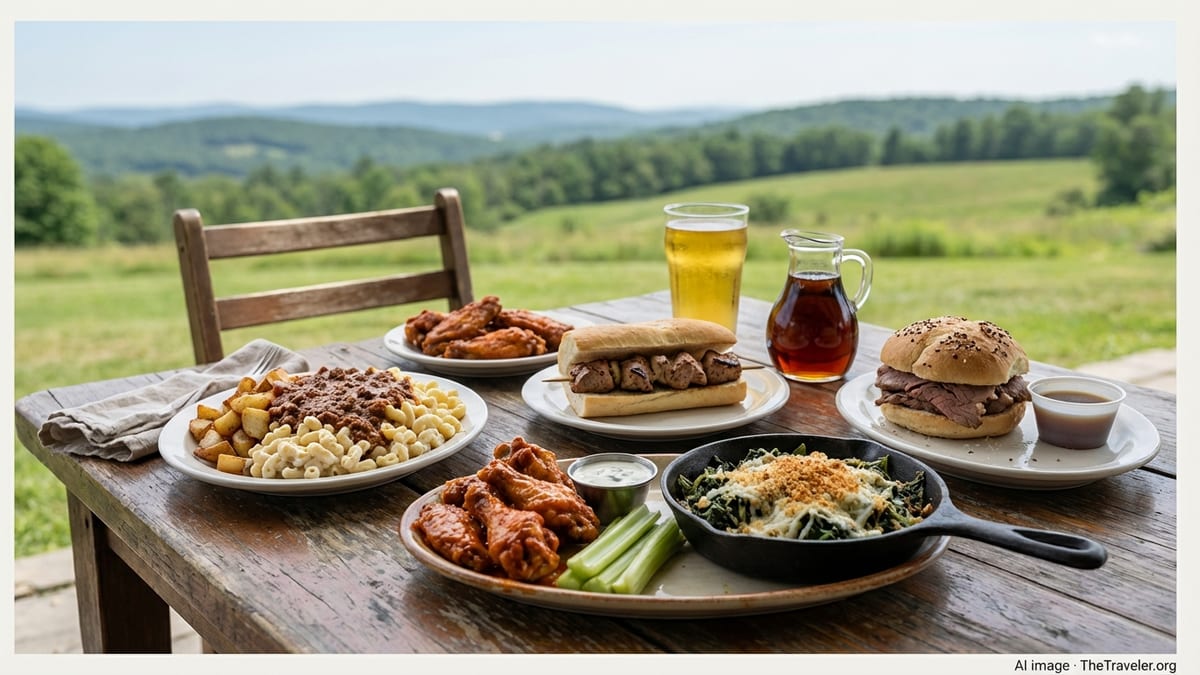
Buffalo Wings in Buffalo
Buffalo’s most famous culinary export has long since circled the globe, but tasting Buffalo wings in their hometown is still a singular experience. The now-classic combination of crisp fried chicken wings coated in a tangy, buttery cayenne pepper hot sauce was popularized in the 1960s in Buffalo and quickly became a staple of sports bars and casual restaurants across the United States. Today, entire wing trails guide visitors from one neighborhood bar to another, each with its own fiercely defended take on what makes the perfect wing.
In Buffalo, the emphasis is typically on balance and texture rather than extreme heat. Locals look for wings that are deeply crisp without being dry, generously but not excessively sauced, and served with a side of celery and bleu cheese dressing. The latter is non-negotiable in western New York, where ranch dressing is often viewed as a sign that you are not from around here. Many spots also offer a range of heat levels, from mild to extra hot, as well as specialty flavors, but traditionalists usually recommend starting with medium to appreciate the classic profile.
Beyond individual restaurants, Buffalo has built an entire culture around its wings. Annual festivals celebrate the dish, regional producers bottle and ship their sauces nationwide, and the city occasionally grabs headlines by setting records connected to chicken wing culture. For visitors, carving out an evening to wander between a few of the city’s veteran wing joints is as much about absorbing the convivial, sports-loving atmosphere as it is about the food on the plate.
To get the most authentic feel for the city’s wing heritage, time your visit around a major sporting event or a busy weekend night. The buzz of conversation, clatter of baskets and plates, and the sight of locals debating which spot serves the “real” Buffalo wing turn a simple meal into a full-fledged cultural experience.
Garbage Plates in Rochester
Rochester’s signature dish, widely known as the Garbage Plate, is the kind of hearty, no-frills comfort food that could only have emerged from a city with strong working-class roots and a sizable student population. At its core, a plate consists of one or more grilled hot dogs or hamburger patties served over a base of two sides, often macaroni salad and home fries or French fries, then covered with a finely crumbled, mildly spicy meat sauce, chopped onions, mustard, and sometimes other condiments. The result looks chaotic but delivers a surprisingly cohesive mix of textures and flavors.
The original version of the dish dates back to the early twentieth century, when a Rochester restaurant began serving generous mixed plates to hungry late-night regulars. Over time, the combination evolved into a recognizable regional icon and became closely identified with the city itself. While the name “Garbage Plate” is trademarked by the founding restaurant, dozens of other eateries in the area now serve similar creations under alternative names such as “trash plate” or “Rochester plate,” each with its own loyal following.
For first-timers, the experience is as much about place as about the meal. Many locals remember their first plate as a rite of passage tied to college days, night shifts, or post-concert outings. The atmosphere in classic plate joints is usually informal and energetic, with counter service, plastic trays, and a crowd that spans students, families, and longtime city residents. Portions tend to be generous, so sharing or arriving with a serious appetite is recommended.
As you explore Rochester’s plate scene, consider trying variations that swap in baked beans, home fries, or additional toppings, and pay attention to the meat sauce, which often defines the personality of each restaurant’s version. Whether you love it at first bite or find it overwhelming, the Garbage Plate is a quintessential Rochester experience that says a lot about how this city eats, works, and celebrates.
Spiedies in Binghamton and the Southern Tier
In the Southern Tier city of Binghamton, the spiedie is more than a sandwich. It is a symbol of local identity, shaped by Italian immigration and backyard grilling traditions. A classic spiedie consists of cubes of marinated meat, often chicken, pork, or lamb, threaded onto skewers, grilled over charcoal, and then nestled into soft Italian bread or a long roll. The marinade is the star: a zesty blend typically anchored by vinegar, oil, herbs, and garlic that tenderizes the meat and gives it a bright, tangy flavor.
The sandwich’s roots stretch back to early and mid twentieth century Italian immigrants who brought their own styles of skewered meat to the region. Over time, local restaurants and home cooks adapted those traditions, standardizing the term “spiedie” and selling bottled marinades so fans could recreate the flavor at home. Today, spiedies appear at neighborhood bars, roadside grills, and regional festivals, and residents often debate which butcher or restaurant makes the most authentic version.
Visiting Binghamton during a summer weekend is an especially rewarding time to seek out spiedies. The aroma of marinated meat sizzling over charcoal is common at picnics, local events, and backyard gatherings. Many places will serve the meat simply over bread, sometimes with an extra drizzle of marinade or a squeeze of lemon. Others offer spiedie salads, subs, or even pizza toppings, reflecting the way a once-humble local specialty has adapted to modern tastes.
If you want to understand why spiedies inspire such devotion, find a spot that cooks over live coals and keeps the preparation simple. The combination of smoky char, tangy marinade, and soft bread is deceptively straightforward, yet it captures the essence of Central New York’s love for unpretentious, flavor-forward food born from family recipes and shared traditions.
Utica Greens in Central New York
Utica, a small city in Central New York with deep Italian American roots, has quietly built a reputation among food travelers for one particular dish: Utica greens. At first glance, it is a humble plate of sautéed escarole, but the preparation elevates it far beyond everyday vegetables. Typically, chopped escarole is blanched and then sautéed with garlic, hot cherry peppers, olive oil, and small bits of prosciutto or another cured meat, before being finished with breadcrumbs and grated cheese. The result is a hearty, slightly spicy, and richly savory side that often eats like a main course.
The dish gained popularity in local Italian American restaurants in the 1980s as chefs transformed traditional southern Italian greens into something distinctly Utican. Diners embraced the new interpretation, and soon Utica greens appeared on menus throughout the city and in nearby towns. While recipes vary, the central idea remains: balance bitter escarole with salty meat, heat from the peppers, and a crunchy breadcrumb topping that soaks up flavorful olive oil.
Today, many visitors come to Utica specifically to try this specialty alongside other local favorites such as tomato pie and chicken riggies. In cozy, often family-run dining rooms, Utica greens might be served as an appetizer to share, as a side to grilled meats, or even as a topping for crusty Italian bread. Each restaurant tends to put its own stamp on the dish, adjusting the level of heat, the kind of cheese, or the amount of prosciutto to suit regulars’ tastes.
To fully appreciate Utica greens, plan a small tour of a few well-regarded Italian spots and order the dish everywhere you go. Comparing versions reveals how a relatively recent invention can quickly become a regional classic, shaped less by strict rules and more by the collective palate of a tight-knit community.
Beef on Weck in Western New York
Another western New York specialty that deserves more national attention is beef on weck, a roast beef sandwich that showcases the region’s German and Central European heritage. The core of the dish is thinly sliced, rare roast beef piled onto a kummelweck roll, a crusty Kaiser-style bun topped with coarse salt and caraway seeds. The sandwich is typically served with horseradish and a side of jus for dipping, creating a savory, slightly spicy combination that is both simple and memorable.
The kummelweck roll is what makes the sandwich distinctive. Its salted crust echoes the appeal of a soft pretzel and provides a textural contrast to the tender meat inside. When the roll is briefly dipped in warm jus before serving, it absorbs just enough liquid to boost flavor without becoming soggy. This detail, along with a generous smear of freshly grated horseradish, turns what could be a basic roast beef sandwich into something with a devoted regional following.
In and around Buffalo, beef on weck is a staple in taverns, neighborhood pubs, and family-friendly restaurants. Many places slow-roast their beef in-house and carve it to order, offering an experience that feels closer to a home-cooked Sunday roast than to fast food. Locals often pair the sandwich with a regional beer and a side of fries or onion rings, especially while watching a game or catching up with friends after work.
Travelers can use beef on weck as a gateway to exploring less-touristed corners of western New York. Seek out long-running bars and corner establishments where the décor might include sports memorabilia and wood-paneled walls, and where the staff can tell you exactly how long the roast has been resting. Those informal, lived-in settings are an essential part of what makes this sandwich such a satisfying local experience.
North Country Maple and Sugar Shacks
Head north toward the Adirondacks and the St. Lawrence River Valley, and New York’s culinary story shifts from pubs and city diners to forests and farm stands. Maple syrup production is a long-standing tradition in this part of the state, where late winter and early spring days bring the freeze-thaw cycles needed to get sap flowing. Visiting a sugar shack while the sap is running offers a vivid, sensory way to understand the labor and craft behind a bottle of locally made syrup.
During sugaring season, usually from late February to early April depending on weather, many producers open their doors to the public on selected weekends. Guests can follow tubing networks into the woods, learn how sap is collected, and step inside steamy sugarhouses where evaporators boil off water to concentrate the syrup. The sweet, slightly smoky aroma of boiling sap fills the air, and staff often explain how syrup is graded by color and flavor, from delicate golden to robust dark varieties.
Tasting is a core part of the experience. Some sugar shacks serve simple pancakes, waffles, or French toast drizzled with fresh syrup, while others offer maple-glazed sausages, maple cream, or soft maple sugar candies. Roadside farm stores may sell syrup in glass bottles, along with maple-infused mustards, barbecue sauces, and baking mixes. Buying directly from small producers helps support rural economies and keeps this time-honored tradition viable as weather patterns and market pressures change.
Visiting the North Country for maple is most rewarding when combined with the region’s outdoor offerings. Many sugar makers are near hiking trails, cross-country ski centers, or scenic byways. Spend the morning outside, then warm up in a sugarhouse with a plate of hot pancakes and syrup drawn from trees just steps away. It is a distinctly northern New York experience that reveals how closely local food is entwined with the landscape and the seasons.
Hudson Valley Farm-to-Table and Cider Culture
The Hudson Valley, stretching north from New York City along the Hudson River, has emerged as one of the state’s premier destinations for farm-to-table dining. Rich soils, a long growing season, and proximity to major markets have supported agriculture here for centuries, but in recent decades, a wave of chefs, farmers, and cider makers has turned the region into a magnet for food-focused travelers. Here, “local food” is not a single dish so much as a way of eating that foregrounds seasonal produce, pasture-raised meats, and artisan products.
Many restaurants in river towns and hilltop villages feature menus that change frequently in response to what nearby farms are harvesting. In spring, that might mean ramps, asparagus, and tender greens; in late summer, tomatoes, sweet corn, and stone fruit dominate. Autumn brings apples, squash, and root vegetables, often showcased in roasted dishes and hearty grain bowls. Dining rooms range from casual cafés to more formal establishments housed in historic buildings, but a common thread is a close relationship with local growers.
The region is also a hub for modern American hard cider, reviving an apple-based tradition that predates the country itself. Orchards throughout the valley are experimenting with heritage apple varieties and traditional fermentation methods, offering tasting flights that range from dry and tannic to slightly sweet and sparkling. Many cider houses pair their pours with simple food menus built around local cheese, charcuterie, bread, and seasonal small plates, creating relaxed settings where visitors can linger over long afternoon tastings.
To experience the Hudson Valley’s local food culture at its best, plan to visit farm markets, roadside stands, and u-pick orchards in addition to restaurants. Talking with farmers about the challenges and rewards of growing in the region adds context to every plate. The result is not just one memorable meal, but a fuller understanding of how this landscape sustains one of New York State’s most dynamic food scenes.
Capital Region Diners and Seasonal Comfort Foods
In and around Albany, Troy, and Schenectady, the Capital Region’s food story is often told through classic diners and casual spots that serve sturdy, seasonal comfort foods. While these dishes may not be as famous nationally as Buffalo wings or Rochester plates, they play a central role in everyday life for residents. Long-running diners, some with gleaming stainless-steel exteriors and neon signs, offer generous breakfasts, thick-cut sandwiches, and daily specials that shift with the calendar.
Winter menus might feature pot roast, turkey dinners, and soups built on local root vegetables, while summer brings sweet corn, fresh tomatoes, and berry pies. Many of these establishments source at least part of their ingredients from nearby farms, either directly or through regional distributors, even if they do not advertise themselves as farm-to-table. The result is food that feels familiar and practical but is often fresher and more rooted in place than outsiders expect.
The atmosphere at Capital Region diners is part of their appeal. Regulars linger over coffee refills, and staff often greet guests by name, creating a sense of community that is hard to replicate in trendier settings. Travelers can slip into a corner booth and eavesdrop on conversations about local politics, weather, and high school sports while working through a plate of eggs, hash browns, and toast. In this context, “local food” is as much about relationships and routines as it is about specific recipes.
Exploring the Capital Region through its diners and neighborhood restaurants offers a counterpoint to more curated culinary destinations. It is a reminder that some of the most authentic food experiences in New York State happen far from tasting menus and headline-grabbing openings, in places where the line between visitor and regular can blur over the course of a few cups of coffee.
The Takeaway
Traveling across New York State with an eye on local food reveals a tapestry of dishes and dining traditions that change from one region to the next. In Buffalo and Rochester, hearty pub fare and late-night specialties speak to industrial histories and strong sports cultures. In Utica and Binghamton, Italian American and immigrant influences shine in dishes cooked from recipes passed down through generations yet continually adapted. Farther north and down the Hudson, maple producers, farmers, and cider makers tie what is on the plate to the fields, forests, and orchards that surround them.
What connects these eight food experiences is a shared commitment to flavor and community rather than polish or trendiness. Some of the most memorable meals happen in no-frills diners, neighborhood bars, and modest family restaurants. Others unfold in sugarhouses or cider tasting rooms where landscape and weather are as important as any recipe. By seeking out these regional specialties and the people who make them, travelers gain a deeper, more grounded sense of New York as a place where food is both a point of pride and a daily pleasure.
For anyone planning a trip, building an itinerary around these dishes is an excellent way to explore smaller cities and rural corners that might otherwise be overlooked. Whether you are tearing into a basket of Buffalo wings, sharing a Garbage Plate after a long day on the road, or lingering over pancakes and fresh maple syrup in the North Country, you will find that New York’s most enduring food experiences are the ones that taste unmistakably of where they come from.
FAQ
Q1. Are these New York State food experiences available year-round?
Many of the dishes, such as Buffalo wings, Garbage Plates, spiedies, and Utica greens, are served year-round. Seasonal experiences, like visiting maple sugar shacks or certain farm-to-table menus, are more dependent on harvest seasons and weather, especially in late winter and early spring for maple and in summer and fall for farm produce.
Q2. Do I need a car to explore these local food specialties across New York State?
A car makes it much easier to connect multiple regions, especially smaller cities and rural areas. Some locations are reachable by train or bus, but many classic eateries, sugar shacks, and orchards sit outside major transit corridors, so driving offers the most flexibility.
Q3. Are these dishes suitable for travelers with dietary restrictions?
Several of the highlighted foods are meat-heavy and can be challenging for strict vegetarians or vegans, though some places offer plant-based alternatives or can adapt recipes. Maple products, many farm-to-table dishes, and some sides at diners and cider houses can be more accommodating, but it is always wise to ask in advance.
Q4. When is the best time of year to plan a New York State food-focused road trip?
Late spring through fall offers the greatest variety, with farmers markets, outdoor events, and harvest-focused menus in full swing. For maple experiences specifically, aim for late winter to early spring, when sugarhouses are most active.
Q5. How expensive are these local food experiences?
Prices vary, but many of the dishes discussed, such as wings, plates, and diner meals, are relatively budget-friendly compared with fine dining in large cities. Farm-to-table restaurants and cider tastings can be pricier, though lunch menus and weekday specials often provide good value.
Q6. Can I find these New York specialties outside the state?
Some items, particularly Buffalo wings and maple syrup, are widely available elsewhere, and a few restaurants in other states imitate dishes like Garbage Plates or spiedies. Still, the versions served in their home regions, in the settings where they developed, tend to be more distinctive and closely tied to local culture.
Q7. Is it necessary to make reservations at the recommended types of places?
Casual wing joints, plate shops, diners, and many bars usually accept walk-ins, though they can get crowded during peak hours. Farm-to-table restaurants, cider houses with full-service kitchens, and popular weekend brunch spots often recommend or require reservations, especially during busy seasons.
Q8. Are these food experiences family-friendly?
Most are very family-friendly. Diners, plate restaurants, and many wing spots welcome children and offer simpler menu items. Bars and cider tasting rooms may have age restrictions in certain areas or after specific hours, so checking policies ahead of time is sensible when traveling with kids.
Q9. How can I learn more about the history behind these dishes while traveling?
Talking with owners, servers, and longtime regulars is one of the best ways to learn the backstory of local specialties. Regional visitor centers, historical societies, and small food festivals often provide additional context about how particular dishes emerged and evolved in each community.
Q10. Do I need to tip differently at diners, bars, and tasting rooms in New York State?
Tipping norms across New York State are similar to much of the United States. In sit-down restaurants, bars, and tasting rooms with table service, a gratuity in the range of 15 to 20 percent of the pre-tax bill is customary when service is satisfactory.