

Pennsylvania’s food story stretches from bustling city markets in Philadelphia and Pittsburgh to quiet back roads lined with Amish farms and Pennsylvania Dutch bakeries. Across this diverse landscape, traditional recipes, immigrant influences, and new-school creativity all collide on the plate. For travelers, eating your way through the state is as revealing as any museum or battlefield, and a handful of distinctly local dishes help tell that story better than any guidebook.
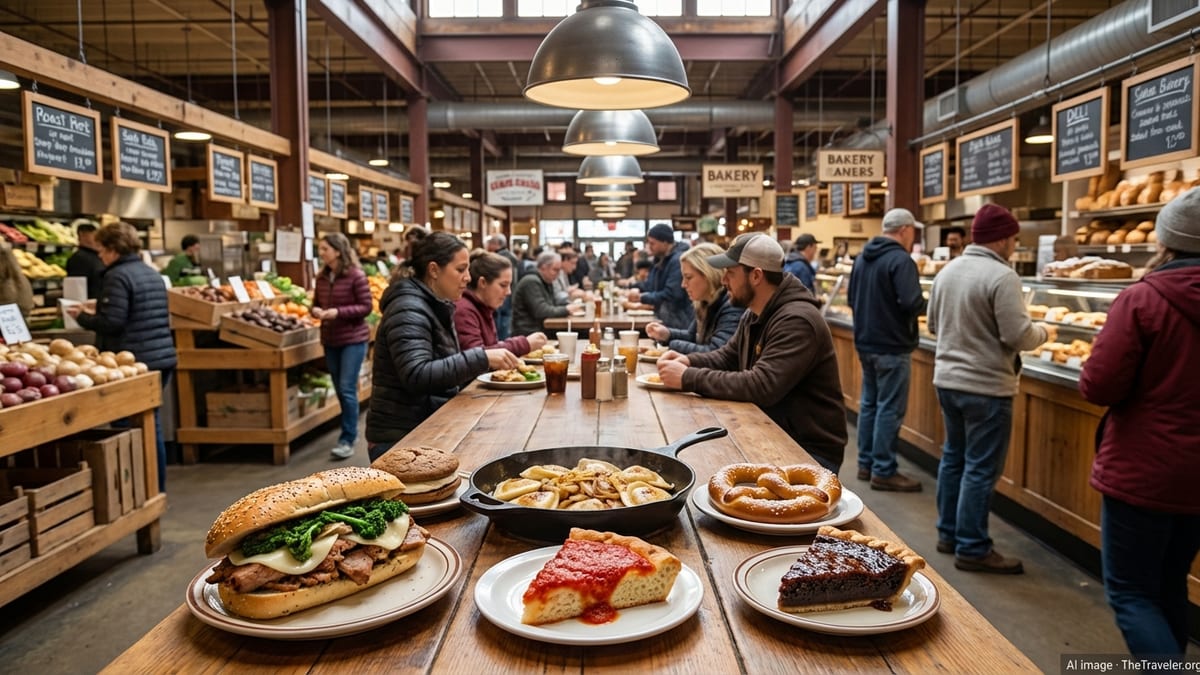
Philly’s Roast Pork Sandwich: The Other Iconic Sandwich
If Philadelphia has a single food to rival the cheesesteak, it is the roast pork sandwich. Built on a sturdy Italian roll, it typically layers slow roasted, thinly sliced pork with sharp provolone and a tangle of garlicky greens, usually broccoli rabe or sometimes sautéed spinach. Juice from the meat soaks gently into the bread without turning it soggy, creating a rich, peppery, deeply savory bite that locals often point to as the city’s true signature sandwich.
The sandwich reflects the influence of Italian American communities that have long shaped the city’s food culture. Well known shops in South Philadelphia and inside Reading Terminal Market slow roast pork shoulders for hours until tender, then slice the meat to order and finish each sandwich with bitter greens, spicy long hot peppers, and cheese. The resulting combination is simple but carefully calibrated, with the bitterness of the greens cutting through the richness of the pork and provolone.
For visitors, seeking out a roast pork sandwich is also a way to experience Philadelphia’s market culture. It is easy to combine a stop for roast pork with a wander through produce stands, bakeries, and spice stalls, soaking in the noise and neon of one of the country’s oldest continuously operating public markets. Whether you eat at a counter, balance your sandwich at a shared table, or carry it outside to a nearby park, the roast pork experience is as much about atmosphere as it is about flavor.
Pierogies and Polish Comfort Food in Pittsburgh
Across the state in Pittsburgh, one of the most beloved local foods arrived with waves of Eastern European immigrants who settled in the city’s steel and riverfront neighborhoods. Pierogies, the stuffed dumplings common in Polish and other Central and Eastern European cuisines, are now a citywide obsession. Typically boiled and then pan fried in butter, they are often filled with potato and cheese, but you will also find versions with sauerkraut, mushrooms, meat, or seasonal vegetables.
Today, pierogies show up everywhere from corner taverns to creative modern bistros. Traditional spots still serve them with browned onions and sour cream, while newer kitchens may tuck them under unexpected toppings or turn them into hearty bar snacks. They offer a comforting, carb rich counterpoint to Pittsburgh’s hills and cold weather, and they are one of the easiest ways to taste the city’s immigrant past in the present day.
Travelers can build an entire afternoon around pierogies, pairing them with other Pittsburgh favorites such as kielbasa and stuffed cabbage at Eastern European delis or neighborhood festivals. Even the city’s professional baseball team leans into the tradition, with the playful pierogi race at PNC Park highlighting just how closely the dumplings are tied to local identity.
Pennsylvania Dutch Classics in the Countryside
Outside the big cities, much of rural Pennsylvania is shaped by Pennsylvania Dutch culture, a term that broadly encompasses descendants of German speaking immigrants, including Amish and Mennonite communities. Their cooking favors hearty, practical dishes built around farm staples such as potatoes, cabbage, noodles, and preserved meats. For travelers driving through Lancaster County, Berks County, or the Lebanon Valley, roadside markets and family restaurants offer a crash course in this distinct regional cuisine.
Scrapple is one of the most notable examples. Traditionally made by simmering pork trimmings with spices and cornmeal, then forming the mixture into a loaf, it is sliced and pan fried until crisp on the outside and soft within. Often served at breakfast alongside eggs and toast, it delivers a savory, slightly peppery flavor that has become an acquired favorite far beyond Pennsylvania Dutch communities.
Other staples include chicken pot pie in its local, non baked form, where squares of dough simmer directly in a rich broth with chicken and vegetables, as well as buttery egg noodles, pickled red beet eggs, and comforting stews. Many farm markets and smorgasbord style restaurants in Lancaster County lay out long buffets of these dishes, letting visitors sample a range of recipes that have been passed down and adapted over generations.
Shoofly Pie, Whoopie Pies, and Sweet Treats of the Lebanon and Lancaster Valleys
Dessert in Pennsylvania’s countryside has its own vocabulary, and two treats in particular stand out. Shoofly pie, closely associated with Pennsylvania Dutch kitchens, is a molasses based pie often described as a cross between a crumb cake and a pie. A flaky crust holds a filling made from molasses, sugar, and spices, finished with a generous layer of buttery crumbs. The result is dense, sticky, and sweet, with a deep caramel like flavor that pairs nicely with hot coffee. Historically, it was eaten more often at breakfast than as an after dinner dessert, and that tradition still lingers in many homes and diners.
Roadside markets and bakeries across the Lebanon Valley and neighboring counties still sell shoofly pies in whole and slice form, each with subtle twists in texture and spice level. Visitors who try more than one will notice how family recipes differ, from gooier versions with a wet bottom layer to drier, cake like interpretations. The pie’s prominence at farm stands and country restaurants speaks to how firmly it remains embedded in local foodways.
Whoopie pies add a playful counterpoint. Two soft, cake like rounds, commonly chocolate, sandwich a thick layer of sweet filling to create a handheld treat somewhere between a cookie and a cupcake. Though debates continue about whether they began in Pennsylvania or in New England, they are firmly rooted in Amish and Mennonite baking traditions in the Keystone State. Today, you can find them in a rainbow of flavors, from classic chocolate and vanilla to pumpkin, red velvet, or seasonal fruit fillings, stacked in glass cases at farm markets and roadside bakeries.
Soft Pretzels and Tomato Pie in Greater Philadelphia
Within and around Philadelphia, everyday snacks can be just as revealing as elaborate meals. The soft pretzel is perhaps the most ubiquitous local bite. Twisted into a distinctive figure eight shape and sprinkled with coarse salt, these pretzels are doughy, deeply browned, and often enjoyed warm with a dab of spicy mustard. Street vendors, corner bakeries, and dedicated pretzel shops supply them to commuters and school groups, and it is common to see boxes of pretzels shared at office gatherings and youth sports games.
The origins of the soft pretzel in the region trace back to German immigrants, and the snack has maintained its appeal thanks to its portability and low cost. Different neighborhoods have favorite bakeries, and small variations in texture, salt level, and chew give locals plenty to debate. Visitors can easily join in by grabbing a pretzel from a vendor cart or a market stand while walking between sights.
Tomato pie is another beloved, if sometimes misunderstood, Philadelphia staple. Unlike typical pizza, this rectangular, bakery style pie features a thick, airy crust covered with a layer of bright tomato sauce and just a dusting of grated hard cheese, with little or no melted mozzarella. It is often served at room temperature and cut into squares, making it popular at family gatherings, parties, and office events. Long running Italian bakeries in South Philadelphia and surrounding suburbs treat tomato pie as an everyday staple, not a novelty.
For travelers, tasting tomato pie provides insight into the city’s Italian American baking traditions. Stopping into a neighborhood bakery for a slice, perhaps along with a cannoli or biscotti, can be a charming detour that offers a window onto local daily life rather than a checklist of tourist attractions.
Pittsburgh’s Stacked Sandwiches and Fries on Everything
While Philadelphia lays claim to the roast pork sandwich, Pittsburgh has built a reputation for stacked, working class sandwiches that are meals in themselves. One of the most recognizable local traditions piles sliced deli meats, provolone, coleslaw, and a fistful of French fries between thick slices of bread. The story goes that this approach suited truck drivers and laborers who wanted a full meal they could eat with one hand, and the habit of placing fries directly on the sandwich has since become part of the city’s food identity.
Beyond those towering creations, Pittsburghers are known for tucking fries into salads and alongside pierogies, reflecting the city’s fondness for generous, no nonsense comfort food. Casual bars and diners in neighborhoods from the Strip District to the South Side embrace this approach, adapting it with different meats, sauces, and breads to suit changing tastes.
For visitors, trying one of these stacked sandwiches is as much about understanding Pittsburgh’s industrial past as it is about the flavor. The hearty portions speak to a time when many residents worked physically demanding jobs in steel mills and on the rivers. Even as the city has transformed into a hub for technology and education, the appetite for substantial, satisfying plates has remained.
Banana Splits and Old Fashioned Ice Cream Parlors
Western Pennsylvania also lays claim to one of America’s most classic desserts: the banana split. In the early twentieth century, a pharmacy clerk in the town of Latrobe is widely credited with creating the first version, and the area still celebrates that legacy. Traditional banana splits follow a familiar pattern, with a peeled banana sliced lengthwise, three scoops of ice cream nestled in between, and toppings such as chocolate syrup, fruit sauces, whipped cream, chopped nuts, and maraschino cherries.
Today, family friendly restaurants and ice cream parlors in and around Latrobe and throughout the region serve versions that range from faithful to highly elaborated. For travelers driving between Pittsburgh and the Laurel Highlands, stopping for a banana split can be a nostalgic interlude, especially in summer. Red vinyl booths, counter seating, and paper menus at older establishments add to the time travel effect, recalling a mid century soda fountain atmosphere.
Beyond banana splits, Pennsylvania has a strong tradition of roadside ice cream stands and dairy based desserts, thanks in part to the state’s agricultural base. Many farm creameries sell scoops made from milk produced on site, sometimes paired with fresh seasonal fruit or local honey. Combining a countryside drive with a visit to a creamery or old fashioned parlor is an easy way to turn dessert into a destination.
Planning Your Own Pennsylvania Food Road Trip
Connecting these food experiences into a single journey is easier than it might seem. A loop that begins in Philadelphia, heads west through Lancaster County and the Lebanon Valley, continues toward Harrisburg and central Pennsylvania, and then sweeps into Pittsburgh before returning east can be built around meals as much as museums or outdoor activities. Along the way, travelers can plan stops at city markets, farm stands, and neighborhood bakeries that highlight different sides of the state’s food culture.
In practical terms, it helps to balance hearty, indulgent dishes with lighter snacks and plenty of walking. A roast pork sandwich in Philadelphia might be followed by a stroll through historic districts and a simple tomato pie snack later in the day. A plate of pierogies in Pittsburgh pairs well with a walk along the riverfront or a ride up one of the city’s inclines. In the countryside, big smorgasbord lunches at Pennsylvania Dutch restaurants can be offset by quiet drives on back roads, visits to covered bridges, or hikes in nearby state parks.
Seasonality also shapes the experience. Warm weather brings roadside produce stands, ice cream windows, and outdoor tables at city markets. Colder months highlight braises, pot pies, and rich baked goods that feel especially satisfying when the air is crisp. Regardless of the time of year, seeking out local specialties and asking residents where they eat is one of the most reliable ways to uncover hidden gems.
The Takeaway
Pennsylvania’s most memorable meals are less about elaborate plating and more about tradition, community, and comfort. From a roast pork sandwich wolfed down at a crowded market counter to a slice of shoofly pie at a roadside stand, each dish offers a glimpse into the lives and histories of the people who created it. Eating your way across the state becomes a form of storytelling, where pierogies, pretzels, fries, and pies all play their part.
Whether you have time for a full road trip or just a weekend in one city, choosing a few of these local food experiences will deepen your sense of place. Skip at least one familiar chain restaurant in favor of a market stall, a neighborhood bakery, or a small town diner. In Pennsylvania, the most revealing landmarks are often the ones you can eat.
FAQ
Q1. What local food should I try first if I only have one day in Philadelphia?
A roast pork sandwich is an excellent starting point, since it captures the city’s Italian American influence and market culture in a single, memorable meal.
Q2. Where can I find authentic Pennsylvania Dutch dishes?
Look for family style restaurants, farm markets, and smorgasbord style buffets in Lancaster County, Berks County, and the Lebanon Valley, where Pennsylvania Dutch traditions remain strong.
Q3. Are pierogies in Pittsburgh only served in traditional restaurants?
No, you will find pierogies at classic Eastern European restaurants, neighborhood bars, food trucks, and even at stadium concessions, often with both traditional and creative fillings.
Q4. What is the difference between tomato pie and regular pizza?
Tomato pie is usually baked in a rectangular pan with a thick, airy crust, topped with tomato sauce and a light sprinkle of hard cheese, and often served at room temperature.
Q5. Is scrapple safe to try if I am unfamiliar with it?
Scrapple is a long standing regional breakfast food; if you enjoy other pork based dishes, trying a small, well browned slice at a reputable diner or market is a low risk introduction.
Q6. Can I find vegetarian friendly options among these local foods?
Yes, many bakeries and markets offer vegetarian friendly items such as soft pretzels, tomato pie, pierogies with cheese or potato fillings, and a wide range of desserts.
Q7. When is the best time of year to plan a food focused trip to Pennsylvania?
Late spring through early fall is ideal for combining farmers markets, ice cream stands, and outdoor dining, though hearty Pennsylvania Dutch dishes are especially comforting in colder months.
Q8. Do I need a car to explore these food experiences?
You can sample many dishes in Philadelphia and Pittsburgh using public transit or walking, but a car makes it much easier to reach rural markets, farm stands, and small town bakeries.
Q9. Are these foods suitable for families traveling with children?
Yes, most featured dishes are casual, kid friendly comfort foods, and many markets and diners are used to welcoming families and offering simple options for picky eaters.
Q10. How can I eat locally but still support smaller businesses?
Prioritize independent markets, neighborhood bakeries, ice cream stands, and family run restaurants, and ask locals for their personal favorites rather than relying only on national chains.