

France’s festival calendar is as rich and varied as its landscapes. From Mediterranean carnivals and all night music marathons to avant garde theatre and luminous cityscapes, celebrations here are woven into the rhythm of everyday life. Whether you are planning a dedicated festival trip or hoping to add a major event into a wider itinerary, understanding the character and timing of France’s biggest festivals helps you experience the country at its most vibrant.
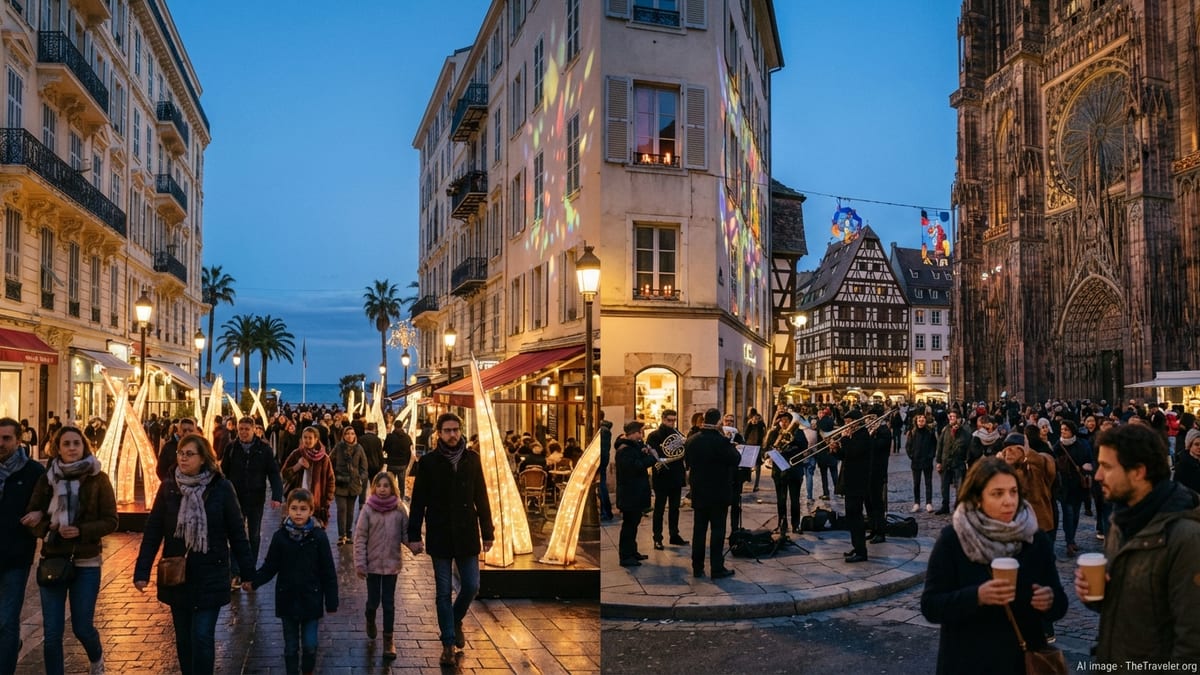
Nice Carnival: France’s Great Winter Party
In February, when much of Europe is still in deep winter, the city of Nice explodes with colour for the Nice Carnival. Widely considered one of the world’s major carnivals alongside events in Rio, Venice and New Orleans, it turns the Promenade des Anglais and the historic centre into a stage for towering floats, papier mâché giants and marching bands. The tradition dates back to the 13th century, and the modern version blends historic ritual with contemporary satire as giant caricatures lampoon politics and pop culture.
The programme usually spans a little over two weeks between mid February and early March, timed around Shrove Tuesday. Visitors can experience both daytime flower parades, where costumed performers shower the crowds with mimosa and other blooms, and illuminated evening parades where floats glow against the Mediterranean night. Grandstands offer reserved seating along the main route, but many travellers simply join the street side throng. Booking accommodation months ahead is essential, as Nice fills with domestic and international visitors chasing a dose of winter sun and spectacle.
Practical planning revolves around the parade schedule and security checks. Many streets in central Nice are closed to traffic during events, and large bags are often restricted. If you prefer a quieter base, nearby coastal towns such as Antibes or Villefranche sur Mer stay calmer while still allowing easy train access for carnival days. For families, the daytime flower parades are the most relaxed and child friendly choice, while the night time processions appeal to those seeking a more electric party atmosphere.
Fête du Citron in Menton: A Citrus Fantasy
Further along the Riviera, on the Italian border, the town of Menton hosts one of France’s most unusual winter festivals, the Fête du Citron. Originating from late 19th century citrus exhibitions and formalised in the 1930s, the event celebrates the region’s prized lemons with enormous sculptures and floats clad entirely in citrus fruit. Each year in mid February a different theme inspires everything from mythological creatures to far flung city skylines, rendered in oranges and lemons and displayed in Menton’s gardens and along its seafront.
The atmosphere is gentler and more intimate than Nice Carnival, though it remains a major draw on the Riviera. Daytime parades, called corsos, roll along the promenade with marching bands and dancers, while the Biovès Gardens in the town centre become an open air gallery of citrus structures that visitors can wander among for an additional fee. After the festival, much of the fruit is sold off, a reminder that this is both spectacle and celebration of local agriculture.
Plan at least one full day in Menton to enjoy both a parade and the static displays, and consider combining the festival with day trips to nearby villages or to Italy’s Ligurian coast. Trains from Nice are frequent but can be busy around parade times, so arriving early in the day is wise. Even in winter the weather is often mild enough to sit on a café terrace overlooking the sea, making the Fête du Citron a pleasant way to experience the Riviera without the summer crowds.
Festival d’Avignon: Theatre in the Open Air
Each July the historic city of Avignon in Provence is transformed into what many consider the world’s leading festival for contemporary theatre. The official Festival d’Avignon stages a curated programme of plays, dance and performance art in venues that range from converted cloisters to the vast open air Cour d’Honneur of the Palais des Papes. At the same time, an enormous fringe festival, known as Avignon Off, brings hundreds of independent companies who perform in every available courtyard, hall and improvised stage around town.
The atmosphere in Avignon during the festival is intense and immersive. Posters for shows plaster every surface, performers hand out flyers on cobbled streets, and conversations in cafés shift naturally to what to see next. Performances in the official festival often push artistic boundaries and may be in French or other languages. The Off programme adds comedy, music theatre and experimental work at a wide range of price points, allowing visitors to build their own schedule according to interest and budget.
Because the festival typically runs for most of July, many travellers tie it into a longer Provence trip. The heat at this time of year can be extreme, particularly during afternoon shows in courtyards or outdoor spaces, so staying hydrated and allowing siesta time between performances is important. Booking accommodation in Avignon itself provides the fullest experience, but cheaper options exist in nearby towns connected by regional trains. Aim to reserve both lodging and tickets as early as possible, especially for high profile productions in the Palais des Papes.
Cannes Film Festival: Glamour on the Croisette
On the Côte d’Azur, the Cannes Film Festival each May holds a unique place in the cultural calendar. Founded in the 1940s, it has grown into one of the most influential film festivals in the world, shaping careers and industry trends. For the public, Cannes is less about buying tickets to red carpet premieres and more about soaking up the atmosphere along the famous boulevard de la Croisette, where photographers, cinephiles and the simply curious gather in hopes of glimpsing international stars.
During the festival, Cannes becomes a tightly organised machine powered by accreditation badges, private screenings and business meetings. Most official film showings are reserved for industry professionals and media, but there are limited ticketed screenings and special events open to residents and visitors, sometimes announced closer to the dates. Open air cinema on the beach, for example, has in recent years provided at least one accessible way to experience the magic of Cannes nights.
If you plan to visit during the festival, expect sharply higher hotel prices and intense demand for everything from restaurant tables to taxi rides. The town’s seafront is ringed with security perimeters and red carpet areas, and casual beach access may be more restricted than at other times of year. Many travellers choose to stay in nearby Antibes, Juan les Pins or even Nice and commute by train for day visits. Even without a ticket in hand, strolling the Croisette, people watching on café terraces and wandering Cannes’ older Le Suquet district provides a vivid snapshot of the global film world colliding with the Riviera.
Fête de la Musique: Music in Every Street
On 21 June each year, the summer solstice, France celebrates Fête de la Musique, a nationwide music festival that turns streets, squares and public spaces into open stages. Created in the 1980s by the Ministry of Culture, it encourages both amateur and professional musicians to perform outdoors, usually for free, in cities, towns and villages across the country. The result is a soundscape that shifts from choirs and brass bands to rock groups, DJs and classical ensembles, often within a few blocks.
For travellers, the appeal of Fête de la Musique lies in its spontaneity. In Paris you might drift from an acoustic set in a neighbourhood square to an electro party under a railway arch, while in smaller towns the main square might host a local orchestra or school performances. Public transport often runs later than usual in major cities and some streets are pedestrianised for the evening to accommodate crowds and stages.
Planning around the event is as simple as ensuring you are in or near a lively town on 21 June. Larger cities like Paris, Lyon, Marseille and Toulouse release broad outlines of their programmes in advance, but part of the charm is discovering performances by simply walking. Comfortable shoes, an open schedule and tolerance for noise are key. If you prefer quiet evenings, consider choosing accommodation on side streets away from major squares, as music can continue late into the night.
Lyon Festival of Lights: A City Glows in December
Every December, around the 8th of the month, the city of Lyon stages the Fête des Lumières, or Festival of Lights. Rooted in a 19th century tradition of lighting candles in windows to honour the Virgin Mary, it has evolved into a major four day urban light festival that attracts visitors from across Europe. Designers, artists and lighting specialists transform façades, parks, riversides and plazas with temporary installations, projections and illuminated pathways.
Lyon’s major monuments, including the Basilica of Fourvière and the façades around Place des Terreaux and Place Bellecour, often become canvases for intricate light shows set to soundscapes. In neighbourhoods across the city, residents still place rows of small candles in coloured glass on their window sills, creating a more intimate glow. The combination of cutting edge multimedia art and simple candlelight gives the festival a layered, atmospheric feel that is particularly striking on cold, clear winter nights.
The event usually spans four evenings, with core dates built around 8 December. Crowds can be extremely dense in the city centre, and certain viewing areas operate one way pedestrian flows to keep people moving. To make the most of the festival, arrive before dusk to explore less crowded installations on the Presqu’île or in outlying districts, then loop back toward the major squares after dinner. Advance hotel bookings are essential, and late autumn is not too early to secure a room. Pack warm clothing and be prepared for prolonged time outdoors in potentially damp conditions.
Nuits Sonores in Lyon: Electronic Nights in Urban Spaces
Also in Lyon, but at the opposite end of the year, Nuits Sonores has become one of Europe’s key festivals for electronic and contemporary music. Active since the early 2000s, it usually unfolds over five days in May, using an inventive mix of venues that ranges from former industrial warehouses to public squares and cultural institutions. The line up typically brings together international headliners and emerging acts spanning techno, house, experimental electronics and hybrid live performances.
Unlike destination festivals held in isolated fields, Nuits Sonores is woven into the fabric of the city. Daytime programmes might feature talks, workshops or smaller performances, while nights stretch into early morning with large scale events. The festival often collaborates with guest cities or curators, resulting in focused showcases of particular scenes or labels. For travellers interested in contemporary urban culture, it offers a chance to see Lyon beyond its traditional heritage image and to mix with a largely local and regional crowd.
Tickets are generally sold in various formats, from single night passes to full festival wristbands. Accommodation in popular neighbourhoods such as Guillotière and Croix Rousse books up quickly among younger audiences, so consider reserving well in advance or staying slightly further out along Lyon’s efficient public transport lines. Ear protection, comfortable footwear and a willingness to embrace late nights are practical essentials, while daytime can be reserved for exploring the city’s traboules, riverside paths and gastronomy.
Strasbourg Christmas Market: An Alsatian Advent Tradition
In late November and throughout much of December, Strasbourg hosts what is often described as one of the oldest and most atmospheric Christmas markets in Europe. Known locally as Christkindelsmärik, it dates back several centuries and today spreads across multiple squares in the historic centre. Timber chalets lit by warm string lights sell ornaments, regional foods, crafts and hot drinks, while a towering Christmas tree dominates Place Kléber.
The market is as much about ambience as shopping. The scent of spiced wine, cinnamon and roasted chestnuts hangs in the air, and choirs or brass ensembles perform at intervals. Strasbourg’s half timbered houses and canals provide a storybook backdrop that feels particularly enchanting at dusk. Families stroll together, office workers pause for an after work drink and travellers weave in and out of the crowds, cups of vin chaud in hand.
Although not a festival in the narrow sense of concerts and fixed programmes, the market is a major seasonal event in France and draws substantial crowds, especially on weekends and around public holidays. Weekday visits usually offer a more relaxed experience. Many visitors base themselves in Strasbourg and take day trips to smaller Alsatian villages, which host their own charming markets. Cold, damp weather is common, so layered clothing, gloves and waterproof shoes will keep you comfortable as you linger at outdoor stalls.
Top 10 Major Festivals in France at a Glance
Across the year, certain events stand out for their scale, influence or uniqueness and form a loose top ten of major festivals in France. In winter, Nice Carnival and the Menton Fête du Citron brighten the Riviera with floats and citrus sculptures, while Lyon’s Festival of Lights and Strasbourg’s Christmas market bring warmth and spectacle to shorter days. As spring turns to summer, Nuits Sonores in Lyon draws electronic music fans, and by June the nationwide Fête de la Musique fills streets with sound in every corner of the country.
Summer in France is synonymous with cultural festivals, and among them the Festival d’Avignon and the Cannes Film Festival remain global touchstones. Each offers very different experiences: Avignon immerses you in live performance and debate inside a medieval city, while Cannes surrounds you with the glamour and logistics of the film industry at work. Together, these ten events showcase the breadth of French festival culture, from religious origins and folk traditions to cutting edge art and music.
For travellers, choosing which of these festivals to experience often starts with practical questions about timing, crowd tolerance and interests, but the reward can be profound. Arriving during a major festival means seeing places when they are most themselves, revealing local priorities, pride and creativity. With thoughtful planning and an open mind, these events can anchor unforgettable journeys through France.
FAQ
Q1. When is the best time of year to plan a festival focused trip to France
The richest concentration of major festivals falls between February and December, with peak variety in late spring and summer, so many travellers target May to July.
Q2. Can I attend the Cannes Film Festival events without industry accreditation
Most official screenings are reserved for accredited guests, but there are usually some public events such as beach screenings and occasional ticketed sessions announced locally.
Q3. How far in advance should I book accommodation for big festivals like Nice Carnival or Avignon
Booking three to six months ahead is sensible for major events, and even earlier if you want central locations or budget options in smaller cities.
Q4. Are France’s major festivals suitable for families with children
Many are, particularly Nice Carnival’s daytime parades, the Menton Lemon Festival, Strasbourg’s Christmas market and early evening walks during Lyon’s Festival of Lights.
Q5. Do I need to speak French to enjoy festivals such as Fête de la Musique or Nuits Sonores
No, although basic phrases help. Music and visual art are largely universal, and practical information is often available in English in larger cities.
Q6. How expensive is it to attend these festivals
Costs vary widely. Some events like Fête de la Musique and Lyon’s window candle traditions are free, while tickets and peak season lodging for Cannes or Avignon can be costly.
Q7. What should I pack for winter festivals in France
Warm layers, a waterproof or windproof jacket, gloves and comfortable shoes are important for outdoor events like Nice Carnival, the Lemon Festival and Strasbourg’s markets.
Q8. Is it easy to get around by public transport during major festivals
Generally yes, though services can be crowded. Many cities add evening services or adjust routes, and driving or parking in central areas is often discouraged.
Q9. How can I find up to date schedules and programmes for these festivals
Official festival programmes are usually released a few months in advance, with detailed schedules firming up closer to the dates and sometimes changing at short notice.
Q10. Are there quieter alternatives if I want festival atmosphere without huge crowds
Yes. Visiting early in the day, choosing weekday dates, or exploring smaller towns’ versions of national events like Fête de la Musique often provides a gentler experience.