

Rochester, New York rewards curious first time visitors with a mix of waterfront scenery, industrial history, playful museums, and a quietly thriving food and arts scene. Sitting on the southern shore of Lake Ontario, the city feels manageable in size yet full of distinctive neighborhoods and experiences. Whether you are here for a weekend or using Rochester as a base for exploring the Finger Lakes, these must see attractions will give you a well rounded introduction to the Flower City.
The Strong National Museum of Play
If you visit only one attraction on your first trip to Rochester, make it The Strong National Museum of Play. This huge museum is dedicated to the history and exploration of play, and it is one of the city’s signature experiences for families, gamers, and anyone who enjoys a dose of nostalgia. Exhibits highlight everything from classic toys and dolls to arcade games, comic books, and video game history, with a collection that ranks among the most comprehensive of its kind in the United States.
Inside, you can walk through immersive environments that feel like storybooks brought to life, from a kid sized Wegmans supermarket to mini neighborhoods where children can take on different roles. Adults will find plenty to enjoy, too, including exhibits that trace how play has changed over generations and how designers create games that capture the public imagination. Plan on at least half a day, and longer if you are traveling with children who will want to linger over every interactive display.
The Strong is located just off downtown and is easy to combine with time at nearby Dr. Martin Luther King Jr. Memorial Park at Manhattan Square, which offers a skating rink in winter and a reflecting pool and playground in warmer months. Advance tickets are recommended during school holidays and peak weekends, as the museum is one of Rochester’s most popular indoor attractions year round.
George Eastman Museum and the Dryden Theatre
The George Eastman Museum is a must for first time visitors who want to connect with Rochester’s role in the history of photography and film. Housed in the former mansion of George Eastman, founder of Eastman Kodak, the museum holds one of the world’s most significant collections of photographic materials, cameras, and motion picture artifacts. Touring the historic house offers a glimpse into early 20th century wealth and design, from formal gardens to the grand conservatory.
Photography exhibitions rotate throughout the year, often mixing historic works with contemporary artists who continue to push the medium forward. The interpretive displays explain how innovations pioneered in Rochester helped move photography from a specialist pursuit to a part of everyday life. For travelers interested in design and architecture as much as imagery, the building itself, with its period furnishings and details, is as compelling as the galleries.
Attached to the museum, the Dryden Theatre is an added draw. It hosts screenings that range from classic cinema and archival prints to foreign and independent films, and it is one of a small number of theaters equipped to project rare nitrate film. If your visit coincides with a screening, spending the day at the museum and the evening at the Dryden makes for one of Rochester’s most distinctive cultural experiences.
High Falls and the Historic Brown’s Race District
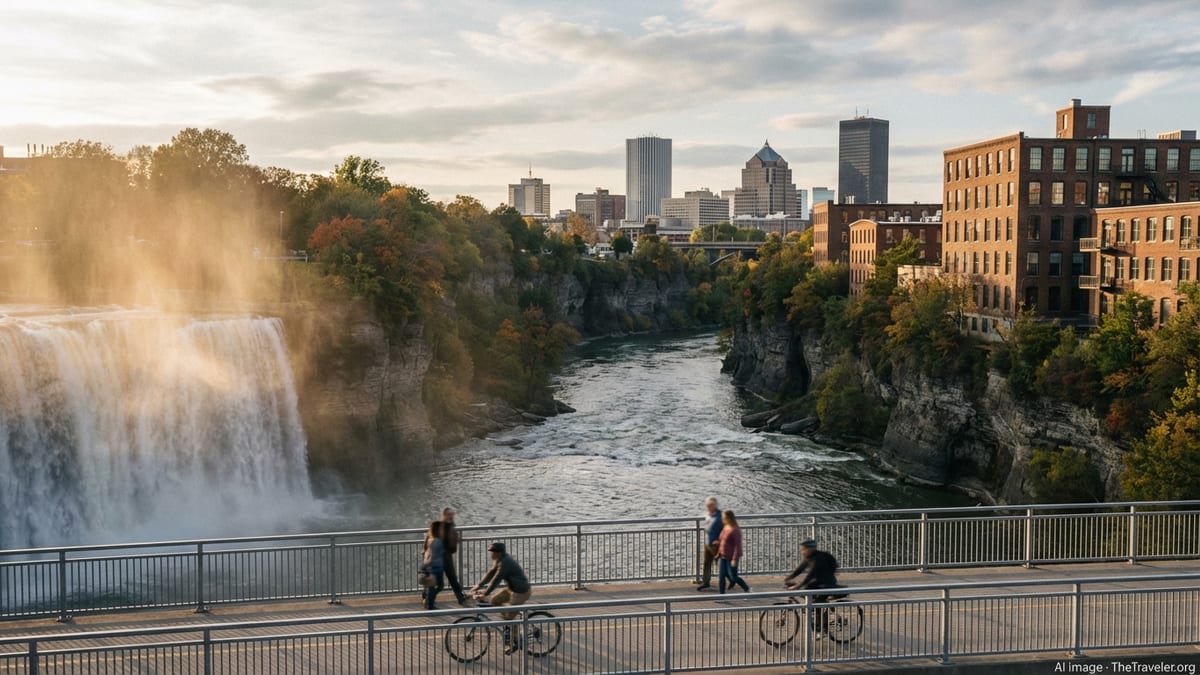
Few visitors expect to find a dramatic waterfall in the middle of an upstate city, but High Falls delivers exactly that. Here the Genesee River drops nearly 100 feet into a gorge just north of downtown, framed by old brick factories and converted mills that recall Rochester’s industrial past. Several overlooks offer striking views of the falls and the surrounding structures, especially in spring when river levels are higher.
The Brown’s Race historic district around the falls preserves remnants of the city’s water powered milling heritage, when Rochester was a major flour producing center. Today, former industrial buildings house offices, lofts, and a small number of cafes and businesses, giving the area a mix of history and adaptive reuse. Interpretive signage explains how the raceway once carried water to power turbines and mills, helping visitors visualize a landscape that once hummed with machinery.
First time visitors should make time to walk across the pedestrian bridge that spans the gorge for a broad view of High Falls, especially near sunset when the light softens and the red brick mills glow. The area is compact, so you can see the main viewpoints in an hour, but many travelers linger longer to photograph the falls from different angles or to follow a section of the nearby Genesee Riverway Trail.
Rochester Museum & Science Center and Strasenburgh Planetarium
The Rochester Museum & Science Center, often shortened to RMSC, is a hands on institution that appeals to families and curious adults alike. Exhibits cover regional history, natural science, and technology, with interactive displays that invite you to experiment, tinker, and explore. You might encounter demonstrations featuring indoor lightning via Tesla coils, exhibits that explain optics and light, or displays that delve into the Underground Railroad and the area’s industrial development.
One of the strengths of the museum is the way it ties national themes to local stories. Exhibits on engineering or energy often reference Rochester companies and innovators, helping you see the city as more than a dot on the map. Visiting early in the day usually offers a bit more breathing room before school groups and families fill the main galleries, especially on weekends and during holidays.
Right next door, the Strasenburgh Planetarium extends the experience into space. Its domed theater hosts star shows, giant screen films, and laser presentations, allowing visitors to explore the night sky even when the city lights or clouds make stargazing difficult. For a first time visitor, combining a few hours in the museum with an afternoon or evening planetarium show offers a well paced introduction to Rochester’s educational side without feeling too academic.
Seneca Park Zoo and the Genesee River Gorge
Set on the east bank of the Genesee River, Seneca Park Zoo gives visitors a chance to see wildlife in a compact, walkable setting that also showcases part of Rochester’s natural landscape. The zoo continues to evolve, with newer habitats that place a strong emphasis on conservation and animal welfare. Expect to see species such as elephants, lions, snow leopards, and river otters, along with smaller animals and rotating educational exhibits.
The surrounding Seneca Park, originally designed as part of the city’s historic park system, is perched along the forested Genesee River gorge. Walking paths lead to overlooks where you can peer into the canyon carved by the river, with views that change dramatically with the seasons. In autumn the steep slopes blaze with color, while in winter the bare branches reveal the full depth of the gorge.
For first time visitors, Seneca Park Zoo can easily fill a half day, especially if you build in time for keeper talks or feeding sessions when they are on the schedule. Pairing a zoo visit with a short walk along the gorge trails gives you a refreshing dose of nature without leaving the city limits, and it helps balance a trip that may also include more urban museums and attractions.
Genesee Riverway Trail and Lake Ontario Waterfront
The Genesee Riverway Trail is one of Rochester’s best assets for travelers who enjoy walking or cycling. Stretching along the Genesee River and connecting multiple parks, historic neighborhoods, and viewpoints, the trail offers a different way to understand the city’s geography. Sections pass by waterfalls, river overlooks, university campuses, and older residential districts, offering a mix of scenery in a relatively short distance.
Many first time visitors focus on the portion of the trail that connects the city core to the waterfront on Lake Ontario. At the northern end you will find Ontario Beach Park at the Port of Rochester, with a broad sandy beach, a pier, seasonal concessions, and a historic carousel that operates in warmer months. Summer brings swimming when conditions allow, along with festivals, concerts, and plenty of locals enjoying the lake breeze.
If you prefer a shorter outing, choose a segment of the trail that fits the time you have available and your comfort level. Some parts are paved and relatively flat, suitable for most walkers and casual cyclists. As with any urban trail, conditions can change with construction and seasonal closures, so it is wise to check recent local updates before planning a long bike ride. Even a simple evening stroll along the river or lakefront, however, will quickly show you why Rochester’s waterways are central to its identity.
Highland Park and the Memorial Art Gallery
Highland Park is Rochester’s signature landscaped park and a highlight for first time visitors, especially in spring. Designed in part by Frederick Law Olmsted, it features rolling hills, winding paths, and extensive collections of trees and shrubs. The park is best known for its lilacs, which draw large crowds each May during the city’s Lilac Festival, but its gardens and arboretum make it a pleasant place to wander in any season.
Beyond its horticultural appeal, Highland Park offers sweeping views over the city and several notable landmarks, including the Lamberton Conservatory, which shelters tropical and desert plants, and a number of memorials and monuments. Locals use the park for jogging, picnics, and informal gatherings, so visitors will likely share the paths with residents going about their daily routines. This everyday energy gives the park a relaxed, authentic feel.
A short drive away, the Memorial Art Gallery, affiliated with the University of Rochester, provides a compact but well curated introduction to visual art. Its collection spans centuries and continents, from European masters to American paintings and contemporary works. Rotating exhibitions bring in additional depth, and the museum’s manageable scale makes it easy to take in the highlights in a couple of hours. Combining time outdoors in Highland Park with a visit to the gallery gives a balanced look at the city’s cultural life.
Neighborhood Flavor: Park Avenue, East End, and Public Market
To understand Rochester beyond its headline attractions, spend part of a day exploring its neighborhoods and everyday gathering places. The Park Avenue area, just east of downtown, is one of the city’s most walkable districts, lined with 19th century houses, cafes, boutiques, and small galleries. It has the feel of a lived in, creative neighborhood rather than a staged shopping street, and it is a favorite area for visitors to find coffee, brunch, or a casual dinner.
Nearby, the East End is known for nightlife, restaurants, and performance venues, making it a good place to experience Rochester after dark. Depending on the night, you might catch live music, theater, or a symphony performance, or simply wander between bars and late night eateries. The streets here are especially lively on weekends when suburban residents and students join downtown locals for a night out.
Another essential stop is the Rochester Public Market, located just northeast of downtown. Operating for over a century, it remains a working market where vendors sell produce, baked goods, specialty foods, and prepared dishes from early morning onward. Saturday mornings are especially busy, with a spirited crowd that reflects the diversity of the city. For first time visitors, it is one of the best places to sample local flavors, grab a casual breakfast, and people watch under the iron framed sheds.
The Takeaway
Rochester may not always headline lists of major tourist cities, but for travelers who give it a few days, it reveals a rich blend of culture, history, and natural beauty. From playful museums and historic mansions to river gorges and lakefront beaches, the city’s attractions are varied enough to fill a long weekend without ever feeling rushed. Neighborhood streets, markets, and parks round out the picture, offering a sense of how people here actually live.
For first time visitors, the 12 attractions outlined here provide a strong framework for planning a trip. You can mix indoor and outdoor experiences based on the season and your interests, whether that means focusing on photography and art, embracing hands on science, or simply enjoying long walks along the river and through leafy parks. Leave room in your schedule for serendipitous discoveries, too, from a cafe that catches your eye to a sunset that paints the High Falls mist in unexpected colors.
Many travelers are pleasantly surprised by how easy Rochester is to navigate and how much it offers within a compact area. After your first visit, you may find yourself already planning a return, perhaps timed to the Lilac Festival, a film series at the Dryden Theatre, or a summer weekend on the Lake Ontario shore. In a region known for its waterways and seasons, Rochester stands out as a welcoming base with a character all its own.
FAQ
Q1. How many days should a first time visitor spend in Rochester
Most visitors are comfortable with two to three full days, which is enough time to see several major attractions, explore a neighborhood or two, and enjoy the waterfront.
Q2. Is Rochester a walkable city for tourists
Downtown, the East End, and Park Avenue are walkable, but attractions are spread out. Combining walking with short drives or rideshares works best for most visitors.
Q3. What is the best time of year to visit Rochester
Late spring through early fall offers the most comfortable weather and events, including the Lilac Festival in May and busy waterfront activity in summer.
Q4. Do I need a car to see the main attractions
You can visit several downtown sites without a car, but having one makes it much easier to reach Highland Park, Seneca Park Zoo, Ontario Beach, and other outlying spots.
Q5. Are the major museums in Rochester family friendly
Yes. The Strong National Museum of Play and the Rochester Museum & Science Center are especially popular with families, thanks to extensive interactive exhibits and programs.
Q6. Can you see High Falls without a guided tour
Yes. High Falls overlooks and the pedestrian bridge are freely accessible. A tour or interpretive signs can add context, but they are not required to enjoy the views.
Q7. Is the Genesee Riverway Trail suitable for casual cyclists
Many sections are paved and relatively flat, suitable for recreational riders. Check current local information for any construction or closures before planning a longer trip.
Q8. What should I pack for a trip to Rochester
Pack layers, comfortable walking shoes, and a light rain jacket. Weather by Lake Ontario and along the river can shift quickly, even in warmer months.
Q9. Are there good food options near the main attractions
Yes. Neighborhoods like Park Avenue, the East End, and the area around the Public Market have many independent restaurants, cafes, and bars within a short drive of major sights.
Q10. Is Rochester safe for tourists
Most visitors have a trouble free stay by following common sense precautions, staying aware of their surroundings, and sticking to well traveled areas, especially at night.