

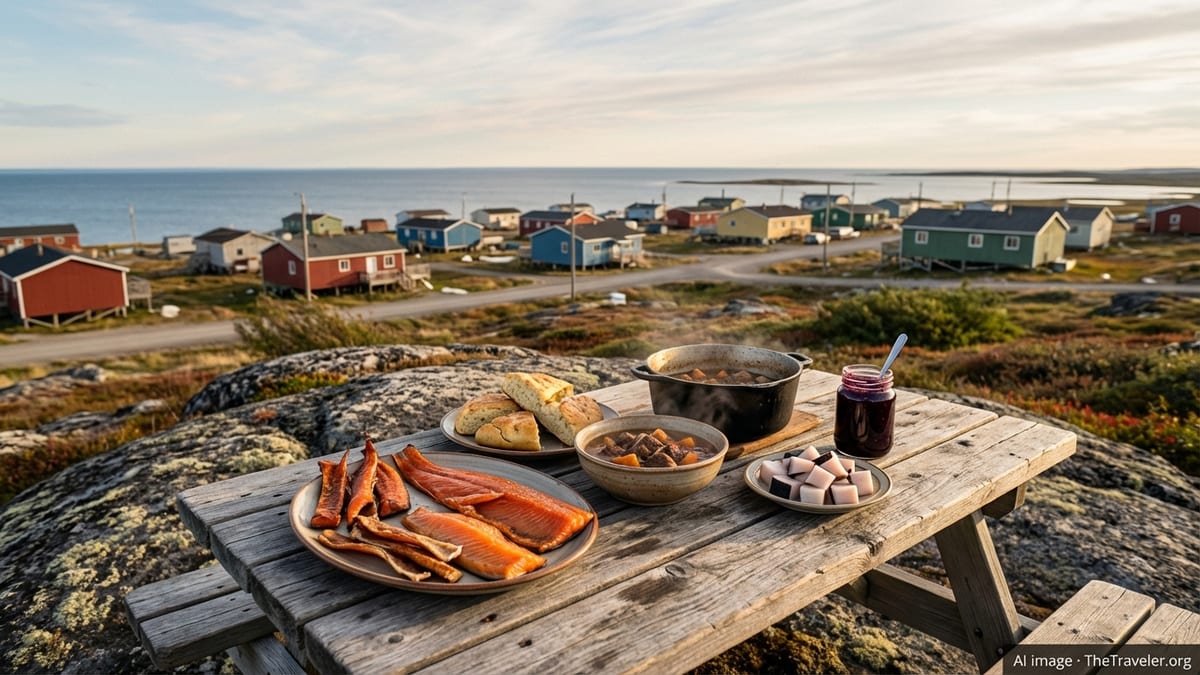
From the rocky shores of Churchill, Manitoba, to Inuit communities scattered along the Kivalliq coast of Nunavut, the Hudson Bay region offers a taste of Northern Canada that is completely unlike the rest of the country. Here, “country food” such as Arctic char, caribou, and maktaaq is more than a menu choice. It is a living connection to the land, the sea, and a deeply rooted culture of sharing. If you are planning a trip to the communities that ring Hudson Bay, these eight foods and local specialties will give you a true sense of place at the edge of the Arctic.
Understanding Country Food on Hudson Bay
Before diving into individual dishes, it helps to understand the idea of “country food,” a term you will hear frequently in Northern communities near Hudson Bay. Country food refers to foods harvested from the land and sea such as caribou, muskox, Arctic char, seals, whales, geese, ptarmigan, and a variety of berries. In Inuit regions this food is central to culture and identity, and harvesting, preparing, and sharing it are community activities as important as the meals themselves.
Hudson Bay’s coastal communities, especially in Nunavut’s Kivalliq region and northern Manitoba, still rely heavily on these traditional foods. Surveys by Canadian researchers have long shown that a large share of households in the Eastern and Central Arctic get much of their meat and fish from country foods rather than from imported products. While store shelves now carry everything from fresh produce to frozen pizzas, many families continue to hunt, fish, and gather throughout the seasons, supplementing modern ingredients with traditional staples.
As a visitor, you are unlikely to join a hunt, but you may encounter country food in community feasts, cultural festivals, or at small processors and hotels that serve it when available. Country food is often seasonal, harvested under strict wildlife regulations, and shared first within families and communities. When you are invited to taste it, you are being welcomed into an intimate part of Northern life.
Respect is key. Try what is offered, avoid waste, and ask questions in an open, curious way. Many local hosts enjoy explaining how a particular dish is harvested or prepared, and stories about the weather, the land, and travel on sea ice often accompany the food. By understanding what country food represents, you will appreciate each bite of char, each spoonful of stew, in a new way.
Arctic Char in All Its Forms
If there is one food that defines the Hudson Bay coastal menu, it is Arctic char. This cold-water fish, whose flavor is somewhere between trout and wild salmon, thrives in the rivers and lakes that drain into Hudson Bay. In Kivalliq communities such as Rankin Inlet and Arviat, char has been a central food source for generations, caught through the ice in winter and by nets or lines after breakup. Its rich, orange flesh is high in protein and omega-3 fatty acids and can be eaten raw, frozen, dried, smoked, baked, or boiled.
In recent years, small processors such as Kivalliq Arctic Foods in Rankin Inlet have helped move char from traditional drying racks into neatly packed fillets, smoked slices, and jerky-style snacks that reach hotels, co-ops, and Northern stores across Nunavut. You might see glistening cold-smoked char on a plate at a local inn or pick up frozen fillets to cook yourself if you have access to a kitchen. Some products, like peppered or candied char, blend traditional fish with southern-style seasonings, showing how Northern cuisine continues to evolve.
For a taste that is closer to the land, seek out pipsi, the traditional dried form of char. To make pipsi, fish are split, sometimes brined, and then air-dried on racks until the flesh becomes firm and chewy. Locals often snack on pieces straight from the skin or dip them in rendered oil. Depending on conditions, you may notice drying racks along shorelines or near homes in late summer and early fall, a sign that families are putting away food for the darker months ahead.
If you are lucky enough to be invited to a meal in a local home or to a community feast, you may also encounter quaq: raw, frozen char that is sliced and eaten like sashimi. The experience of tasting cold, almost crunchy pieces of fish while a blizzard howls outside is profoundly Arctic. Whether you try char smoked with modern equipment or still drying in the coastal wind, it offers one of the most direct connections to Hudson Bay’s waters.
Hearty Caribou Stew and Dry Meat
On cold days along Hudson Bay, nothing is more comforting than a bowl of caribou stew. Caribou has long been one of the most important land animals for Inuit and Dene peoples in Northern Canada. In Nunavut and northern Manitoba, it remains a prized meat. Traditional caribou stew typically features cubes of meat simmered slowly with onions, potatoes, carrots, and sometimes turnips or other hardy vegetables. The broth is rich but not heavily spiced, allowing the mild, slightly sweet flavor of caribou to come through.
In modern kitchens, recipes may add herbs such as thyme or bay leaves and serve the stew alongside fluffy bannock. For visiting travelers, caribou stew is often the most accessible way to try this meat, because it may appear as a special on hotel menus or at community events. The texture is similar to lean beef, but with a distinct taste that reflects an animal raised on wild tundra plants rather than grain. When caribou herds are healthy and hunting is permitted, local processors sometimes offer retail cuts that make their way into Northern grocery freezers and restaurant kitchens.
Beyond stew, dried caribou meat is another staple you may encounter. Known in some communities as mikku or mipku, thin strips of meat are hung to dry in the open air or in a smokehouse. The result is a chewy, intensely flavored jerky that stores well through long winters and long journeys by snowmobile or boat. For residents, dry meat is both a snack and a taste of home when they are out on the land for days at a time.
Because caribou populations are closely monitored and hunting quotas can change, availability in any given season is never guaranteed. This is part of what makes a bowl of caribou stew in Churchill, Rankin Inlet, or another Hudson Bay community feel special. When you do find it, enjoy it slowly, knowing it reflects a long tradition of respectful harvesting and careful use of every part of the animal.
Muskox, Goose, and Other Wild Meats
While caribou is often the star, other wild meats also shape the culinary landscape around Hudson Bay. Muskox, a shaggy, ice-age survivor of the Arctic tundra, appears in burgers, sausages, and stews when harvests allow. Its meat is dark, rich, and slightly gamey, somewhere between beef and lamb. In some Nunavut communities, local food plants process muskox from across the territory into cuts that are sold as seasonal specialties. When you see a muskox burger or meatballs on a menu, it is worth ordering for both flavor and story value.
Waterfowl are another important wild food in the region. Spring and fall bring migratory geese and ducks, which have traditionally been hunted along the coasts, river mouths, and inland wetlands. In smaller communities, families still gather to prepare and roast wild goose, sometimes stuffing it with rice or vegetables. The taste is more intense than farmed poultry, with a deep, almost earthy note from the birds’ natural diet. If you attend a community gathering or feast in a Hudson Bay community during migration seasons, roast goose might be one of the dishes set out in large trays for everyone to sample.
Smaller game birds, like ptarmigan, also have a place on local tables, particularly in Nunavut and Nunavik further east. Ptarmigan is often stewed or roasted and has a delicate yet distinctive flavor. Like caribou and goose, these birds are part of an intricate system of knowledge regarding migration patterns, safe ice travel, and respectful harvesting practices that are passed down within families.
Because regulations, quotas, and local customs around wildlife are complex, wild meats are usually not marketed in the same way as southern game. Instead, you are most likely to encounter them through community feasts, cultural festivals, or as rotating specials at local hotels. If you see a notice about a feast posted at the arena, community hall, or hotel lobby, consider attending. It can be an extraordinary way to experience a range of wild Hudson Bay flavors in a single evening.
Maktaaq and Whale-Based Delicacies
For many visitors, the idea of eating whale can be surprising, even controversial. Yet in Inuit communities along Hudson Bay and throughout the Arctic, maktaaq, the skin and underlying layer of fat from whales such as beluga and bowhead, is a traditional delicacy and a deeply meaningful food. It has historically provided important nutrients, including vitamin C and omega-3 fats, in a region where imported fresh produce was scarce or nonexistent for much of the year.
Maktaaq is typically eaten raw, frozen, or lightly cooked. When served raw, it is often cut into small cubes that combine chewy skin with rich blubber. People may dip it into fermented whale or seal oil or simply enjoy it on its own. The flavor can range from surprisingly mild to quite strong, depending on how it has been aged. It is usually shared during special occasions such as community celebrations, the successful return of a hunt, or holiday feasts.
Modern regulations tightly control whale harvesting, and hunts are generally organized at the community level to provide food locally rather than for large-scale commercial sale. As a result, visitors are unlikely to find maktaaq listed on restaurant menus. Instead, they might encounter it at a community feast or a cultural demonstration, where small pieces are offered alongside dried fish, char, or caribou.
If you are offered a taste, it is important to remember that accepting is a form of respect for the hosts and for the long, often dangerous work involved in hunting, processing, and distributing whale. You can always begin with a small piece. The combination of textures and oceanic flavors is unlike anything found in southern cuisine, and even a single bite offers insight into the ingenuity and resilience of Arctic food traditions along Hudson Bay.
Bannock and Other Everyday Staples
Travel long enough anywhere in Northern Canada and you will encounter bannock. This simple, adaptable bread has roots in Indigenous and fur trade histories and is now a staple across First Nations, Inuit, and Métis communities. Around Hudson Bay, bannock shows up at everything from family suppers to community feasts, often served alongside caribou stew, fish chowder, or tea. At its most basic, it is a mixture of flour, baking powder, fat, and water or milk, fried in a pan or baked until golden.
In practice, every household seems to have a slightly different take on bannock. Some cooks prefer it thick and cake-like, others flatter and crisp at the edges. It might be cooked in a cast-iron pan over an open fire on the tundra or baked in a modern kitchen oven. Some versions include sugar for a hint of sweetness, while others incorporate wild berries when in season. The result pairs well with both savory and sweet toppings, making it as at home with stew as it is with jam or honey.
For visitors, bannock is often the easiest Northern specialty to find, because it is inexpensive to make and can stretch to feed crowds. Try it warm if you can, when the outside still has a slight crunch and the interior is soft. Some cooks slice leftover bannock horizontally to create sandwiches, while others treat it almost like a flatbread base for hearty toppings.
You may also see bannock reimagined in creative contemporary dishes, such as bannock burgers or open-faced bannock with smoked char. These modern twists demonstrate how flexible this “everyday” food can be. Despite the innovations, its role as a symbol of hospitality endures. When someone offers you bannock with tea in a Hudson Bay community, you are being treated as a guest, not merely as a tourist.
Wild Berries, Teas, and Sweet Treats
Summer is short along Hudson Bay, but it brings a burst of plant life that locals eagerly anticipate. One of the most cherished seasonal foods is wild berries. Across tundra and coastal lowlands, you will find cloudberries, crowberries, blueberries, cranberries, and other small fruits growing low to the ground. Families and friends head out on berry-picking trips, filling buckets and plastic containers that later become jams, jellies, desserts, and frozen stores for winter.
Each type of berry has its own character. Cloudberries, found in wet, boggy areas, are golden-orange and intensely aromatic, often used in sauces or spooned over desserts. Crowberries are small, dark, and resilient, commonly eaten with sugar or mixed into baked goods. Blueberries and cranberries are more familiar to southern visitors, but they take on a particular intensity in the cool northern climate. In many Hudson Bay communities, berry picking is as much a social outing as it is a food-gathering activity.
Alongside berries, you may encounter wild herbal teas made from local plants. Labrador tea, for instance, is an aromatic leaf that has been used in Indigenous communities across the North for generations. Steeped in hot water, it produces a fragrant drink that pairs beautifully with bannock, dried fish, or berry desserts. Some community stores and craft fairs sell dried Labrador tea and berry products, making it possible to bring a small taste of the tundra home.
In some parts of the Western Arctic, a traditional dessert known as akutuq, or “Eskimo ice cream,” blends whipped fat, sometimes meat, and berries into a rich, mousse-like dish. While this particular specialty is more associated with Alaska and the Inuvialuit region than with Hudson Bay’s eastern shores, visitors occasionally encounter similar sweets that combine whipped cream or modern baking ingredients with local fruit. Whether you try a jar of jam, a slice of berry pie at a northern hotel, or a spoonful of cloudberries straight from the pail, you will be tasting the bright side of an otherwise stark landscape.
Where and How Travelers Can Taste These Foods
One of the realities of traveling near Hudson Bay is that you cannot simply walk down a street lined with restaurants and choose from multiple takes on Arctic char or caribou. These are small, often remote communities, and dining options are limited. Many visitors arrive on organized tours that include meals at a main hotel or lodge. In Churchill, licensed restaurants and inns sometimes offer dishes such as Arctic char, pickerel from nearby lakes, or bison and elk sourced from elsewhere in Manitoba. These give a gentle introduction to Northern flavors, even when the ingredients are partly southern.
Farther north in Nunavut’s Kivalliq region, many communities have a single hotel or Inns North property that functions as both lodging and the main place to eat out. Menus generally focus on familiar comfort foods like burgers, sandwiches, and pasta but may occasionally feature local specialties, especially when country food is available. You might find muskox or caribou burgers as a daily special or smoked char on the appetizer list. Ask staff whether any local dishes are being served during your stay, as availability can change quickly.
For country food to enjoy on your own, look to community stores and small processors that package Arctic char, caribou, and related products. In some Nunavut communities, locally run plants process fish and meat for sale across the territory, offering items such as dried pipsi, smoked char, or country food packs that combine several types of meat. Because these businesses depend on seasonal harvests and shipping schedules, selection can vary from week to week, but that is part of the experience. Buying a package of smoked char or dry meat is not only a way to taste the region but also a way to support Northern livelihoods.
Perhaps the most memorable food experiences, though, come from invitations into local homes or community feasts held at arenas and halls. These events may coincide with holidays, hunting successes, or cultural festivals and can feature long tables covered with trays of maktaaq, roasted goose, dried char, bannock, and berry desserts. If your timing is right, ask at your hotel or the local visitor center whether any public feasts are happening. Attend as a guest, observe what others do, and join the line once it is your turn. For many travelers, these meals remain the highlight of a Hudson Bay journey.
The Takeaway
Tasting Northern Canadian foods near Hudson Bay is not like dining your way through a big-city restaurant district. It is quieter, more seasonal, and more dependent on relationships. Arctic char, caribou stew, muskox burgers, maktaaq, bannock, and wild berries are not just flavors to check off a list. They reflect webs of knowledge about ice, weather, and wildlife, as well as values of sharing and resilience that have sustained communities for generations.
Planning ahead, staying flexible, and showing respect will help you encounter these specialties in a meaningful way. Ask gentle questions, accept what is offered, and remember that country food has deep cultural and nutritional importance in the North. Whether you find yourself savoring smoked char in a hotel dining room in Rankin Inlet, mopping up the last of a caribou stew with bannock in Churchill, or tasting maktaaq at a bustling community feast, each bite brings you closer to understanding life along the vast, cold waters of Hudson Bay.
FAQ
Q1. Can I buy Arctic char and other country foods to take home from Hudson Bay communities?
In some communities you can purchase frozen or smoked Arctic char and other products from local stores or processors, but availability depends on season, harvests, and shipping. Always check local regulations about transporting meat or fish, and keep items frozen during your journey.
Q2. Is it safe for visitors to eat raw or frozen country foods like quaq or maktaaq?
Locals have generations of experience handling and preparing these foods safely, and they are commonly eaten in Northern communities. However, if you have a sensitive stomach or specific health concerns, start with small portions and follow local advice. When in doubt, choose cooked preparations such as baked char or stews.
Q3. Will restaurants in Churchill or Nunavut always have caribou, muskox, or whale on the menu?
No. Wild meats depend on regulated harvests and local availability, so they are often offered only as occasional specials or at community feasts. Many establishments focus on more predictable ingredients and add country foods when they can.
Q4. How can I respectfully try country food without offending anyone?
Approach each dish with curiosity and gratitude. If you are offered something unfamiliar, it is polite to accept at least a small taste. Avoid waste, do not make negative comments about how a food looks, and feel free to ask about its preparation and cultural meaning if your host seems comfortable sharing.
Q5. Are there vegetarian or vegan options that still reflect the local food culture?
Vegetarian and vegan options are limited in many small Hudson Bay communities, but you may find dishes built around bannock, potatoes, rice, and imported vegetables. When wild berries are in season, jams, desserts, and berry-topped bannock can offer a plant-based taste of the local landscape.
Q6. When is the best time of year to experience local foods near Hudson Bay?
Late summer and early autumn often provide the widest variety, with fresh Arctic char, berry picking, and the tail end of some hunting seasons. Winter and spring bring their own specialties, such as char caught through the ice and hearty stews, but travel logistics and weather can be more challenging.
Q7. Can I join a hunt or fishing trip to see how country food is harvested?
In some areas outfitters offer guided fishing or wildlife-viewing trips, but joining an actual subsistence hunt is uncommon and may not be appropriate for short-term visitors. If you are interested, talk with licensed local guides or tour operators, who can explain what is possible and respectful in that community.
Q8. What should I know about alcohol and dining in Northern communities?
Alcohol rules vary widely across Hudson Bay communities, from strict bans to permit systems or open sales. Some hotels and restaurants serve alcohol, while others do not. It is important to learn the local regulations before you arrive, respect community norms, and never bring alcohol into a community where it is restricted.
Q9. How expensive is eating out in remote Hudson Bay communities?
Because almost all store-bought food must be flown or shipped in, prices can be significantly higher than in southern Canada. Buffets or set meals at hotels can still offer good value given the logistics involved. Budget accordingly, and remember that when you pay for a plate of smoked char or stew, you are also supporting local jobs and supply chains.
Q10. What is the best way to learn more about food culture while I am there?
Start by talking to local staff at hotels, visitor centers, and stores. Ask about community feasts, cultural events, or storytelling evenings. Museums, cultural centers, and school events sometimes highlight traditional foods and harvesting practices, offering context that will deepen every meal you eat along Hudson Bay.