

Circle Lake Superior by car and you quickly understand why so many travelers obsess over this inland sea. Small harbors, working ports, and forested peninsulas ring its cold blue water, and along the way, the food often tells you as much about the place as the scenery does. From whitefish pulled straight from the big lake to Finnish pancakes, wild rice, and unfussy diners that fuel snowmobilers and hikers alike, these eight spots around Lake Superior are where local flavor is far more than a marketing line. It is simply how people eat here.
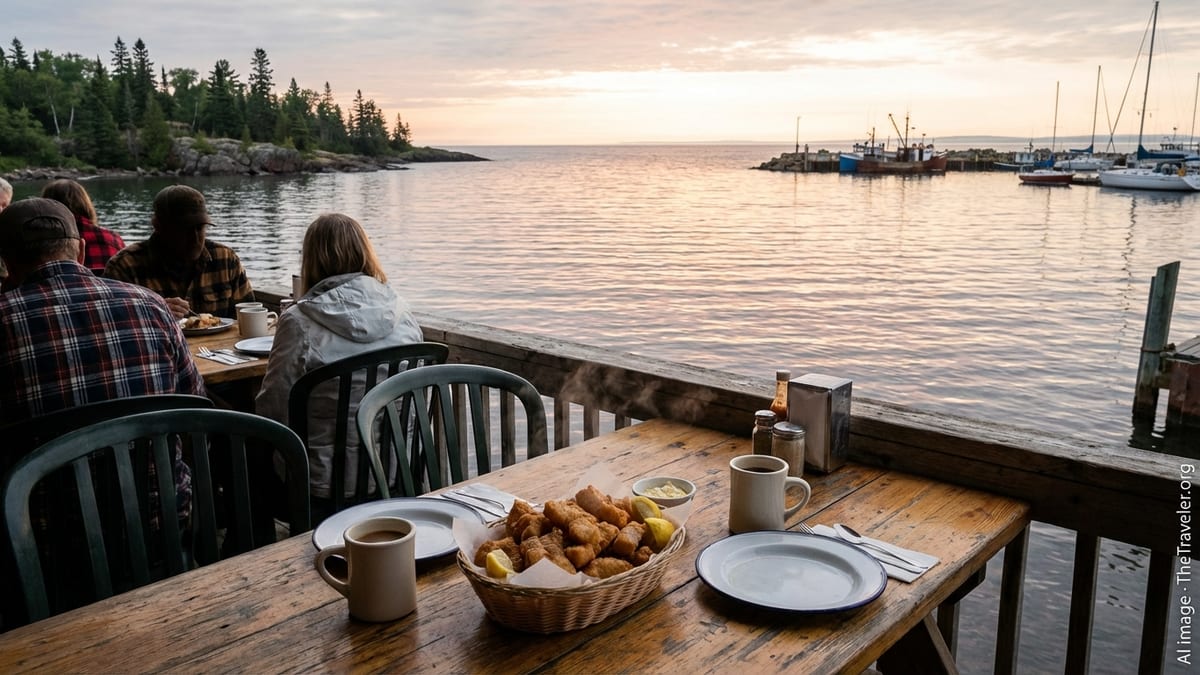
1. Bayfield, Wisconsin: Whitefish and Harbor Views
On the Wisconsin shore, Bayfield has become one of Lake Superior’s best-known small towns for travelers who care as much about their next meal as their next hike. You can see why the moment a plate of Lake Superior whitefish reaches the table. Many local menus revolve around this cold-water staple, often sourced from family-run fisheries that have worked these waters for generations. Pan-fried fillets, whitefish tacos, and even whitefish livers appear, each preparation reflecting the cooks who grew up on this shoreline. Eating it while looking out over the Apostle Islands connects the dots between lake, livelihood, and lunch in a single bite.
Restaurants here lean into what Bayfield does best: fresh fish, local produce from nearby orchards, and a relaxed harbor-town pace. Several dining rooms and patios are positioned to frame sailboats and ferries sliding across the bay while you linger over supper-club style fish fries or more contemporary takes with seasonal sides. Portions tend to be hearty, service is informal but attentive, and dress codes skew firmly toward “whatever you wore to the dock.” In summer and early fall, it is wise to expect a wait at peak times and to check current hours, which can shift with the tourist season.
What stands out most is how strongly the local food economy shapes the menus. Orchards on the Bayfield Peninsula supply apples and berries for ciders, desserts, and breakfast specials. Simple side salads may feature greens from small farms just inland. You will see the word “local” often, but in Bayfield it is specific rather than vague: local whitefish, local berries, local cider, all grown or caught within a short drive of the waterfront. For travelers chasing a sense of place through food, Bayfield delivers it plate by plate.
2. Duluth, Minnesota: From Harborside Fish to Creative Comfort Food
Duluth anchors the southwestern corner of Lake Superior, and its food scene mirrors the city itself: a working port with a growing creative streak. Traditionalists can still find harbor-side spots serving straightforward platters of fried or grilled Lake Superior fish, usually whitefish or herring when available, along with coleslaw and potatoes. The views here are pure Duluth, featuring ore ships sliding through the canal, the Aerial Lift Bridge rising and lowering, and the constant presence of the lake. Eating fish caught in the same waters you are watching is a core Great Lakes experience, and Duluth remains one of the easiest places to have it.
Beyond the docks, the city’s neighborhoods offer a surprising range of flavors for a town of its size. Breweries pair small-batch beers with menus that highlight local cheeses and sausages or playful spins on Midwestern comfort dishes. Bakeries and cafes lean into northern staples like cardamom-laced pastries, hearty oat breads, and soups substantial enough to get you through a Duluth winter. In recent years, Detroit-style pizza has found a foothold here, giving travelers another option when they are ready to trade fish for chewy, caramelized-edged slices. It is not traditional North Shore fare, but it has quickly become a local favorite.
What ties Duluth’s dining scene together is a pragmatic sense of hospitality. This is still a port city where people dress for the weather, not for the room, and where a table of cyclists in fleece blends easily with families celebrating a birthday next to them. You can spend a day walking the Lakewalk or climbing trails in nearby state parks, then head directly to dinner without changing out of hiking boots. Menus tend to note when fish or meat is locally sourced and when seasonal produce from the region is available, but the tone stays understated. Duluth is comfortable letting the lake set the mood and letting the food quietly match it.
3. Grand Marais, Minnesota: North Shore Cabin Culture on a Plate
A couple of hours up the North Shore from Duluth, Grand Marais feels like the archetypal Lake Superior harbor town: a protected bay, a working waterfront, and forested hills that rise almost from the shoreline. Food here reflects a blend of cabin culture and a growing community of chefs and bakers drawn to the North Shore lifestyle. You will find no shortage of casual, lake-facing spots where burgers, chowders, and baskets of fish share menu space with craft beer and local cider. Many places offer patios or picnic tables steps from the water, inviting you to linger over a meal even when the wind off the lake brings a chill.
Breakfast and coffee are where Grand Marais particularly shines. Independent bakeries turn out famously sturdy breads, filled pastries, and cinnamon rolls meant to be shared, all suited to fueling long hikes on the Superior Hiking Trail. Coffee shops often double as community hubs, with walls lined by local art and bulletin boards covered in trail conditions and music announcements. Grab a latte and a breakfast sandwich here, and you will likely find yourself surrounded by a mix of locals starting a workday and visitors mapping out canoe routes in the Boundary Waters.
Grand Marais also embraces the region’s seasonal bounty. In late summer and early fall, wild blueberries and other boreal fruits appear in pies and desserts. Some restaurants highlight wild rice in soups, burgers, or grain bowls, a nod to Indigenous food traditions that long predate tourism. While you can still get a straightforward basket of fried fish or a classic slice of pie, the town’s food scene has gradually expanded to include vegetarian and gluten-aware options, making it easier for diverse groups of travelers to eat well together after a day on the trail.
4. Thunder Bay, Ontario: Finnish Pancakes and Northern Ingredients
Across the lake in Ontario, Thunder Bay is one of the most rewarding cities for travelers seeking local flavor shaped by immigration and geography. Finnish culture, in particular, runs deep here, a legacy of early 20th-century settlers who came to work in logging and mining. That heritage lives on in the form of thin, tender Finnish pancakes served hot from griddles at local cafes and diners. Often described as somewhere between a crepe and a traditional pancake, they arrive folded or rolled, dusted with sugar, and ready for lashings of butter, berries, or syrup. They are as much a Thunder Bay morning ritual as they are a meal.
Beyond pancake houses, Thunder Bay’s restaurants tap into northern Ontario’s pantry. Menus highlight freshwater fish such as pickerel and trout when they are in season, as well as wild rice, a traditional staple in the region’s Indigenous communities. Wild rice salads, pilafs, and soup bases appear in both casual eateries and more upscale dining rooms. Local bakeries turn out dense rye breads and cardamom-scented pastries, continuing Nordic influences in everyday eating. Cafes and breweries add to the mix, offering spaces where locals gather year-round despite the city’s famously long winters.
The city has also cultivated seasonal food events that celebrate its restaurant scene and regional ingredients. These festivals typically encourage participating restaurants to create special menus that emphasize local produce, meat, and fish, giving visitors a snapshot of what Thunder Bay kitchens can do with what the north provides. Schedules and lineups change from year to year, so it is worth checking what might be happening when you plan your trip. Even outside of festival periods, the through-line here remains the same: approachable, hearty food informed by Finnish and Indigenous traditions, served by people who know exactly how to feed you after a day in the cold.
5. Hancock and the Keweenaw Peninsula, Michigan: Diner Culture at the Edge of the Lake
On Michigan’s Upper Peninsula, the Keweenaw juts into Lake Superior like a rocky, forested finger. Snow piles deep here, and distances between towns can be long, which helps explain the enduring appeal of classic diners. In Hancock and nearby communities, you will find breakfast-and-lunch spots that open early, close in the afternoon, and focus on the kinds of meals that help you get through a long workday or a day on the trail. Expect generous omelets, pancakes, skillets, sandwiches, and bottomless coffee poured by staff who are used to greeting the same regulars every morning.
These diners may be lighthearted in tone, but they take their food seriously. Many pride themselves on house-made elements, from sausage patties and hash to baked goods and seasonal jams. Breakfast burritos and sandwiches are popular with travelers heading out early for hikes, mountain bike rides, or snowmobile trips. The atmosphere is typically casual and quick-moving, but never rushed; you can be in and out efficiently or linger over a second or third cup of coffee as snowplows rumble by outside. Prices are generally moderate, and kids fit right in alongside construction workers and students from nearby universities.
While Lake Superior fish does not dominate menus here the way it does in harbor towns, the lake still shapes daily life and the regional identity. You will see it on postcards at the register and hear it come up in conversation about weather, road conditions, or where to go exploring after breakfast. Many diners cater to visitors heading toward small Keweenaw communities further north, offering directions and travel tips alongside refills. Eating here is less about tracking down a particular signature dish and more about experiencing the everyday food culture that keeps this peninsula going through long winters and bright, short summers.
6. Bayfield Peninsula Backroads, Wisconsin: Farm, Forest, and Shoreline
Step away from Bayfield’s compact main street and the surrounding peninsula reveals a quieter, more rural side of Lake Superior dining. Backroad cafes and roadside kitchens are often tucked among orchards, rolling farms, and forest. Some began as small baking operations or farm stands and have slowly grown into full-fledged eateries, selling sandwiches, burritos, breads, and pastries to locals and travelers en route to trailheads or beach walks. The mood is unhurried, the decor simple, and the focus firmly on what can be made from scratch in a small kitchen.
Many of these spots showcase ingredients grown or produced nearby, from apples and berries to pasture-raised meats and eggs. Menus might change daily or weekly depending on what is available, but you can typically count on robust sandwiches, soups, and baked goods that travel well. Some kitchens emphasize whole grains, vegetarian fillings, and lighter fare that contrasts nicely with the heavier fish fries and suppers available closer to town. In summer and fall, picnic tables outside make it easy to grab food and keep moving, whether you are headed to the Apostle Islands, a quiet stretch of shoreline, or a scenic drive under changing leaves.
Because hours and offerings can vary with the season and the owner’s schedule, planning a little flexibility into your day is wise. It is common for these small enterprises to close midweek or to shift to reduced winter hours. The reward for working around that reality is a meal that feels deeply personal and place-specific, often assembled by someone who grows or knows the people who grow the ingredients. If your vision of local flavor includes talking to the person who baked your bread that morning, the side roads of the Bayfield Peninsula are worth exploring.
7. Indigenous and Wild Foods Around Lake Superior
Many of the most meaningful flavors around Lake Superior trace back to Indigenous food traditions that long predate national borders and tourism. Wild rice, in particular, is central to Anishinaabe foodways and remains an important cultural and culinary touchstone in parts of northern Minnesota, Wisconsin, and Ontario. While wild rice does not always appear front and center on restaurant signs, attentive travelers can find it woven into menus as a base for soups, a side dish, or part of more contemporary grain bowls. When you see it, you are tasting a food that carries stories of seasonal harvests and careful stewardship of lakes and wetlands.
Other ingredients with deep local roots include freshwater fish species, wild berries, and game. Some restaurants collaborate with Indigenous suppliers or culinary entrepreneurs to bring these foods to a broader audience, while Indigenous-run food trucks, caterers, and pop-ups appear periodically in regional hubs. Because these ventures can be small and mobile, it is difficult to pin them down in a simple list, and their hours or locations may change season to season. Asking at visitor centers, farmers markets, or local events can be one of the most reliable ways to discover who is currently cooking with these ingredients.
Approaching Indigenous food around Lake Superior with respect means recognizing that not every dish or practice is meant for visitors, and that some foods, like wild rice, carry spiritual as well as nutritional significance. When you do have the opportunity to taste them, it is worth taking a moment to understand their background rather than treating them as novelty items. Read menu descriptions, ask thoughtful questions if staff have time, and support businesses that clearly credit Indigenous producers and communities. In doing so, you add an important layer of meaning to your culinary tour of the lake.
8. Seasonal Food Events and Markets on the Big Lake
The Lake Superior region may feel remote on a map, but its communities take food seriously enough to organize around it. Seasonal food festivals, restaurant weeks, and harvest events pop up in many of the larger towns and cities, giving travelers an efficient way to sample a wide range of local cooking in a short time. Some focus on fall harvests, inviting restaurants to build fixed-price menus around regional produce, meat, and fish. Others highlight particular ingredients, like apples or berries, with everything from farm tours to pie tastings. On the Ontario side, city-backed culinary events encourage kitchens to experiment with local themes and draw both residents and visitors into the dining room.
Farmers markets also play a big role in connecting travelers with the region’s food culture. In summer, you will find stalls piled with greens, root vegetables, and early fruits, alongside bakers selling breads and pastries still warm from the oven. Artisan producers bring cheeses, cured meats, pickles, honey, and preserves, many of which travel well and make excellent edible souvenirs. A stroll through a market can double as breakfast or lunch, and it often leads to recommendations from vendors about where else to eat in town. Ask what they like nearby, and you will typically get pointed toward places that quietly do right by local ingredients.
Because dates and formats change frequently, it is smart to check for the latest information when you plan your circuit of the lake. Tourism offices, local chambers of commerce, and city event calendars in places like Duluth, Thunder Bay, and Bayfield usually carry up-to-date listings. Even if your trip does not line up perfectly with a festival, weaving in a weekly farmers market or two gives you another vantage point on how people around Lake Superior eat at home, not just in restaurants.
The Takeaway
Eating your way around Lake Superior is not about chasing a single famous restaurant or booking tables months in advance. It is about paying attention to the small details that repeat from shore to shore: the snap of a freshly fried whitefish fillet, the chew of real wild rice, the buttery edges of a Finnish pancake, the quiet pride with which a diner server slides a loaded breakfast plate onto your table. The best meals here tend to appear where lake, land, and community overlap most strongly, whether that is a harbor-side dining room, a backroads bakery, or a market stall piled with berries.
As you plan your own loop around the big lake, consider leaving room in your schedule and your appetite for unplanned stops. The eight places and themes in this guide are starting points, not a complete inventory. Ask locals where they eat on a Tuesday morning in February or a windy night in October, and follow their suggestions. Lake Superior rewards that kind of curiosity with meals that may not be flashy, but that feel unmistakably rooted in the place. Those are the flavors that linger long after the road trip is over.
FAQ
Q1. What is the most iconic local dish to try around Lake Superior?
Lake Superior whitefish, prepared in everything from simple pan-fried fillets to fish fries and tacos, is the signature taste of the lake in many communities.
Q2. Do I need reservations at restaurants around Lake Superior in summer?
In popular towns like Bayfield, Duluth, Grand Marais, and Thunder Bay, reservations or early arrivals are recommended in peak summer and fall weekends.
Q3. Can I find vegetarian or vegan options in these lake towns?
Yes. While fish and meat are prominent, most larger towns now offer salads, grain bowls, vegetarian sandwiches, and some clearly marked vegan dishes.
Q4. Is wild rice commonly available in restaurants around Lake Superior?
Wild rice appears regularly in soups, pilafs, and side dishes, especially in northern Minnesota and northwestern Ontario, though availability can vary by season and restaurant.
Q5. Are restaurants open year-round, or do many close in winter?
Larger cities like Duluth and Thunder Bay have many year-round options, while some small-town and seasonal spots reduce hours or close in the quiet winter months.
Q6. How dressy are typical restaurants around Lake Superior?
Most places are casual. Outdoor gear, jeans, and hiking boots are widely accepted, even in dining rooms with harbor views or multi-course menus.
Q7. Can I safely eat locally caught fish from Lake Superior?
Commercially served fish must meet regional safety regulations. For personal catches, check current local fish consumption advisories, which can change over time.
Q8. Are there options for travelers with gluten-free or other dietary needs?
Yes. Many restaurants can accommodate gluten-free, dairy-free, or other needs, especially if you mention them when reserving or ordering, though choices may be limited in smaller towns.
Q9. What is the best season to plan a food-focused trip around Lake Superior?
Late spring through early fall offers the broadest selection of open restaurants, fresh local produce, and food events, though winter has its own cozy charm.
Q10. How can I find truly local favorites instead of tourist-only spots?
Ask staff at lodgings, visit farmers markets, and chat with locals at cafes or diners; their everyday choices often lead you to the most authentic meals.