

Alabama tends to conjure images of college football, small towns, and humid summer nights. Visitors often arrive expecting a laid-back Southern drive-through state and instead find barrier-island beaches that feel almost Caribbean, bioluminescent canyons, a globally influential music scene, and some of the most powerful civil rights sites in the United States. These are 15 things to do in Alabama that surprise most visitors, revealing a state far more complex, beautiful, and compelling than its stereotypes suggest.
Stand Where the Civil Rights Movement Changed the World
Many travelers are startled to realize how much of modern U.S. history unfolded on ordinary-looking streets in Alabama. In Birmingham, Montgomery, and Selma, everyday storefronts, churches, and bridges became stages for events that altered the course of global civil rights. Visiting these places is not a lighthearted activity, but it is one of the most powerful experiences Alabama offers.
In Montgomery, the Legacy Museum and the National Memorial for Peace and Justice trace the story from enslavement through mass incarceration, using personal narratives and stark outdoor memorials that leave a lasting emotional impact. Nearby, the Rosa Parks Museum and Dexter Avenue King Memorial Baptist Church put you in the spaces where people once made decisions that reshaped the nation. In Selma, walking across the Edmund Pettus Bridge, where peaceful marchers demanding voting rights were attacked by state troopers in 1965, is a sobering reminder that this history is not as distant as it can feel in textbooks.
What surprises most visitors is how intimate and accessible these sites are. Instead of cordoned-off monuments, you are guided through neighborhoods, into sanctuaries, and along sidewalks still used by local residents. Docents and community members often share first-hand or family stories that add nuance to what you may have learned in school, and travelers frequently leave saying this was the most important part of their entire Southern itinerary.
Discover a World-Class Music Legacy in a Small River Town
On a map, Florence and its neighboring communities of Muscle Shoals, Sheffield, and Tuscumbia look like a cluster of modest river towns on Alabama’s northern edge. Music fans, though, know this region as one of the most influential recording hubs in American history. Many visitors are surprised to learn that global legends once slipped into unassuming brick buildings here to create songs that reshaped rock, soul, and R&B.
At FAME Recording Studios and Muscle Shoals Sound Studio, guided tours lead you into live rooms and control booths where artists like Aretha Franklin and other major acts recorded some of their best-known tracks. The settings feel disarmingly low-key, with original instruments, scuffed floors, and vintage equipment creating the sense that a session could start at any moment. Even travelers with only a casual interest in music often find themselves unexpectedly moved standing inches from microphones and pianos that helped define entire genres.
Florence itself extends the story beyond the studio doors. The W.C. Handy Birthplace and Museum honors the man often called the “Father of the Blues,” while streetside murals and small venues showcase local bands carrying the tradition forward. Add Tennessee River sunsets, a walkable downtown, and classic spots for ice cream or live music, and you have a destination that feels more like a discovery than a detour.
Walk Through Bioluminescent Glow in a Hidden Canyon
Alabama is one of only a few places on Earth where you can see a canyon wall glitter with natural blue-green light, and many residents of other states have never heard of it. Tucked into the foothills near the small town of Phil Campbell, Dismals Canyon is a privately managed nature preserve known for its rare bioluminescent larvae, nicknamed “dismalites.” Under the right conditions, their glow can resemble a miniature night sky spread across mossy rock.
During special night tours, you follow guides down into the sandstone gorge while your eyes adjust to the dark. As artificial lights are dimmed, the canyon begins to shimmer softly, the glow intensifying along damp, vertical walls. The ecology that allows these creatures to thrive is delicate, so tours are timed and group sizes are limited, which only adds to the sense of witnessing something rare and fragile.
Even during the day, Dismals Canyon surprises visitors with its tangle of waterfalls, boulders, and ancient trees that seem far removed from the highways above. A short trail loops through the gorge past rock shelters and pools that have sheltered people and wildlife for thousands of years. Combined with a small on-site café and soda fountain, the experience feels equal parts backcountry adventure and time capsule.
Explore Caves and Canyons That Feel Far From the Flat South
Many outsiders picture Alabama as uniformly flat and swampy, so the state’s dramatic rock formations, caves, and highland vistas can feel like a revelation. In the northern part of the state, sandstone bluffs and limestone caverns make the landscape more reminiscent of the Appalachian highlands than a coastal plain.
Rickwood Caverns State Park, just north of Birmingham, offers guided tours through an underground world of stalactites, stalagmites, and fossil-rich limestone walls. Temperatures in the caverns stay cool year-round, making it a refreshing stop in summer. Visitors often remark that they had no idea Alabama had caves that rival better-known destinations in neighboring states. Above ground, hiking trails and a seasonal swimming pool turn the park into a full-day outing.
In the northeast, Little River Canyon National Preserve and nearby DeSoto State Park thread waterfalls and deep gorges through the top of Lookout Mountain. From overlooks, the river appears to slice right through the plateau, with steep rock walls and sweeping forest views. Hikers find trails that range from easy rim walks to rugged descents into the canyon, while paddlers tackle sections of the river when water levels are right. It is a landscape that quietly overturns preconceptions of what Alabama looks like.
Hike to the Highest Point in Alabama and Into Backcountry You Did Not Expect
Cheaha Mountain, at just over 2,400 feet, may not seem lofty compared with Western peaks, but reaching the highest point in Alabama surprises many travelers with its sense of altitude and space. Cheaha State Park crowns the summit with stone structures built in the 1930s, scenic overlooks, and trailheads that connect directly into national forest backcountry.
From Bunker Tower and the boardwalk out to Bald Rock, the views stretch over rolling ridges and dense forest that appear almost unbroken to the horizon. On clear autumn days, the ridgelines burn with fall color that rivals more famous leaf-peeping spots farther north. What many hikers do not expect is how quickly they can trade a short accessible walk for all-day treks that link into the Pinhoti Trail, a long-distance route that eventually connects with the Appalachian Trail system.
Elsewhere in the state, Alabama’s growing trail network keeps surprising outdoor enthusiasts. The Hugh S. Branyon Backcountry Trail along the Gulf Coast, for example, links more than two dozen miles of routes through nine different ecosystems, from maritime forest to wetlands. Cyclists and walkers can leave the bustle of Gulf Shores or Orange Beach behind within minutes and find themselves pedaling past tall pines, bird-filled marshes, and quiet lakes, all within sight of major resort areas that many visitors never realize are bordered by such extensive wild spaces.
Find White-Sand Beaches and a Wild Gulf Coast
Perhaps the single biggest surprise for first-time visitors is how stunning Alabama’s short stretch of Gulf Coast really is. In Gulf Shores, Orange Beach, and the surrounding barrier islands, the sand is soft and pale, made from quartz eroded from the Appalachians and carried south over millennia. On bright days, the combination of white sand and emerald water can easily be mistaken for a Caribbean shoreline in travel photos.
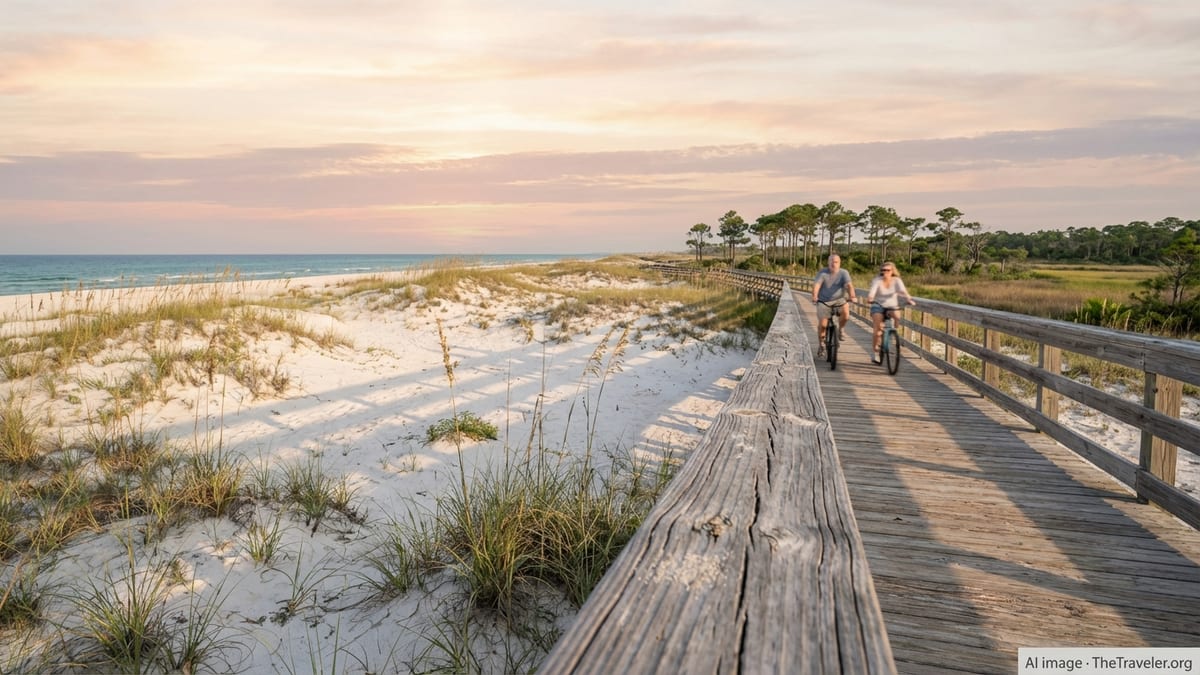
Gulf State Park protects a long swath of this coastline and the dunes just inland. Beyond the expected beachgoing, the park has become a model for environmentally focused coastal recreation, with an elevated boardwalk system that lets visitors bike or walk between the shore, freshwater lakes, and pine forest without constantly returning to the main road. Kayak rentals, fishing piers, and guided nature programs mean you can shift from sunbathing to birdwatching or paddling in a single afternoon.
Farther offshore, Dauphin Island introduces a more low-key, village-like version of the Alabama coast. The Dauphin Island Audubon Bird Sanctuary protects crucial habitat for migrant songbirds arriving after crossing the Gulf, and in spring the trees can seem alive with color and movement. For many travelers who think of Alabama only in terms of inland scenery, standing on a quiet Gulf beach at sunset, with pelicans gliding overhead and shrimp boats on the horizon, is enough to reorder their mental map of the state.
Encounter Art, Architecture, and Spiritual Spaces in Unexpected Places
Beyond big-ticket museums, Alabama hides works of art and architecture in small cities and monastic communities that many travelers would otherwise pass by. In Cullman, the Ave Maria Grotto occupies a hillside on the grounds of a Benedictine abbey. Here, a monk spent decades building intricate small-scale models of famous religious structures using everything from concrete to found objects. Winding through the park, you encounter miniature versions of cathedrals, shrines, and cityscapes that feel whimsical and meditative all at once.
Architecture fans often detour to Florence to tour the Rosenbaum House, the only Frank Lloyd Wright-designed residence open to the public in Alabama. Set on a quiet street, the low-slung Usonian home reveals how Wright translated his ideas about organic architecture into an affordable family dwelling in the 1940s South. Original furnishings, built-ins, and thoughtful guides make the visit feel like stepping into a preserved moment in mid-century design history.
Around the state, smaller art centers and folk-art environments deepen the sense that creativity runs through Alabama in surprising ways. Community-based institutions showcase everything from contemporary painting to traditional crafts, while local festivals pull artists out into the streets. Visitors frequently leave with the sense that Alabama’s cultural life runs much deeper and more diverse than they expected from a largely rural state.
Seek Out Quirky Monuments, Legends, and Roadside Americana
Alabama’s sense of humor and storytelling shows up in places that rarely make conventional travel brochures but are beloved by those who find them. One of the most famous is the Boll Weevil Monument in Enterprise, a downtown statue dedicated not to a heroic figure but to an insect that devastated cotton crops in the early 1900s. Local farmers eventually diversified into peanuts and other products, and the town commemorated the pest that forced them to change. Visitors often arrive expecting something kitschy and leave with a surprisingly thoughtful story about resilience and adaptation.
Across the state, legends attach themselves to playgrounds tucked into cemeteries, ghost stories linger around old bridges and backroads, and small-town museums preserve oddities alongside artifacts. While it is wise to approach tales of hauntings with skepticism, exploring these places can provide a window into how communities narrate their own pasts. The combination of folklore, local pride, and a touch of the macabre makes for road trips filled with memorable stops that you are unlikely to find elsewhere.
What unites these quirky attractions is a sense of place: they could not easily be transplanted to another state and feel the same. Travelers who venture off the main interstate exits often discover that the stories they tell back home are less about the big-name sites and more about the unexpected roadside monument or half-forgotten legend they stumbled across at dusk.
The Takeaway
Alabama rarely tops lists of dream destinations, which is precisely why it has such capacity to surprise. Visitors who give the state more than a single overnight stop discover a place where world-changing history sits quietly on downtown corners, where small studios and rural canyons hold experiences found almost nowhere else, and where beaches and backcountry trails exceed expectations set by stereotypes.
From the glow of Dismals Canyon and the creative energy of the Shoals to the solemn power of civil rights sites and the wild sweep of Gulf dunes, Alabama rewards curiosity. Build time into your itinerary to follow side roads, linger in small museums, and strike up conversations. The state’s most memorable experiences are often the ones you did not know to plan for at all.
FAQ
Q1. Is Alabama safe for road-trip travelers who want to explore smaller towns and backroads?
Alabama’s small towns and backroads are generally safe for visitors who use normal travel common sense, such as staying aware of their surroundings, locking vehicles, and avoiding poorly lit areas late at night. As with any destination, checking local guidance and keeping friends or family informed of your route is a good idea.
Q2. When is the best time of year to visit Alabama for outdoor activities?
Spring and autumn usually offer the most comfortable weather for hiking, exploring canyons, and walking historic districts, with milder temperatures and fewer biting insects. Summer can be hot and humid, especially along the Gulf Coast, while winter is often cool and relatively short, with outdoor activities still possible on many days.
Q3. Do I need a car to see the surprising places mentioned in Alabama?
In most cases, yes. Public transportation options are limited outside major cities, and many of Alabama’s most surprising attractions sit in rural or suburban areas. Renting a car or planning a road trip gives you the flexibility to reach canyons, caverns, small coastal communities, and historic sites on your own schedule.
Q4. Are the civil rights sites in Alabama appropriate for children and teenagers?
Many families find that visiting civil rights museums, churches, and landmarks is a meaningful educational experience for older children and teenagers. Some exhibits include graphic or emotionally intense content, so parents may want to review materials in advance and prepare to have thoughtful conversations during and after the visit.
Q5. How accessible are Alabama’s natural attractions for travelers with limited mobility?
Accessibility varies by site. Some state parks, scenic overlooks, and boardwalk trails offer paved paths, ramps, and viewing platforms, while canyons and caves may involve uneven terrain or stairs. Checking park websites or calling ahead can help you identify specific trails and viewpoints that match your mobility needs.
Q6. What should I pack for a trip that includes both city visits and outdoor adventures in Alabama?
Packing breathable clothing, comfortable walking shoes, a light rain jacket, and sun protection works well for most seasons. For outdoor days, insect repellent, a refillable water bottle, and quick-drying layers are useful, while a slightly dressier outfit can be handy for nicer restaurants or cultural events in cities.
Q7. Are guided tours recommended for places like Dismals Canyon and historic districts?
Guided tours can add significant depth to your experience, especially in places with complex history or sensitive ecosystems. In some locations, such as night tours in Dismals Canyon, guides are required, while in historic districts a local guide or walking tour often reveals stories you might miss when exploring alone.
Q8. Can I combine a Gulf Coast beach vacation with visits to other surprising Alabama attractions?
Yes, many travelers base themselves on the Gulf Coast and plan day trips or short overnights to inland destinations. With a car, it is possible to enjoy beach time while also visiting backcountry trails, caverns, or historic cities within a few hours’ drive, making for a varied and memorable itinerary.
Q9. How many days should I plan to experience the more unexpected side of Alabama?
A three to five day trip allows time to see at least one coastal area, one historic city, and a natural attraction such as a canyon or state park. With a week or more, you can add the music heritage of the Shoals, additional hikes, and smaller towns, gaining a broader sense of the state’s diversity.
Q10. Are there any cultural customs or etiquette tips visitors should know before coming to Alabama?
Travelers usually find Alabama welcoming and informal, with courtesy and small talk appreciated in shops and restaurants. Dressing modestly in churches and historic religious sites, tipping in line with general U.S. norms, and being respectful when discussing local history and politics help ensure positive interactions.