

Italian cuisine is one of the world’s great culinary love affairs, but what most travelers discover in Italy is very different from the red-sauce classics served abroad. Rooted in regional traditions, seasonal ingredients, and recipes refined over generations, Italian food is at once rustic and refined, simple and deeply expressive of place. If you are planning a trip, these eight traditional dishes provide a delicious roadmap to understanding Italy one plate at a time.
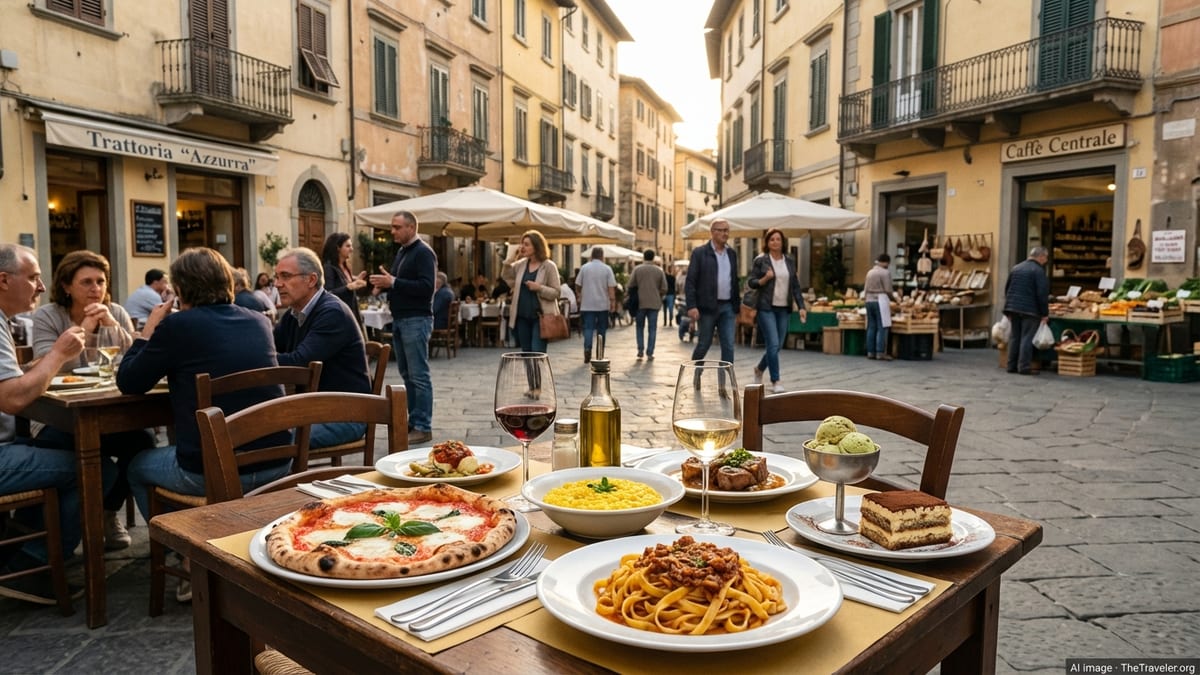
1. Neapolitan Pizza: The Soul of Naples
Few foods are as closely tied to a city as pizza is to Naples. Neapolitan pizza is recognized as a symbol of Italian culinary heritage, crafted with a soft, elastic dough, minimal toppings, and blistered in a blazing wood-fired oven for less than two minutes. At its most classic, a simple Margherita combines San Marzano tomatoes, fresh mozzarella, basil, and extra virgin olive oil on a tender, chewy base with a leopard-spotted crust. The result is a pizza that is light yet satisfying, fragrant with tomatoes and smoke, and designed to be eaten with a knife and fork rather than as a quick street snack.
Authentic Neapolitan pizza is strictly regulated in Italy by associations that protect traditional methods. Dough is typically made with finely milled Italian flour, water, salt, and yeast, then left to ferment slowly to develop flavor and digestibility. Pizzaioli, or pizza makers, train for years to master the dough’s hydration and the intense heat of a wood-fired oven. When you sit down at a pizzeria in Naples, you are not just ordering dinner. You are tapping into a living craft that locals take seriously and that continues to define the city’s daily life.
Travelers will notice that toppings are more restrained than the heavily loaded pizzas common elsewhere. A traditional menu focuses on a handful of combinations that showcase pristine ingredients, such as marinara with tomatoes, garlic, and oregano, or a simple pizza bianca with olive oil and salt. Seasonality matters too. In summer, fresh basil and tomatoes take center stage, while cool weather may bring richer cheeses or cured meats. The discipline and simplicity of Neapolitan pizza are precisely what make it unforgettable.
To enjoy it like a local, order one pizza per person and eat it hot from the oven, often accompanied by a chilled beer or a light local wine. Take your time and notice the texture contrast between the airy, charred rim and the softer, sauced center. This is fast food in cooking time only. In spirit, it is slow food, rooted in generations of Neapolitan families and the volcanic soils around Mount Vesuvius that nurture its signature tomatoes.
2. Pasta alla Carbonara: Roman Comfort on a Plate
Rome has gifted the world several iconic pasta dishes, but carbonara is the one that captures the imagination of visitors most. At its heart, traditional carbonara is astonishingly simple. It marries just a few ingredients: pasta, usually spaghetti or rigatoni, with cured pork, egg yolks, aged Pecorino Romano cheese, and black pepper. When prepared correctly, there is no cream involved. The silky sauce forms from beaten eggs and cheese emulsified with starchy pasta water and fat rendered from the pork.
The choice of pork is key to a proper Roman carbonara. Classic recipes call for guanciale, cured pork jowl, prized for its rich flavor and delicate fat. When crisped gently in a pan, the guanciale releases aromatic fat that coats each strand of pasta. Egg yolks give the dish its golden color and velvety texture, while Pecorino Romano, a sharp, salty sheep’s cheese, brings intensity and depth. Ground black pepper, cracked generously, adds warmth and a subtle kick that balances the creaminess.
Eating carbonara in Rome is as much about context as flavor. Trattorias across the city serve it in generous portions, often alongside other Roman specialties, and it is typically enjoyed as a primo, or first course, before a main of meat or vegetables. The best versions feel lighter than you might expect, with the sauce clinging to each piece of pasta without pooling or becoming heavy. A well-executed carbonara is warm and luscious, but the eggs remain silky rather than scrambled, a benchmark that local diners know and expect.
Travelers tempted to tweak the recipe may be surprised by how firmly Romans defend tradition. Cream, garlic, and onions are often viewed as unnecessary additions that interfere with the dish’s pure flavors. To fully appreciate carbonara, try it exactly as Roman cooks intend, then linger with a glass of local white or red wine. It is a masterclass in how Italian cuisine transforms a few excellent ingredients into something far greater than the sum of its parts.
3. Risotto alla Milanese: Northern Elegance in a Golden Bowl
In the northern region of Lombardy, rice often takes the place of pasta, and nowhere is that more apparent than in risotto alla Milanese. This golden, saffron-scented dish is closely associated with Milan and the surrounding area, where rice paddies stretch across the plains. The risotto begins with a special variety of rice, commonly Carnaroli or Arborio, prized for its ability to release starch while holding its shape. Cooked slowly in hot stock and stirred attentively, the grains transform into a creamy, almost velvety preparation that still retains a subtle bite at the core.
The distinctive color and aroma of risotto alla Milanese come from saffron, which is steeped and added during cooking to infuse the dish with a deep yellow hue and floral notes. Butter and grated aged cheese, often Grana Padano or Parmigiano Reggiano, are beaten in at the end in a step known as mantecatura, which further enriches the texture. The result is both luxurious and restrained, a dish that looks celebratory yet remains anchored in the region’s long history of rice cultivation and hearty family cooking.
Traditionally, risotto alla Milanese is served alongside ossobuco, braised veal shanks slow-cooked with wine, broth, and aromatic vegetables. The richness of the meat and marrow finds an ideal partner in the creamy rice. However, it is also common to see risotto alla Milanese presented as a standalone course, especially in elegant Milanese restaurants that take pride in their interpretation of this classic. For travelers, it offers an opportunity to experience the slower, more deliberate rhythms of northern cooking, where patience and careful technique define the meal.
When ordering risotto in Milan, be prepared to wait a little longer than for pasta or pizza. Authentic risotto is cooked to order, not reheated, and kitchens will usually insist on this standard. Use that time to enjoy an aperitivo, perhaps a glass of Franciacorta or a regional white wine, and watch as locals treat this dish as an expression of local identity rather than just another menu item. A perfectly executed risotto alla Milanese is a quiet kind of luxury that lingers in memory long after the last spoonful.
4. Tagliatelle al Ragù alla Bolognese: The Heart of Emilia-Romagna
Emilia-Romagna is often described as Italy’s gastronomic heart, and its most famous export may be ragù alla Bolognese. Outside Italy it is frequently paired with spaghetti and called by a shortened name, but in its homeland the classic combination is fresh egg tagliatelle with a slow-cooked meat sauce. The wide, flat ribbons of tagliatelle are ideal for catching every bit of ragù, ensuring a balanced mouthful with each bite.
Authentic ragù alla Bolognese is a carefully layered sauce made from ground or finely chopped meats, often a blend of beef and pork, cooked slowly with soffritto, tomatoes in modest quantity, wine, and broth. Milk or a little cream may be added to soften the acidity and give the sauce its characteristic richness. The key is time. The ragù simmers gently for hours until it becomes thick and deeply flavored, with tender pieces of meat that almost melt into the sauce. This long cooking process is a hallmark of traditional home kitchens in Bologna and neighboring towns.
Fresh pasta is central to the experience. Tagliatelle is usually made by hand from flour and eggs, then rolled into thin sheets and cut into ribbons. In Emilia-Romagna, pasta-making is an art passed down through generations, and local sfogline, the women who roll dough by hand, are still celebrated figures. Their work results in pasta with a delicate, slightly rough surface that holds the ragù beautifully. When the two come together on the plate, it is a vivid expression of local pride and culinary heritage.
Travelers visiting Bologna will find tagliatelle al ragù on menus at traditional osterie and trattorie, often served in modest portions that encourage tasting multiple courses. It is common to precede it with a board of cured meats like prosciutto and mortadella and to follow with a simple main course and dessert. The dish embodies the region’s love of generous, deeply satisfying food prepared according to well-defined local customs. For many visitors, this is the moment when Italian comfort food becomes something truly profound.
5. Lasagne alla Bolognese: Layers of Tradition
While tagliatelle al ragù offers a direct encounter with Emilia-Romagna’s signature sauce, lasagne alla Bolognese shows how the same flavors can be transformed into something even more indulgent. In its classic form, this dish layers thin sheets of fresh spinach pasta with ragù alla Bolognese, creamy béchamel sauce, and grated aged cheese, then bakes everything until the top is bubbling and lightly browned. The result is a dish that is rich but balanced, each layer contributing structure, moisture, and depth of flavor.
Traditional lasagne in Bologna looks and tastes different from many versions served abroad. The pasta sheets are usually made with both flour and eggs, sometimes enriched with spinach for a distinctive green hue. The ragù is spread in relatively thin layers, and the béchamel provides a delicate creaminess rather than overwhelming richness. This approach keeps the focus on the interplay of textures: the tender pasta, the savory meat sauce, and the smooth, almost custard-like béchamel. The goal is harmony rather than excess.
In many families, lasagne alla Bolognese is reserved for Sundays and special occasions, and preparing it can be an all-day project. The ragù is often made in advance, then the pasta is rolled, cut, and briefly blanched before layering. Baking times vary, but the best versions rest slightly before serving so the layers settle and slice cleanly. For travelers who manage to experience homemade lasagne in a local home or a long-established trattoria, it offers a window into the rhythm of Italian family life and celebration.
When you order lasagne in Emilia-Romagna, do not be surprised if the portion appears smaller than you might expect. The dish is filling and meant to be part of a larger meal that may include antipasti, a main course, and dessert. Accompanied by a glass of regional red wine, such as Sangiovese, lasagne alla Bolognese remains one of the most comforting and iconic expressions of Italian hospitality.
6. Osso Buco with Gremolata: A Lombard Classic
Another emblematic dish from northern Italy is osso buco, a cross-cut veal shank braised slowly until the meat is tender and the marrow at the bone’s center becomes meltingly soft. Most commonly associated with Milan and Lombardy, osso buco is a prime example of cucina di casa, the home-style cooking that has quietly defined Italian family tables for generations. What separates an average osso buco from a truly memorable one is the balance between rich, long-cooked flavors and the bright lift added at the very end.
The veal shanks are typically browned first, then simmered with white wine, broth, and aromatics such as onions, carrots, and celery. Over several hours, the connective tissue breaks down and enriches the sauce, creating a glossy, full-bodied consistency. Just before serving, the dish is finished with gremolata, a finely chopped mixture of parsley, garlic, and lemon zest. This garnish is more than decorative. Its fresh, citrusy aroma cuts through the richness and wakes up the palate, ensuring the final impression is vibrant rather than heavy.
Osso buco is often served alongside or on top of risotto alla Milanese, polenta, or simple mashed potatoes, each providing a neutral canvas that absorbs the flavorful sauce. For many locals, the true highlight is the marrow hidden inside the bone. Diners use a small spoon to scoop it out, spreading it on bread or mixing it into the risotto. This element reflects a long-standing Italian respect for using every part of the animal and turning humble cuts into celebratory dishes.
Travelers seeking osso buco in Milan will find it on menus of both traditional trattorias and more contemporary restaurants that pay homage to regional classics. Portions are generous and meant to be shared or savored slowly. Paired with a structured red wine from Lombardy or neighboring regions, osso buco provides a satisfying glimpse into northern Italian cooking where patience, restraint, and careful seasoning come together on the plate.
7. Gelato: Italy’s Artisanal Sweet Treat
No culinary journey through Italy would be complete without gelato, the country’s beloved frozen dessert. Although often translated simply as ice cream, gelato is distinct in texture, flavor, and production. It generally contains less fat than many traditional ice creams and is churned more slowly, introducing less air. The result is a denser, silkier scoop that delivers concentrated flavor. Served at a slightly warmer temperature than typical ice cream, gelato feels soft and intensely creamy on the tongue.
Artisanal gelaterie across Italy pride themselves on using fresh, seasonal ingredients and small-batch methods. Fruit flavors change with the calendar, from bright strawberry and lemon in spring and summer to fig or pear in cooler months. Nut-based varieties such as pistachio, hazelnut, and almond are perennial favorites, especially in regions where these ingredients are locally grown or roasted. Classic dairy flavors like fior di latte, made from sweet milk and cream, and stracciatella, a milk base streaked with shards of chocolate, highlight gelato’s simplicity and craftsmanship.
The experience of eating gelato in Italy extends beyond flavor. It is a daily ritual for many locals, enjoyed during an evening stroll through a piazza or as an afternoon pause. Travelers quickly learn that a good gelateria often forgoes towering, brightly colored displays in favor of understated presentation and shorter ingredient lists. Simple metal tubs, natural hues, and clear signs indicating seasonal ingredients can be good indicators of quality. Asking for a small taste before deciding is common practice and welcomed by most vendors.
Whether you enjoy yours in a crisp cone or a small cup, gelato invites lingering. Order one or two flavors at a time to appreciate the nuances, and consider pairing a dairy-based scoop with a fruit sorbetto for contrast. In a country filled with extraordinary sweets, from regional cakes to pastries, gelato remains the most democratic indulgence, accessible on nearly every corner and enjoyed by Italians of all ages.
8. Tiramisu: A Modern Classic Dessert
Compared to ancient regional recipes, tiramisu is a relatively recent addition to Italy’s culinary repertoire, gaining popularity in the late twentieth century. Yet it has quickly become one of the country’s signature desserts and a staple on menus worldwide. At its core, tiramisu consists of layers of coffee-soaked ladyfinger biscuits and a rich cream made from mascarpone cheese, eggs, and sugar, all finished with a dusting of cocoa powder. Served chilled, it offers a contrast of textures, from the tender, soaked biscuits to the smooth, almost cloudlike cream.
The dessert’s name loosely translates as “pick me up,” a nod to the energizing effects of coffee and, in some versions, a hint of liqueur. The coffee component is crucial. Strong espresso is typically used to soak the biscuits, providing a robust, aromatic base that infuses each bite. Mascarpone, a soft, buttery cheese from northern Italy, gives the cream its luxurious mouthfeel. Some recipes include beaten egg whites to lighten the mixture, creating a texture that sits somewhere between mousse and custard.
Today, travelers will encounter both classic tiramisu and numerous regionally inspired variations. Some pastry chefs play with different spirits, such as Marsala or local liqueurs, while others introduce seasonal fruits or swap cocoa for grated chocolate. Despite these creative interpretations, the most satisfying versions remain those that respect the dessert’s essential balance: not overly sweet, distinctly coffee-forward, and with a clean finish that encourages one more bite.
Enjoying tiramisu in Italy is often the final note of a leisurely meal. Portions tend to be modest, reflecting the Italian preference for ending on a light, harmonious note rather than an overwhelming sugar rush. Paired with an espresso or a small glass of dessert wine, a well-made tiramisu encapsulates the hospitality and warmth that define Italian dining culture.
The Takeaway
Exploring Italy through its traditional foods is one of the most rewarding aspects of travel in the country. Each dish tells a story, from the volcanic slopes of Campania that nurture the tomatoes on your pizza to the rice fields of Lombardy that make risotto possible. Regional specialties like carbonara, tagliatelle al ragù, and osso buco reflect local ingredients, climate, and history, while national favorites such as gelato and tiramisu show how Italian cooks excel at transforming simple elements into something unforgettable.
For travelers, seeking out these eight traditional foods is less about ticking boxes and more about slowing down and engaging with Italian life. Order the house specialty at a neighborhood trattoria, watch how locals enjoy their meals, and ask questions about ingredients and preparation. You will quickly find that Italian cuisine is as much about people and place as it is about recipes. By the time you leave, the flavors of Naples, Rome, Milan, Bologna, and beyond will form a delicious map of your journey, one you may find yourself planning to revisit before you have even boarded the flight home.
FAQ
Q1. What is the most traditional Italian dish to try on a first visit?
The most traditional choice for many first-time visitors is authentic Neapolitan pizza, followed closely by a classic pasta such as carbonara or tagliatelle al ragù.
Q2. Is Italian food the same throughout the country?
No, Italian cuisine is highly regional. Each area has its own specialties shaped by local climate, history, and ingredients, so dishes can vary dramatically from north to south.
Q3. Do Italians really eat pasta every day?
Many Italians eat pasta frequently, often several times a week, but not always daily. Meals are usually varied and follow a structure that can include pasta, vegetables, and protein.
Q4. What is the difference between gelato and regular ice cream?
Gelato is typically lower in fat, churned more slowly, and served slightly warmer than many ice creams, giving it a denser, silkier texture and more intense flavor.
Q5. Is carbonara made with cream in Italy?
Traditional Roman carbonara does not include cream. It relies on egg yolks, Pecorino Romano cheese, and rendered fat from guanciale to create its silky sauce.
Q6. Are there vegetarian options among traditional Italian dishes?
Yes, many traditional dishes are naturally vegetarian, including simple tomato-based pastas, vegetable risotti, and a range of regional antipasti featuring seasonal produce and cheeses.
Q7. When is the best time of year to enjoy Italian food at its freshest?
Spring and early autumn are particularly rewarding, as markets overflow with seasonal vegetables, fruits, and herbs, but each season brings its own specialties and flavors.
Q8. How can I tell if a gelato shop is high quality?
Quality gelaterie often use natural colors, modest displays, and short ingredient lists. Seasonal flavors and metal tubs with lids can be good signs of careful production.
Q9. Do Italians drink cappuccino with their meals?
Cappuccino is usually reserved for breakfast in Italy. With or after lunch and dinner, Italians typically choose espresso or sometimes a small digestif instead.
Q10. Is tipping customary in Italian restaurants?
Tipping is more restrained than in some countries. Service may be included, but rounding up the bill or leaving a small amount in cash for good service is appreciated, not mandatory.