

More news on this day
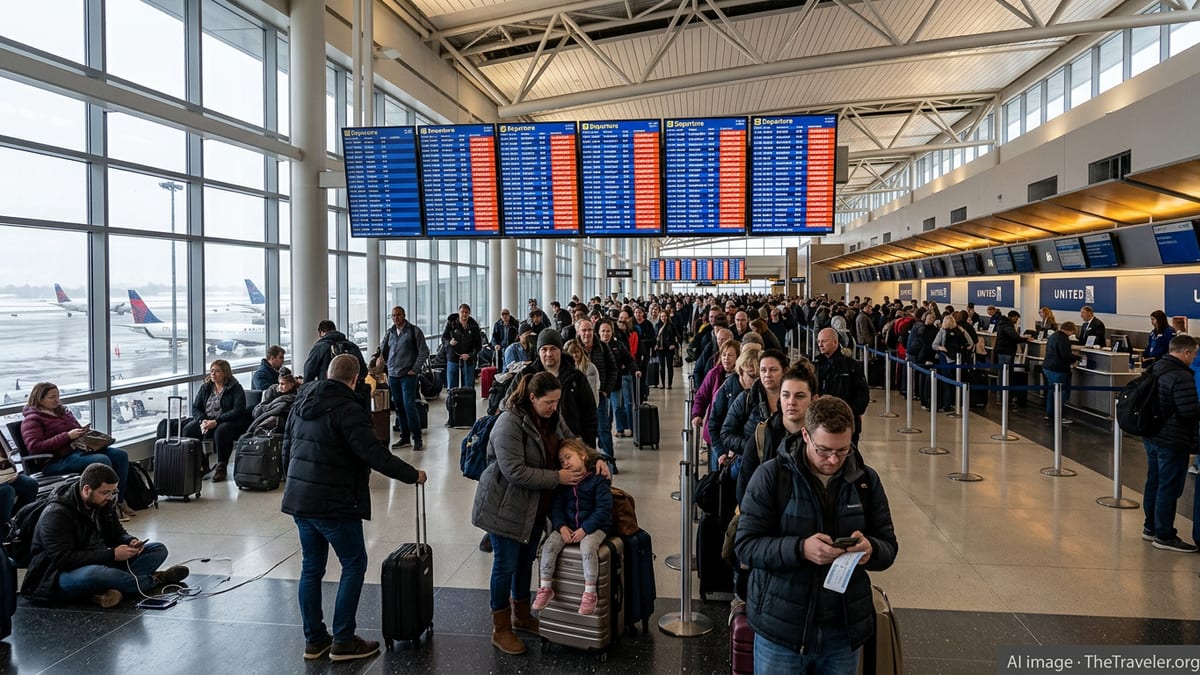
Hundreds of travelers were left scrambling at Minneapolis–Saint Paul International Airport after more than 80 flights were canceled, causing long lines, crowded terminals and a ripple of disruptions across regional and national air networks.
Get the latest news straight to your inbox!
What Happened at Minneapolis–Saint Paul International Airport
Operations at Minneapolis–Saint Paul International Airport were severely disrupted as airlines canceled around 80 departures and arrivals in a single day, according to preliminary tallies from airport and flight-tracking data. The wave of cancellations quickly cascaded through the schedule, with additional delays and missed connections compounding the chaos for passengers already in the air or on their way to the airport.
The disruption concentrated around the airport’s mainline and regional carriers, with hubs and spoke destinations across the Upper Midwest particularly affected. Travelers who had expected a routine morning departure instead found departure boards filling with red “canceled” notices as airlines pulled flights from the schedule.
While exact numbers shifted throughout the day as airlines adjusted operations, airport officials said the volume of cancellations was well above a typical day at MSP, where only a small percentage of flights are usually scrubbed. The sudden spike left customer-service desks overwhelmed as travelers sought options to salvage their plans.
For many passengers, the timing meant they were already checked in, through security or even sitting at the gate when updates came through. With limited spare capacity during a busy travel period, reaccommodation was often measured in many hours rather than minutes.
Why So Many Flights Were Canceled
Early indications from airline representatives and meteorologists point to a combination of adverse weather and operational knock-on effects as the main drivers of the disruption. Blowing snow, changing visibility and high winds around the Twin Cities can require extra spacing between aircraft, deicing holds and occasional runway changes, all of which erode schedule reliability when conditions deteriorate over several hours.
Once a core block of flights is canceled out of a hub like Minneapolis–Saint Paul, the impact extends far beyond Minnesota. Aircraft and crews scheduled to operate onward legs may be left out of position, triggering additional cancellations or long delays at outstation airports. Even when weather improves, it can take the rest of the day for airlines to absorb the backlog and realign planes and staff.
Industry analysts note that airlines now operate tighter schedules with fewer spare aircraft and leaner staffing, which allows them to operate efficiently in normal conditions but leaves less flexibility when storms or ground restrictions hit. That dynamic was on clear display at MSP, where even a localized disruption translated into widespread inconvenience.
Airline operations centers also weigh safety margins carefully during freezing conditions. If time needed for deicing and taxi queues becomes too unpredictable, carriers often preemptively cancel flights rather than risk extensive on-board delays and potential tarmac holds that run up against federal time limits.
How Passengers at MSP Are Being Affected
Inside the terminals, the human impact of the cancellations was immediately visible. Long lines formed at airline service counters as stranded passengers tried to secure seats on remaining flights or request refunds and hotel vouchers. Many travelers reported waiting over an hour just to speak with an agent, while others turned to airline apps and call centers that were also experiencing high volumes.
Families traveling with children, international visitors with tight connection windows and business travelers facing critical meetings were among those hardest hit. With popular routes quickly selling out, some passengers were told that the first available alternative might be later in the day or even the following morning, forcing last-minute changes to hotel, rental car and meeting plans.
Nearby hotels around the airport filled rapidly as evening approached, leaving some travelers searching for availability farther from MSP or staying with friends and relatives in the Twin Cities. Ride-hailing queues grew longer as people abandoned air travel altogether and opted for road or rail alternatives to reach destinations in Wisconsin, the Dakotas or greater Minnesota.
For those who did manage to travel, the experience was often marked by missed connections at other hubs, baggage mismatches and uncertainty over when checked luggage would catch up. Airlines indicated they were prioritizing reaccommodation and working to reunite passengers with their bags, but warned that handling backlogs could take time to clear.
What Stranded Travelers Can Do Right Now
Travel experts say the first step for anyone affected by cancellations at Minneapolis–Saint Paul is to contact their airline as quickly as possible through multiple channels. Airline mobile apps and websites are often the fastest way to see live rebooking options, request automated changes or add yourself to standby lists without waiting in physical lines at the airport.
Passengers are also advised to monitor their flight status frequently, as schedules can change by the minute when airlines attempt to rebuild operations. Even if a flight initially appears delayed rather than canceled, it is wise to explore backup options early, especially for time-sensitive trips like cruises, tours or important events.
Those with flexible travel dates may choose to push their journeys back by a day or two to avoid the immediate crunch. Many airlines typically issue travel waivers in response to weather-related disruption, allowing customers to change dates or routes without standard change fees, though fare differences can still apply depending on the new itinerary.
Travelers who believe they may be entitled to hotel or meal vouchers should retain receipts and confirm policies directly with their airline, which will vary based on the cause of disruption and whether the cancellation is within the carrier’s control. Using credit cards that include trip-interruption coverage can also help recover some out-of-pocket expenses, provided documentation is kept.
Planning Ahead for Future Travel Through MSP
The events at Minneapolis–Saint Paul are a reminder of how quickly air travel can be upended, especially in regions prone to winter weather. Frequent travelers recommend building extra buffer time into itineraries that pass through MSP during storm-prone periods, including avoiding tight connections and scheduling important meetings or events at least several hours after planned arrival.
Booking earlier flights in the day can improve odds of traveling as planned, since schedules and aircraft rotations are generally more intact in the morning and airlines have more room to adjust later departures if conditions worsen. When possible, nonstop flights reduce the risk of missed connections cascading into full cancellations.
Experienced passengers also advise packing essential items such as medications, chargers, a change of clothes and basic toiletries in carry-on bags rather than checked luggage. That preparation can make an unexpected overnight stay or extended delay more manageable if hotels and airport shops are crowded.
For visitors connecting through MSP, keeping an eye on weather forecasts across the Upper Midwest and signing up for airline and airport alerts can offer early warning signals of potential disruption. While no traveler can completely avoid the risk of cancellations, informed planning and quick action can soften the blow when dozens of flights are suddenly pulled from the board.