

New York State stretches far beyond the skyscrapers of Manhattan. From the roar of Niagara Falls on the western edge to the pine-scented peaks of the Adirondacks in the northeast, the state offers a sweep of landscapes and experiences that feel a world away from city streets. Whether you are planning a first-time road trip or looking to dive deeper into familiar regions, these nine standout things to do offer an inspiring route from Niagara Falls to the Adirondacks and several memorable stops in between.
Feel the Power of Niagara Falls at the Oldest State Park
Any west-to-east journey across New York State starts naturally at Niagara Falls, where three waterfalls thunder over the Niagara Gorge on the border with Canada. On the New York side, Niagara Falls State Park lays out classic viewpoints, from Prospect Point to the brink of the American and Bridal Veil Falls, that show just how much water constantly pours over the cliffs. The roar is unrelenting, the mist hangs in the air, and the boardwalks and paved paths make it easy to explore at your own pace.
For a closer encounter, seasonal boat tours like the Maid of the Mist bring visitors to the base of Horseshoe Falls, where rain ponchos are not optional and cameras quickly get soaked. The Cave of the Winds experience, accessed from Goat Island, leads down an elevator into the gorge and onto wooden decks that edge right up to Bridal Veil Falls. Here the wind, spray, and rumbling rock underfoot create the sense of standing inside the weather. It is an immersive reminder of why visitors have been traveling here for generations.
Beyond the immediate spectacle, the park also hints at the long human story of the falls, from Indigenous significance to early hydroelectric experiments that helped power modern industry. Interpretive displays and ranger talks touch on this history, while quieter spots like Three Sisters Islands and wooded overlooks provide some peace away from the busiest viewpoints. Staying overnight in Niagara Falls allows time to see the nightly illuminations and, in season, fireworks that add color to the plume of mist rising from the gorge.
Because the falls are a year-round destination, conditions and experiences shift dramatically by season. Summer brings crowds and warm spray, while winter can transform the landscape into a frozen tableau of ice formations and snow-covered railings. Whenever you visit, sturdy shoes and layers help you enjoy boardwalks that can be damp and breezy even on sunny days.
Follow the Shores of the Finger Lakes for Wine and Waterfalls
Driving east from Niagara, the land softens into rolling hills and long, narrow lakes that define the Finger Lakes region. This is one of New York’s most scenic areas, known for cool-climate vineyards, deep blue waters, and a remarkable concentration of waterfalls. Each of the major lakes has its own character, from the collegiate energy around Cayuga and Seneca Lakes to the quieter, more rural feel near Keuka and Skaneateles.
Outdoor travelers gravitate to state parks that line the gorges feeding into the lakes. Parks near Ithaca and along the southern rim of Seneca Lake, for example, offer trails that wind past layers of shale, plunge pools, and cascades that surge in spring and mellow into ribbons in late summer. Many of the paths are relatively short but involve staircases and rock steps, so comfortable footwear and a readiness for some climbing are important.
Wine tasting is another hallmark of the region, with well-established wine trails around Seneca, Cayuga, and Keuka Lakes. Wineries range from small family-run operations to larger estates, most offering views across vineyards and water. In recent years, craft breweries, cideries, and distilleries have joined the mix, making it easy to spend an afternoon sampling locally made beverages in a single area. Because producers can change hours seasonally, it is wise to check opening times in advance or build flexibility into your schedule.
On the water, boat rentals, guided cruises, and public launches allow visitors to experience the lakes directly. Calm mornings are ideal for paddling, while warm evenings bring pastel sunsets and the glow of dock lights reflecting off the surface. Many towns along the lakeshores feature walkable main streets with cafés, ice cream shops, and independent boutiques, making them pleasant bases for a few days of exploring nearby trails and vineyards.
Explore the Cultural Corridors of Rochester and the Erie Canal
Continuing east, Rochester offers a mix of lakefront scenery, heritage attractions, and a growing food and arts scene. Located along the southern shore of Lake Ontario, the city has deep ties to photography, social reform, and industrial innovation. Museums highlight the legacy of figures associated with these movements, giving context to the mills and redbrick buildings that still line sections of the riverfront.
Nearby, the historic Erie Canal weaves through smaller communities and countryside. Once a commercial artery that reshaped New York and the wider United States, the canal is now a linear playground for cyclists, walkers, and paddlers. The Erie Canalway Trail and Empire State Trail link dozens of canal towns, with converted towpaths offering mostly gentle grades and extended stretches separated from traffic. Canal-side villages often preserve 19th-century warehouses, lift bridges, and lock structures, some of which still operate during the navigation season.
Travelers can join short boat tours through canal locks to see how vessels are raised and lowered, or simply watch from a shaded bench as pleasure craft pass through. The slow pace contrasts sharply with the speed of interstate highways, and it offers a good way to break up longer drives across the state. Cafés, bakeries, and small museums in canal towns add to the sense of stepping back into an earlier era of trade and travel.
The Rochester region also connects easily to lakefront parks and beaches on Lake Ontario, where broad horizons and pebbled shorelines provide an entirely different take on New York’s waterscape. In summer, this is a place for swimming, picnicking, and watching dramatic weather roll in across the open water, while shoulder seasons attract birdwatchers and people in search of quieter walks along the shore.
Discover History and River Views in the Hudson Valley
Several hours southeast of the Finger Lakes, the Hudson Valley stretches along the tidal Hudson River, framing it with wooded hills, cliffs, and historic towns. This corridor has long attracted artists, statesmen, and writers inspired by both the landscape and the ease of travel along the river. Today, it is one of New York State’s most popular getaway regions, offering a blend of culture, outdoor recreation, and farm-to-table dining.
Riverside towns such as Beacon, Hudson, and Rhinebeck have transformed former industrial buildings into galleries, design shops, and performance spaces. Historic mansions dot the bluffs above the river, their grounds often open as public parks. Visiting one or two estates can give a sense of how the valley evolved from agricultural territory and Indigenous homelands into a retreat for wealthy families and a stage for American political life.
Scenic overlooks and hiking trails are never far from the water. Some routes climb to rocky ledges with sweeping views of the river and distant Catskill Mountains, while others follow old carriage roads through forests and meadows. Walkway-style bridges and waterfront parks bring the river up close, ideal for relaxed strolls at sunset. Fall foliage is a major draw, when the hardwood forests lining the valley flare into shades of orange and red.
Food and drink experiences are central to the Hudson Valley’s appeal. Roadside farm stands, orchards, and wineries are complemented by high-profile restaurants and casual cafés that prioritize local produce. Because weekends can be busy, especially during harvest season and major festivals, advance reservations for dining and lodging are often prudent. Midweek visits can feel noticeably calmer while still capturing the region’s atmosphere.
Climb High and Cool Off in the Catskills
Southwest of the Hudson Valley, the Catskill Mountains rise in rounded, forested peaks that have been a summer refuge for New Yorkers for more than a century. This region offers a mix of easygoing small towns, classic hiking routes, and clear swimming holes that reward those willing to follow rocky trails upstream. Elevations are lower than in the Adirondacks but high enough to provide fresh air, sweeping views, and cooler nights in summer.
Popular hikes range from short walks to waterfalls to more demanding ascents that crest at fire towers and open ledges. Trails can be rooty and muddy in places, especially after rain, so waterproof footwear and trekking poles are helpful. Many routes follow old carriage roads or logging paths that open onto surprising vistas after steady climbing through hardwood forests and patches of evergreen.
In warm weather, creeks and mountain streams become natural playgrounds, with pools and cascades that locals and visitors alike use for cooling dips. Safety is important here, as rocks can be slick and stream levels vary based on rainfall and snowmelt. Checking local guidance on closures, parking regulations, and leave-no-trace practices helps protect both travelers and fragile river ecosystems.
The Catskills also carry a deep cultural legacy, once home to grand resorts and now to a creative community of artists, musicians, and chefs. Renovated motels, cabins, and inns mix with long-standing diners and new bakeries. In winter, smaller ski areas and cross-country centers provide accessible snow sports, while quieter back roads and frozen lakes attract those looking for peaceful cold-season getaways within driving distance of major cities.
Stroll Through Saratoga Springs and Its Mineral Waters
As you move northeast toward the Adirondacks, Saratoga Springs offers a refined pause between mountain regions. The city built its reputation on naturally carbonated mineral springs, horse racing, and elegant resorts, and those influences are still evident in its leafy streets and historic architecture. A compact downtown makes Saratoga particularly walkable, with Victorian-era buildings housing boutiques, cafés, and galleries.
Saratoga Spa State Park preserves the spring environment alongside classical bathhouses, landscaped lawns, and wooded trails. Visitors can sample different springs at outdoor taps, each with its own mineral profile and taste, and learn how the waters shaped the city’s fortunes. The park also hosts cultural venues and seasonal events, making it a year-round destination rather than only a summer resort.
The Saratoga Race Course, typically active in the summer meet, remains one of the most storied horse racing tracks in the United States. Even travelers who are not racing enthusiasts may appreciate the historic grandstands, morning training sessions, and the festive atmosphere that spreads across town on race days. Planning around the racing calendar is important, as lodging prices and availability can shift significantly during peak periods.
For those focused more on the outdoors, the Saratoga region also offers access to lakes, nature preserves, and bike paths. Its location on major rail and highway routes makes it a natural gateway to the southern Adirondacks, where the low foothills begin to rise into more rugged country.
Experience Classic Lake Life in Lake George
Just north of Saratoga Springs, Lake George introduces the granite outcrops, pine forests, and island-dotted waters that signal the start of the Adirondack Park. Often called the “Queen of American Lakes,” Lake George has attracted visitors since at least the 19th century, and its southern end has developed into a full-service resort town with marinas, hotels, and family attractions.
Out on the water, sightseeing cruises, rental boats, and paddlecraft all share the long, narrow lake. Many travelers choose to base themselves at the southern end, then venture north by boat to see quieter coves, state-owned islands with basic campsites, and stretches of undeveloped shoreline. The clarity of the water on sunny days reveals rocky bottoms and submerged ledges, while surrounding peaks form a constant backdrop.
On land, a network of hiking trails climbs to overlooks such as Prospect Mountain and other viewpoints scattered along the lake’s eastern and western ridges. Some trails begin close to town and offer half-day excursions, while others start along narrower backroads and climb more steeply into the surrounding hills. In high season, arriving early helps with parking and avoids the warmest part of the day, particularly on south-facing slopes with limited shade.
Lake George also serves as a natural handoff point between more developed resort experiences and the wilder expanses deeper inside the Adirondack Park. It is possible to enjoy amusement parks and busy waterfront promenades one day, then continue north to quiet trailheads and low-key hamlets the next, all within a relatively short drive.
Head Deep Into the Adirondacks Around Lake Placid and Saranac Lake
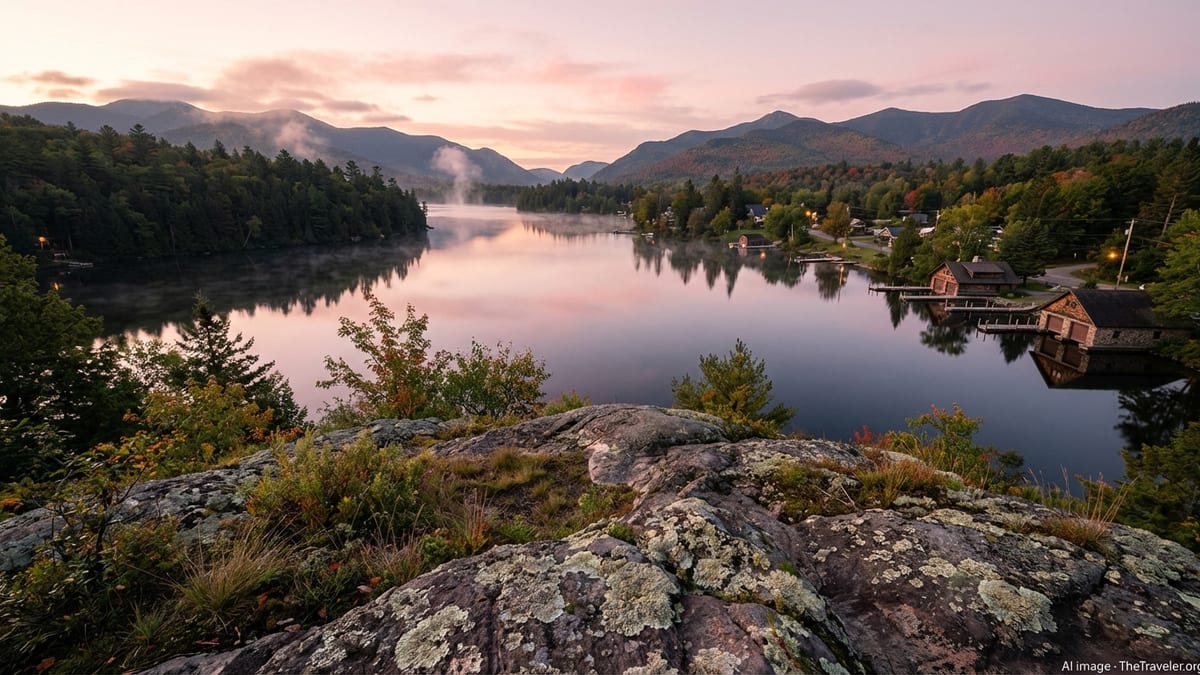
Beyond Lake George, the Adirondack Park unfolds in millions of acres of protected forest, lakes, and mountains. Unlike a typical national park, the Adirondacks are a patchwork of public and private lands, with small communities woven into forests and shorelines. Among the most popular bases for exploring the High Peaks region are Lake Placid and Saranac Lake, two villages with distinct personalities but complementary strengths.
Lake Placid carries the legacy of hosting two Winter Olympic Games, a history reflected in venues that visitors can still tour and, in some cases, actively use. From ski jumps and sliding tracks to arenas and training centers, the town blends outdoor recreation with sports heritage. Nearby trailheads lead to a range of hikes, from short loops around forested ponds to demanding ascents of high summits that require full-day efforts, careful preparation, and attention to changing mountain weather.
Saranac Lake, a short drive away, offers a slightly quieter, more residential feel while still providing easy access to paddling routes, multi-use paths, and nearby peaks. The Adirondack Rail Trail, sections of which have been opening in stages, is poised to connect communities such as Saranac Lake, Lake Placid, and beyond with a relatively gentle cycling and walking corridor through the woods. On the water, linked lakes and rivers present multiple-day canoe and kayak routes, with designated campsites that help manage impact on shorelines and wetlands.
Because conditions in the Adirondacks can shift quickly, especially on higher summits and remote lakes, preparation is essential. Sturdy footwear, navigation tools, layers for wind and rain, and a clear understanding of your chosen route are all important. Local visitor centers, guide services, and ranger stations can provide up-to-date information on trail closures, backcountry regulations, and best practices for traveling in black bear country and sensitive alpine environments.
Slow Down at Adirondack Great Camps and Wild Lakes
Beyond the more visited hubs, the broader Adirondack region rewards travelers who are willing to slow down on backroads and linger in smaller communities. Historic Great Camps, once private summer estates for wealthy families, still dot remote shorelines and islands, some now operating as lodges, educational centers, or private homes occasionally visible only from the water. Their log-and-stone architecture, boathouses, and clusters of cabins reflect the early 20th-century vision of rustic luxury in the northern woods.
Lakes throughout the park, from large bodies such as Long Lake and Tupper Lake to smaller ponds tucked into side valleys, offer quieter alternatives to the busier High Peaks area. Loons call across the water at dusk, and night skies can be remarkably dark when cloud cover cooperates. Many state campgrounds and day-use areas provide basic facilities, while nearby hamlets supply groceries, gear shops, and diners that are central to local life.
Wildlife sightings are common but unpredictable, with possibilities that might include deer along roadsides, otters and beavers in wetlands, or moose in some northern and eastern sections of the park. Travelers should keep a safe distance from all wildlife, store food responsibly, and drive carefully on forested roads where animals may appear suddenly, especially at dawn and dusk.
The Adirondacks are also a place where seasonal rhythms remain strong. Spring can be muddy and buggy but lush, summer brings warm lake temperatures and the broadest range of activities, autumn delivers brilliant foliage and cooler hiking weather, and winter turns trail networks into snowshoe and ski routes. Lodging and restaurant availability often varies by season, so advance planning helps ensure that services are open when you arrive.
The Takeaway
Traveling from Niagara Falls to the Adirondacks reveals a version of New York State defined more by gorges, vineyards, and spruce forests than by subway lines and skyscrapers. Niagara’s raw power gives way to the gentle curves of the Finger Lakes, which then transition to the cultural layers of canal towns and the Hudson Valley, onward to the rounded Catskills and gracious streets of Saratoga Springs, and finally into the rugged quiet of Adirondack lakes and High Peaks.
Along this route, you can stand in blowing mist at the base of a world-famous waterfall, sip wine above a glacial lake, cycle beside a historic canal, hike to river views, swim in mountain streams, stroll past mineral springs, and paddle across still northern waters under dark skies. Each region can be a stand-alone trip, yet together they form a compelling cross section of New York’s natural and cultural heritage.
However you choose to structure your journey, building in time for slow mornings, small-town detours, and unplanned viewpoints will pay off. New York State rewards curiosity and patience, and some of its most memorable moments come not at marquee landmarks but on quiet side roads, backcountry trails, and village sidewalks far from the city that shares its name.
FAQ
Q1. What is the best time of year to travel from Niagara Falls to the Adirondacks?
The route is possible year-round, but late spring through fall generally offers the most reliable conditions for hiking, boating, and scenic drives.
Q2. How many days should I plan for a trip across New York State that includes these regions?
A week allows only a quick overview. Ten to fourteen days provide a more relaxed pace with time to linger in two or three areas.
Q3. Do I need a car to visit these destinations outside New York City?
A car offers the most flexibility, especially for smaller towns and trailheads. Limited train and bus services connect some hubs, but not all.
Q4. Are Niagara Falls boat tours and the Cave of the Winds open all year?
Boat tours typically operate in the warmer months, while the Cave of the Winds has adapted operations. Exact dates vary by season and weather.
Q5. Can I safely swim in lakes and rivers along this route?
Designated swimming areas at state parks and supervised beaches are the safest options. Always heed local signage, currents, and weather.
Q6. Are the hiking trails in the Catskills and Adirondacks suitable for beginners?
Both regions offer easier trails alongside demanding ones. Beginners should choose shorter, well-marked routes and check local advice in advance.
Q7. Is it possible to visit wineries in the Finger Lakes without a guided tour?
Yes, many wineries welcome independent visitors. A self-driven route is common, but always designate a sober driver or consider local transport options.
Q8. How far in advance should I book lodging in popular areas like Lake George and Lake Placid?
For summer, fall foliage, and holiday periods, booking several months ahead is prudent. Shoulder seasons may offer more last-minute flexibility.
Q9. Are these destinations family-friendly for travelers with children?
Yes, most regions feature kid-friendly hikes, boat rides, beaches, and interactive museums. Checking age recommendations for specific activities is helpful.
Q10. What should I pack for a multi-region trip across New York State?
Layered clothing, waterproof footwear, a lightweight rain jacket, sun protection, and day-hiking basics will handle most weather and activity changes.