

Wisconsin is often summed up in two images: a Great Lakes shoreline that seems to run to the horizon and a cluster of livable, culture-rich cities surrounded by rolling countryside. Between those two poles, the state offers a surprising range of experiences, from kayaking beneath sandstone sea caves and hiking glacier-carved bluffs to touring world-class museums and wandering historic main streets. Whether you are planning a dedicated lake getaway or weaving city stops into a road trip, these nine standout experiences highlight the best things to do in Wisconsin, balancing outdoor adventure with urban energy.
Explore the Apostle Islands on Lake Superior
On Wisconsin’s northern edge, the Apostle Islands National Lakeshore showcases Lake Superior at its most dramatic. This chain of 21 islands and protected shoreline near the port town of Bayfield is known for wave-carved sandstone cliffs, sea caves, pebble beaches, and historic lighthouses. Boat tours operate in the warmer months, giving visitors an overview of the archipelago’s rugged coastlines and forested interiors while staying comfortably on the water. Conditions on Lake Superior can change quickly, so tours typically adjust routes to match weather and wave forecasts, an advantage for travelers unfamiliar with big-lake boating.
For those who want to get closer to the rock formations, guided kayak outings are a signature experience. In calm conditions, paddlers can slip into narrow sea caves and under overhangs, watching light bounce off red and orange sandstone and hearing waves echo in the caverns. Some outfitters focus on short, beginner-friendly trips near the mainland sea caves, while others offer full-day or multi-day excursions that include time on the islands themselves. Water temperatures on Lake Superior remain cold even in midsummer, so wetsuits and safety briefings are standard for reputable operators.
On shore, visitors can complement boat time with strolls around Bayfield’s harborfront, where marinas, small shops, and seasonal restaurants cluster along the waterfront. Nearby orchards and berry farms open for picking in late summer and early fall, and the region’s fall color display draws visitors long after swimming season has ended. With its mix of lake adventure and small-town atmosphere, the Apostle Islands area makes a strong anchor for any northern Wisconsin itinerary.
Hike the Bluffs and Beaches of Devil’s Lake State Park
Devil’s Lake State Park in Sauk County is Wisconsin’s most visited state park, and its scenery explains why. Just south of Baraboo and within driving distance of Madison and the Wisconsin Dells, the park centers on a spring-fed lake hemmed in by 500-foot quartzite bluffs. Trails thread up both sides of the valley, rewarding hikers with panoramic views of the lake, surrounding forests, and the rolling landscape beyond. The park forms part of the Ice Age National Scenic Trail, giving visitors a look at geologic formations shaped by the region’s glacial past.
The East Bluff and West Bluff trails provide classic introductions to the park, with rocky scrambles, stone steps, and overlooks that are especially popular near sunrise and sunset. Iconic rock formations such as Balanced Rock and Devil’s Doorway sit just off the main routes and are frequent photo stops. At lake level, sandy swimming beaches on the north and south shores offer calmer experiences, with designated swim areas, rentals in peak season, and picnic spots shaded by oaks and pines. Summer weekends can be particularly busy, so arriving early helps with both parking and trail crowds.
Beyond hiking and swimming, Devil’s Lake appeals to climbers who tackle bolted routes on the quartzite cliffs and to birdwatchers scanning for raptors riding thermals along the bluffs. In shoulder seasons, cooler temperatures and changing foliage shift the mood of the park, with quieter trails and vivid color in autumn. Given its popularity, travelers are encouraged to check for current park capacity updates, especially on holiday weekends, and to consider visiting on weekdays for a less congested experience.
Discover Door County’s Peninsula Villages and Shoreline
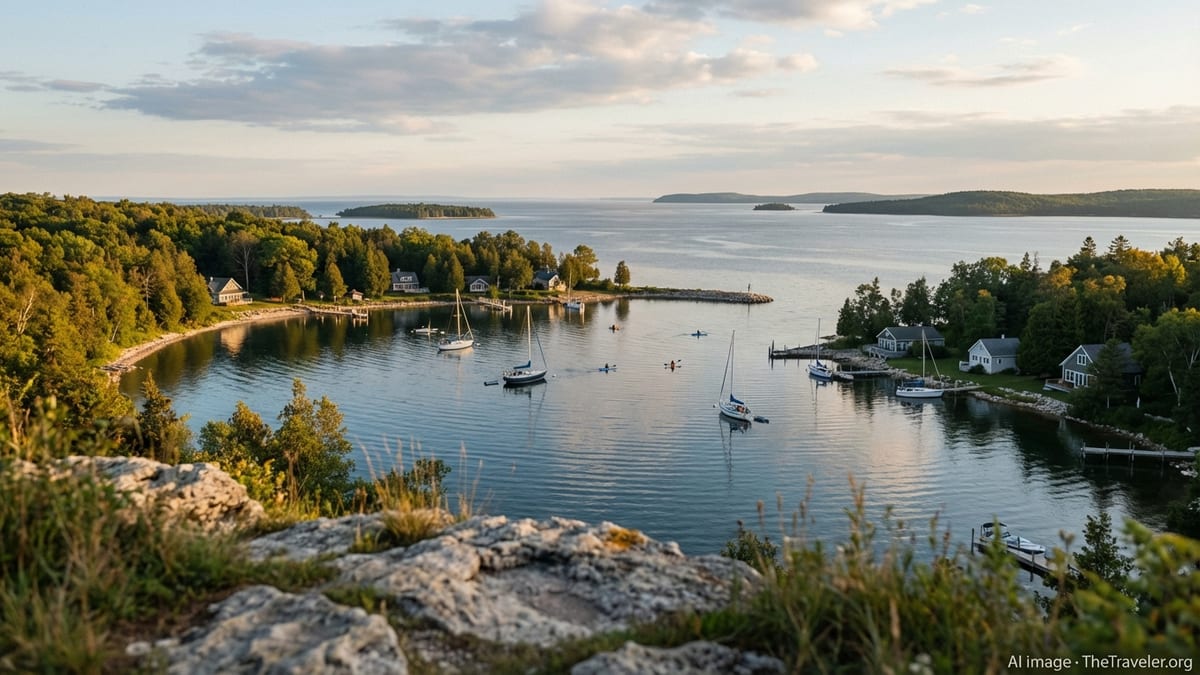
Stretching into Lake Michigan like a hooked thumb, the Door Peninsula has long been a favorite summer destination in Wisconsin. Its string of harbors and small towns, including communities such as Sister Bay, Fish Creek, Ephraim, and Sturgeon Bay, offer an appealing mix of water access, galleries, restaurants, and family-run lodgings. The peninsula’s dual coastlines along Green Bay and Lake Michigan create varied shorelines, from sandy town beaches to rocky bluffs and quiet coves suited to paddling or sunset watching.
Peninsula State Park near Fish Creek is one of Wisconsin’s premier state parks, combining wooded campgrounds, a shoreline golf course, bike-friendly roads, and trails that traverse rocky ridges above Green Bay. Lookouts provide broad views of the islands offshore, and the historic Eagle Bluff Lighthouse adds a dash of maritime history. On the Lake Michigan side, county parks feature limestone cliffs and wave-battered ledges that show the power of the big lake on windy days. Simple footpaths often lead from parking areas through forest to sudden cliff-top viewpoints.
Door County’s cultural scene complements its outdoor offerings. Seasonal theater companies, art galleries, and local music events draw both visitors and residents, while long-running traditions such as fish boils and cherry-based desserts remind travelers of the region’s farming and fishing roots. Summer and early fall are the busiest times, with festivals and harvest events scattered across the calendar, but shoulder seasons reward visitors with lower crowds, cooler hiking temperatures, and a more relaxed pace along the waterfronts.
Experience Lake Geneva’s Classic Resort Atmosphere
In southeastern Wisconsin, Lake Geneva has built a reputation as a resort town that balances nostalgia with contemporary comforts. The community sits along the shore of Geneva Lake, a deep glacial lake lined with historic estates, public parks, and marinas. Steamboat-style tour vessels, modern cruise boats, and private craft share the water in summer, offering passengers views of manicured lawns, boathouses, and wooded shorelines that are otherwise hard to see from the road. Sightseeing cruises often include commentary on the lake’s history as a retreat for Chicago-area families beginning in the 19th century.
One of the area’s distinctive features is the Geneva Lake Shore Path, a public footpath more than 20 miles long that traces the lake’s perimeter. Sections of the trail pass directly in front of waterfront homes, with lake views on one side and gardens and architecture on the other. Many visitors opt to walk shorter segments rather than tackle the full loop, using public access points and local advice to craft a route that fits their time and fitness level. Sturdy walking shoes are recommended, as the path surface changes from lawn to gravel to flagstone.
Within the city of Lake Geneva itself, a compact downtown offers dining, boutique shopping, and casual lakefront parks. Public beaches, including family-oriented options near the central business district and additional swimming areas at nearby state and local parks, provide easy water access in warm weather. During winter, the focus shifts to ice formations, local winter festivals, and regional ski hills, but for most travelers Lake Geneva’s primary appeal remains its summer lake culture, walkable center, and convenient location within a short drive of major Midwestern cities.
Soak Up Art, Architecture, and Lakefront Energy in Milwaukee
Wisconsin’s largest city anchors the state’s urban experiences, and much of Milwaukee’s appeal centers on its Lake Michigan shoreline. The city’s downtown and adjacent neighborhoods sit close to the water, stitched together by a network of trails and parks. The Milwaukee Art Museum is among the most recognizable buildings on the skyline, its modern design featuring a movable, wing-like sunscreen that frames views of both the lake and the city. Inside, collections span centuries and include European and American works, contemporary pieces, and rotating exhibitions that draw regional and national audiences.
Beyond the museum, the city’s revitalized Third Ward warehouse district has become a hub for dining, shopping, and arts venues. Converted brick buildings now house galleries, theaters, and lofts, while riverfront walkways tie the neighborhood to downtown. Visitors can explore on foot or by kayak along the Milwaukee River, where seasonal rental operators offer equipment for short paddles past historic bridges and former industrial sites now repurposed as housing and offices. The mix of old and new architecture gives the city a distinct sense of place that differentiates it from other Midwestern urban centers.
Milwaukee’s event calendar keeps the waterfront lively from late spring through early fall. Festivals at the lakefront grounds, including the long-running Summerfest music festival and cultural celebrations dedicated to different communities and cuisines, draw large crowds. Many of these events combine lake views with outdoor stages, food vendors, and family activities. Even outside festival dates, the lakefront pathways remain popular for morning runs, evening strolls, and casual cycling, making Milwaukee a natural stop for travelers who want a city break alongside their time on the water.
Explore Madison’s Lakes, Capitol, and Neighborhoods
Built on an isthmus between lakes Mendota and Monona, Madison blends college-town spirit with state-capital formality. The domed Wisconsin State Capitol anchors the city center, with streets radiating outward to residential neighborhoods, campus districts, and waterfront parks. Visitors can tour the Capitol interior on most days, taking in murals, marble staircases, and observation areas that look across the lakes. Farmers markets and public events frequently fill the surrounding square, especially during the warmer months, adding a festival feel to weekend mornings.
Lake life is woven into daily routines in Madison. Shoreline paths along both Mendota and Monona attract walkers, runners, and cyclists, while public boat launches and paddle-craft rentals get people onto the water with minimal preparation. Community-focused beaches offer swimming access in season, often backed by playgrounds and picnic lawns. Sunset views over the lakes can be particularly memorable from points along the university campus, city parks, or quiet residential shores, depending on wind conditions and sky color.
Madison’s neighborhoods provide a second layer of exploration. Areas near the university showcase eclectic restaurants, music venues, and independent shops, while other districts highlight historic architecture and tree-lined streets. Year-round cultural programming at performance halls and museums gives travelers additional options when weather turns, and the city’s extensive cycling infrastructure means visitors can often get around efficiently without a car. For road-trippers, Madison’s central location also makes it a convenient base for day trips to state parks, small towns, and rural landscapes in southern Wisconsin.
Follow the Great River Road and the Mississippi Bluffs
On Wisconsin’s western edge, the Mississippi River carves a broad valley lined with forested bluffs, river islands, and small towns that face the water. The Wisconsin section of the Great River Road, a designated National Scenic Byway, follows this corridor, offering river views, overlook pullouts, and access to parks and historic sites. Drivers can tackle the route in small segments or as part of a longer north-south road trip, stopping in communities that have embraced the river as a defining feature of local life.
Wyalusing State Park near the confluence of the Wisconsin and Mississippi rivers is a highlight along this stretch. Set atop 500-foot bluffs, the park’s overlooks provide sweeping vistas of braided river channels, islands, and wetlands, especially striking at sunrise and sunset when low light accentuates the contours of the valley. Trails wind through hardwood forests and past archaeological sites that preserve Native American effigy mounds, underscoring the region’s long human history. Birdwatchers value the park for its mix of woodland and river species, including raptors and migratory songbirds.
Throughout the valley, travelers encounter a mixture of working river towns, wildlife refuges, and recreation areas. Seasonal barge traffic, recreational boating, and riverside industry share space with fishing piers, marinas, and riverfront parks. Small museums and visitor centers interpret topics from river ecology to regional logging and transportation history. For visitors who know Wisconsin primarily through its inland lakes and cities, the Mississippi corridor can feel like an entirely different side of the state, with a slower pace and a strong link to one of North America’s major waterways.
Chase Waterfalls and Gorge Trails at Willow River and Beyond
While lakes dominate many conversations about Wisconsin’s outdoors, the state’s rivers and waterfalls deserve attention in their own right. In the northwest, not far from the Minnesota border, Willow River State Park draws visitors with its multi-tiered Willow Falls, which plunge through a deep sandstone gorge. Trails descend from forested uplands to the river below, where hikers can view the waterfalls from various angles and feel the cool spray on hot summer days. The sound of rushing water and the layered rock walls give this pocket of the park a distinctive character compared with the surrounding prairie and woods.
The park’s proximity to the Twin Cities has made it a popular regional day trip, especially in warm weather. Families, photographers, and local hikers share the routes, so starting early or visiting on weekdays can make the trails feel more relaxed. Beyond the gorge, additional paths explore quieter sections of the park, with open meadows and wooded slopes providing habitat for songbirds and other wildlife. Seasonal camping extends the experience for those who want to spend more than a few hours along the river.
Elsewhere in Wisconsin, smaller gorges and waterfalls appear in state and county parks, each with its own personality tied to local geology. Narrow rock passages in certain areas create almost slot-like experiences, while other falls are wide and low, inviting close-up exploration when water levels allow. For travelers building a road trip around natural attractions, linking several of these waterfall and gorge sites with better-known lakes and cities can give a more rounded sense of Wisconsin’s varied landscapes.
The Takeaway
From the wave-sculpted caves of Lake Superior’s Apostle Islands to the urban lakefront of Milwaukee and the resort traditions of Lake Geneva, Wisconsin delivers a broad spectrum of experiences shaped by water and framed by distinctive communities. The state’s cities add cultural depth, with museums, music festivals, and lively neighborhoods, while its parks preserve bluffs, islands, river valleys, and waterfalls that reveal how glaciers, rivers, and time have carved the landscape. Travelers can lean into adventure with paddling and hiking, or focus on relaxed days in harbor towns and city districts where the next cafe or viewpoint is only a short walk away.
What unites these nine highlights is their accessibility and variety. It is possible to see several in a single extended trip, yet each destination rewards a slower, more immersive stay. Whether you are drawn by the promise of sunrise over Lake Michigan, sunset on the Mississippi, or an evening concert by the water in Milwaukee or Madison, Wisconsin offers enough lake adventures and city attractions to fill multiple itineraries, in every season.
FAQ
Q1. What is the best time of year to visit Wisconsin for lake activities?
The most reliable months for warm-weather lake activities are typically late June through early September, when water and air temperatures are most comfortable.
Q2. Do I need previous paddling experience to kayak the Apostle Islands sea caves?
Many outfitters offer beginner-friendly guided trips and provide instruction and safety gear, but comfort on the water and following guide directions are important.
Q3. How crowded does Devil’s Lake State Park get in summer?
Devil’s Lake can be very busy on sunny weekends and holidays, with parking lots filling early, so arriving in the morning or visiting on weekdays helps avoid peak crowds.
Q4. Is Door County suitable for travelers without a car?
Door County is easiest to explore by car, but some towns are walkable, and seasonal shuttles or tour services can help car-free visitors reach select attractions.
Q5. Can I swim in Lake Superior near the Apostle Islands?
Swimming is possible at designated beaches, but Lake Superior stays cold even in midsummer, so visitors should be prepared for chilly water and changing conditions.
Q6. Are Milwaukee and Madison good winter destinations?
Both cities offer year-round museums, restaurants, and events, though winter travel involves colder temperatures, potential snow, and shorter daylight hours.
Q7. Is the Geneva Lake Shore Path open to the public along its entire length?
The path encircles the lake with public access, but it crosses varied terrain and private-property edges, so visitors should respect signage and stay on the designated route.
Q8. How long should I plan for a Great River Road trip in Wisconsin?
A focused weekend allows you to sample key Mississippi River towns and overlooks, while three to five days give time for deeper exploration and hiking.
Q9. Do I need to reserve campsites at popular Wisconsin state parks in advance?
At well-known parks, especially in summer and on holiday weekends, reserving campsites in advance is strongly recommended to secure a spot.
Q10. Are waterfalls like Willow Falls accessible for families with children?
Families frequently visit, but trails can include elevation changes and uneven surfaces, so checking current trail descriptions and choosing routes that match abilities is wise.