

Arizona rewards curiosity. Within a few hours of its major cities, the landscape shifts from cactus-studded desert to cool pine forest, red rock canyon, and historic main street. Whether you are based in Phoenix, Tucson, Flagstaff, or Sedona, you can spend a single day discovering national parks, small towns, lakes, and mountain viewpoints that feel far removed from city life yet are logistically simple to reach. These nine easy day trips highlight some of the most accessible and rewarding corners of the state, with practical context to help you choose the right outing for your time, interests, and season.
Sedona and Red Rock Country
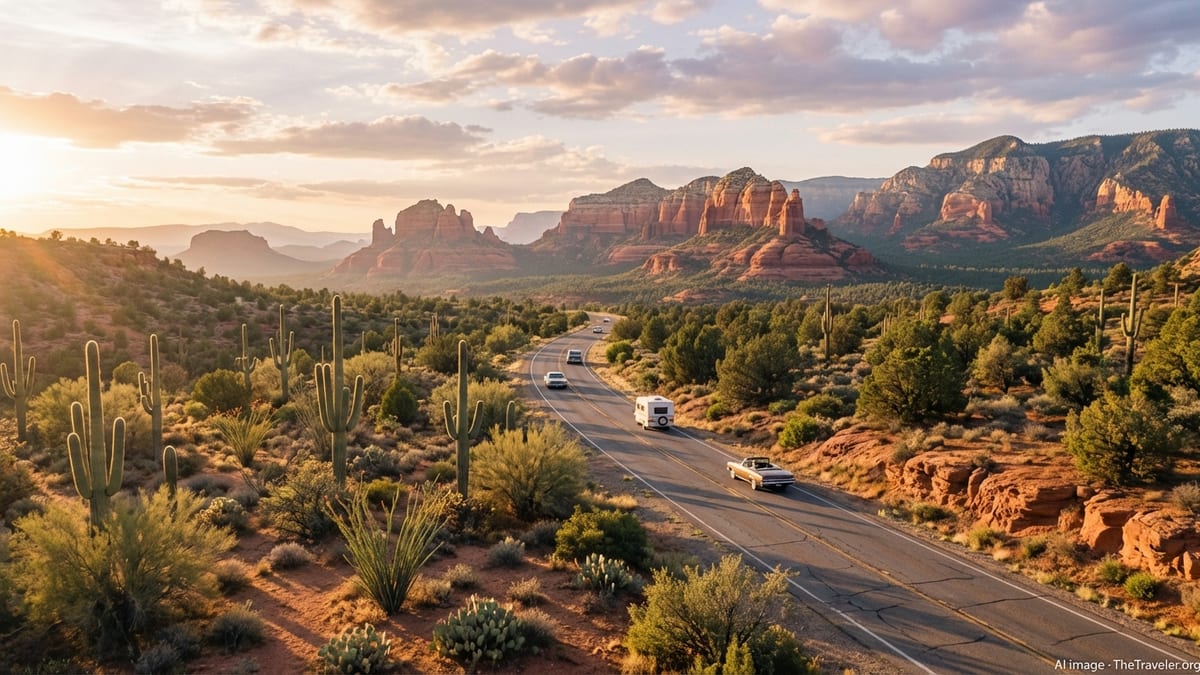
Few places in Arizona are as instantly recognizable as Sedona. Surrounded by towering red sandstone formations and a patchwork of juniper and piñon, this small city offers a compelling mix of outdoor adventure, scenic drives, galleries, and wellness retreats. From Phoenix, the drive is typically just under two hours along Interstate 17 before turning onto a state highway that gradually reveals the red cliffs on the horizon. Travelers often spend their day hiking among signature landmarks such as Cathedral Rock or Bell Rock, taking short, well-signed trails that offer big views without requiring advanced backcountry skills.
Beyond hiking, Sedona’s appeal lies in how easy it is to experience the landscape. Scenic turnout points line the main roads, and short walks from roadside parking lots can deliver sweeping panoramas over canyons and buttes. Jeep tours and guided excursions are widely available for those who prefer not to navigate rougher tracks. The compact Uptown district concentrates restaurants, tasting rooms, and art galleries, making it simple to transition from a morning on the trail to an afternoon browsing or relaxing over a late lunch before the drive back.
Planning around season and time of day is important. Spring and fall are particularly popular for mild temperatures, and holiday weekends can bring congestion at trailheads and in town. Arriving early helps with parking and allows you to experience the red rock formations in the soft light of morning, while sunset rewards those who linger with deepening colors on the cliffs. In summer, heat builds quickly and afternoon thunderstorms are common, so scheduling hikes for early morning and saving indoor stops or shaded creek walks for later is a sensible strategy.
For travelers looking for variety in a single outing, Sedona pairs naturally with nearby viewpoints, state parks, and historic sites. Short detours to creekside picnic areas, small heritage centers, and roadside overlooks can easily fill a day without long additional driving. Because services are plentiful and distances relatively short once you arrive, Sedona remains one of the simplest and most flexible day trips in Arizona for both first-time visitors and returning travelers.
Grand Canyon South Rim
The South Rim of Grand Canyon National Park is one of the most sought-after day trips in the American Southwest. From Phoenix, the journey is roughly three and a half to four hours by road, often via Flagstaff and then across high plateau country where pines gradually give way to open views. The payoff is immediate on arrival: a short walk from the main visitor center or several parking areas brings you to the edge of a chasm carved by the Colorado River over millions of years. Even a brief visit offers a powerful sense of scale, with layered cliffs stretching to the horizon.
For a day visit, the Rim Trail provides the simplest way to experience the canyon. This mostly level route follows the edge between a series of developed viewpoints, many connected by a frequent free shuttle. Visitors can stroll a short section near the main village or spend several hours walking between overlooks, stepping off at bus stops when they are ready to move farther along. The trail surfaces near the village are paved, making them accessible to a wide range of travelers, including families with strollers and visitors who prefer not to tackle steep grades.
Those seeking a taste of the inner canyon can explore the upper portions of classic routes such as the Bright Angel or South Kaibab trails. Even a short descent of thirty to sixty minutes offers shifting perspectives as cliffs rise above and the rim recedes from view. It is important, however, to turn around in time and account for the more strenuous climb back to the top, especially in warmer months when temperatures can rise significantly below the rim. The National Park Service strongly discourages trying to hike to the river and back in a single day for most visitors.
Because of its popularity, planning ahead smooths the experience. Peak seasons around spring break, summer, and major holidays can mean full parking lots by late morning, so arriving early or later in the afternoon can make logistics easier. Weather also varies dramatically by season, with winter bringing snow and cold at this higher elevation and summer producing afternoon thunderstorms. Even with these considerations, a carefully paced day trip to the South Rim remains a highlight of many Arizona itineraries and is achievable for travelers who are comfortable with a full day of driving and sightseeing.
Historic Jerome and the Mingus Mountain Scenic Drive
Perched high on the slopes of Cleopatra Hill, Jerome began as a copper mining camp in the late nineteenth century and evolved into a near ghost town before reinventing itself as an arts community. Today it is one of Arizona’s most distinctive small towns, popular as a day trip from both Phoenix and Flagstaff. The approach is part of the experience: the state highway that climbs over Mingus Mountain to Jerome is recognized as a scenic route, with long switchbacks, forested slopes, and occasional overlooks providing expansive views.
In town, narrow streets curve along the steep hillside, and buildings seem to cling to the rock. Many former boarding houses, saloons, and commercial blocks now host galleries, studios, restaurants, and tasting rooms. Visitors can spend several relaxed hours walking between shops, exploring a small state historic park that interprets the region’s mining history, and pausing at viewpoints that look over the Verde Valley to distant red rock formations. The atmosphere blends frontier history with a slightly eccentric, bohemian edge.
Because of its location, Jerome often pairs well with nearby communities such as Cottonwood and Clarkdale or with Sedona and Oak Creek Canyon on a loop drive. Travelers can begin in the cool pines near Flagstaff, descend through dramatic canyon scenery, explore Sedona’s red rock vistas, and then climb again to Jerome’s hillside setting before returning via an alternate route. Each leg of this circuit showcases a different face of central Arizona, yet the total driving time remains manageable within a long day for those comfortable on winding mountain roads.
Parking is limited in Jerome’s compact core, particularly on weekends and during festival periods, so patience and a willingness to walk a few blocks up or down steep streets is helpful. Weather can also shift quickly at this higher elevation, with cooler temperatures and winter snow possible compared with the desert below. These practical details are part of the town’s character and contribute to the feeling of having discovered a place that still retains much of its historic fabric and unusual topography.
Tucson and Saguaro Country
South of Phoenix, Tucson offers a different vision of Arizona, one shaped by centuries of Indigenous presence, Spanish and Mexican influence, and a surrounding desert dominated by towering saguaro cacti. Driving time between the two metropolitan areas is typically around two hours, making Tucson a realistic and rewarding day trip if you begin early. Many visitors divide their time between the city’s cultural institutions and the protected desert landscapes that frame it.
One of the most memorable experiences near Tucson is walking among the giant saguaros of a nearby national park. Paved scenic drives and short trails weave through dense cactus forests, revealing how surprisingly varied the Sonoran Desert can be. Wide desert vistas, seasonal wildflower blooms, and silhouettes of saguaros at sunset all feel particularly striking here. The developed loops and marked viewpoints make it easy to adjust a visit to the time and energy you have available, whether that means a brief drive with photo stops or several hours of hiking.
Within the city, Tucson’s character emerges in its historic barrios, vibrant food scene, and university-driven cultural life. Low-rise adobe and brick neighborhoods retain a sense of scale and history, while a growing number of independent restaurants and cafes highlight Mexican, Indigenous, and Southwestern flavors. Museums dedicated to regional history, aviation, and the natural world provide additional options, particularly during the hotter parts of the day. Travelers who prioritize food often plan their route specifically to sample tacos, bakeries, and heritage recipes that have earned national attention.
Because Tucson sits at a higher elevation than Phoenix, temperatures can feel slightly more moderate, especially from late autumn through spring. Summer heat is still intense, however, and midday hours are best reserved for indoor activities or shaded strolls. With advance planning, it is possible to experience sunrise or early-morning light in the desert, a long lunch in town, and an evening return drive, condensing a wide cross section of southern Arizona into a single, varied day.
Flagstaff and the High Country
Flagstaff provides one of the starkest contrasts to the desert environments that many travelers associate with Arizona. Sitting at roughly 7,000 feet in elevation and surrounded by ponderosa pine forest, this college town along historic Route 66 is reachable from Phoenix in about two and a half hours by car. The temperature difference can be dramatic, often 20 to 30 degrees cooler in summer, which makes Flagstaff a popular warm-season escape as well as a gateway to surrounding natural attractions.
Within town, the historic core features brick commercial buildings, cafes, breweries, and outdoor gear shops that reflect both the student presence and the city’s long-standing role as a base for mountain adventures. A noted observatory on a nearby hill offers public programs focused on astronomy, taking advantage of the region’s dark skies. Pedestrian-friendly streets and a modestly sized downtown make it easy to spend a few hours wandering without needing to move your vehicle frequently.
Flagstaff also anchors a network of scenic drives and trail systems. Short excursions lead to volcanic fields, lava tubes, and viewpoints beneath the San Francisco Peaks, home to a ski resort in winter and chairlift rides with wide vistas in summer. Nearby protected sites preserve the remains of ancient pueblo communities, where interpretive trails explain how people adapted to this high-altitude environment centuries ago. For many visitors, a day in Flagstaff is less about ticking off specific attractions and more about enjoying cool air, tall trees, and the relaxed rhythm of a mountain town.
Weather is a key consideration. Winter storms can bring heavy snow, affecting both local roads and the main interstate approaches, while summer monsoon patterns deliver afternoon thunderstorms and quickly changing skies. Checking conditions before departure and allowing extra time for mountain driving helps keep the day pleasant. When planned with these factors in mind, Flagstaff becomes both a refreshing stand-alone day trip and a practical stopover on longer journeys to the Grand Canyon and beyond.
Slide Rock State Park and Oak Creek Canyon
Just north of Sedona, Oak Creek Canyon carves a deep, forested corridor through red and cream-colored cliffs. This stretch of river valley is easily reached by a scenic highway that climbs from Sedona toward Flagstaff, and along it sits a beloved day-use area centered on a historic homestead and natural water features. For many Arizona residents, this canyon is synonymous with hot-weather relief, combining cold flowing water, polished rock, and shaded picnic spots.
The main attraction for many visitors is a natural rock chute along the creek that forms a series of smooth slides and pools. In warm months, people line up to ride the currents, wading between boulders and launching themselves down the slippery channel. Lifeguards are not always present, and the rock can be both slick and rough in places, so sturdy water shoes and a cautious approach are recommended. Away from the slide area, shallow stretches and eddies provide gentler places for children to splash or for adults to sit with feet in the water.
Beyond swimming, the site preserves remnants of an early twentieth-century apple orchard and rustic cabins, with short interpretive trails that trace the property’s farming history. Simple paths lead to viewpoints above the canyon and to quieter stretches of creekside vegetation where visitors can watch birds and listen to the sound of moving water. Picnic tables scattered under cottonwoods and pines make it easy to settle in for several hours without needing elaborate equipment.
Because space is limited and this canyon is extremely popular in summer and on weekends, parking lots often fill early in the day. When capacity is reached, vehicles are turned away until others leave, so arriving in the morning or visiting on a weekday greatly improves the chance of entry. Water levels and conditions also vary seasonally and with recent weather, so it is wise to check for any current advisories before committing to the drive. For those who plan well, a day at Oak Creek offers a memorable contrast to the surrounding desert, combining clear, cold water with the dramatic red rock backdrop that defines this part of Arizona.
Lake Pleasant and the Desert Lakes North of Phoenix
Less than an hour’s drive from much of metropolitan Phoenix, a cluster of reservoirs in the surrounding desert provides quick access to boating, fishing, and wide-open views of water framed by rugged hills. Among them, one of the most visited is a large reservoir north of the city, managed as a regional park and popular for everything from paddleboarding to powerboating. For residents, this is often the most convenient way to trade city streets for open water without committing to a long road trip.
Facilities around the lake typically include boat launches, marinas, picnic areas, and networks of short trails that climb low ridges for broader views. On a single day visit, it is easy to launch a kayak or paddleboard in the calm coves, join a guided cruise, or simply set up a shaded picnic overlooking the shoreline. Anglers target species such as bass and catfish, and birdwatchers often scan for bald eagles, ospreys, and other raptors that frequent the area, especially in cooler months.
Because this reservoir sits at a lower elevation, temperatures in summer can be intense, often matching or exceeding those in Phoenix itself. On very hot days, most activity concentrates in the early morning and late afternoon, with visitors using the middle of the day for rest or water-based activities that allow frequent cooling. Outside of peak summer, conditions are generally milder, and the combination of clear desert light, reflective water, and distant mountain silhouettes can be particularly photogenic.
Entry fees, water levels, and specific regulations about boating and shoreline access can change with seasons and management needs, so checking recent information before departure helps prevent surprises. Even with these practical considerations, the proximity and variety of activities make this lake one of the simplest day trips for travelers based in Phoenix or nearby communities, especially those looking to balance an urban stay with time on or beside the water.
Montezuma Castle and Verde Valley Heritage Sites
For travelers interested in the human history of Arizona as much as its landscapes, the Verde Valley region between Phoenix and Flagstaff offers a compact collection of archaeological sites and heritage centers. One of the most striking is a national monument where a remarkably preserved cliff dwelling sits high in a limestone alcove, visible from a short loop trail along the canyon floor. Built centuries ago by the Sinagua people, this multi-story structure gives a vivid sense of how communities once lived in close relationship with the surrounding environment.
The monument is designed with day visitors in mind. A paved path leads from the visitor center past shaded benches and interpretive signs that explain the site’s history, architecture, and the plants that sustained its residents. Even travelers with limited mobility can usually enjoy clear views of the dwelling, as there is no need to climb into the structure itself. A small museum and bookstore provide context and a place to cool off during the hotter hours of the day.
Nearby, additional protected areas expand the story with larger pueblo ruins on open mesas and smaller cliff dwellings overlooking a dam-created lake. Many visitors combine two or more of these sites into a single day, connected by relatively short drives through cottonwood-lined river valleys and low desert hills. Small towns in the valley offer cafes, tasting rooms, and galleries, making it easy to pause between historic stops for lunch or a short stroll through a walkable main street.
These heritage sites are especially rewarding in the shoulder seasons of spring and autumn, when daytime temperatures are moderate and wildflowers or fall colors may be present along the river corridors. Summer visits are still possible but benefit from starting early in the day, seeking shade where available, and carrying ample water. For those who want to balance natural scenery with deeper cultural understanding, a circuit through the Verde Valley’s monuments provides one of the most accessible and educational day trips in central Arizona.
Meteor Crater and the Open Spaces East of Flagstaff
East of Flagstaff, the high desert stretches toward the horizon in muted tones of sage and volcanic soil. Amid this broad plain lies one of the world’s best-preserved meteorite impact sites, a nearly circular crater roughly a mile wide and more than five hundred feet deep. Privately managed but widely recognized, this landmark offers an unusual day trip for travelers interested in geology, astronomy, and the dramatic forces that shape planets.
From Flagstaff, the drive east along the main interstate is straightforward, typically taking under an hour. As you approach, low mesas and scattered cinder cones give way to the raised rim of the crater itself, which is only fully appreciated from the viewing platforms along its edge. The visitor complex provides access to multiple observation decks, where interpretive signs and occasional guided talks explain how the crater formed tens of thousands of years ago when a meteorite struck at high speed.
Inside the main building, exhibits and a museum-style gallery explore impact science, meteors, and the broader context of planetary geology. A theater presentation adds visual detail, and hands-on displays help younger visitors grasp the scale involved. Weather permitting, guided rim walks sometimes lead small groups along a portion of the outer edge, offering changing perspectives into the basin and across the surrounding plains.
This outing pairs naturally with other stops east of Flagstaff, including national monuments that protect ancient pueblos constructed atop volcanic outcrops and forests of fossilized wood scattered across badlands. Because distances can be significant and cell service intermittent in places, it is wise to top up fuel in Flagstaff, carry extra water, and keep an eye on the weather, particularly in winter when snow and wind can sweep across the open country. For those who plan accordingly, a day centered on this crater and its neighboring landscapes offers a memorable blend of space science and high-desert solitude.
The Takeaway
Arizona’s size and diversity mean you could spend weeks exploring without exhausting its options, yet these nine day trips show how much is possible in just a single day’s outing from major hubs like Phoenix, Tucson, Flagstaff, and Sedona. From the iconic depths of the Grand Canyon to the intimate coolness of a creek in Oak Creek Canyon, from the cultural layers of Tucson to the revived mining streets of Jerome, each excursion offers a distinct combination of scenery, history, and local flavor.
Choosing between them often comes down to the kind of experience you want and the season of your visit. Cooler months invite longer hikes, desert explorations, and high-country drives, while the heat of summer pushes activities toward water, shaded canyons, and higher elevations. With realistic driving expectations, early starts, and a bit of flexibility, these day trips can slot easily into a broader Arizona itinerary or stand alone as rewarding escapes from daily routine. However you sequence them, they provide a concise introduction to the state’s remarkable range of environments and stories.
FAQ
Q1. Are these Arizona day trips suitable for first-time visitors?
Yes. Each destination in this guide is well-established for tourism, with signed roads, basic services nearby, and a range of activities that do not require specialized gear or local expertise. First-time visitors who are comfortable driving, staying hydrated, and checking basic conditions can enjoy them confidently.
Q2. Which day trip is best if I only have one free day in Arizona?
The best choice depends on your interests and starting point. From Phoenix, Sedona and the Grand Canyon South Rim are the most iconic, while Tucson offers a strong mix of culture and desert scenery. If you prefer a shorter drive with time on the water, the lake north of Phoenix is a convenient option.
Q3. Can I visit the Grand Canyon South Rim as a day trip from Phoenix?
Yes, but expect a long day. The drive is roughly three and a half to four hours each way, so an early start is essential. Many visitors spend several hours walking between viewpoints along the rim and then return to Phoenix in the evening. If time and budget allow, turning the trip into an overnight stay is more relaxed.
Q4. When is the best time of year for these day trips?
Generally, late autumn through spring offers the most comfortable temperatures for hiking and sightseeing in lower-elevation deserts and canyons. Summer can still be enjoyable if you focus on higher elevations such as Flagstaff, seek out water-based activities, or plan outdoor time for early morning and late afternoon while avoiding midday heat.
Q5. Do I need a four-wheel-drive vehicle for these routes?
For the destinations described here, standard passenger vehicles are typically sufficient, as primary access roads are paved highways or well-maintained routes. Some optional side roads, jeep tours, or backcountry detours may require higher clearance or four-wheel drive, but these are not necessary to experience the core sights in each area.
Q6. How should I prepare for temperature changes in Arizona?
Temperatures can vary sharply with elevation and time of day. A common strategy is to dress in layers, carry sun protection, and pack more water than you think you will need. Moving between desert lowlands and high-country towns like Flagstaff can mean a difference of many degrees, so having a light jacket and hat handy is helpful.
Q7. Are reservations or timed entries required for any of these day trips?
Some popular parks and monuments occasionally use reservation or timed-entry systems during peak seasons or for specific activities. Requirements change over time, so it is wise to check current information from managing agencies or visitor centers shortly before your trip, particularly for the Grand Canyon and heavily visited canyon or water recreation sites.
Q8. Is it safe to swim or wade at Slide Rock and other natural water spots?
Swimming and wading are popular but come with inherent risks. Rocks can be slippery, currents stronger than they appear, and water levels variable. There may also be occasional advisories related to water quality or recent weather. Wearing appropriate footwear, entering slowly, and following posted guidance all help reduce risk.
Q9. Can I combine more than one of these destinations in a single day?
Yes, several destinations lend themselves to pairing, such as Sedona with Jerome, Oak Creek Canyon with Flagstaff, or Verde Valley heritage sites with a stop in a nearby town. The key is to be realistic about driving times and to prioritize a few meaningful stops rather than rushing through many.
Q10. What general safety tips should I follow on Arizona day trips?
Plan your route in advance, carry extra water and snacks, keep fuel levels comfortably above empty, and check weather forecasts and park alerts before leaving. Let someone know your general plan if you are traveling in more remote areas, and be prepared for limited cell coverage in canyons or high desert stretches. With these basics covered, most day trips proceed smoothly.