

Stretching between Europe and Asia, Turkey is a country of layered civilizations, striking landscapes, and a hospitality culture that quickly turns visitors into repeat travelers. Whether you are drawn by Ottoman mosques, ancient ruins, surreal rock formations, or turquoise bays, Turkey offers an unusually rich mix of experiences in a relatively compact area. These nine must see places provide a balanced route through the country’s cultural, historic, and coastal highlights, with a focus on regions that are well developed for tourism and widely considered suitable for most visitors in 2026.
Istanbul: Where Continents and Centuries Meet
Istanbul is the natural starting point for most journeys in Turkey and remains one of the world’s great city experiences. Spanning both sides of the Bosphorus Strait, it is the only metropolis that sits in Europe and Asia at once, a geography that is reflected in its skyline of domes, minarets, and modern towers. Historic neighborhoods such as Sultanahmet and Fatih hold the city’s most famous monuments, while nearby Beyoğlu and Karaköy showcase its contemporary face in galleries, cafes, and converted warehouses.
Central to any visit is the historic core around Sultanahmet Square, where Hagia Sophia and the Blue Mosque stand almost facing each other. Hagia Sophia’s vast dome and layered history as church, mosque, museum, and mosque again encapsulate Istanbul’s complex past. A short walk away, the Blue Mosque impresses with its cascade of domes and delicate tilework. Nearby, the Basilica Cistern, Grand Bazaar, and Spice Bazaar give a sense of how commerce and daily life have long animated this city.
Across the Golden Horn, districts such as Galata, Cihangir, and Balat introduce a different mood. Here you find steep cobbled streets, converted han buildings, and lively nightlife clustered around İstiklal Avenue. The Galata Tower offers a classic panoramic view, while ferries shuttle constantly between the European and Asian shores, giving visitors a sense of the city’s maritime rhythms.
Logistically, Istanbul is also the country’s primary air hub, with two major airports and extensive domestic connections. For most travelers, it makes sense to spend at least several days here at the start or end of a trip, using the time to adjust, sample regional cuisines, and understand the broader cultural context before heading deeper into Turkey.
Cappadocia and Göreme: Surreal Landscapes and Cave Heritage
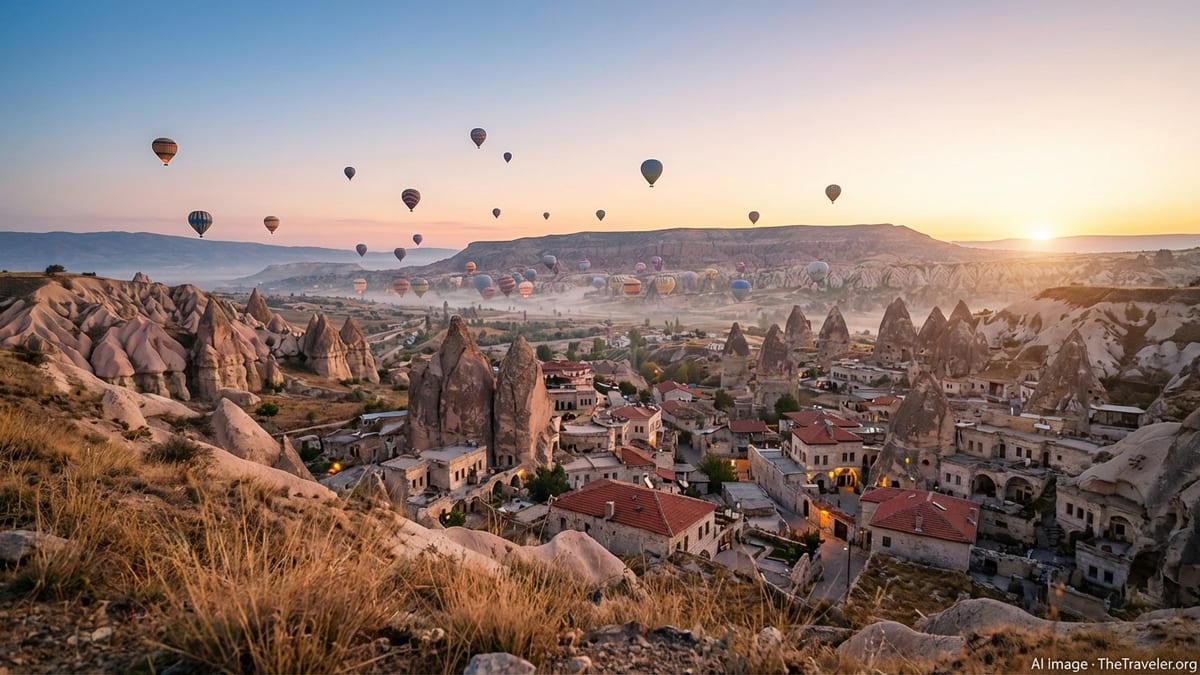
The region of Cappadocia in central Anatolia feels unlike anywhere else on earth, with valleys of conical rock formations, soft volcanic cliffs carved into dwellings, and underground cities stretching many levels below ground. At its heart lies Göreme Historical National Park, a protected landscape and UNESCO World Heritage Site known for its rock cut churches and otherworldly terrain. Here, erosion has sculpted pillars and hoodoos often referred to as fairy chimneys, many of which have been hollowed out over centuries to form homes, chapels, and storerooms.
Visitors typically stay in the towns of Göreme, Ürgüp, or Uçhisar, where traditional stone houses have been converted into small hotels, including the famous cave accommodations. Walking paths lead out from these settlements into valleys such as Love Valley, Pigeon Valley, and the Rose and Red Valleys. Each area has a slightly different color and texture, particularly at sunrise and sunset when the tuff rock glows in shades of gold and pink. Hiking is accessible to most reasonably fit travelers, though good footwear and sun protection are important in summer.
Hot air balloon flights have become synonymous with Cappadocia and remain one of the most popular activities, taking off just before dawn on weather permitting days. From the basket, you can watch the sun rise behind the distant mountains as dozens of other balloons drift quietly above the valleys. Flights are regulated and operate year round, but they are subject to cancellations in high winds, so allowing at least two mornings in your schedule increases your chance of getting airborne.
Beyond the iconic scenery, Cappadocia also offers a window into early Christian history and later rural life. Painted frescoes in the Göreme Open Air Museum preserve scenes from the Byzantine period, although photography rules vary in order to protect fragile pigments. Further afield, underground settlements such as Derinkuyu and Kaymaklı reveal how entire communities once retreated below the surface during times of invasion. Taken together, the region’s geology and cultural layers help explain why Cappadocia consistently ranks among Turkey’s most compelling destinations.
Ephesus and the Aegean Coast: Walking Through the Classical World
On Turkey’s western Aegean coast, the ruins of Ephesus provide one of the most complete and atmospheric glimpses into the ancient Mediterranean world. Once a major Roman port city, it is now set a few kilometers inland due to centuries of sedimentation, but its streets, public buildings, and grand library remain remarkably well preserved. Walking the marble lined Curetes Street, past temples, fountains, and the famous terrace houses, gives a powerful impression of scale and urban organization.
The Library of Celsus, with its restored two story facade, is the visual centerpiece of Ephesus. Nearby, the Great Theater, which could seat tens of thousands of spectators in antiquity, still hosts occasional performances today. Many visitors spend half a day exploring, but those with a deeper interest in archaeology can easily linger longer, particularly if they add the upper gates and less visited areas to their route. To better appreciate the site, it is worth arriving early in the morning or later in the afternoon, when temperatures are milder and day tour crowds have thinned.
Ephesus is typically accessed from the modern town of Selçuk or the resort city of Kuşadası, both of which have a range of accommodations. Selçuk itself is worth some time for its own hilltop fortress, the İsa Bey Mosque, and local museums that house artifacts from the excavations. For travelers seeking a blend of culture and relaxation, nearby coastal towns and beaches along the Aegean offer swimming, seafood, and views of the Greek islands on clear days.
The wider region is also home to other ruins and religiously significant sites. These include the remains sometimes identified with the Temple of Artemis and locations associated with early Christian pilgrimage. As with many archaeological areas in Turkey, new findings occasionally reshape academic understanding of the landscape, so interpretation signage and museum exhibits are periodically updated. For visitors, the key point is that the Aegean coast allows you to combine beach time with some of the most important classical ruins in the eastern Mediterranean.
Pamukkale and Hierapolis: Terraces and Thermal Waters
Inland from the Aegean, Pamukkale is instantly recognizable for its white travertine terraces, formed over thousands of years by mineral rich hot springs cascading down the hillside. The name means cotton castle in Turkish, and from a distance the formations can resemble snowfields or frozen waterfalls. At the top of the slope lie the ruins of ancient Hierapolis, a Greco Roman spa town that grew up around the same thermal waters.
Visitors approach along boardwalks designed to protect the fragile terraces while still allowing access to certain pools. Regulations have evolved over time to limit erosion and discoloration, so only designated sections of the slope are open for wading. Walking barefoot in the warm, shallow water is still part of the experience in those zones, and the contrast between the pale stone and blue pools is striking in the late afternoon light. It is important to follow posted guidelines, as authorities take conservation seriously in order to preserve the site for future generations.
Above the terraces, Hierapolis spreads out over a broad plateau. The theater, necropolis, city gates, and remnants of colonnaded streets speak to the town’s role as a place of healing and pilgrimage in antiquity. One of the more unusual attractions is a pool filled with submerged marble fragments, where visitors can swim among the scattered remains of columns and pavements, although separate admission fees and capacity controls may apply.
Most travelers visit Pamukkale as a day trip from Denizli or as a stop on an overland route between the Aegean and central Anatolia. To appreciate the changing light on the terraces, staying one night in the nearby village can be worthwhile, allowing you to see both sunset and early morning views. Combining Pamukkale with Ephesus and the surrounding Aegean coast creates a coherent arc through western Turkey’s classical and natural highlights.
Antalya and the Turquoise Coast: Beaches, Old Towns, and Mountain Backdrops
On Turkey’s Mediterranean shoreline, the province of Antalya is the anchor of what is often called the Turquoise Coast, a reference to the clear blue water that laps against limestone cliffs and sheltered coves. The city of Antalya itself blends a busy modern center with the restored quarter of Kaleiçi, where Ottoman era houses, narrow lanes, and small boutique hotels cluster above the old harbor. Roman and Seljuk monuments, including Hadrian’s Gate and various towers and mosques, add further layers to the streetscape.
To the west and east of the city, a string of resorts and smaller towns cater to different travel styles. Places such as Kemer, Belek, Side, and Alanya offer long beaches, large hotels, and family oriented amenities. For those seeking a more understated atmosphere, smaller coastal settlements farther along the Lycian or Carian coasts provide pensions, hiking access, and a closer relationship with the surrounding topography. The coastal mountains rise steeply behind many of these towns, giving a dramatic backdrop, especially at sunrise and sunset.
This stretch of coast is also dotted with ancient ruins and hiking trails. Segments of the long distance Lycian Way pass through villages and past coastal viewpoints, and sites like Termessos and Phaselis allow visitors to see theater remains, city walls, and tombs amid pine forests and sea views. Boat trips, ranging from short outings to multi day gulet cruises, are widely available in season and give access to coves and islands that are otherwise difficult to reach.
Because the region is significantly removed from Turkey’s more sensitive border areas, it has remained one of the country’s primary tourism engines, with a long season that starts in spring and runs well into autumn. For many travelers, combining a few days in Antalya with inland exploration in Cappadocia or the Aegean makes logistical sense, as domestic flights link the city to major hubs elsewhere in the country.
Bodrum Peninsula: Aegean Lifestyle and Coastal Energy
Farther north along the Aegean, the Bodrum Peninsula has long been a favored holiday area for domestic and international visitors. The town of Bodrum itself curves around twin harbors dominated by a castle that once served as a stronghold of the Knights Hospitaller and now houses a museum. Whitewashed houses climb the hills behind the waterfront, and the streets close to the marina are lined with restaurants, bars, and small shops. The overall feel is relaxed but lively, especially in high summer.
Beyond the main town, the peninsula fans out into a series of bays and headlands, each with its own character. Some areas focus on upscale beach clubs and stylish hotels overlooking calm inlets, while others retain more of a village atmosphere, with modest pensions and working fishing boats sharing the shore with swimmers. Inland, the landscape is dotted with small farms, tangerine groves, and windmills, a reminder that the region was not always a tourism hotspot.
One reason many visitors gravitate to Bodrum is its combination of accessible beaches, sailing opportunities, and dining. The wider Aegean has been attracting attention for its food scene, with coastal towns and nearby inland districts developing a reputation for olive oil based cooking, fresh seafood, and contemporary interpretations of regional dishes. In and around Bodrum you can find everything from simple grills to more ambitious restaurants, reflecting Turkey’s broader gastronomic evolution in recent years.
As with other major resort areas, summer brings crowds and higher prices, while the shoulder seasons of late spring and early autumn tend to offer a more balanced mix of pleasant weather and manageable visitor numbers. For travelers charting a route along the coast, Bodrum can serve as either a starting or ending point, easily linked by domestic flights and ferries to other parts of the country.
Trabzon and the Black Sea: Green Mountains and Monastery Cliffs
On Turkey’s northern shore, facing the Black Sea, Trabzon and its surrounding region offer a very different atmosphere from the sun baked Aegean and Mediterranean coasts. Here the climate is cooler and more humid, producing lush green hillsides, tea plantations, and dense forests that sweep down toward the sea. The city of Trabzon itself has long functioned as a port and cultural crossroads, with layers of Greek, Roman, Byzantine, and Ottoman influence visible in its architecture and urban layout.
One of the area’s most striking attractions is the Sumela Monastery, built high on a cliff face in the Altındere Valley. After periods of closure for restoration and stabilization work, the site has gradually reopened, allowing visitors to again access its courtyards and see surviving frescoes. The combination of mountain scenery, river valley, and the improbable position of the monastery makes for a memorable day trip from the city, provided you are comfortable with some uphill walking and stairs.
Beyond Sumela, the broader Eastern Black Sea region appeals to travelers interested in nature and rural culture. Highland pastures known as yaylas offer summer grazing grounds and simple wooden houses, and in recent years they have also become destinations for domestic tourism, with small guesthouses and walking trails. Valleys such as Uzungöl and further east toward Rize and Artvin are known for their lakes, forests, and tea gardens perched on terraces above the rivers.
Weather along the Black Sea can be changeable, with mist and showers common even in warmer months, so packing layers is advisable. The payoff for the less predictable skies is a landscape that feels markedly different from much of the rest of Turkey. For visitors who have time to move beyond the classic Istanbul Cappadocia coast triangle, adding a few days in Trabzon and its surroundings can round out a more complete picture of the country’s geographic diversity.
Konya and the Central Anatolian Heartland
Konya lies on the central Anatolian plateau and holds a special place in Turkey’s cultural and spiritual geography. Historically an important Seljuk capital, it is best known today as the city associated with the 13th century poet and mystic Jalal ad Din Rumi and the Mevlevi Sufi order sometimes referred to as the whirling dervishes. The Mevlana Museum complex, which contains Rumi’s tomb, is one of the city’s focal points, with green tiled domes, courtyards, and exhibition rooms that explain the order’s history and rituals.
A visit to Konya offers insight into a more conservative and traditionally minded side of Turkish urban life, yet it is also a modern provincial capital with universities, tram lines, and growing neighborhoods. Seljuk architecture is evident in its caravanserais, madrasas, and mosques, some of which feature intricate stone carving and tile work that prefigure later Ottoman styles. Spending time in the city’s older districts, tea gardens, and markets can help travelers understand how central Anatolia connects to the more frequently visited coastal regions.
For those interested in Rumi and Sufism, timed events and performances throughout the year offer opportunities to see the sema ceremony, in which Mevlevi practitioners whirl in white robes to the accompaniment of music and recitation. While some presentations are designed primarily for visitors, others maintain a more devotional character, and observing respectfully is important. Schedules and formats can change, so it is wise to check locally once in the city for the most current information.
Konya is also a practical overland stop between Cappadocia and the Mediterranean coast, making it relatively easy to incorporate into a broader itinerary. The surrounding countryside features steppe landscapes, salt lakes, and agricultural zones, allowing travelers who venture just beyond the urban center to see yet another face of the country’s varied interior.
Mount Nemrut and Eastern Horizons
For travelers with additional time and an interest in more remote archaeological sites, Mount Nemrut in southeastern Turkey remains one of the country’s most enigmatic locations. At its summit, a tumulus and terraces hold giant stone heads and seated figures erected by King Antiochus I of Commagene in the first century BCE. The sculptures, toppled and weathered over time, now sit scattered around the summit plateau, looking out over rugged ridgelines and distant valleys.
Sunrise and sunset are the classic times to visit, as the low sun accentuates the carved features and casts long shadows across the summit. Reaching the top requires a combination of driving and walking on a mountain path, and weather conditions can be harsh outside the core summer and early autumn season. Layers and wind protection are essential, as temperatures can be significantly cooler than in the lowlands, even when nearby cities are warm.
The wider southeastern region has faced challenges in recent years, including recovery from major earthquakes and periodic security concerns, and conditions can vary substantially by province. Some well known attractions have returned to normal operation, while others are undergoing restoration or may be subject to temporary access restrictions. Before planning travel in this part of the country, it is particularly important to consult up to date official advisories and to work with knowledgeable local operators who understand current realities on the ground.
For those who do make the journey, Mount Nemrut offers both a powerful sense of ancient political ambition and a reminder of how Turkey’s cultural heritage extends far beyond its better known western and central regions. The contrast between the monumental ruins and the sparsely populated highlands around them underscores just how varied Turkey’s landscapes and historical experiences can be within a single national border.
FAQ
Q1. What is the best time of year to visit Turkey for this kind of itinerary?
The most comfortable periods for combining cities, inland sites, and the coast are generally spring and autumn, roughly April to early June and late September to October. Summer brings long beach days but also higher temperatures and larger crowds in major destinations.
Q2. Is it safe to travel in Turkey in 2026?
Most of Turkey’s main tourist areas, including Istanbul, Cappadocia, the Aegean, and the Mediterranean coasts, are far from higher risk border regions and remain busy with visitors. It is still important to check current government advisories for your home country, stay aware of local news, and avoid any areas subject to specific travel warnings.
Q3. How many days do I need to see these nine places?
To experience all nine locations in a single trip with reasonable pace, three to four weeks is a realistic minimum. Many travelers instead focus on a core route such as Istanbul, Cappadocia, and one or two coastal or inland regions over 10 to 14 days.
Q4. Do I need a car to get around Turkey?
Major destinations are linked by frequent domestic flights and intercity buses, so a car is not essential for most itineraries. However, renting a vehicle can be helpful along the Aegean and Mediterranean coasts or in rural areas around places like the Black Sea highlands, provided you are comfortable with local driving conditions.
Q5. Are there any health or entry requirements I should know about?
Requirements can change, so travelers should confirm visa rules, passport validity conditions, and any health related measures with official sources before departure. It is sensible to carry travel insurance that covers medical care and evacuation, and to check which routine vaccinations are recommended for Turkey.
Q6. Can I visit mosques and religious sites as a non Muslim visitor?
Many mosques and religious complexes in Turkey are open to visitors of all backgrounds outside of main prayer times. Modest dress, removal of shoes where required, and quiet behavior are expected, and women may be asked to cover their hair in certain spaces. Photography rules vary by site and are usually posted.
Q7. How expensive is Turkey compared to Western Europe?
Overall daily costs for accommodation, food, and local transport in Turkey are often lower than in many Western European countries, especially outside peak season and top luxury properties. Prices vary by region, time of year, and exchange rate conditions, so it is wise to budget with some flexibility.
Q8. Do people speak English in the main tourist areas?
In major cities, resort towns, and heavily visited sites, many people working in tourism related businesses speak at least basic English, and often other languages as well. In more rural or residential neighborhoods, English may be less common, so learning a few Turkish phrases is appreciated and can be very helpful.
Q9. What should I wear when visiting different parts of Turkey?
In coastal resorts and large cities, dress tends to be similar to Southern Europe, though modest clothing is advisable when visiting mosques and conservative districts. In inland and eastern regions, especially smaller towns, slightly more conservative dress will help you feel comfortable and show respect for local norms.
Q10. How can I make my trip more sustainable and respectful?
Choosing locally owned accommodations where possible, supporting small businesses, minimizing plastic use, and sticking to marked paths at natural and archaeological sites all help reduce your impact. Taking time to learn about regional cultures and recent events also contributes to more thoughtful and responsible travel.