

Visiting Italy is a dream trip for many travelers, but it is also a destination where a little advance planning dramatically improves your experience. From new entry requirements to timed museum tickets and crowded train corridors, understanding how Italy works today helps you spend less time in lines and more time in piazzas. These nine planning tips focus on what you need to know now to organize a smooth, rewarding journey to Italy in 2025 and 2026.
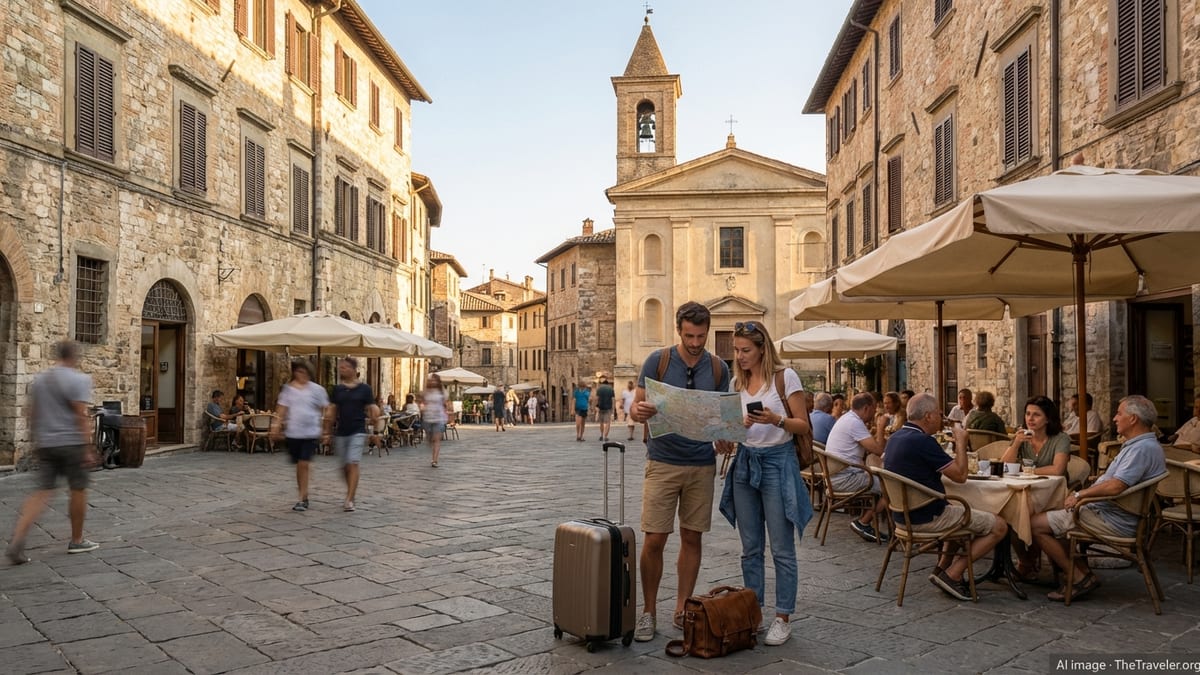
1. Choose your timing with care
When you visit Italy shapes almost everything about your trip, from prices to crowds to how much you enjoy simply walking around. Late spring and early autumn are often considered the sweet spot, with generally pleasant temperatures and slightly lighter crowds than peak summer, particularly in cities such as Rome, Florence and Venice. July and August bring intense heat in much of the country and heavy visitor numbers in major destinations and coastal hotspots, which can make sightseeing and even basic errands more tiring.
Winter can be atmospheric in cities, with shorter museum lines and better hotel offers, but days are shorter and weather can be damp or cold. Mountain regions develop a strong ski season, and some coastal or island destinations scale back ferry schedules, tours and restaurant hours. If you want to include places such as the Amalfi Coast, Cinque Terre or smaller islands, check in advance when services and accommodations are fully operating.
Local holidays and major events are another factor that should be part of your initial planning. Italy’s national holidays, regional festivals and big church celebrations can affect opening hours, traffic and hotel availability. In Rome, the Jubilee year in 2025 is expected to draw extra pilgrims and tourists, particularly around religious holidays, which may mean higher demand for central hotels and tickets to major Vatican sites. Looking at a calendar of Italian public holidays before locking in your dates helps you understand when crowds might spike and what will actually be open.
Whatever season you choose, build in more time than you think you need. Italy is best enjoyed at a slightly slower pace, and extra breathing room in your schedule protects you from stress when trains are delayed, weather changes or you find a neighborhood you want to explore longer than expected.
2. Understand current entry rules and travel documents
Before booking flights, make sure your passport and entry preparations align with the latest rules. Many visitors to Italy must have a passport valid for at least three months beyond the date they plan to leave the Schengen Area, and airlines often insist on six months of remaining validity as a safety margin. Check your passport now and renew early if needed, as processing times can stretch in busy periods.
From mid‑2025, most travelers from visa‑exempt countries, including the United States and Canada, will be required to obtain ETIAS, a new online travel authorization for short stays in the Schengen Zone. It is not a visa, but you will need to apply online, pay a small fee and receive approval before boarding your flight. The authorization is expected to remain valid for multiple trips over several years, as long as your passport stays the same, but you should always double‑check current rules as your departure date approaches.
In addition, the European Union is rolling out an Entry/Exit System that records biometric data, such as fingerprints and facial scans, when you enter and leave the Schengen Area. The aim is to speed up border checks and replace manual passport stamps, but during the early phases it may actually cause longer lines at busy airports. Build extra time into connections involving passport control and avoid tight layovers when arriving into or departing from Italy.
It is also wise to confirm any vaccination or health documentation requirements well ahead of time, especially if global health rules change. Airlines, cruise companies and tour operators may have their own policies, sometimes stricter than national regulations. Keeping digital and paper copies of key documents, including your passport, travel insurance policy and essential prescriptions, will make it easier to recover if something is lost or delayed while you are abroad.
3. Book high‑demand sights and experiences early
Italy’s most famous sights now rely heavily on timed reservations, and many sell out days or weeks ahead in popular seasons. The Colosseum in Rome, the Vatican Museums and Sistine Chapel, the Uffizi and Accademia in Florence, popular archaeological sites such as Pompeii, and Leonardo’s Last Supper in Milan all limit daily visitors and allocate specific entry windows. Waiting until you arrive can easily mean you miss a highlight or spend half a day in line.
A practical approach is to identify a shortlist of non‑negotiable experiences and secure those first. Once your flights are booked, look up reservation requirements for the major sites in each city you plan to visit, then book directly through their official channels wherever possible. Many now release tickets in monthly or 60‑day batches, and early morning or late afternoon slots often sell first because they are cooler and slightly less crowded. If official tickets for your dates are gone, reputable small‑group tours can sometimes provide access through their own allocations, though at higher cost.
Planning ahead is not only about blockbuster attractions. Popular food tours, special access experiences, cooking classes, winery visits and highly regarded restaurants also book out quickly in peak months and weekends. If there is a specific neighborhood trattoria or Michelin‑starred dining room you have your heart set on, treat it like a key sight and reserve as soon as your dates are firm. You can always release a reservation closer to the trip if your plans change.
At the same time, leave some flexibility in your schedule so the trip does not feel over‑scripted. Pre‑booking the experiences that truly matter and keeping other time open for wandering, spontaneous cafe stops or discovering lesser‑known churches and small museums strikes a balance between structure and serendipity.
4. Plan your route and train travel strategically
Italy’s rail network is one of the most useful tools for planning a smooth itinerary. High‑speed lines connect major cities such as Rome, Florence, Venice, Milan and Naples in a matter of hours, often city center to city center, while regional trains reach smaller towns and countryside destinations. For longer trips between big hubs, high‑speed trains are usually the most efficient and comfortable choice, while slower regional services work well for shorter hops.
When mapping your route, aim to move broadly in one direction rather than backtracking, for example from north to south or vice versa. One‑way itineraries that start in Milan or Venice and finish in Rome or Naples, or the reverse, often save travel time and avoid repeating long segments. It is usually worth booking advance tickets for major high‑speed routes, especially on busy days, both to secure seats and to access lower fares that can increase as departure approaches.
Downloading the apps of Italy’s main train operators allows you to see schedules, buy tickets and receive updates on platform changes or delays. For many long‑distance and high‑speed journeys, reservations are included and tickets are tied to a specific train. Regional tickets may be more flexible, with fixed prices and no mandatory seat reservations, which allows some spontaneity in day‑tripping. Always read the conditions carefully so you understand whether you must take a specific service or whether you can validate and board any train within a time window.
Build realistic expectations into your daily plan. Travel days are rarely full sightseeing days, especially when you factor in packing, hotel checkout, travel to and from stations and time settling into your next accommodation. It is usually better to schedule a lighter agenda on days you change cities, limiting yourself to a neighborhood stroll or one relaxed activity rather than multiple timed tickets. This reduces stress and gives you space to respond calmly to minor delays or last‑minute platform changes.
5. Think carefully about where you stay
Your choice of accommodation and neighborhood can shape your experience as much as your list of sights. In large cities, staying in or near the historic center often means you can walk to many of the major attractions, which reduces time and money spent on public transport or taxis. However, central neighborhoods tend to be more expensive and busier, with lively nightlife and more noise. Areas slightly outside the very center can offer better value and a more local feel while still remaining practical if they are well‑served by metro or tram lines.
When comparing options, look beyond the headline price to understand location, cancellation policies and what is included. In some cities, there are local tourism taxes payable per person per night, often collected separately on arrival and not always obvious in the initial rate. Many traditional Italian hotels still include breakfast, while apartment rentals may offer more space and the ability to cook, which is helpful for families or longer stays. Travelers with mobility concerns should pay particular attention to elevators, staircases and bathroom layouts, since historic buildings may have limited accessibility and no lift.
If your trip includes coastal destinations or smaller popular towns, such as those in Cinque Terre, the Amalfi Coast or on Lake Como, booking early becomes especially important. These places often have a limited number of accommodations, and the best‑located rooms can sell out months in advance for high season and weekends. In return, planning ahead can put you within easy walking distance of docks, beaches and trailheads, making it easier to explore without relying constantly on overcrowded buses or ferries.
For multi‑city trips, consider varying your lodging style. A mix of classic city hotels, agriturismi in the countryside and maybe one or two nights in a historic property or palazzo keeps the journey interesting. Just remember that frequent hotel changes add logistical friction, so try to spend at least two or three nights in most stops instead of racing through a long list of cities.
6. Prepare for practicalities: money, safety and daily life
Planning for the small, everyday aspects of travel in Italy can prevent many headaches. Credit and debit cards are widely accepted in hotels, larger restaurants and shops, particularly in major cities, and contactless payments through phones and watches have become common. However, smaller family‑run businesses, market stalls and some rural establishments may still prefer cash, especially for low bills. It is sensible to arrive with a modest amount of euros or withdraw cash from reputable ATMs attached to banks instead of currency kiosks with high fees.
Notifying your bank and card issuers of your travel dates reduces the risk of security blocks, and checking foreign transaction fees beforehand helps you decide which card to favor abroad. Dynamic currency conversion, where a terminal offers to charge your card in your home currency, is usually more expensive than paying in euros, so choosing the local currency is often the better value. Having a backup card stored separately from your main wallet provides insurance if a card is lost or compromised.
In terms of safety, most of Italy is very safe for travelers, but petty theft can be an issue in crowded areas, on public transport and around major train stations. Planning your day with this in mind helps. Use bags that close securely, keep valuables in front of you in busy crowds, and avoid leaving phones and wallets on cafe tables near the street. Be politely firm with anyone who approaches offering unsolicited assistance, “friendship bracelets” or petitions, and only engage services that have clear signage and posted prices.
Finally, remember that daily rhythms in Italy may differ from what you are used to. Many shops close for a midday break, particularly in smaller towns, and restaurants often open later in the evening than in North America. Museums can have weekly closure days, often on Mondays, and public holidays may affect opening hours. Looking up typical hours for key sites and planning meal times with this rhythm in mind saves you from wandering hungry through shuttered streets or finding a favorite museum closed.
7. Pack with Italy’s streets, churches and climate in mind
Packing for Italy is less about fashion rules and more about comfort, practicality and cultural awareness. Streets in historic centers often have uneven stone paving, cobbles and occasional steep slopes, especially in hill towns. Comfortable, supportive walking shoes with good grip matter more than stylish but unforgiving footwear. Lightweight layers work well for spring and autumn, while breathable fabrics and a hat help in summer’s heat. A compact travel umbrella or light rain jacket is useful year‑round, as brief showers can appear even on otherwise pleasant days.
Religious sites are among Italy’s most memorable spaces, and many operate dress codes that ask visitors to cover shoulders and knees. To avoid being turned away from a church or basilica, especially in Rome and other major cities, plan outfits that can adapt. A light scarf or shawl that can be thrown over bare shoulders, and skirts or shorts that reach the knee, make it simple to step into churches without worry. This is especially important if you intend to visit several churches in one day or if your itinerary combines outdoor heat with indoor sacred spaces.
Electronics and connectivity deserve some forethought. Italy uses standard European plugs, so most visitors will need an adapter, and some will also need a voltage converter depending on their devices. Bringing a small power strip or multi‑USB charger allows you to charge several items from one outlet in older hotel rooms that may have limited sockets. Downloading offline maps and translation tools before you fly ensures you can navigate and communicate even when you do not have mobile data or reliable Wi‑Fi.
Finally, keep your packing list realistic. Many first‑time visitors overpack and then wrestle heavy suitcases on cobblestones, up narrow staircases and onto busy trains. Planning outfits around a smaller set of versatile pieces and doing occasional laundry, either in sinks, laundromats or through hotel services, is often far more comfortable than hauling oversized luggage from city to city.
8. Learn to navigate Italy’s culture and etiquette
Thoughtful cultural preparation makes Italy feel more welcoming and helps you move through daily situations with ease. A handful of basic Italian phrases, such as greetings, please and thank you, and how to ask for the bill, signal respect and often lead to warmer interactions. Even if many people in tourism areas speak some English, starting with “buongiorno” or “buonasera” and addressing staff politely goes a long way.
Cafe and restaurant customs can be different from what visitors expect. In many bars, ordering and drinking coffee at the counter is cheaper and quicker than sitting at a table, especially in very central areas where table service carries a surcharge. Tipping is more restrained than in North America; service charges may be included, and small amounts for exceptional service are appreciated rather than mandatory percentages. Reading your bill calmly and asking if anything is unclear is always acceptable.
Italy’s cities also ask for thoughtful behavior from visitors. Many historic squares and monuments are protected by rules that restrict eating on monuments, swimming in fountains or sitting in certain areas. Local authorities may impose fines for climbing on statues, wheeling heavy suitcases through fragile old streets or pausing for picnics on church steps. Planning where you will snack or rest, and choosing benches or parks instead of monuments, keeps relations with local communities more harmonious.
Another aspect of cultural navigation is managing expectations around pace and flexibility. Trains can be late, shop hours can change, and administrative processes may feel slower than at home. Building small buffers into your plans, staying patient and treating delays as part of the experience rather than a crisis all contribute to a more relaxed trip. The more you plan the essential elements in advance, the easier it becomes to stay flexible and present in the moment when small surprises arise.
9. Build a realistic itinerary that balances cities, countryside and coast
A well‑planned Italian itinerary is as much about what you leave out as what you include. Trying to see too much in too little time is one of the most common mistakes first‑time visitors make. Each city and region offers enough to fill several days, and frequent long transfers quickly eat into your sightseeing time. When planning, consider focusing on two or three main bases over a ten‑ to fourteen‑day trip, and limiting yourself to one or two overnight stops for a week‑long journey.
Within those bases, decide how to balance urban highlights with quieter spots. Classic combinations might pair Rome with the hill towns of Umbria or Tuscany, Florence with smaller Tuscan cities and vineyards, or Venice with the nearby Veneto countryside or the Dolomites. Coastal destinations, whether the Amalfi Coast, Puglia or Liguria, are best appreciated when you are not rushing in and out for a single afternoon, as ferry schedules, crowds and weather can all affect what you can do.
Day trips can be a satisfying way to extend your reach without changing hotels constantly. With early starts and realistic plans, you can see nearby towns and smaller sites by train or bus, returning to your base in the evening. When plotting these excursions, allow some margin for late trains or crowded platforms on the way back, especially if you have dinner reservations or timed tickets the same evening. Having a few “backup” ideas, such as alternative museums or neighborhoods to explore if weather turns bad, keeps your schedule adaptable.
Most importantly, include unstructured time. A morning with no fixed plan to wander Roman backstreets, sit in a Florentine piazza or watch boats glide across the Venetian lagoon can become the memory you treasure most. Planning your trip around a realistic, uncluttered framework gives you the freedom to enjoy these moments without worrying about what you are missing elsewhere.
The Takeaway
Planning a trip to Italy today involves more moving parts than it once did, from timed tickets and new border systems to busier train routes and evolving local rules. Taking time to understand these elements before you go pays off in smoother travel days and more relaxed hours on the ground. By choosing your timing thoughtfully, securing key reservations, mastering the basics of trains and money, and allowing space for spontaneity, you set yourself up for a journey that feels organized yet still delightfully open‑ended.
Italy rewards travelers who arrive prepared but not rigid. Treat planning as the foundation rather than the entire structure of your trip, and you will be able to adapt comfortably once you are there, following your curiosities through markets, museums and winding streets. With these nine tips as your framework, you can approach your Italian adventure with confidence, ready to enjoy the food, art, landscapes and everyday moments that make the country such a lasting favorite.
FAQ
Q1. How far in advance should I start planning my trip to Italy?
For visits during popular months such as May, June, September and October, begin planning six to nine months ahead to secure flights, central accommodations and key tickets. For quieter seasons, three to six months is often enough, though you should still book must‑see attractions as soon as your dates are fixed.
Q2. Do I really need to book tickets for major Italian attractions in advance?
While not legally required, advance booking is strongly recommended for sights such as the Colosseum, Vatican Museums, Uffizi, Accademia and Last Supper. Same‑day tickets may be unavailable or involve very long waits, especially in peak season and on weekends.
Q3. What is ETIAS and will I need it to visit Italy?
ETIAS is a new electronic travel authorization that citizens of many visa‑exempt countries will need to visit countries in the Schengen Zone, including Italy. It is an online application with a small fee and is expected to become mandatory from mid‑2025, so travelers should check the latest rules and apply before departure.
Q4. Is it better to travel around Italy by train or by car?
For most first‑time visitors focusing on cities and larger towns, trains are the most practical, efficient and relaxing choice. Renting a car can be useful in rural areas and some regions without strong rail links, but driving and parking in historic centers can be stressful and restricted.
Q5. How many cities should I include on a two‑week trip to Italy?
Two or three main bases are usually ideal for a two‑week trip, perhaps with a few day trips added. Trying to visit five or six cities in that time tends to create rushed days, frequent packing and more time in transit than actually enjoying each destination.
Q6. How much cash should I carry in Italy?
Card payments are widely accepted, so you do not need to carry large amounts of cash. Many travelers find it sufficient to keep enough euros on hand for small purchases, market stalls, tips and occasional businesses that prefer cash, while relying on cards for hotels, tickets and most restaurant bills.
Q7. What should I wear to visit churches and religious sites?
Plan to cover shoulders and knees when entering churches and other religious spaces. Lightweight trousers, longer skirts and tops with sleeves work well, and carrying a scarf or shawl allows you to adapt quickly if you are out sightseeing in lighter clothing.
Q8. Are Italian cities safe for solo travelers?
Italian cities are generally safe for solo travelers, including women, provided you take standard precautions. Staying aware of your surroundings, avoiding poorly lit areas late at night and watching your belongings in crowded places are usually sufficient measures for a comfortable trip.
Q9. How much Italian do I need to know before visiting?
You do not need to be fluent, but learning a few basic phrases and polite expressions is very helpful. Simple greetings, numbers, how to order food and how to ask for the bill or directions will smooth many interactions and are appreciated by locals.
Q10. How can I stay connected to maps and apps while in Italy?
Options include using an international plan from your home provider, buying a local SIM card or eSIM, or relying mainly on Wi‑Fi and offline maps. Downloading maps and key apps before departure ensures you can navigate even when your connection is limited.