

On the far northern tip of Vancouver Island, where paved highways taper into logging roads and cell signals fade to silence, Port Hardy serves as a genuine frontier town. This small coastal community is more than a gateway to the backroads of British Columbia.
It is a living, working place surrounded by unprotected coastline, ancient forests, and First Nations territories where guardians still patrol the land and sea. For travelers seeking the real thing rather than a curated version of the wild, Port Hardy offers the rare chance to experience rugged nature and culture side by side.
The Edge of the Road: A Remote Coastal Outpost
Port Hardy’s sense of wilderness begins with its geography. Located at the northern end of Highway 19, it feels like a genuine end‑of‑the‑road community. Beyond town, pavement quickly gives way to gravel, and travel becomes slower, rougher, and more dependent on weather and tides. This remoteness filters out casual visitors and helps preserve the region’s wild character.
1. A True End‑of‑the‑Line Location
Unlike resort towns closer to major cities, Port Hardy sits several hours’ drive north of Nanaimo through sparsely populated countryside. The last stretch is a procession of deep fjords, dense forest, and small working communities rather than tourist strips. When travelers arrive in Port Hardy, they are as far north on Vancouver Island as the highway will take them, with only logging roads and boat routes extending farther into the coastal backcountry.
This distance from large population centers shapes the rhythm of life. Supplies arrive by highway and sea, storms roll in from the Pacific, and residents plan around ferry schedules and road conditions. Visitors feel this shift immediately. It is easier to hear ravens and ocean swell than traffic, and at night, the darkness over Hardy Bay is still dark enough for stars.
2. A Working Harbour, Not a Theme Park
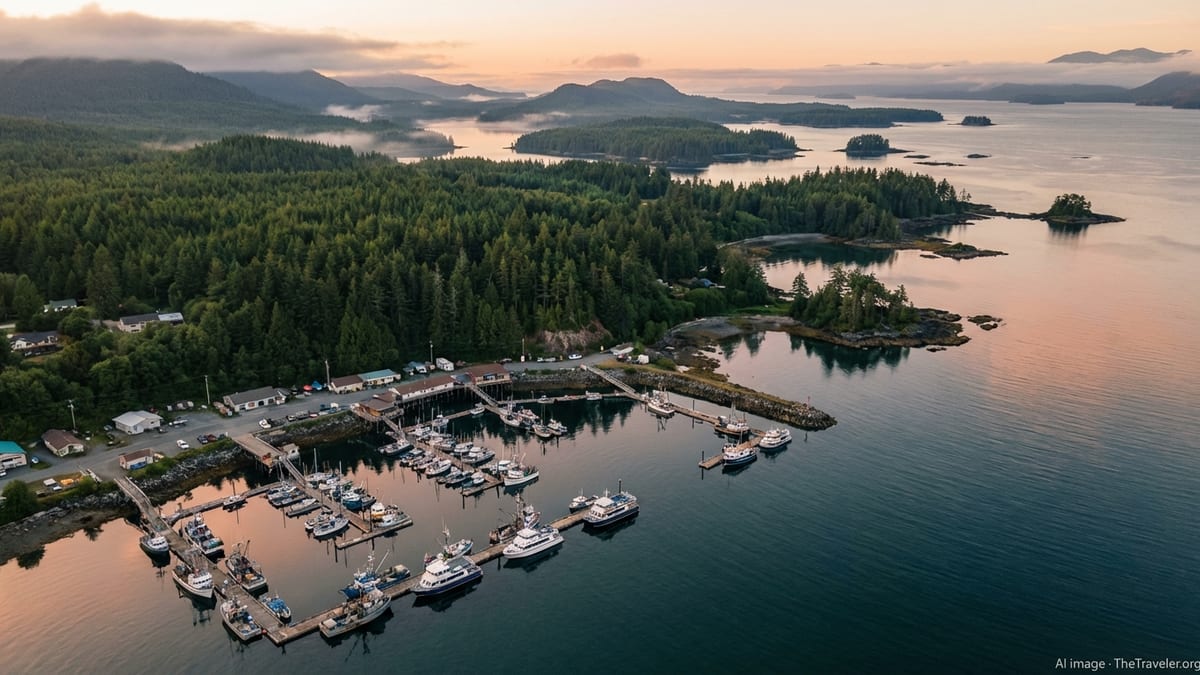
Port Hardy’s waterfront is first and foremost a working harbour. Fishing vessels, water taxis, eco‑tour boats, and barges share dock space, and it is common to see crews loading crab traps, fuel, and freight at dawn. This commercial character is part of what makes the town feel like a genuine outpost rather than a staged destination.
For travelers, this means wilderness is not treated as backdrop but as livelihood. The sea provides salmon, halibut, and shellfish. Small operators run charters, shuttles, and supply runs to remote inlets and islands. It is a place where you might board a water taxi alongside local residents heading home to an off‑grid cabin, or share a dock with a Guardian patrol boat returning from a day of monitoring wildlife and cultural sites.
Gateway to Serious Backcountry: Trails, Bays, and Wild Coasts
From Port Hardy, the map opens in every direction into some of the most remote, road‑limited terrain on Vancouver Island and the adjacent mainland. Trailheads begin at the end of rough gravel roads, while many beaches, inlets, and estuaries are reached only by boat or floatplane. This is not casual day‑hike country. It is a launch point into serious backcountry for travelers prepared to slow down and plan ahead.
3. Cape Scott and the North Coast Trail
One of the clearest examples of Port Hardy’s wilderness credentials is its proximity to Cape Scott Provincial Park and the North Coast Trail. Reached via active logging roads west of town, the Cape Scott trailhead feels immediately remote: no cell service, minimal infrastructure, and frequent signs warning about bears, wolves, and unpredictable conditions. A drive that would be simple on pavement becomes an adventure in itself, with potholes, industrial traffic, and weather dictating the pace.
From the trailhead, backpackers heading into Cape Scott and the North Coast Trail step into multi‑day routes that combine deep forest, bog boardwalks, and long, empty beaches. Sections of the North Coast Trail in particular are considered challenging, with steep climbs, slippery roots, and tidal crossings that demand careful planning. The fact that one end of the route is reached only by water taxi or floatplane reinforces just how far Port Hardy sits from the usual tourist circuit.
4. Remote Wilderness Parks Within Striking Distance
Cape Scott is only one of several remote protected areas anchored by Port Hardy. Smaller, lesser‑known parks and conservancies extend around the region, protecting salmon rivers, eagle nesting habitat, and stretches of temperate rainforest. These are not drive‑through viewpoints with interpretive centers. Facilities are limited to rough trails, pit toilets, and a few primitive campsites, if any.
The result is a network of wild spaces where visitors must be entirely self‑reliant. Hikers and paddlers travel with full rain gear, bear awareness, emergency communication when available, and a tolerance for mud, fog, and sudden changes in weather. These landscapes are more often used by locals, researchers, and dedicated backcountry travelers than by tour buses, and that relative anonymity helps keep them wild.
Rich Indigenous Stewardship and Living Culture
What makes Port Hardy unique among wilderness destinations is that it is not an empty frontier. It lies within the territories of Kwakwaka'wakw peoples, including the Gwa’sala‑’Nakwaxda’xw, Kwakiutl, and Quatsino Nations. These communities maintain active cultural, economic, and stewardship roles across land and sea, bringing depth and meaning to what visitors might otherwise see only as wild scenery.
5. Indigenous Guardians on the Land and Water
The presence of Indigenous Guardian programs in the region is a powerful reminder that Port Hardy’s wilderness is watched over, not forgotten. Guardians from Nations surrounding the town patrol inlets, islands, and river systems to monitor salmon, grizzly bears, marine life, and cultural sites. They record observations, support research, and educate visitors they encounter in the field.
For travelers, this stewardship means the landscape is layered with history and responsibility. A quiet estuary might be both critical salmon habitat and the site of ancestral village remains. A remote beach is not simply a camping spot but a place with traditional names and stories. When visitors learn about or travel with Indigenous‑owned tour operators, they are invited to see these coastlines not as empty spaces, but as homelands.
6. Indigenous‑Owned Eco‑Tours and Cultural Experiences
Port Hardy is home base for several Indigenous‑owned tourism enterprises that combine wildlife viewing with cultural interpretation. Local guides lead boat trips through nearby channels and rapids, narrating the landscape with knowledge passed down through generations. Guests may witness sea lions hauled out on rocky islets, humpback whales feeding in sheltered bays, or powerful tidal rapids in narrow passages, all while hearing the place names and histories associated with these waters.
These experiences give Port Hardy’s wilderness a human dimension that many remote areas lack. Instead of treating nature and culture as separate, tours weave them together, explaining how traditional harvesting, spiritual practices, and modern stewardship exist side by side. The result is an encounter with wilderness that is immersive yet grounded in community.
Exceptional Wildlife Encounters on Land and Sea
Port Hardy sits where the temperate rainforest meets the cold, nutrient‑rich waters of the Pacific. That convergence supports an impressive range of wildlife: whales and porpoises offshore, eagles and seabirds overhead, and bears, deer, and smaller mammals in the surrounding forests. Encounters are not guaranteed, but they are common enough that a stay of several days often yields memorable sightings.
7. Marine Wildlife on a Grand Scale
The waters around Port Hardy and into adjacent sounds and channels are known for seasonal concentrations of marine mammals. Humpback whales frequent nearby feeding areas, surfacing with explosive blows as they gorge on schooling fish and krill. Resident and transient orcas travel through in search of salmon and marine mammals. Porpoises ride the bow waves of boats, while sea lions patrol the current lines.
Local operators offer marine wildlife tours from Port Hardy, timing departures to maximize chances of sightings while respecting distance and behavior guidelines. Even without a formal tour, travelers regularly report watching whales from headlands and waterfront parks when conditions are right. On calm days, the quiet slap of a whale’s tail or the breathy exhale of a blow can carry a surprising distance across the water.
8. Bears, Wolves, and Forest Wildlife
Away from the water, Port Hardy’s surroundings are classic coastal rainforest habitat. Black bears forage along riverbanks and logging roads. Wolves patrol beaches, estuaries, and forest edges, sometimes leaving tracks along the same stretches of sand hikers use. Deer browse on the margins of town and along nearby trails, and bald eagles are a routine sight, circling over Hardy Bay or perched on shoreline snags.
This abundance of wildlife comes with responsibility. Visitors are expected to store food carefully, travel in groups when possible, and carry deterrents such as bear spray in remote areas. Local advice emphasizes respect and distance rather than pursuit. The presence of apex predators and large mammals is part of what qualifies Port Hardy as a true wilderness destination, reminding travelers that they are guests in habitats where humans are not at the top of the food chain.
Off‑Grid Adventure: Roads, Weather, and Self‑Reliance
What distinguishes Port Hardy from many scenic coastal towns is how quickly conditions become serious once you leave the main streets. Gravel logging roads, fast‑changing weather, and limited services define the experience beyond town limits. For some, these are inconveniences. For others, they are exactly what makes the region compelling.
9. Travel That Still Feels Like Expedition
Reaching many of the North Island’s most beautiful places from Port Hardy requires preparation and flexibility. The route to major trailheads and backroad lakes runs along active industrial roads used by logging trucks. Drivers must yield to heavy traffic, keep headlights on even in daylight, and be ready for flat tires, washouts, or fallen branches. There is often no cell phone coverage, and roadside assistance can be hours away.
On the coast, boat travel is similarly subject to tides, currents, and wind. Trips may be delayed or rescheduled due to storms, and guides build weather windows into their planning. Hikers on long routes carry extra food and clothing in case high water or tidal timing forces an unplanned camp. This level of uncertainty may deter travelers used to tight itineraries, but for those looking for genuine adventure, it is part of the appeal.
The practical effect is that journeys feel like expeditions rather than outings. Even a day trip can involve careful packing, route checks, and back‑up plans. When travelers do stand on a deserted beach, watch a sunset from a remote headland, or reach the end of a forest trail, the sense of accomplishment is amplified by the effort it took to get there.
A Small Town With Strong Community Ties
Despite its frontier reputation, Port Hardy is not a temporary camp or seasonal resort. It is a year‑round community with schools, local businesses, and deep relationships to the surrounding land and sea. This foundation makes the town feel welcoming while keeping its priorities clear: people live here first, tourism second.
Everyday Life at the Edge of the Wild
Visitors walking the seawall, browsing local shops, or stopping for coffee near the harbour will see the rhythms of a working town: students heading to school, residents meeting at the grocery store, and crews moving gear for shifts on boats or in the bush. Festivals, markets, and community events bring together residents from town and nearby reserves, reflecting a shared investment in the region’s future.
This everyday normalcy at the edge of such dramatic landscapes reinforces Port Hardy’s authenticity. The wilderness outside town is not a playground set aside for visitors. It is where people gather food, earn a living, and practice cultural traditions. That continuity of use is a large part of why the region retains its character: it is actively inhabited and cared for rather than left empty.
The Takeaway
Port Hardy is not the kind of destination that unfolds easily from a car window or cruise ship deck. Its remoteness, working waterfront, Indigenous stewardship, and demanding landscapes ask more of visitors than many coastal towns. In return, the region offers encounters with wilderness that still feel unscripted: a humpback surfacing unexpectedly beside a skiff, wolf tracks on an empty beach, or the quiet satisfaction of reaching a trailhead that required hours of careful driving.
For travelers seeking a true wilderness destination, these elements are not obstacles but invitations. They encourage slower travel, deeper learning, and genuine respect for the people who call this coast home. Come prepared, listen to local advice, and accept that conditions will sometimes dictate your plans. If you do, Port Hardy rewards you with something increasingly rare on the modern travel map: wild country that still behaves like itself.
FAQ
Q1. Is Port Hardy suitable for first‑time wilderness travelers?
Port Hardy can work for careful first‑timers, but only if you respect its remoteness. Staying in town, joining guided tours, and starting with shorter hikes or boat trips is a good way to experience the region safely before attempting multi‑day backcountry routes or rough backroad driving.
Q2. Do I need a 4x4 vehicle to explore around Port Hardy?
You can visit Port Hardy and nearby viewpoints in a regular vehicle, but many of the most remote trailheads and backroads are reached by rough gravel roads better suited to high‑clearance or 4x4 vehicles. If you plan to drive to more isolated areas, check current road conditions locally and consider specialized rentals or shuttle services.
Q3. What is the best time of year to visit for wilderness experiences?
Late spring through early autumn generally offers the most comfortable combination of daylight, milder temperatures, and access to trails and marine tours. Summer months tend to have calmer seas and more predictable weather, while shoulder seasons can be quieter but wetter and more challenging.
Q4. How wild is the wildlife around Port Hardy?
The region is genuinely wild, with regular sightings of black bears, wolves, deer, and abundant marine mammals. Encounters are usually brief and at a distance if visitors store food properly, keep respectful space, and follow local safety advice. You should always assume that large animals may be nearby in forested or shoreline areas.
Q5. Are there guided options if I do not have backcountry experience?
Yes. Local operators offer guided hikes, marine wildlife tours, and cultural trips that allow you to experience remote areas without navigating tides, complex routes, or logging roads on your own. These trips are ideal for travelers who want immersive wilderness experiences while relying on the expertise of professional guides.
Q6. How reliable is cell service in and around Port Hardy?
Cell coverage in town is generally available, but it diminishes quickly once you leave the main roads and communities. Many backroads, trailheads, and coastal areas have no signal at all. Travelers should not rely on mobile phones for navigation or emergency contact in remote locations and should plan accordingly.
Q7. Is Port Hardy a good base for multi‑day backpacking trips?
Yes, Port Hardy is an important staging point for multi‑day trips into Cape Scott Provincial Park and along the North Coast Trail. Most hikers use the town to rest, gather supplies, check conditions, and arrange transportation to and from trailheads before heading into the backcountry.
Q8. What safety preparations are recommended before heading into the wilderness?
At minimum, you should carry appropriate rain gear and warm layers, a map and navigation tools, sufficient food and water, a first‑aid kit, and bear‑aware food storage. Inform someone in town of your route and expected return time, and be prepared to turn back if weather, tides, or trail conditions deteriorate.
Q9. How can visitors respectfully engage with local Indigenous culture?
Visitors can support Indigenous‑owned accommodations, tours, and cultural experiences, and take time to learn about local Nations and their territories. Listening to guides, following protocols, and treating cultural sites with care are important ways to show respect while deepening your understanding of the region.
Q10. Is Port Hardy family‑friendly for nature‑focused trips?
Yes, families can enjoy waterfront walks, shorter forest trails, and boat tours tailored to a wide range of ages. Parents should be realistic about children’s comfort levels with long drives, rough weather, and basic facilities, and choose activities that match their family’s experience and energy.