

On central Vancouver Island, far from ferry terminals and city streets, Strathcona Provincial Park protects a vast sweep of jagged peaks, glacier-fed lakes and dense coastal rainforest.
As British Columbia’s oldest provincial park and the mountain heart of the island, it offers a rare blend of true wilderness, accessible adventures and a deep sense of remoteness that begins the moment the pavement narrows and cell coverage drops away.
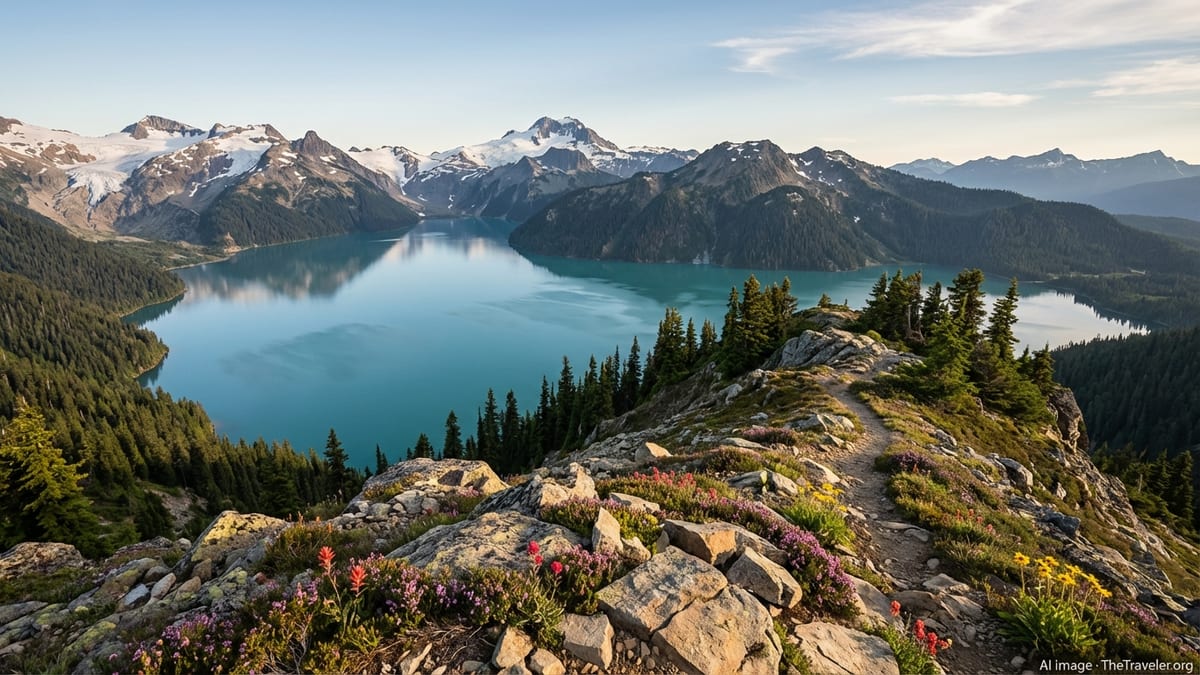
1. A True Island Mountain Wilderness With Deep Protection
Strathcona Provincial Park is widely regarded as Vancouver Island’s premier mountain wilderness, and one of British Columbia’s most significant protected landscapes. Spread across rugged ranges between Campbell River, the Comox Valley and Port Alberni, it shelters glaciers, alpine meadows, old growth forest and remote valleys that feel far wilder than their distance from coastal towns might suggest.
Oldest provincial park and core conservation areas
Established in 1911, Strathcona is the oldest provincial park in British Columbia, created to preserve the dramatic interior of Vancouver Island at a time when industrial logging and mining were rapidly expanding elsewhere in the province. That early protection laid the groundwork for sizable tracts of intact wilderness that visitors experience today.
Within the larger park, three extensive roadless tracts have been designated as nature conservancy areas. These zones emphasize ecological integrity over recreation access and preserve sweeping examples of undisturbed forests, alpine ridges and wetland systems. For modern visitors, that means the views from many summits still stretch across unbroken forest rather than clearcuts and roads.
Distinct island ecosystems and iconic wildlife
The park protects a mosaic of ecosystems, from low elevation rainforest to subalpine heather meadows. Western red cedar, Douglas fir, hemlock and amabilis fir dominate the forest canopy, while juniper and dwarf shrubs cling to windswept ridges. This diversity supports some of Vancouver Island’s most emblematic wildlife, including Roosevelt elk, Vancouver Island marmot, coastal black tailed deer, black bear and wolf.
Unlike much of mainland British Columbia, there are no grizzly bears on Vancouver Island, which subtly changes how many people experience the backcountry. Careful food storage and wildlife awareness remain essential, but hikers often remark on a heightened sense of ease as they move through remote basins and river valleys.
2. Accessible Alpine Scenery at Forbidden Plateau and Paradise Meadows
One of Strathcona’s greatest strengths is how quickly you can step into high country terrain without committing to a multi day expedition. Nowhere is that more obvious than around Forbidden Plateau and Paradise Meadows, where thoughtfully built trails and gentle grades unlock classic subalpine scenery within an hour or two of leaving the trailhead.
Paradise Meadows: High country for almost everyone
Reached via Mount Washington from the Comox Valley, the Paradise Meadows trailhead starts high enough that you are walking through heather meadows, tarns and stunted subalpine firs almost immediately. Boardwalks and well graded paths create some of the most accessible hiking in the park, including loops suitable for families, newer hikers and people with limited time.
From these shorter circuits, stronger hikers can link into a wider network of routes that reach Lake Helen Mackenzie, Battleship Lake, Kwai Lake and Circlet Lake. The scenery evolves from soft meadowland to rockier basins framed by peaks, demonstrating how quickly Strathcona shifts from inviting to rugged as you venture farther from the parking lot.
Forbidden Plateau’s lakes and lingering legends
Forbidden Plateau itself occupies a large, hilly highland pitted with small lakes and backed by taller summits such as Mount Albert Edward. Trails crisscross the plateau, linking campsites at popular lakes with viewpoints over deep valleys and distant peaks. In late summer, blueberries line the paths and the plateau becomes a patchwork of reds and golds.
Local stories and First Nations oral histories give this area an added layer of mystery, and that sense of legend lingers in the quiet coves of tree rimmed lakes and in the morning mist that hangs over open meadows. For many visitors, Forbidden Plateau offers their first taste of Strathcona’s alpine character, rewarding even modest effort with expansive views and peaceful camps.
3. Spectacular Waterfalls and Glacier Fed Lakes
Water defines the experience of Strathcona Provincial Park. Snowfields and small glaciers feed icy streams that gather in turquoise lakes, spill over cliffs as waterfalls and carve deep channels through the forest. Exploring these water features is one of the most compelling reasons to venture into the park’s backcountry.
Della Falls: A multi day journey to a towering cascade
Hidden deep in the park’s western reaches, Della Falls plunges roughly 440 metres in a series of cascades, ranking among Canada’s tallest waterfalls by total height. Reaching it is an adventure in its own right, typically requiring a boat journey up Great Central Lake from near Port Alberni followed by a backpacking approach through a forested valley.
The trail to the falls threads alongside a river swollen by snowmelt and rain, with simple backcountry camps spaced along the route. The final viewpoint looks across a broad amphitheatre to the segmented white ribbons of Della Falls, framed by steep cliffs and dense conifers. It is an experience that combines classic coastal rainforest with the scale of a true mountain waterfall.
Myra Falls and Buttle Lake’s accessible water features
On the eastern side of the park, around Buttle Lake, visitors can reach impressive waterfalls on shorter hikes. Upper Myra Falls spills through a series of rock bowls in a forested canyon, while lower Myra Falls fans out in tiers that plunge directly into turquoise water at the edge of Buttle Lake. These trails give day trippers a glimpse of Strathcona’s powerfully carved landscape without the commitment of an overnight trip.
Buttle Lake itself is quintessential glacier carved scenery. Long and narrow, it is hemmed in by steep forested slopes and rocky bluffs that rise almost directly from the shoreline. Simple day use sites and viewpoints offer easy access to swimming, paddling and photography, particularly in the soft light of early morning and late evening.
Alpine tarns and classic backpacking lakes
For backpackers, Strathcona is synonymous with high country lakes tucked below sharp ridges. Bedwell Lake and Baby Bedwell Lake, Cream Lake, Circlet Lake and other smaller tarns are ringed with campsites that balance access with protection of fragile terrain. Clear reflections of serrated peaks on calm mornings are part of what brings people back year after year.
Even in mid summer, these lakes remain cold, a reminder of their glacial and snowfield sources. Short swims, icy plunges after hot climbs and evenings spent listening to frogs and loons are all part of the rhythm of lake based trips in the park.
4. World Class Hiking and Backpacking for All Levels
Strathcona’s trail network combines short, family friendly walks with serious multi day routes that demand navigation skills and self sufficiency. That range of options makes the park appealing whether you are new to backpacking or an experienced wilderness traveler looking for a challenging route.
Day hikes that deliver big scenery quickly
Several areas are ideal for half day or full day exploration. Around Buttle Lake, short trails lead to Lady Falls, Lupin Falls, Auger Point and river viewpoints, all showcasing different expressions of coastal forest and river canyon terrain. These walks are well suited to road trippers or families camping in the frontcountry who want to mix relaxed time at the lake with light hiking.
From Paradise Meadows, loop trails offer gentle elevation gain and well marked junctions. Even the more ambitious routes toward Lake Helen Mackenzie or Battleship Lake are within reach of reasonably fit hikers and provide excellent introductions to subalpine travel: boardwalk crossings of wet meadows, small stream fords and occasional rooty or rocky sections.
Multi day routes for committed backpackers
The park truly comes into its own once you shoulder an overnight pack and head for high country camps. The Elk River Trail leads deep into a glaciated valley ending below the dramatic walls near Landslide Lake. Bedwell Lake and Cream Lake trips offer efficient access to classic mountain scenery with established backcountry sites, while Phillips Ridge and Flower Ridge routes climb steadily to long, airy crests.
These journeys typically involve sustained elevation gain, rough tread underfoot and weather that can shift from sun to driving rain within hours. Trails may be rooty, muddy or snow covered well into early summer. For prepared hikers, that rawness is part of the appeal: Strathcona still feels like true backcountry rather than a managed walking park.
Mountaineering objectives and off trail possibilities
For experienced parties, the park contains some of Vancouver Island’s most coveted peaks. Golden Hinde, the island’s highest summit, sits at the core of a complex basin and ridge system, requiring a multi day approach that blends trail walking, route finding and hands on scrambling. Other objectives such as Mount Albert Edward and Mount Tom Taylor offer varied routes that reward climbers with sweeping views over the coast, the Salish Sea and on clear days even the distant Coast Mountains.
Many of these trips move beyond formally maintained paths into less traveled terrain, where cairns and old boot tracks replace signs and junction markers. In this realm, careful planning, map and compass skills and strong group judgment are essential. The reward is a feeling of exploration that is increasingly rare in easily accessed North American parks.
5. Frontcountry Comforts at the Edge of the Wild
Part of what makes Strathcona one of British Columbia’s best wilderness destinations is how smoothly it accommodates both rugged backcountry travelers and visitors who prefer a few extra comforts. With campgrounds, day use areas and nearby services, you can choose your own balance between ease and adventure.
Buttle Lake and Ralph River campgrounds
Along the shores of Buttle Lake, two main vehicle accessible campgrounds provide simple but atmospheric bases for exploration. Sites are tucked among mature forest near the water, with basic amenities such as picnic tables, fire rings where permitted, pit toilets and access to the lake for swimming and paddling.
During the main season, camping fees are collected and services are maintained to cater to steady summer demand. In the quieter shoulder months and winter, these facilities feel far more remote, attracting locals and dedicated campers who appreciate the solitude, early sunsets and crisp mornings when mist clings to the lake surface.
Day use areas, lodges and nearby communities
Well signed day use areas dot the main access corridors, including lakeside spots along Buttle Lake and the popular staging area at Paradise Meadows. These sites typically offer parking, toilets and access to short walks or launch points for water based activities, making it easy to build an itinerary that suits mixed groups with varying abilities.
Just outside the park boundary on Upper Campbell Lake, an outdoor education lodge and adventure centre provides accommodation, guiding, skills courses and youth programs. Beyond that, the nearby communities of Campbell River, Courtenay and Port Alberni serve as practical bases with accommodations, outfitters, groceries and dining. Visitors can spend several nights deep in the park and then easily transition back to coastal comforts.
Seasonal rhythms and trip planning flexibility
Because Strathcona sees relatively moderate visitation compared with some mainland destinations, it often feels calmer even in peak summer. That said, popular trailheads and lakeside camps do fill on sunny weekends, so advance planning for permits, ferry crossings and accommodation is wise.
Spring arrives late at higher elevations, so snow can linger on alpine trails well into June or later, while valley bottoms start to green earlier. By late July and August, many of the classic hiking routes are typically in their prime. Autumn brings thinner crowds, vibrant foliage on the plateau and cooler nights that make campside fires, where allowed, especially welcome.
6. Year Round Adventure in a Coastal Mountain Climate
Strathcona’s maritime climate shapes nearly every backcountry decision, from what to pack to when to go. It also creates a dynamic, year round recreation environment that extends far beyond the classic summer hiking season.
Long, bright summer days with cool nights
In summer, extended daylight and generally stable weather windows make it possible to plan ambitious day hikes and multi day traverses. Clear mornings often give way to building clouds in the afternoon, which can produce localized showers. Even during warm spells, nights at higher camps are cool, and temperatures can drop sharply with passing fronts.
Lakes and rivers remain cold thanks to snowmelt and glacial sources, which is refreshing for quick swims but potentially dangerous for prolonged immersion or unplanned falls. Layered clothing, reliable rain gear and dry camp systems are essential, even when forecasts look favourable.
Snowy winters and shoulder season challenges
Mount Washington, right on the park’s fringe, is known for deep and often heavy snowfall, and that same pattern shapes winter in Strathcona’s high country. Paradise Meadows and Forbidden Plateau transform into a landscape of rolling snowfields, making them prime destinations for cross country skiing and snowshoeing when avalanche conditions permit.
Shoulder seasons can be especially demanding. Trails may be a confusing mix of snow, ice and mud, stream crossings can run high, and weather systems can move in quickly from the Pacific. For many experienced backcountry users, these conditions are part of the attraction, offering solitude and a rawer experience in familiar landscapes.
Microclimates and rapid weather changes
Elevation, aspect and proximity to the coast create distinct microclimates within the park. A warm, calm day at Buttle Lake can coincide with sleet and limited visibility on nearby ridges. Fog banks can roll in swiftly, obscuring landmarks and turning easy route finding into a serious navigational exercise.
Understanding these shifts, reading updated forecasts before leaving service areas and building conservative safety margins into your plans are all part of traveling responsibly in Strathcona. The reward is experiencing a living landscape that never feels static, even on well known trails.
7. Wildlife Encounters and Rich Natural History
Strathcona Provincial Park protects not only dramatic scenery but also a complex web of life that has evolved in relative isolation on Vancouver Island. For many visitors, quiet wildlife sightings, bird song at dawn and small details along the trail are as memorable as summits and big views.
Large mammals in a grizzly free landscape
The park’s forests and valleys are home to black bear, coastal black tailed deer, Roosevelt elk, cougar and Vancouver Island wolf. Moose are occasionally observed in surrounding regions, and smaller mammals from snowshoe hare to porcupine and river otter round out the mix. While actual sightings can be infrequent, tracks, scat and claw marks on trees signal their presence.
Traveling in a landscape without grizzly bears does not remove the need for caution, but it can feel less intimidating for visitors new to backcountry travel in Western Canada. Food storage, group travel, noise in thick vegetation and adherence to wildlife guidance from BC Parks remain critical both for human safety and for the long term health of animal populations.
Birdlife, wildflowers and subtle alpine details
Birders will find plenty to watch and listen for. Chestnut backed chickadees, jays, wrens, grouse and various thrushes are common forest companions, while ptarmigan occasionally appear along higher routes. Lakes and wetlands attract migratory waterfowl during seasonal movements, adding another dimension to early morning shoreline walks.
From early summer into autumn, wildflowers and berry shrubs trace the changing season. Marsh marigolds, heathers, dwarf dogwood and saxifrage dot meadows and seepage zones, while berry laden bushes draw both hikers and bears as summer progresses. Learning to recognize these plants adds depth to each outing and underscores the sensitivity of fragile alpine and subalpine environments.
Geology written in cliffs and ridgelines
Even without a background in earth sciences, it is hard to miss the park’s geologic story. Jagged ridges, hanging valleys and U shaped troughs reflect a long history of glaciation. Exposed rock faces in certain ranges reveal thick volcanic and sedimentary formations that have been uplifted and carved by ice and water.
As you move from valley floors to high traverses, the changes in rock type, soil depth and drainage patterns become obvious in the vegetation and landforms around you. Pausing at passes and viewpoints to consider how those shapes formed can transform a simple hike into a deeper appreciation of how landscapes evolve over millennia.
8. A Destination Shaped by Stewardship and Ongoing Debates
Strathcona’s status as one of British Columbia’s best wilderness destinations is not an accident. It reflects more than a century of evolving park policy, local advocacy and, at times, controversy as residents, First Nations, conservation groups and industry have negotiated the future of the island’s interior.
Balancing recreation with conservation
In modern management planning, Strathcona is often framed as a landscape where wilderness preservation and human use have to coexist. Popular trails and lakeside camps concentrate impact in certain zones, leaving large blocks of forest and alpine habitat with relatively light visitation. Rules such as designated campsites in sensitive areas, seasonal backcountry fees and fire restrictions are tools intended to manage that balance.
For visitors, this means accepting some structure in how and where you travel in exchange for a landscape that still feels largely intact. Using durable surfaces, packing out all waste and keeping group sizes reasonable are simple ways to support those objectives on every trip.
First Nations presence and cultural values
Strathcona lies within the traditional territories of several First Nations whose histories on this land extend far beyond the park’s creation. In recent years, there has been increased attention to incorporating Indigenous perspectives into planning, wildlife management and interpretation, although the depth and visibility of that integration can vary by project and region.
As more visitors seek out authentic connections to place, engaging respectfully with Indigenous led initiatives, where they exist, and taking the time to learn about local Nations’ relationships with these mountains and valleys adds important context to any visit.
Continuing conversations about industry and protection
The presence of a long running underground mine near Myra Falls, and its surrounding small provincial park designation, highlights how questions of resource use and protection continue to intersect in this region. Although industrial activity is tightly bounded and regulated, its proximity to a celebrated wilderness core keeps public attention focused on long term environmental safeguards.
For travelers, understanding that this is a living, working landscape, not a museum piece, can deepen appreciation for the protections that are in place and for the ongoing efforts required to keep Strathcona wild for future generations.
9. Gateway to Vancouver Island’s Wider Wilds
Strathcona does not exist in isolation. It forms the mountainous spine of Vancouver Island and acts as a hub for adventures that extend toward the outer coast, remote lakes and smaller parks and conservancies. Using it as a base or anchor in a longer itinerary opens up a wealth of possibilities.
Logical hub for multi stop Vancouver Island trips
The park sits within reach of coastal communities such as Campbell River and the Comox Valley to the east and Port Alberni and the outer coast to the west. This geography makes it straightforward to combine a few days of backcountry travel with time on sandy beaches, whale watching, paddling among islands or exploring cultural and culinary scenes in small cities and villages.
Travelers can arrive by ferry from the mainland, gather supplies in a service centre, spend several nights exploring Strathcona’s interior and then carry on to surf breaks, sheltered inlets or quieter island communities. That mix of rugged mountains and ocean edge landscapes is what sets Vancouver Island apart as a destination.
Stepping stone to deeper exploration
For visitors new to Pacific Northwest backcountry, Strathcona serves as a proving ground. Its well known trails, reliable information sources and relative proximity to services help build confidence and skills. After a successful trip to Forbidden Plateau or the Elk River, hikers often feel ready to tackle more remote island ranges, coastal routes or mainland expeditions.
In that way, the park functions both as a destination in its own right and as a gateway. The lessons learned about weather, navigation, wildlife and self sufficiency here transfer directly to other wild corners of British Columbia and beyond.
The Takeaway
Strathcona Provincial Park stands out as one of British Columbia’s finest wilderness destinations because it combines deep protection, serious backcountry opportunities and surprisingly accessible high country experiences in a single, coherent landscape. From boardwalk loops through flowered meadows to multi day mountaineering objectives, from quiet lakeside camps to roaring waterfalls, it offers layers of adventure that reward first time visitors and dedicated returnees alike.
What makes the park truly special is not just its scenery but its character: a feeling that, despite roads, campgrounds and nearby towns, you have stepped into a mountain realm that still functions largely on its own terms. In an increasingly busy world, that sense of intact wildness is rare, and Strathcona delivers it in spades.
FAQ
Q1. Where is Strathcona Provincial Park located?
Strathcona Provincial Park is in the central mountains of Vancouver Island in British Columbia, roughly between Campbell River, the Comox Valley and Port Alberni.
Q2. What is the best time of year to visit Strathcona?
For most hikers, late July through September offers the best combination of snow free alpine trails, longer days and relatively stable weather, though conditions can still change quickly.
Q3. Do I need a permit to camp in Strathcona Provincial Park?
Frontcountry vehicle campgrounds charge nightly fees during the main season, and many popular backcountry areas have seasonal backcountry camping fees or designated sites that require permits.
Q4. Are there easy hikes suitable for families and beginners?
Yes. Paradise Meadows and Forbidden Plateau offer well graded, clearly signed loop trails through subalpine meadows that work well for families and newer hikers.
Q5. Are there dangerous animals in the park?
The park is home to black bears, cougars and wolves, so visitors should follow standard wildlife safety practices. There are no grizzly bears on Vancouver Island.
Q6. Can I visit Strathcona in winter?
Yes, but access is more limited and conditions can be severe. Paradise Meadows and nearby Mount Washington are popular for cross country skiing and snowshoeing when avalanche risk is appropriately managed.
Q7. How difficult is the hike to Della Falls?
The Della Falls route is a demanding multi day backpacking trip with significant distance and elevation gain that requires good fitness, preparation and experience with backcountry travel.
Q8. Are there services or lodges inside the park?
There are no towns inside the park, but a lodge and outdoor education centre on a nearby lake offers accommodation and activities just outside the boundary, with full services in surrounding communities.
Q9. Is Strathcona suitable for first time backpackers?
Yes, certain routes such as Bedwell Lake or shorter trips from Paradise Meadows can be good introductions, provided you are properly equipped and prepared for mountain weather.
Q10. How can visitors help protect Strathcona’s wilderness?
Travel on established trails, use designated campsites, pack out all waste, store food securely, follow fire regulations and respect seasonal closures or restrictions aimed at protecting sensitive habitats.