

For many travelers planning a Vancouver Island escape, one question comes up early: where should the trip begin? Again and again, the answer is Victoria. Set on the southern tip of Vancouver Island, the British Columbia capital blends historic harbourfront charm with marine wildlife, gardens, and easy access to the rest of the island.
Recent accolades, including top rankings in major travel awards and recognition for sustainable tourism, have only sharpened its appeal. Here are nine reasons Victoria remains the launchpad of choice for a Vancouver Island journey.
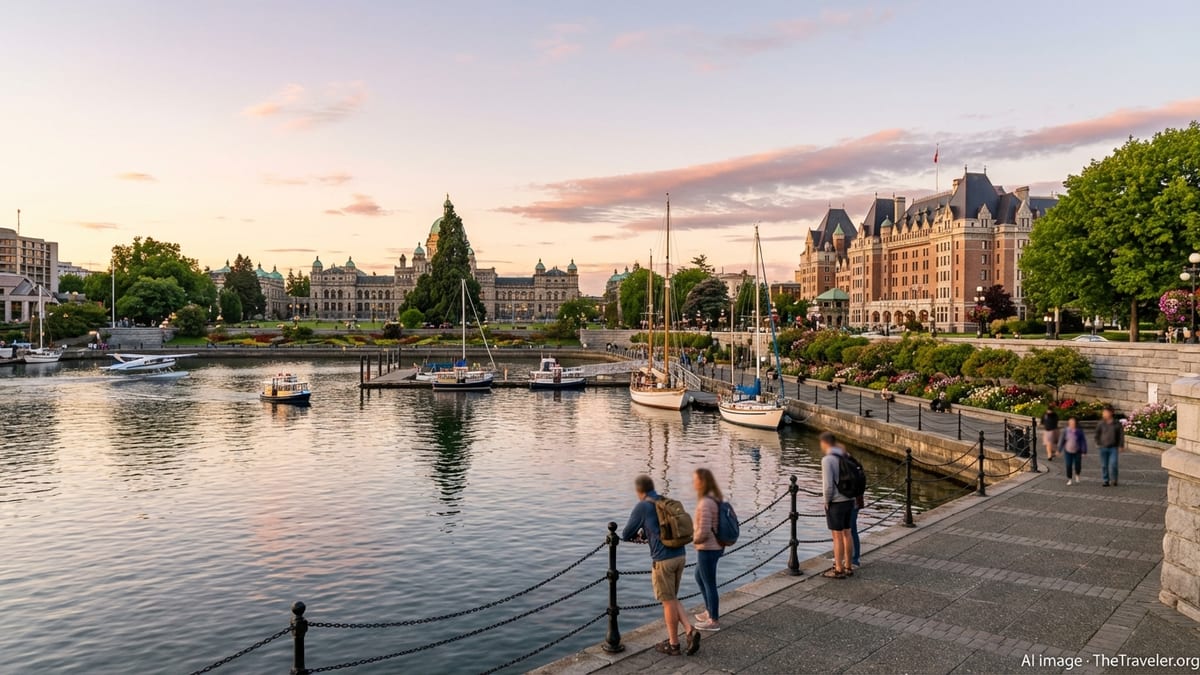
1. A Compact, Walkable Gateway City
Victoria is one of those rare places where you can arrive, drop your bags, and explore almost everything on foot. For travelers crossing from Vancouver or Seattle, it works as a gentle introduction to Vancouver Island, combining small-city ease with enough attractions to easily fill several days. Its harbour, historic core, and cultural precinct are all clustered close together, so visitors can orient themselves quickly before heading north to other island communities.
Victoria’s Celebrated Inner Harbour
The Inner Harbour is the city’s visual calling card and the first glimpse many travelers have of Vancouver Island. Ferries, floatplanes, whale-watching boats, and kayaks share the sheltered waterway, with the domed British Columbia Parliament Buildings and the Fairmont Empress hotel framing the scene in stone and brick. Public promenades ring the harbour, making it easy to stroll at any time of day and watch the constant movement of boats and seaplanes.
Because the Inner Harbour is also the departure point for many cruises and tours, it functions as a practical hub as much as a postcard backdrop. Travelers can step off a seaplane or foot passenger ferry and be within a short walk of hotels, restaurants, galleries, and green spaces, which keeps logistics simple at the start or end of a longer island trip.
Historic Streets You Can Explore in an Afternoon
Victoria’s downtown core remains compact, with a street grid that can be covered comfortably on foot. Narrow alleys, heritage brick warehouses, and Victorian-era facades create a dense network of lanes between Government Street, Bastion Square, and the Old Town waterfront. Chinatown, including famously narrow Fan Tan Alley, lies just a short walk from the harbour, so visitors can fit several distinct neighbourhoods into a single outing.
This walkability appeals to travelers arriving without a car or planning to rely on transit on Vancouver Island. Cafes, craft breweries, boutiques, and bookstores are sprinkled through the centre, which means there are frequent reasons to pause, linger, and adjust to the island’s slower pace before venturing farther afield.
2. Easy Access from Mainland British Columbia and Beyond
Another reason Victoria often anchors Vancouver Island itineraries is how straightforward it is to reach. The city acts as a transportation hub, with air, sea, and road connections that tie it to Vancouver, Seattle, and major Canadian cities. That mix of options allows travelers to choose based on budget, scenery, and time rather than necessity.
Ferries, Seaplanes, and Scenic Approaches
Many visitors arrive via ferry, either on large vehicle ferries connecting the Saanich Peninsula with the Vancouver area or on passenger-only routes linking downtowns directly. The crossing itself doubles as a miniature coastal cruise, with views of forested Gulf Islands, rocky shorelines, and, in clear weather, the North Shore and Olympic mountains.
Others prefer to land in the heart of the city by seaplane or helicopter. Victoria’s Inner Harbour hosts frequent floatplane services operated by regional carriers, connecting directly to downtown Vancouver and to Vancouver International Airport. The short flights give an aerial overview of the archipelago-dotted Salish Sea and often make a memorable start or finish to a Vancouver Island holiday.
Victoria International Airport and Regional Links
Victoria International Airport, located to the north of the city, offers flights to major Canadian hubs and to select U.S. destinations, which simplifies one-way or multi-stop itineraries. Travelers can, for example, fly into Victoria, explore the island overland, and then continue to the mainland by ferry, or do the reverse.
Bus services, shuttles, and rental cars connect the airport and ferry terminals with downtown Victoria, making transfers relatively straightforward. Once settled, travelers can easily pick up rental cars or join tours that run north along the Island Highway toward communities such as Nanaimo, Parksville, Tofino, and Campbell River.
3. A Recognized World-Class Small City
In recent years Victoria has quietly shifted from regional favourite to international headline. The city has been highlighted in major travel rankings and has drawn attention for its approach to sustainable tourism. For travelers choosing where to focus limited vacation days, that recognition provides extra reassurance that Victoria offers a polished experience, while still feeling approachable in scale.
Award-Winning Destination Status
British Columbia’s tourism authorities report that Victoria has been repeatedly recognized in prominent reader surveys and city rankings, including recent lists that place it among the world’s leading small cities and best urban destinations. These honours reflect feedback from international travelers who consistently rate the city highly for its scenery, friendliness, and overall quality of experience.
Such accolades matter for visitors comparing options across Vancouver Island and beyond. They signal that Victoria delivers the kind of food, accommodation, and cultural infrastructure typically associated with much larger cities, yet maintains the relaxed atmosphere and ease of navigation that many travelers seek in an island getaway.
Commitment to Sustainable Tourism
Victoria has also gained attention for its sustainability credentials. In 2023 it became one of the first urban destinations in North America to secure a respected biosphere-focused certification for responsible tourism, and it has continued to renew that status. The designation recognizes efforts to reduce environmental impact, support local communities, and integrate Indigenous perspectives into tourism planning.
For travelers who want their Vancouver Island trip to align with more thoughtful, lower-impact travel choices, this focus on sustainability is an additional reason to make Victoria a base. Many local operators explicitly highlight eco-conscious practices, whether through low-emission transport, wildlife viewing guidelines, or partnerships with community organizations.
4. Rich Indigenous and Coastal History
Before it was a British colonial outpost or Canadian provincial capital, the southern tip of Vancouver Island was, and remains, the traditional territory of Coast Salish peoples, including the Songhees and Esquimalt Nations. Today, that long human history is woven through Victoria’s museums, cultural sites, and public art. Travelers who begin their island journey here find ample opportunities to contextualize the land and sea they will explore elsewhere on Vancouver Island.
Royal BC Museum and Cultural Precinct
The Royal British Columbia Museum, located beside the Inner Harbour, is one of Victoria’s cornerstone attractions. Founded in the nineteenth century, it houses extensive collections that explore the province’s natural history, settlement, and diverse cultures, including First Nations communities. Permanent galleries showcase Indigenous artifacts and stories, while rotating exhibitions add new perspectives on the region and the wider world.
Outside the museum, the broader cultural precinct includes Thunderbird Park, where totem poles and carved house posts represent the artistic traditions of several Indigenous nations. Nearby, historic buildings such as the Parliament complex add another layer, illustrating how colonial and contemporary governance evolved on this stretch of coast.
Layered Stories in Neighbourhoods and Landscapes
Walking through Victoria reveals traces of different eras. Chinatown, Canada’s oldest continuous Chinese district, reflects waves of immigration connected to trade, mining, and railway construction. Old Town’s warehouses and former maritime offices speak to the gold rushes and shipping routes that once defined this harbour.
Beyond the city centre, coastal parks and village sites carry much older stories. Places like Beacon Hill Park were inhabited for thousands of years before European arrival, and travelers can learn about this deeper history through interpretive signs, guided walks, and programming offered by local Nations and cultural organizations.
5. Iconic Gardens and Year-Round Flowers
Victoria markets itself as a city of gardens, and the climate supports that claim. Mild, relatively dry weather by Canadian standards allows flowers to appear early in the year and linger into autumn. For visitors, especially those arriving from colder climates, the city’s greenery and colour are often a welcome surprise and a major reason to build in extra time before heading farther up Vancouver Island.
Showcase Gardens and Estate Landscapes
Several major gardens in and around Victoria draw visitors from around the world. Carefully tended beds, manicured lawns, and themed landscapes illustrate both the region’s horticultural potential and its British-influenced garden traditions. Many travelers make these gardens a central pillar of a Vancouver Island itinerary, timing their visits for spring blooms or late-summer borders.
While formal gardens draw the most attention, smaller public spaces and neighbourhood plots also contribute to the city’s lush feel. Street plantings, community gardens, and front yards brimming with rhododendrons, roses, and flowering shrubs give even casual walks a botanical dimension.
Parks, Trails, and Wildflower Coastlines
Victoria’s green appeal extends well beyond horticulture. Urban parks such as Beacon Hill Park combine ornamental gardens with wilder meadows, ponds, and viewpoints over the Salish Sea. The park’s network of paths makes it easy for visitors of all ages to explore, and its open lawns and playgrounds are popular with local families.
Along the coastline east and west of downtown, trails follow sea bluffs and rocky beaches dotted with native plants that change with the seasons. Travelers who start their Vancouver Island trip in Victoria can get a taste of coastal ecosystems on these short walks before venturing to more remote parks elsewhere on the island.
6. World-Class Marine Wildlife Experiences
One of the strongest reasons travelers choose Victoria for a Vancouver Island trip is its proximity to the wildlife-rich waters of the Salish Sea. The city has developed into a major base for marine excursions, especially whale watching, with tours departing directly from the Inner Harbour. This combination of urban comfort and quick access to open water is a rare advantage.
Whale Watching from the Inner Harbour
Several established operators run whale-watching and marine-wildlife tours out of downtown Victoria. They typically head into nearby straits and channels where orcas, humpbacks, and other whale species are regularly sighted in season. Sea lions, seals, porpoises, and a variety of seabirds are common companions on these trips.
Tour styles range from high-speed open zodiac boats to larger, more sheltered vessels with indoor seating, which allows travelers to choose based on comfort level and weather. Many tours emphasize naturalist commentary and responsible viewing guidelines, which helps visitors understand both the species they are seeing and the broader conservation issues facing the Salish Sea.
Kayaking, Sailing, and Coastal Encounters
Beyond dedicated whale-watching tours, Victoria serves as a launch point for a range of on-the-water experiences. Guided kayak outings explore sheltered coves, harbour inlets, and nearby islands, offering a quieter way to see marine life at close quarters. Sailing charters and small-boat cruises reveal different perspectives on the coastline, from lighthouses to kelp forests.
For travelers continuing up Vancouver Island to destinations such as Tofino, Ucluelet, or the Discovery Islands, beginning with a marine excursion in Victoria provides useful context. It introduces the currents, wildlife, and weather patterns that shape life along this coast, and underscores how closely the island’s communities are tied to the sea.
7. Food, Drink, and Local Flavour
In recent years Victoria’s food and drink scene has grown into an attraction in its own right. Travelers who might once have passed through quickly now build extra nights into their Vancouver Island plans to explore its restaurants, cafes, and breweries. The result is a compact city that punches above its weight when it comes to eating and drinking well.
From Harbourfront Dining to Neighbourhood Gems
Restaurants cluster around the Inner Harbour and extend into surrounding districts such as Cook Street Village, Fernwood, and James Bay. Diners will find everything from seafood-focused bistros and contemporary Canadian menus to casual noodle bars and family-owned spots reflecting the city’s multicultural roots.
Local ingredients feature prominently, with Pacific seafood, island-grown produce, and wines from British Columbia’s interior appearing on many menus. Afternoon tea at one of the city’s heritage hotels remains a time-honoured experience, while modern bakeries and cafes give a more contemporary spin to Victoria’s love of pastries and coffee.
Craft Breweries, Cideries, and Coffee Culture
Victoria was an early hub for craft beer in Canada, and that legacy remains visible in a cluster of breweries and tasting rooms, some within easy walking distance of downtown accommodations. Visitors can sample a range of styles, from hop-forward ales to lighter lagers, either on organized tours or casual self-guided walks.
Regional cideries and distilleries, many drawing on Vancouver Island apples and botanicals, add further depth to the drinks scene. Coffee culture is strong as well, with independent roasters and cafes scattered throughout the city. For travelers recovering from jet lag or a long drive, this combination of good coffee and relaxed spaces can be reason enough to linger an extra day before moving on.
8. Soft Adventure at the Edge of the City
For travelers who want a dose of outdoor adventure without committing to multi-day backcountry trips, Victoria offers a satisfying middle ground. Coastal walks, cycling routes, and nearby regional parks provide easy access to nature, giving visitors a taste of Vancouver Island’s landscapes while keeping urban comforts close at hand.
Cycling Trails and the “Cycling Capital” Reputation
Victoria has long cultivated a strong cycling culture, supported by a network of bike lanes and trails that radiate from the city. The Galloping Goose Trail, a former railway line converted into a multi-use path, is one of the best-known routes. It connects Victoria with surrounding communities and passes through a mix of urban, suburban, and rural scenery.
Casual cyclists can use segments of these trails for short rides to viewpoints, beaches, or cafes, while more committed riders can plan full-day excursions. Bike rental shops and guided tours help visitors of varying experience levels get onto two wheels safely and efficiently.
Coastal Parks and Short Hikes
Several noteworthy parks lie within a short drive of downtown Victoria. Urban green spaces such as Beacon Hill Park provide leisurely walking paths and ocean views, while regional parks to the west and north offer more rugged trails through forest and along shoreline bluffs. These areas showcase moss-draped trees, ferns, and the characteristic rocky outcrops of the island’s coast.
Because many of these hikes are relatively short and close to the city, they fit neatly into a broader Vancouver Island itinerary. Travelers can enjoy a morning on the trail, return to Victoria for an afternoon museum visit or meal, and still be rested for onward travel the next day.
9. A Perfect Base for Exploring the Rest of Vancouver Island
Ultimately, what sets Victoria apart for many travelers is how well it functions as a base. It offers enough attractions to stand alone as a destination, yet it also anchors a network of routes leading to the island’s beaches, rainforests, wine country, and small towns. Starting or ending a trip here allows visitors to adjust their pace, refine their plans, and connect the dots between different parts of Vancouver Island.
Flexible Itinerary Options
From Victoria, travelers can drive or take bus services north along the island’s eastern shore, with natural stopping points such as Sidney, Duncan, Nanaimo, and Parksville. Side trips to Cowichan Valley vineyards, Gulf Islands, or west-coast surf towns can be added depending on time and interests. Because Victoria has strong transport links and a range of accommodation, it often makes sense to return here at the end of a loop to catch flights or ferries.
Those with limited time can still gain a representative sense of Vancouver Island by basing themselves entirely in Victoria and adding a few well-chosen day trips. Coastal hikes, winery visits, or wildlife excursions are all feasible without changing hotels, which suits travelers who prefer to unpack only once.
Balancing Urban Comfort and Island Character
Victoria’s particular strength lies in its balance. It offers the restaurants, cultural venues, and lodging options of a small city while remaining closely linked to forests, beaches, and working harbours. Visitors can spend one day at a museum and a concert, and the next watching whales or walking a windswept shoreline, without long transfers or complicated logistics.
For many travelers looking at a map of Vancouver Island and trying to decide where to begin, that combination is decisive. Victoria feels both like a destination and a doorway, a place where a Vancouver Island trip can start with ease and end with a final stroll along the harbour.
The Takeaway
Victoria’s appeal as the preferred starting point for a Vancouver Island adventure rests on more than its picturesque harbour. It is a compact, well-connected city that has earned global recognition while staying grounded in its maritime setting and Indigenous history. Gardens, wildlife, food, and soft adventure all sit within easy reach of downtown, and sustainable tourism efforts suggest that the experiences drawing visitors today are being carefully managed for the future.
Whether travelers plan to span the entire island or focus on its southern reaches, choosing Victoria as the anchor offers a rewarding mix of convenience and character. It is a place where ferries, floatplanes, and forest trails intersect, and where a single day can provide a snapshot of the landscapes and communities that define Vancouver Island.
FAQ
Q1. How many days should I spend in Victoria on a Vancouver Island trip?
Most travelers find that two to three full days allow time to see the Inner Harbour, key museums, a garden visit, and at least one wildlife or coastal excursion. Those interested in food, cycling, or more day trips often stay four or five nights.
Q2. Is Victoria a good base for exploring the rest of Vancouver Island without a car?
Yes, to a point. Victoria has walkable neighbourhoods and organized tours to regional highlights. However, to reach more remote beaches, small towns, and hiking areas on your own schedule, renting a car remains the most flexible option.
Q3. When is the best time of year to visit Victoria?
Late spring through early autumn offers the mildest weather and the fullest range of tours and events. Flowers begin blooming as early as March, while peak whale-watching and outdoor activities typically run from late spring into fall.
Q4. Can I see whales on a short stay in Victoria?
Whale sightings are never guaranteed, but Victoria-based operators report frequent encounters with humpback and orca populations in season. Booking a half-day tour during the main viewing months significantly increases your chances.
Q5. Is Victoria suitable for families with children?
Yes. Short walking distances, parks, interactive museum exhibits, and family-friendly wildlife tours make Victoria particularly approachable for families. Many attractions, such as urban parks and harbour promenades, are free to enjoy.
Q6. How does Victoria compare with Tofino or other Vancouver Island destinations?
Victoria offers more urban comforts, cultural venues, and easier access, while places like Tofino provide a wilder, more remote coastal experience. Many travelers choose to experience both, using Victoria as either the starting or ending point.
Q7. Do I need advance reservations for popular attractions and tours?
In peak travel months and on holiday weekends, it is wise to book whale-watching tours, major gardens, and in-demand restaurants in advance. Outside the busiest periods, same-day bookings are more feasible but still not guaranteed.
Q8. Is Victoria a walkable city for visitors with limited mobility?
The core harbour and downtown areas are generally flat and walkable, with curb cuts and benches. Some historic buildings and older streets can present challenges, so checking accessibility details with specific attractions and accommodations is recommended.
Q9. What should I pack for a trip to Victoria and southern Vancouver Island?
Layers are essential. Weather can shift between sun and coastal showers, even in summer. A light waterproof jacket, comfortable walking shoes, and warmer layers for evenings or boat tours are recommended year-round.
Q10. Is Victoria a good choice for sustainable or low-impact travel?
Victoria’s walkability, transit links, and growing emphasis on responsible tourism make it a strong option for lower-impact travel. Choosing locally owned businesses, eco-focused tours, and slower itineraries can further reduce your footprint while supporting the community.