

Arizona’s landscapes may be defined by desert skies and red-rock canyons, but its food culture is just as dramatic. Shaped by Indigenous communities, Mexican borderlands, ranching traditions and waves of newcomers, the state’s most iconic dishes tell a story of adaptation and survival in a harsh yet generous environment. From fry bread and tepary beans to Sonoran hot dogs and citrus-laced desserts, these are nine traditional foods that capture the flavor of Arizona and are well worth seeking out on your next trip.
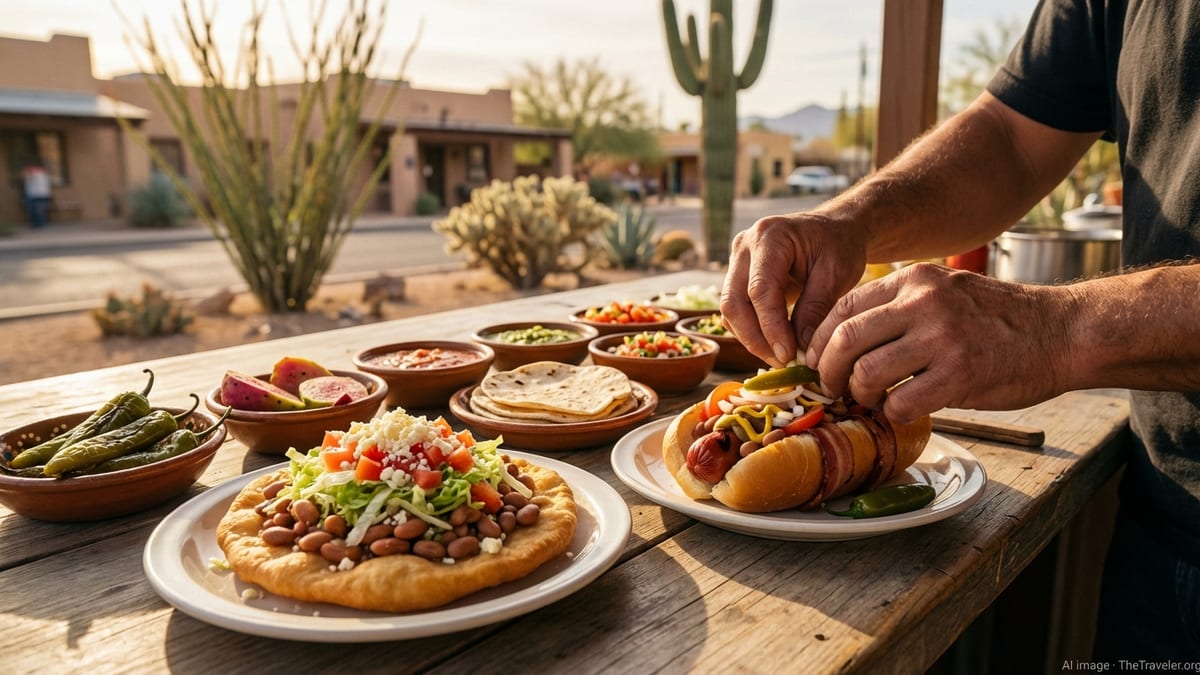
1. Fry Bread and Navajo Tacos
If there is one dish that instantly evokes Arizona, it is fry bread. This pillowy round of dough, stretched by hand and fried until golden, is sold at roadside stands, powwows and tribal fairs across the state. It is simple at first glance, usually made from flour, baking powder, salt and water, yet it carries a complex and painful history. Fry bread emerged during the 19th century, when Native American communities were displaced from their homelands and forced to rely on government-issued rations like flour and lard. Over time, they transformed these rations into a sustaining staple that has since become a symbol of both resilience and cultural survival.
In Arizona, fry bread appears both as a comfort food and as the foundation for one of the Southwest’s most beloved meals: the Navajo taco. Instead of a folded tortilla, the fry bread becomes an edible plate, topped with seasoned ground beef or mutton, pinto beans, shredded cheese, lettuce, tomatoes and sometimes chopped green chile or onions. Knife and fork are optional; many locals simply fold the bread and eat it by hand, accepting that a little mess is part of the experience.
Look for Navajo tacos on reservations in northern Arizona and at community events in cities like Phoenix and Flagstaff. You will often find versions that prioritize locally grown beans and chiles, and some cooks still prepare meat the old-fashioned way, slowly stewed for tenderness. However it is served, a fresh, hot piece of fry bread carries the unmistakable aroma of the desert and the sound of crackling oil that instantly draws a crowd.
When you order fry bread on its own, it is commonly offered with sweet toppings like honey, powdered sugar or cinnamon. This dessert-style preparation contrasts with the savory Navajo taco and highlights the versatility of the bread. Whether you try it as a main meal or a snack, fry bread offers a powerful introduction to Indigenous foodways in Arizona and the ongoing efforts to reclaim and reinterpret traditional dishes.
2. Sonoran Hot Dogs
Few foods capture modern Arizona as vividly as the Sonoran hot dog, a cross-border specialty that has become a point of pride in cities like Tucson and Phoenix. The dog itself is straightforward enough: a beef frank wrapped in bacon and grilled, tucked into a soft bolillo-style bun. What sets it apart is the avalanche of toppings that follows. Pinto beans, diced tomatoes, onions, jalapeños, mayonnaise, mustard and a bright salsa or chile sauce are all typical, often joined by a grilled güero pepper served on the side.
The Sonoran hot dog originated across the border in the Mexican state of Sonora, where street vendors served them near universities and ballparks before the style migrated north. In Arizona today, these hot dogs are sold from late-night carts, tiny trailers and busy brick-and-mortar restaurants. Tucson in particular has embraced the dish as a symbol of its identity in the Sonoran Desert. Visitors quickly discover that each stand has its own signature touches, whether that is a slightly sweet bun, extra-crisp bacon or an especially fiery house salsa.
Eating a Sonoran hot dog is as much about the setting as the food itself. Many locals swear the best way to experience one is at a sidewalk cart, standing at a high table or leaning against your car while the desert night air cools around you. The foil-wrapped dog arrives overstuffed and barely contained by the bun, demanding that you commit to the first, saucy bite before gravity takes over. It is casual, convivial food that reflects the fluid cultural and culinary border shared between Arizona and Sonora.
For travelers, seeking out a Sonoran hot dog is an easy way to connect with Arizona’s contemporary food scene without spending much money. The dish also illustrates how traditions evolve: a classic American hot dog transformed by Mexican ingredients and borderlands creativity into something that feels distinctly Arizonan. Once you have tried one, the combination of smoky bacon, creamy sauces and fresh vegetables is surprisingly hard to forget.
3. Green Chile Stew and Hatch-Style Chiles
When cooler weather finally settles over Arizona’s high desert and mountain towns, many locals turn to green chile stew. This warming dish, common across the Southwest, has a particularly strong presence in northern and eastern parts of the state, where the influence of neighboring New Mexico is easy to taste. The stew typically combines diced roasted green chiles with chunks of pork or beef, potatoes, onions and garlic, all simmered until the meat is tender and the broth thickens slightly.
The star, however, is always the chile. In late summer and early autumn, roasters appear in supermarket parking lots and at farmers markets, turning mesh drums of fresh green chiles over roaring flames. The air fills with a sweet, smoky aroma as the skins blister and blacken. Some chiles are grown in New Mexico’s Hatch Valley, while others are cultivated in Arizona’s own farming regions, but they share the same balance of heat and flavor that makes them ideal for stews, enchiladas and burritos.
In Arizona, green chile stew varies from household to household. Some cooks prefer a thick, almost gravy-like consistency served over rice or rolled into a burrito, while others keep it brothy, spooned up with warm flour tortillas on the side. The heat level can range from mild to ferocious, so it is wise to ask before you commit to a large bowl. What remains constant is the stew’s role as a comforting staple that bridges Indigenous ingredients, Mexican techniques and ranch-style cooking.
Travelers can find green chile dishes throughout Arizona, from family-owned diners on Route 66 to contemporary Southwestern restaurants in larger cities. Ordering a bowl of stew offers insight into how deeply chiles are woven into everyday life here. They season breakfast eggs, accent burgers and appear in everything from tamales to mac and cheese, but it is in a slow-cooked stew that their full character comes through.
4. Chimichangas and Cheese Crisps
Arizona has a long-standing affection for indulgent, shareable plates, and few items demonstrate this better than chimichangas and cheese crisps. Both are often associated with local Mexican American restaurants and have become mainstays on menus around the state. A chimichanga is essentially a deep-fried burrito, filled with ingredients like shredded beef, chicken or carne asada, plus beans, cheese and sometimes rice. It is then topped with sauces, sour cream and guacamole, turning a modest burrito into a hearty, knife-and-fork meal.
Several stories claim that the chimichanga was first created in Arizona, when a burrito accidentally fell into hot oil and was served anyway. The exact origins are debated, but there is no question that the dish took root in the state’s mid-20th-century restaurant boom. Today, you will find versions ranging from classic red or green chile-smothered plates to lighter, contemporary takes that use grilled vegetables and lean meats while keeping the same satisfying crunch.
Cheese crisps are another Arizona favorite, particularly in Tucson and Phoenix. Imagine a large flour tortilla brushed with butter or oil, baked or grilled until crisp, then blanketed with melted cheese and sometimes green chiles or jalapeños. Sliced into wedges, it resembles a thin, Southwestern take on pizza. Diners order cheese crisps as appetizers to share at the table, and they often arrive before more elaborate plates of enchiladas or fajitas.
What ties chimichangas and cheese crisps together is their role in Arizona’s borderlands comfort food canon. Both are rooted in Mexican dishes but have evolved to match local tastes for crispy textures and generously layered toppings. For travelers, splitting a cheese crisp or tackling a chimichanga smothered in chile sauce is a fun way to experience the state’s playful side, where tradition mingles with a hint of diner-style extravagance.
5. Mesquite, Tepary Beans and Indigenous Desert Staples
Beyond the headline dishes, some of Arizona’s most important traditional foods are the quiet, nutrient-dense ingredients that have sustained Indigenous communities for centuries. Mesquite pods, tepary beans and desert seeds are part of this pantry, adapted to thrive in low water and intense heat. Today, chefs and farmers across the state are working to bring these ingredients back into everyday cooking, not only to honor cultural heritage but also to offer a more resilient, climate-smart approach to food.
Mesquite trees are ubiquitous in much of Arizona, casting dappled shade along washes and in urban neighborhoods. Their long, tan pods can be dried and milled into a naturally sweet flour with notes of caramel and cocoa. In traditional and modern kitchens, mesquite flour is used in tortillas, breads, pancakes and cookies, often blended with wheat flour. It adds a gentle sweetness and rich aroma, turning simple baked goods into something distinctly tied to the desert.
Tepary beans, cultivated for generations by O’odham and other Indigenous farmers, are another cornerstone. Smaller and denser than common beans, they come in a range of colors and are prized for their ability to grow with minimal water. When cooked slowly, they develop a creamy interior and a deep, earthy flavor. Tepary beans appear in stews, salads and spreads, and they are increasingly featured on restaurant menus in Tucson and beyond as chefs highlight local agriculture and traditional crops.
For travelers, it is worth seeking out bakeries, markets and cafes that mention mesquite or tepary beans in their offerings. You might encounter mesquite chocolate chip cookies, tepary bean hummus or a grain bowl built around heirloom beans and roasted squash. These foods help tell a story that predates Arizona’s statehood by many centuries, connecting you to the original stewards of the land and to a culinary future that looks to the past for inspiration.
6. Prickly Pear, Citrus and Desert-Inspired Sweets
Arizona desserts often draw directly from the surrounding landscape. Few ingredients illustrate this as vividly as prickly pear, the magenta fruit of the Opuntia cactus that dots the Sonoran Desert. In late summer, the ripe fruits are harvested, carefully stripped of spines and juiced. The resulting liquid has a vibrant color and a flavor that falls somewhere between watermelon and berry, slightly floral and refreshing. Local producers turn it into syrups, jellies, candies and ice creams that appear on dessert menus and in small shops statewide.
Prickly pear lemonade and margaritas are particularly popular in Arizona, offering a bright, tart-sweet counterpoint to the dry heat. While these drinks are widespread, the fruit also features in more traditional preparations, such as jams served with biscuits or glazes brushed over grilled meats. For visitors, ordering one prickly pear item is almost a rite of passage, a way of literally tasting the desert in liquid or spoonable form.
Citrus is another pillar of Arizona’s sweet tooth. From the mid-20th century onward, groves of oranges, lemons and grapefruit flourished in the state’s irrigated valleys, and remnants of that agricultural heritage still influence local food culture. Many classic diners and roadside cafes serve old-fashioned citrus pies, lemon bars or orange cakes. Some bakeries combine citrus with Indigenous staples, such as mesquite-lemon cookies or grapefruit glazed doughnuts that pair perfectly with a cup of locally roasted coffee.
Not all Arizona sweets are flashy, but they reflect a thoughtful use of what the land offers. Dates grown in the lower desert become sticky, caramel-like additions to breads and milkshakes. Local honey and pecans find their way into pies and brittle. Taken together, these desserts reveal a culinary landscape that is surprisingly lush once you learn to recognize the flavors hidden in its canyons and groves.
7. Carne Asada, Barbacoa and the Borderlands Grill
Across Arizona’s cities and small towns, the scent of grilling meat is a familiar backdrop to daily life. Carne asada and barbacoa are two of the most enduring traditional preparations, deeply tied to Sonoran and northern Mexican cooking yet fully integrated into Arizona’s identity. Carne asada typically involves thin cuts of beef marinated in a mixture that might include citrus juice, garlic, chiles and spices before being grilled over mesquite or charcoal. The result is tender, smoky meat that can be tucked into flour tortillas, piled onto plates with beans and rice or chopped for tacos and burritos.
Barbacoa, meanwhile, is a slow-cooked preparation that often uses tougher cuts of beef or goat, simmered or steamed until they collapse into rich shreds. Historically, barbacoa in the region might have been cooked in underground pits, though many modern restaurants rely on ovens and stovetops to achieve similar tenderness. The meat is seasoned generously, sometimes with dried chiles and spices that create a deep, brick-red broth perfect for dipping tortillas.
In Arizona, these meats show up in countless forms. Carne asada fries, a plate of French fries loaded with chopped steak, cheese and salsa, are a popular late-night indulgence. Weekend mornings in many neighborhoods bring the tradition of barbacoa tacos, eaten with simple garnishes of onions, cilantro and lime. At backyard gatherings, families might grill marinated meats over mesquite, echoing the techniques used for generations in Sonora and the borderlands ranches.
For visitors, sampling carne asada or barbacoa is an easy way to appreciate the linkage between Arizona and the broader Sonoran Desert region. Look for restaurants that emphasize mesquite grilling or showcase regional beef. The interplay of smoky char, bright citrus and handmade tortillas speaks to a culture where outdoor cooking is not just a summertime hobby but a year-round way of life.
8. Sonoran-Style Flour Tortillas and Burros
While corn tortillas are fundamental in many parts of Mexico, northern Mexico and Arizona share a strong tradition of flour tortillas. Sonoran-style flour tortillas, in particular, are celebrated for their tenderness and subtle chew. Traditionally made with wheat flour, water, salt and fat, they are rolled thinner and larger than many other styles, then cooked quickly on a hot griddle until brown blisters appear. When made with skill, they are pliable enough to fold around generous fillings yet flavorful enough to enjoy warm with just a swipe of butter.
In Arizona, these tortillas are the foundation for burros, close cousins to burritos that predate the modern fast-food version. Classic combinations include beans and cheese, machaca (shredded dried beef cooked with tomatoes and chiles), chile colorado or simple breakfast fillings like eggs and potatoes. The key, locals will tell you, is the tortilla itself. A freshly made Sonoran tortilla, warm from the comal, can transform even the most modest ingredients into something memorable.
Many family-run tortillerias and small restaurants still make their tortillas by hand or with minimal mechanization, preserving techniques passed down through generations. Watching someone roll and flip tortillas is a kind of live performance that captures the rhythm of everyday life in the region. You can often buy a stack to take away, wrapped in paper and still radiating heat, to eat plain or to build your own burros during a road trip.
For travelers, seeking out Sonoran-style tortillas offers an intimate window into Arizona’s food culture. These simple rounds of dough connect wheat farming in the desert valleys, Mexican culinary traditions and the creativity of home cooks who stretch, fold and fill them in countless ways. Even if you sample the state’s more elaborate dishes, it is often the memory of a perfect, fresh tortilla that lingers longest.
9. Pozole, Menudo and Weekend Soups
Weekend mornings and late nights in Arizona are often punctuated by bowls of steaming soup, particularly pozole and menudo. These hearty dishes have deep roots in Mexican cuisine and have become fixtures in Arizona’s communities, especially among families with ties to Sonora and central Mexico. Both are based on hominy, large kernels of corn that have been nixtamalized, which gives them a distinct chewy texture and earthy flavor.
Pozole usually features pork simmered with hominy in a broth that can be red from dried chiles or green from tomatillos and fresh chiles. It is customarily served with a spread of garnishes such as shredded cabbage, radishes, onions, lime wedges and dried oregano, allowing each person to customize their bowl. The result is a vibrant, layered dish that balances the sweetness of corn with the warmth of chiles and the brightness of fresh vegetables.
Menudo is more polarizing but no less traditional. Its star ingredient is beef tripe, slow-cooked with hominy and chile to create a rich, deeply flavored soup. Many people in Arizona treat menudo as a weekend ritual, often enjoyed on Sundays or after long nights out. Restaurants that specialize in it typically open early and sell out by midday, a sign of its devoted following.
Sampling these soups gives travelers a sense of how Arizona’s culinary landscape is shaped as much by family gatherings and Sunday traditions as by restaurant menus. The broths carry stories of migration, adaptation and continuity, linking small town kitchens in Sonora with suburban dining rooms in Phoenix or Tucson. For those willing to explore beyond the usual tacos and burritos, a steaming bowl of pozole or menudo might turn out to be the most memorable meal of a trip.
The Takeaway
Arizona’s traditional foods defy quick summaries. They stretch from simple fry bread served at a roadside stand to elaborately topped Sonoran hot dogs at busy night carts, from the quiet, enduring presence of tepary beans and mesquite to the vivid sweetness of prickly pear desserts. What unites them is a profound sense of place, shaped by Indigenous knowledge, borderlands exchange and the practical realities of living in a desert that rewards ingenuity.
For travelers, exploring these dishes is an invitation to move beyond generic Southwestern fare and discover the specific flavors that make Arizona unique. Seek out Navajo tacos on reservation lands, grilled meats perfumed with mesquite in neighborhood taquerias, and tortillas so fresh they almost melt in your hands. Along the way, you will encounter people and stories that reveal how food weaves together history, identity and landscape in this striking corner of the American Southwest.
FAQ
Q1. What is the most iconic traditional food to try in Arizona?
The Sonoran hot dog and Navajo fry bread are often cited as Arizona’s most iconic foods, each reflecting different cultural influences within the state.
Q2. Where can I find authentic Navajo tacos in Arizona?
You will find especially authentic versions on Navajo Nation lands in northern Arizona and at Native-run food stands, markets and community events across the state.
Q3. Are Sonoran hot dogs very spicy?
They usually offer mild to moderate heat, with most of the spice coming from jalapeños or salsa. You can often adjust the heat level with optional toppings.
Q4. When is prickly pear fruit in season in Arizona?
Prickly pear typically ripens in late summer, though products like syrups, candies and jellies are available year-round in many shops and restaurants.
Q5. What is the difference between a burro and a burrito in Arizona?
In Arizona, burro is an older regional term for a flour tortilla wrapped around fillings. It closely resembles a burrito but is tied to local Sonoran-style traditions.
Q6. Are mesquite flour and tepary beans easy to find for visitors?
They may not appear in every supermarket, but specialty shops, farmers markets and some cafes in cities like Tucson and Phoenix commonly feature them.
Q7. Is fry bread considered a traditional Native American food?
Fry bread is widely eaten in Native communities but developed from government-issued rations. Many people view it as both a symbol of resilience and of a difficult history.
Q8. What should I order if I want a hearty traditional Arizona meal?
Dishes like green chile stew, pozole, menudo or a large chimichanga with beans and rice offer satisfying, regionally rooted meals that showcase local flavors.
Q9. Are there vegetarian-friendly traditional foods in Arizona?
Yes. Cheese crisps, prickly pear drinks, mesquite baked goods, tepary bean dishes and many green chile plates can be prepared without meat.
Q10. How can I experience Arizona’s food culture in a short visit?
Focus on a few essentials: try a Sonoran hot dog, sample fry bread or a Navajo taco, seek out a dish with local chiles and finish with a prickly pear dessert or drink.