

More news on this day
Travelers across multiple continents are facing severe disruption after a wave of 91 flight cancellations linked to Hamad International Airport in Doha rippled through the networks of Qatar Airways, Gulf Air, Malaysia Airlines, Saudia, EgyptAir and other carriers, affecting major gateways in Cairo, Bahrain, Nairobi, Kuala Lumpur and beyond.
Get the latest news straight to your inbox!
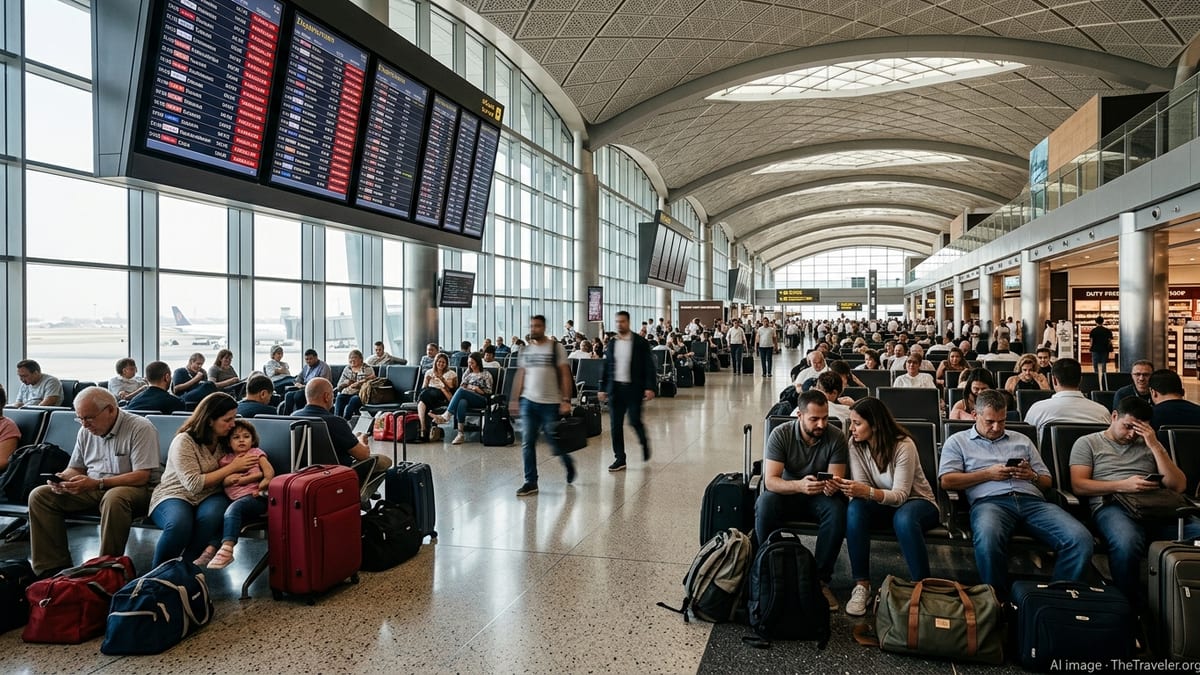
Regional Airspace Turmoil Hits Hamad International
Hamad International Airport remains at the heart of an evolving aviation disruption following weeks of constrained airspace in and around Qatar. Publicly available information indicates that Qatari airspace was closed at the end of February after regional security incidents, with only limited emergency and repatriation flights permitted into and out of Doha in early March. As of mid March 2026, airlines using Doha as a hub or key transit point continue to work through rolling cancellations and schedule reductions.
Reports describe a phased reopening process, with Qatar Civil Aviation authorities allowing a narrow operating corridor for relief services while keeping most regular commercial operations on hold or heavily curtailed. As airlines publish revised timetables and extend cancellation windows, travelers are encountering short-notice changes even for flights that had appeared to be operating normally only days earlier.
Against that backdrop, at least 91 flights connected to Doha and neighboring hubs have been canceled over a short period, according to airline notices and airport departure boards reviewed on Tuesday, March 18. The bulk of these cancellations are tied to Qatar Airways services, but they also affect codeshares and partner operations operated by Gulf Air, Malaysia Airlines, Saudia and EgyptAir, compounding the disruption across the wider region.
The cancellations span both long haul and regional routes, turning Hamad International from a high-frequency global hub into an airport running a skeleton schedule. Even where some services are still listed, passengers report schedule changes, aircraft swaps and last minute status updates, leaving many unsure whether their journeys will proceed as planned.
Cairo, Bahrain, Nairobi and Kuala Lumpur Feel the Strain
The shock to Doha’s hub status is reverberating through other major airports that rely on Qatar Airways and its partners for connectivity. In Cairo, public airport data and media coverage show a series of scrubbed services on routes linking the Egyptian capital to Doha and other Gulf points, including Qatar Airways and EgyptAir codeshares. Travelers flying between Cairo and destinations in Asia or Australia typically connect via Doha, so a single canceled segment often unravels entire itineraries.
In Bahrain, reports indicate that Gulf Air has canceled multiple flights in coordination with reduced regional traffic, trimming frequencies on routes that depend on feed from Doha and other nearby hubs. With both Bahrain and Doha serving as key connection points between Europe, the Middle East and South Asia, passengers are increasingly being rebooked through alternative Gulf hubs, lengthening travel times and straining remaining capacity.
Further south, Nairobi’s Jomo Kenyatta International Airport has seen intermittent disruption to services that connect via Doha, according to recent schedules carried in regional newspapers and airline advisories. Qatar Airways’ links between Nairobi and Doha are a primary one-stop option to Asia and Europe for Kenyan travelers, so each cancellation forces rerouting through more circuitous paths, often via multiple intermediate stops.
In Southeast Asia, Kuala Lumpur International Airport has recorded cancellations and revised timings on flights to and from Doha operated by Qatar Airways and Malaysia Airlines as codeshare partners. Reports from recent days describe passengers on Kuala Lumpur to Doha services receiving notices of cancellation followed by offers to move to limited remaining flights later in March, underlining the uneven and fast-changing nature of the current schedule.
Passengers Face Cascading Disruptions and Uncertain Timelines
For individual travelers, the 91 cancellations represent far more than numbers on an operations board. Accounts shared in public forums and travel communities describe passengers stranded in transit cities after their onward Doha legs were removed from the schedule, sometimes with only a few hours’ warning. Others report multiple rebookings within days as successive flights they were moved to were later canceled.
Some travelers with itineraries in the second half of March report that their journeys remain listed as operating but have already undergone significant time changes or extended layovers in Doha. In several cases, publicly accessible booking tools now show overnight or 15 hour connections where previous itineraries had been under four hours, reflecting how airlines are trying to consolidate limited capacity rather than run full pre-disruption frequencies.
Refund and rebooking policies play a critical role in how these disruptions are felt. Qatar Airways has published a series of travel advisories over recent weeks expanding the window for fee free changes and refunds for tickets touching Doha during specified dates. According to these published conditions, many passengers whose flights fall within the affected periods can request full refunds or move their travel dates within defined ranges, though processing times and availability of alternatives vary.
For those with complex multi segment tickets, especially involving partner airlines, the situation can be more complicated. Some travelers indicate they were rebooked only on the first leg to a regional hub, with onward segments still pending confirmation, while others have chosen to cancel entire trips amid uncertainty over when a fully stable schedule through Doha will resume.
Airlines Adjust Networks While Limited Operations Continue
Qatar Airways has maintained a small number of limited operations during the airspace disruption, primarily to bring home stranded passengers and serve select point to point routes. Notices reported in local Qatari media in early and mid March highlight tightly constrained operations between Doha and cities including London, Frankfurt, Amsterdam, Berlin, Muscat, Nairobi and Kuala Lumpur, among others, with clear emphasis that these services do not constitute a full return to normal commercial flying.
Other carriers with close ties to Doha are also reshaping their schedules. Malaysia Airlines has adjusted its codeshare services with Qatar Airways to reflect the reduced Doha frequencies, directing some passengers toward alternative connections via other Asian or Middle Eastern hubs where possible. Saudia and EgyptAir, which both market connections over Doha on certain flows, have similarly adapted timetables in response to the lack of available capacity through Hamad International.
Gulf Air in Bahrain has faced a dual challenge of its own regional constraints and the ripple effects from Doha’s slowdown. Published coverage and airline communications show a pattern of targeted cancellations, often on routes that feed longer haul services. In some cases, airlines are using larger aircraft or combining passenger loads from multiple canceled flights onto a single operating service to maintain at least minimal connectivity on strategic routes.
Aviation analysts quoted across regional outlets note that such network adjustments are typical when a major hub is partially offline: carriers first protect the most commercially and strategically important routes, then rebuild frequencies incrementally as airspace conditions and operational resources allow. Until Qatari airspace is fully reopened without restrictions and a stable flight program is published, travelers using Doha as a transit point are likely to face an elevated risk of last minute disruption.
What Travelers Can Expect in the Coming Days
With schedules around Hamad International still in flux on March 18, there is no single date widely reported as a definitive return to normal operations. Some public reports from passengers in contact with airline call centers suggest that additional flights may be introduced from March 18 onward, and that more extensive service restoration could follow around March 19 and later in the month. However, these indications remain subject to change and are not yet reflected across all official timetables.
For now, publicly available information suggests that travelers due to fly through Doha in the coming days should closely monitor their booking status, particularly within the 72 hour window before departure when recent cancellations have frequently been processed. Many airlines encourage affected passengers to use digital channels to check real time status and manage rebooking, given heavy call volumes at customer service centers.
Industry observers caution that even as additional flights are added, backlogs of disrupted passengers from earlier in March may keep available seats tight on key routes for some time. Travelers departing from Cairo, Bahrain, Nairobi, Kuala Lumpur and other cities that rely heavily on Qatar Airways and its partners for long haul connectivity may find that alternatives involve longer routings, multiple connections or travel on different alliances than initially booked.
While the pace of cancellations may ease if airspace conditions continue to improve, the immediate impact of the 91 recently canceled flights underlines the vulnerability of global travel networks to regional disruptions centered on a single hub. For many travelers, journeys that once involved a seamless connection through Doha now require flexibility, contingency planning and a willingness to accept significant changes at short notice.