

More news on this day
An airstrike attributed to a U.S. A-10 attack aircraft on an Iraqi military base in western Anbar province has killed seven Iraqi soldiers and injured more than a dozen others, according to emerging reports from Iraqi and international media monitoring the incident.
Get the latest news straight to your inbox!
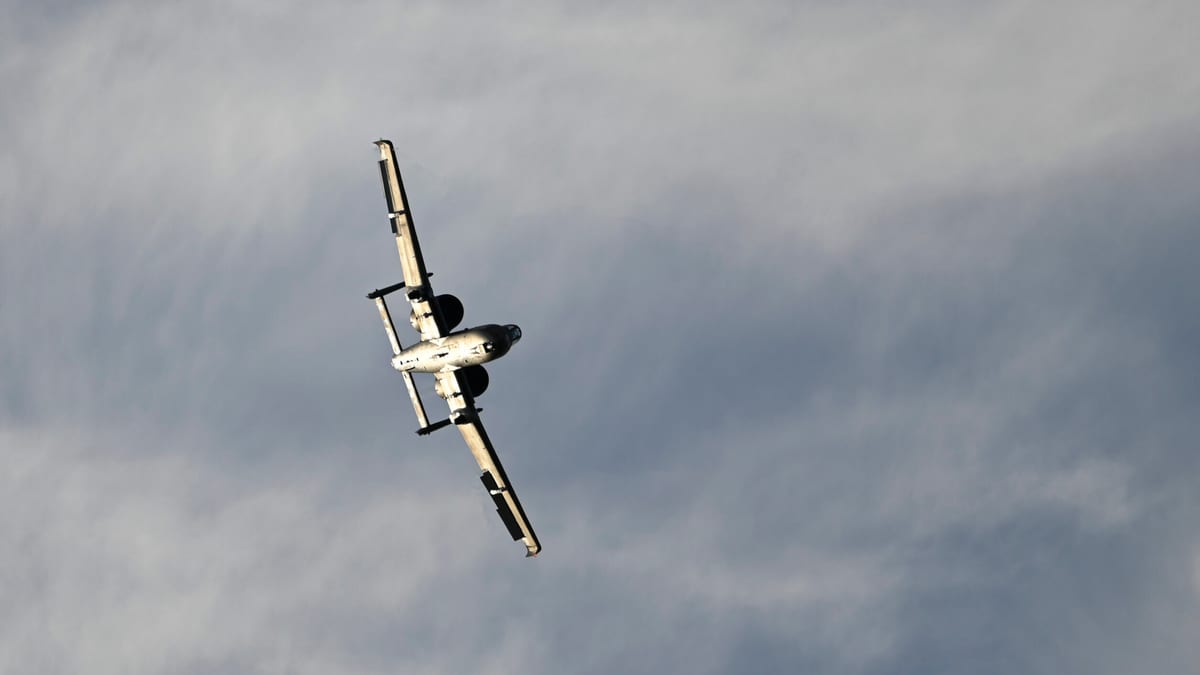
Image by AeroTime
Strike on Habbaniyah base in western Iraq
Publicly available information indicates that the strike took place at the Habbaniyah military complex in Anbar province, a large facility used by both the Iraqi army and units linked to the Popular Mobilization Forces. Video footage and local reporting circulating online show an A-10 Thunderbolt II, commonly known as the Warthog, conducting a low pass over the base shortly before explosions and smoke are seen rising from inside the compound.
Initial accounts from Iraqi military-linked channels state that the attack killed seven Iraqi soldiers and wounded at least thirteen others. Several of the casualties were reportedly inside a support area on the base rather than on an active front line, heightening concern in Baghdad about the nature and targeting of the strike.
The timing of the incident places it within a broader pattern of recent strikes on facilities associated with Iran-aligned militias and Iraqi security units in western and northern Iraq. Observers note that Habbaniyah has long been a key hub for operations against Islamic State remnants, while also hosting formations with close ties to Tehran.
Disputed targeting near clinic and engineering section
Details emerging from Iraqi security sources and regional reporting suggest that the A-10’s munitions struck an area of the base that includes a clinic and an engineering or logistics section. Iraqi accounts describe damage to the medical facility and nearby support buildings, prompting questions over whether the strike was aimed at militia infrastructure positioned close to regular army services or was the result of faulty intelligence and identification.
Commentary in Iraqi media emphasizes that army personnel were among the dead and wounded, rather than exclusively members of the Popular Mobilization Forces. This distinction is politically sensitive in Iraq, where the government has formally integrated many militia formations into the state security apparatus, but public opinion still differentiates between regular troops and Iran-backed factions.
Analysts following the incident point out that the proximity of militia facilities to core army units on shared bases has long complicated air operations by foreign militaries. In such environments, any strike on suspected militia assets risks collateral damage to regular Iraqi forces or medical and support infrastructure, increasing the likelihood of diplomatic friction.
U.S. role and wider regional backdrop
Open-source coverage of the incident consistently links the aircraft involved to the United States, with the A-10 platform widely recognized as part of the U.S. Air Force inventory and frequently deployed for close air support missions across the region. While U.S. military channels have not immediately provided a detailed public account specific to the Habbaniyah strike, recent official statements on regional operations refer to continued actions against what are described as Iranian-aligned militia networks threatening U.S. and partner forces.
The strike occurs against a backdrop of heightened tensions following months of rocket, missile and drone attacks on facilities hosting U.S. and coalition personnel in Iraq and neighboring countries. In response, U.S. forces have carried out a series of targeted airstrikes on depots, command sites and launch positions linked to Shiite militia factions, arguing that such operations are intended to deter further attacks.
In Iraq, however, repeated incidents in which Iraqi security forces are killed or wounded alongside militia members have strengthened calls for a reassessment of the foreign military presence. Political factions in parliament have periodically renewed demands for a timetable for the withdrawal of U.S. troops, framing the latest strike as further evidence that foreign operations carry unacceptable risks for Iraqi soldiers on their own soil.
Baghdad’s reaction and calls for investigation
According to regional news coverage and statements circulated through Iraqi government-linked channels, Baghdad has condemned the attack and characterized it as a violation of Iraqi sovereignty and of existing security understandings. Officials are reported to be pressing for a formal explanation and for joint or independent investigations into how a base housing Iraqi army personnel and a clinic came under fire from a foreign aircraft.
Within Iraq’s political scene, parties close to the Popular Mobilization Forces have seized on the incident to renew criticism of security cooperation with Washington. Commentators aligned with these groups argue that the deaths of seven soldiers at a domestic base underline the risks of allowing foreign forces to operate with significant autonomy in Iraqi airspace.
Other voices in Baghdad are urging a more measured response, calling for clear facts on the chain of events, possible militia activity in or near the targeted section of the base, and the extent to which deconfliction mechanisms between Iraqi and foreign militaries functioned as intended. For them, the episode illustrates the need to separate Iraqi army infrastructure from militia positions more clearly in order to reduce the chances of similar tragedies.
Heightened scrutiny of A-10 operations
The use of the A-10 platform in the Habbaniyah strike has also drawn renewed attention to the aircraft’s record in complex battle spaces. The A-10 is designed for close air support, with a heavy cannon and the ability to loiter at low altitude over the battlefield. Military histories show that, while the aircraft has been highly valued by ground forces in many conflicts, its low-level attack profile and the fog of war have at times been associated with friendly fire and misidentification incidents in Iraq and elsewhere.
Security analysts note that employing such aircraft around mixed-use bases, where regular troops, militia formations and civilian contractors may operate in close proximity, demands particularly precise intelligence, strict target vetting and real-time coordination with host-nation commands. The reported casualties among Iraqi army personnel at Habbaniyah will likely intensify debate over whether those safeguards were sufficient in this case.
As information about the strike continues to emerge, monitoring organizations and regional observers are tracking whether the incident leads to changes in air tasking procedures, restrictions on certain types of strikes, or fresh negotiations over the mandate governing foreign forces in Iraq. The deaths of seven soldiers at a key Iraqi base have quickly become part of a broader conversation about sovereignty, security partnerships and the cost of ongoing military confrontations with Iran-aligned networks on Iraqi territory.