

More news on this day
As airlines look to stretch single-aisle jets onto ever longer routes, the Airbus A321XLR and Boeing 737 MAX 10 have emerged as headline rivals, but their technical profiles and market momentum now point in very different directions.
Get the latest news straight to your inbox!
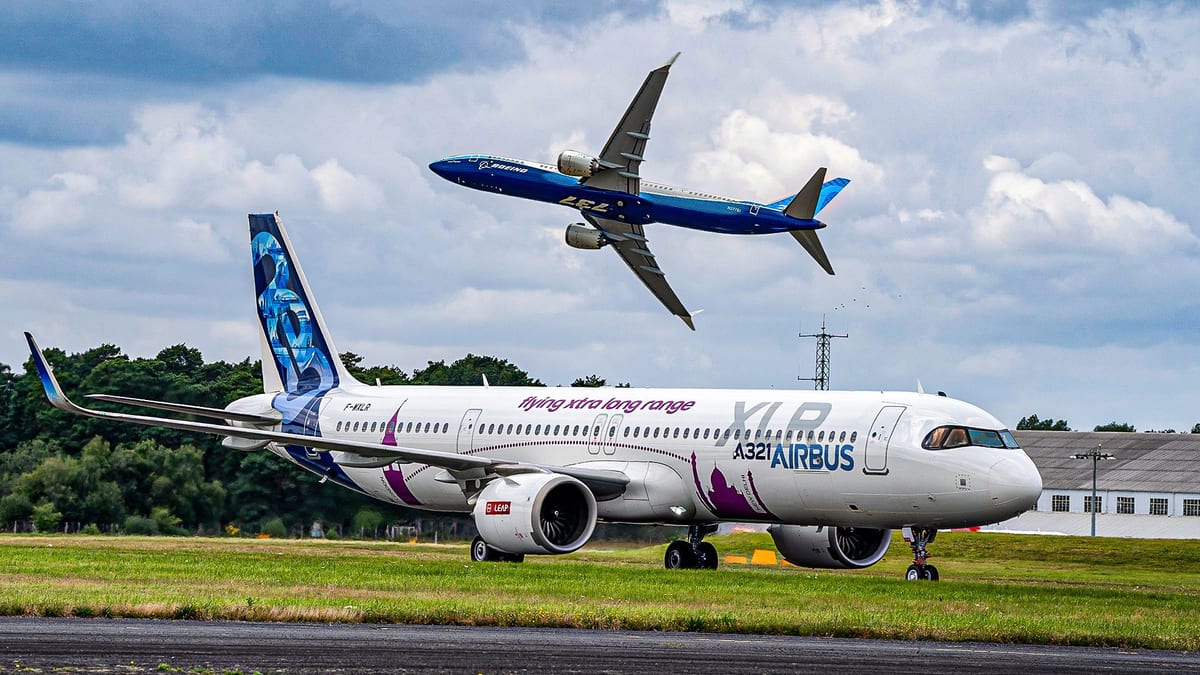
Image by Simple Flying
Range and Performance: A Clear Long-Haul Advantage
Publicly available manufacturer data shows that the A321XLR is designed around long range first, with a published range of about 4,700 nautical miles in a typical two class layout. The jet achieves this with additional fuel capacity, structural reinforcement and aerodynamic tweaks that push the A321neo platform into true long haul territory and enable routes such as transatlantic services from secondary European and North American cities.
The 737 MAX 10, by contrast, is positioned as a high capacity narrowbody for dense short and medium haul markets. Boeing documentation and independent comparisons put its range at roughly 3,100 nautical miles, suitable for continent spanning missions but well short of the A321XLR’s capabilities. Analysts note that up to around 3,000 nautical miles the two aircraft can compete on similar routes, but beyond that threshold the MAX 10 drops out of contention while the A321XLR can still operate with commercial payloads.
This performance gap is central to how airlines are planning their fleets. The A321XLR is being slotted into segments once reserved for smaller widebodies, allowing carriers to test thinner long haul routes with fewer seats and lower trip costs. The MAX 10 instead targets replacement of older 737s and 757s on high density domestic and regional links where range demands are modest but seat count and operating economics are critical.
Capacity, Cabin Layout and Passenger Experience
Despite being close in size, the two aircraft favor different capacity sweet spots. Data compiled from industry comparisons indicates that the A321XLR typically carries around 206 to 220 passengers in a standard two class configuration, with room for lie flat business seats and additional premium economy on long missions. Airlines using the type for transatlantic and Asia Pacific flights are emphasizing premium heavy layouts that trade some overall seat count for higher yield cabins.
The 737 MAX 10 is optimized to fit more passengers in the same single aisle footprint. Boeing’s planning documents and fleet guides describe a typical two class layout in the 188 to 204 seat range, with a maximum certified capacity well above that for single class operators. Low cost and leisure focused airlines are expected to push seat counts higher, prioritizing volume on trunk routes rather than introducing long haul premium products.
Cabin experience also diverges as flight lengths increase. On the A321XLR, carriers in regions such as Europe, North America and Australia are marketing upgraded seating, larger overhead bins and long haul style inflight entertainment on flights lasting seven hours or more. Reports on early cabin reveals highlight fully flat suites in business class and enhanced economy seating tailored to overnight sectors. The MAX 10, still awaiting entry into service, is being promoted mainly as an incremental improvement over earlier 737s with modernized interiors, but not as a step change for ultra long narrowbody flying.
Certification Timelines and Operational Status
The most striking difference in early 2026 is that the A321XLR is already flying passengers while the 737 MAX 10 remains in the certification phase. Industry coverage indicates that Europe’s aviation regulator cleared the A321XLR in 2024, paving the way for initial deliveries and the first commercial services later that year. By 2025 and into 2026, airlines in Europe, Australia, India and North America had begun taking aircraft and planning new long haul narrowbody routes.
Examples include Iberia operating early A321XLR services from Spain, Qantas introducing the type on domestic and short international sectors before extending it to overseas destinations, and IndiGo preparing India’s first A321XLR flights from Mumbai to Athens from January 2026. American Airlines has taken delivery of its first aircraft but has faced delays bringing it into regular service due to a shortage of certified cabin seats, underlining how interior supply chains and regulatory approvals remain a bottleneck even after airframe certification.
The 737 MAX 10, meanwhile, is still working through regulatory hurdles years after its initial launch. Public filings and recent coverage show that certification, once targeted for the mid 2020s, has slipped into 2026 following a series of design reviews and broader scrutiny of Boeing’s narrowbody program. Boeing has continued to assemble test aircraft and sign large orders, but airlines have pushed back expected delivery dates and in some cases removed the MAX 10 from near term fleet plans while waiting for a firm regulatory timeline.
Airline Strategies: Different Roles in the Network
These technical and certification differences are shaping how airlines deploy each type. The A321XLR is being framed as a strategic tool for opening new city pairs that would be uneconomical for widebodies, such as medium sized North American cities linked directly to secondary European hubs or longer routes across the Indian Ocean and western Pacific. Carriers in alliances centered on major hubs are using the aircraft to funnel traffic from smaller markets, while low cost and hybrid airlines see an opportunity to push further into long haul point to point flying.
The MAX 10 sits in a more traditional role. Its mission profile aligns with replacing older 737 Next Generation fleets on high frequency domestic corridors and short international sectors where turn times, commonality with existing 737 crews, and per seat operating costs are decisive. North American and Asian carriers with large 737 fleets have signaled that the MAX 10 will be important for sustaining capacity growth once certified, particularly where airport slots are scarce and upgauging is more attractive than adding frequencies.
For airports, the arrival of the A321XLR is already visible in schedules that list narrowbody aircraft on routes previously served only by widebodies. The MAX 10’s impact is still prospective, centered on forecasts that anticipate more passengers per movement on established routes rather than the introduction of entirely new long haul markets. This divergence suggests the Airbus jet is reshaping network maps, while the Boeing model is geared to intensifying existing patterns once it enters service.
Market Outlook and Competitive Balance
From a commercial standpoint, the A321XLR has given Airbus a strong head start in the highest margin segment of the single aisle market. Analyst reports describe the aircraft as offering an unprecedented combination of narrowbody seat capacity and long range, and airlines have responded with substantial orders that are gradually being converted into active fleets. As more A321XLRs enter service through the mid 2020s, their operating performance on extended routes is expected to reinforce Airbus’s position.
Boeing still holds a major order book for the MAX 10, but delays have changed the competitive narrative. Some carriers have adjusted fleet plans, accelerated deliveries of smaller MAX variants, or leaned on Airbus narrowbodies where possible while waiting for clarity on the MAX 10’s certification date. The longer the gap between the A321XLR’s widespread deployment and the MAX 10’s entry into service, the more entrenched Airbus’s advantage in this corner of the market is likely to become.
Looking ahead, industry observers see limited overlap between the two jets despite their similar size. The A321XLR has effectively created a long range single aisle category of its own, allowing airlines to experiment with new long haul strategies. The 737 MAX 10, once certified, is expected to strengthen Boeing’s hand on short and medium haul routes where capacity and commonality matter more than extreme range. Together they illustrate how a single aisle airframe can be pushed in radically different directions, and how program timing can shift the balance of power between two long standing rivals.