

More news on this day
Superjumbo jets are back in force between South Korea and Japan, and the return of Airbus A380 services by Korean Air and Asiana Airlines is coinciding with a sharp upswing in cross-border travel and hotel demand across both countries’ gateway cities.
Get the latest news straight to your inbox!
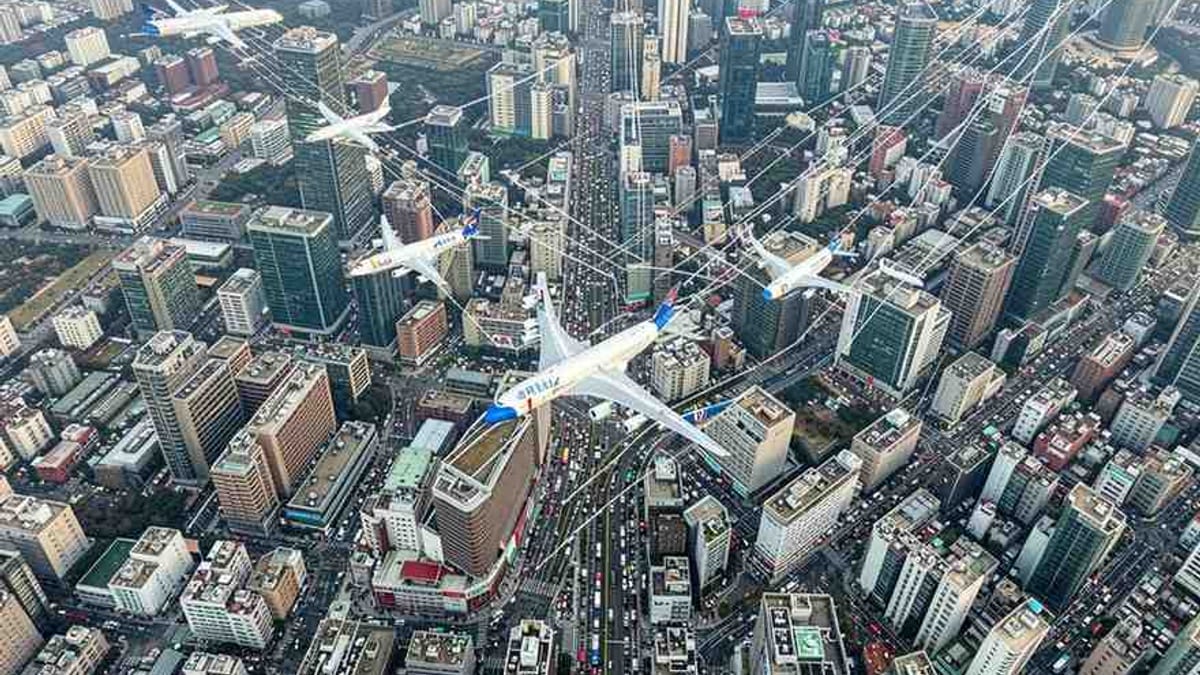
Image by Travel And Tour World
A380 Capacity Returns on Flagship Korea Japan Routes
Korean Air and Asiana Airlines are reactivating Airbus A380s on high-traffic routes linking Seoul with Tokyo and Osaka, restoring pre-pandemic levels of widebody capacity on some of Northeast Asia’s busiest short-haul corridors. According to published schedules and industry databases, Korean Air has progressively reintroduced the double-decker type on select high-demand Asia routes, while Asiana is operating the A380 on the Seoul Incheon to Tokyo Narita sector during the early 2026 winter season.
Asiana’s deployment of the A380 on flights OZ101 and OZ102 between Incheon and Narita from January to March 2026 signals growing confidence in sustained demand on the South Korea Japan pairing. After the seasonal window, the carrier plans to revert to smaller Airbus A350-900 equipment, indicating that the A380 is being used tactically to ride a peak in leisure and shopping traffic during the northern winter and early spring.
For Korean Air, the A380’s return on regional routes complements its long-haul network and underscores a strategy of using high-capacity aircraft on short segments where demand is dense and yields are resilient. Travel data providers and aviation analytics firms note that the Seoul Tokyo corridor remains one of Asia’s most competitive city pairs, with flag carriers, low-cost airlines and Japanese incumbents crowding the market, making upgauge decisions especially notable.
Industry analysts point out that the A380’s deployment on flights of barely two hours highlights how intense the rebound in intra-Asian tourism has become. The combination of large seat counts and multiple daily frequencies is effectively turning the corridor into an air bridge, with capacity that rivals some long-haul trunk routes in Europe and North America.
Record Visitor Flows Deepen Korea Japan Travel Ties
The renewed A380 operations are taking place against a backdrop of record-setting tourism flows in both directions. Figures from the Japan National Tourism Organization show that Japan welcomed roughly 36.9 million foreign visitors in 2024, surpassing its 2019 benchmark and setting a new record. South Korea consistently ranks among the top source markets, supplying millions of arrivals annually as travelers take advantage of proximity, dense flight schedules and a historically weak yen.
More recent tallies point to further acceleration. Tourism-focused research groups report that Japan saw more than 21 million visitors in the first half of 2025 alone, on track to surpass the prior year’s record. Korean travelers remain a pivotal segment of this surge, even as outbound demand begins to diversify toward China and Southeast Asia. Analysts note that the steady recovery of Japanese outbound travel to Korea is adding another layer of volume to the bilateral market.
South Korea’s own inbound sector has been expanding quickly. Data compiled by international tourism bodies and Korea’s tourism authorities indicate that the country welcomed around 16.3 million foreign visitors in 2024, approaching its pre-pandemic high, with Japan listed among the top contributors. By mid-2025, industry trackers were already suggesting that South Korea could match or exceed its 2019 visitor total if airline capacity continued to grow.
Travel industry insight platforms describe the Korea Japan corridor as a critical short-haul bridge inside a broader Northeast Asia hub system. Improved connectivity between Seoul, Tokyo, Osaka and regional Japanese cities is feeding not only point-to-point tourism but also transit traffic, as travelers from North America and Southeast Asia route through these hubs for multi-country itineraries that combine stops in both nations.
Hotel Markets in Seoul, Tokyo and Osaka Feel the Lift
The surge in air capacity, particularly on high-profile A380 services, is echoing through hotel pipelines in Seoul, Tokyo and Osaka. Hospitality consultancies covering the Asia Pacific market report that Japan’s nationwide recovery has pushed visitor volumes and room demand to record levels, with 2024 foreign arrivals surpassing previous peaks and putting upward pressure on occupancy and rates in key urban markets.
In Tokyo and Osaka, analysts describe a pronounced rebound in international stays, driven in part by regional travelers from South Korea. The opening of large-scale attractions and events in the Kansai region, alongside the run-up to Expo 2025 Osaka, has helped transform Osaka into a major tourism and entertainment hub. Local business press reports detail how visitor numbers in and around the city have climbed sharply over the past decade, bolstering performance for midscale and upscale hotels.
Seoul’s hotel sector is experiencing a similar tailwind. Research summaries from global travel and tourism organizations suggest that South Korea was among the world’s fastest-growing tourism markets in 2024, with the sector’s economic contribution reaching record territory. Strong inbound flows, led by regional visitors from China, Japan and other nearby markets, have fed demand for accommodation in central Seoul districts and emerging lifestyle neighborhoods around the capital.
Online travel agencies and booking platforms cite robust growth in cross-border reservations between the two countries, noting that higher seat supply and competitive airfares are encouraging more frequent, shorter trips. With A380 operations adding hundreds of extra seats per rotation on some days, hotels near major airports and downtown transit hubs are reporting tighter availability during peak weekends, festival periods and large-scale concert events.
Currency Trends, Pop Culture and Visa Policies Fuel Demand
Behind the capacity and hotel metrics lie structural drivers that continue to deepen tourism links between South Korea and Japan. Currency fluctuations remain a major factor. A relatively weak yen through much of 2024 and 2025 has made Japan particularly attractive for Korean visitors seeking shopping, dining and entertainment, offsetting some of the impact of later yen appreciation on discretionary travel budgets.
At the same time, both countries are capitalizing on their global soft power. Japan’s mix of traditional culture, contemporary design and pop media has cemented its appeal across Asia and beyond, while the Korean Wave continues to draw fans from Japan into Seoul’s concert venues, fashion districts and filming locations. Industry commentators observe that tour packages built around K pop performances in Seoul and anime, gaming and themed attractions in Tokyo and Osaka are increasingly bundled together, driving demand for multi-stop itineraries and extended hotel stays.
Policy initiatives are reinforcing these trends. According to public tourism strategies and industry briefings, South Korea has rolled out a series of measures to stimulate arrivals, including targeted visa relaxations and promotional campaigns aimed at key Asian source markets. Japan, meanwhile, has treated tourism as a strategic industry, investing in infrastructure and regional promotion that channels visitors beyond Tokyo to secondary cities where new hotels and renovation projects are proliferating.
Consultancies tracking Asia Pacific tourism note that this combination of favorable policy, strong branding and improved air connectivity is encouraging higher-spend segments such as medical tourists, luxury shoppers and long-stay visitors. The A380’s spacious cabins and premium seating configurations dovetail with this push, enabling airlines to sell more high-yield seats on short routes that feed into longer regional or intercontinental journeys.
Outlook: Superjumbos as Symbols of a Deeper Tourism Cycle
Looking ahead, aviation planners and tourism researchers see the A380’s reappearance between South Korea and Japan as more than a logistical choice. The aircraft’s scale and visibility provide a tangible symbol of confidence in the durability of travel demand, even as airlines continue to manage fleet retirements and environmental pressures.
Network plans indicate that Asiana’s A380 stint on the Seoul Tokyo route is scheduled as a seasonal overlay, while Korean Air continues to evaluate where large-gauge aircraft best fit within its dual role as a national carrier and a global connector. Market watchers suggest that if load factors and yields remain strong through the 2025 and 2026 travel seasons, further episodes of superjumbo deployment within Northeast Asia are likely, particularly around major events and holiday peaks.
For hotels and destination managers, the message is clear: capacity is coming back, and travelers are responding. With visitor numbers in both countries already challenging historic records, the additional lift provided by A380 services points to a more integrated Korea Japan tourism ecosystem, in which airports, airlines and accommodation providers are closely intertwined.
As competition intensifies from other Asian destinations, maintaining that momentum will depend on more than hardware. Industry experts stress the importance of diversifying experiences, improving language support and transport connectivity, and carefully managing overtourism risks. For now, though, the sight of double-decker jets shuttling across the Korea Strait encapsulates a broader story of recovery, expansion and a tourism boom that shows little sign of slowing.