

More news on this day
Abra Group, the Latin American airline holding company behind GOL Linhas Aéreas, Avianca and Wamos Air, has unveiled plans to introduce seven Airbus A330-900 aircraft, marking a pivotal shift in its long-haul strategy and setting the stage for new nonstop links between Latin America, North America and Europe.
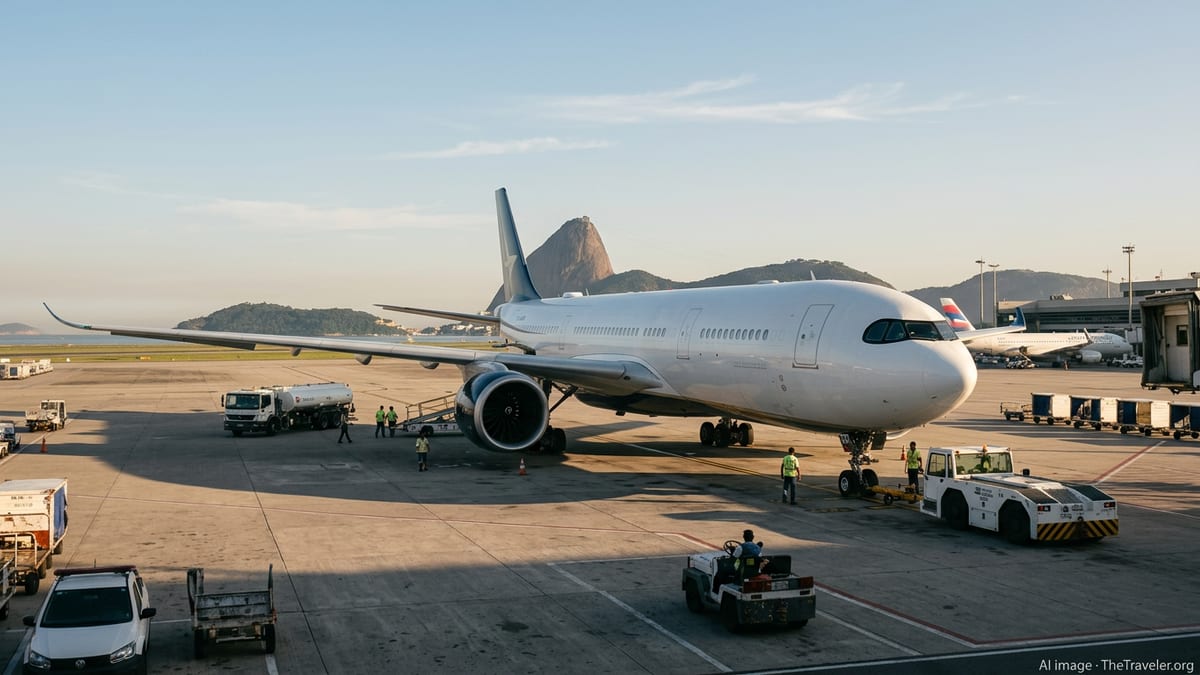
What Abra Group Announced and When the New Jets Arrive
The group confirmed on March 6 that it will progressively incorporate seven Airbus A330-900 widebody aircraft into its fleet over 2026 and 2027. In the initial phase, up to five of the aircraft will be operated by Brazil’s GOL Linhas Aéreas, while two will join Avianca, strengthening long-haul operations across the group. The move builds on a previously disclosed widebody and narrowbody orderbook that already included A330neo and A350-900 aircraft as well as a large pipeline of Airbus A320neo family and Boeing 737 MAX jets.
For GOL, the A330-900s represent a historic addition. The carrier has traditionally flown a single-type Boeing 737 fleet focused on domestic and regional routes, and only this year began to move away from that model. Executives had signaled in recent days that widebody aircraft could be coming, but the March 6 confirmation locks in the plan for GOL to operate up to five A330neo jets with deliveries starting in 2026.
Avianca, already an established long-haul operator within Abra, will operate two of the seven A330-900s. These will complement its existing widebody fleet and support a broader international expansion strategy that includes additional long-haul capacity and closer coordination with GOL and Wamos Air. Taken together, the seven A330-900s are designed to be a flexible resource that Abra can deploy across group airlines as market conditions evolve.
The aircraft are being introduced under lease and purchase agreements that sit within Abra’s multi-year fleet renewal and expansion program. Earlier announcements detailed plans for dozens of additional A320neo narrowbodies and a handful of A350-900s, underlining a long-term pivot toward more fuel-efficient widebodies and a high-density, lower-cost narrowbody backbone.
How the A330-900 Will Change GOL and Avianca Routes
The arrival of the A330-900 will enable GOL to launch true long-haul flights for the first time in its history, including nonstop services from Brazil to Europe and North America. Company statements indicate that the new widebodies will underpin an expanded international hub operation in Rio de Janeiro, positioning the city as a launchpad for new transatlantic and transcontinental routes that cannot be sustainably served by single-aisle aircraft.
Under the plan, GOL will no longer rely exclusively on partner connections via Avianca’s Bogotá hub for long-haul itineraries. Instead, the airline expects to operate its own nonstop services to key North American gateways and major European capitals, while continuing to offer connecting itineraries across the wider Abra network. The A330-900’s range and seating capacity allow GOL to compete more directly for long-haul leisure and visiting-friends-and-relatives traffic.
Avianca is expected to use its two A330-900s to thicken existing long-haul routes and open select new markets in Europe and North America, particularly where demand justifies a widebody but does not yet require the capacity of larger aircraft such as the A350-900. The additional lift will also give the Colombian carrier greater flexibility to redeploy other widebodies and optimize seasonal capacity across its long-haul portfolio.
Wamos Air, which already operates Airbus widebodies and specializes in long-haul and charter flying, will play a supporting role. Abra says Wamos will provide operational support, including training, maintenance and potential wet-lease capacity, ensuring that GOL’s transition into widebody operations is backed by in-house expertise with the A330 platform.
Onboard Experience and Technical Features of the A330-900
The Airbus A330-900, part of the A330neo family, is a new-generation twin-engine widebody designed for medium and long-haul routes. Powered by Rolls-Royce Trent 7000 engines and incorporating advanced aerodynamics, the type offers significantly lower fuel burn per seat compared with older A330 variants, improving both environmental performance and operating economics. For Abra, those efficiencies are central to making new long-haul routes viable from Brazil and Colombia.
Cabin layouts will vary by airline, but passengers can expect a two or three-class configuration with a modern long-haul product. GOL, which is entering the widebody market for the first time, is widely expected to debut a new international business-class cabin on the A330-900, along with a refreshed economy section calibrated for long journeys of eight to eleven hours. Details of exact seat counts and configurations have not yet been published, but group executives emphasize comfort and competitive amenities on the new aircraft.
Avianca’s A330-900s are likely to align with the carrier’s ongoing efforts to upgrade its premium cabins and refine its long-haul offering. The airline has previously invested heavily in product improvements on its international network, and the introduction of the A330neo gives it a platform to standardize newer business-class seats, improved in-flight entertainment and connectivity, and more consistent cabin finishes across long-haul routes.
Across the group, the A330neo’s quieter cabin, LED lighting, larger overhead bins and improved cabin pressurization are expected to form part of the passenger proposition. The jets will also be equipped for high-bandwidth in-flight connectivity under a separate partnership between Abra Group and satellite provider SES, which is rolling out next-generation Wi-Fi across more than 100 Airbus and Boeing aircraft in the fleet.
Strategic Reasons Behind Abra’s Widebody Bet
Abra Group’s decision to allocate seven A330-900s to its airlines is part of a wider strategy to strengthen its position as a leading long-haul player connecting Latin America with Europe and North America. By giving GOL its own widebody capability while reinforcing Avianca’s long-haul fleet, the group aims to capture a greater share of high-value international traffic and deepen customer loyalty within its multi-airline ecosystem.
The A330-900 also provides a bridge between Abra’s narrowbody and ultra-long-haul assets. It complements the forthcoming A350-900s, which will be deployed on the most demanding routes and peak periods, and the extensive fleets of A320neo and 737 MAX aircraft that dominate domestic and regional flying. This tiered approach to fleet planning allows Abra to match capacity and range more precisely to each market while maintaining commonality in pilot training, maintenance and spare parts.
Cost and risk management also feature prominently in the strategy. Leasing and gradually inducting the A330-900s over 2026 and 2027 allows Abra to scale capacity in line with demand and macroeconomic conditions. If certain markets underperform, the aircraft can be redeployed across GOL, Avianca and Wamos routes or used for charter and seasonal flying, giving the group flexibility that single-carrier operators often lack.
At the same time, adding fuel-efficient widebodies helps Abra advance its sustainability commitments. Newer engines and aerodynamic improvements translate into lower emissions per passenger compared with older long-haul types, supporting both regulatory objectives and growing consumer expectations for more sustainable air travel.
What Travelers Should Expect in the Next Two Years
For travelers in Brazil, Colombia and across Latin America, the most visible impact of Abra’s A330-900 rollout will be more nonstop options and new one-stop itineraries to Europe and North America beginning in 2026. GOL customers will gain access to long-haul flights directly operated by the Brazilian carrier, likely from hubs such as Rio de Janeiro and possibly São Paulo, while Avianca customers will see added frequencies and potential new European gateways from Bogotá and other key cities.
Within the group, schedules will be structured to maximize connectivity between domestic and regional networks and the new long-haul services. That means tighter banks of flights feeding into widebody departures, shorter connection times and more opportunities to combine GOL, Avianca and Wamos flights on a single ticket. Abra’s growing joint ventures and partnerships in Europe are expected to extend that connectivity deeper into secondary cities on the other side of the Atlantic.
Passengers should also anticipate an upgrade in the onboard experience on select long-haul routes as the A330-900s enter service. New or refurbished cabins, enhanced in-flight entertainment, high-speed Wi-Fi and refreshed meal services are all part of the toolkit Abra is using to compete with global legacy airlines on transatlantic and transcontinental sectors.
Timelines and exact route announcements will continue to roll out over the coming months, but the direction of travel is clear. With the A330-900 at the center of its next growth phase, Abra Group is reshaping how GOL and Avianca connect Latin America to the world, setting up a more competitive and integrated long-haul network for the second half of the decade.