

More news on this day
ACI Europe is calling on the European Union to enforce a uniform approach to aircraft noise management, warning that inconsistent national policies risk constraining airport capacity, weakening connectivity and undermining regional economic growth across the bloc.
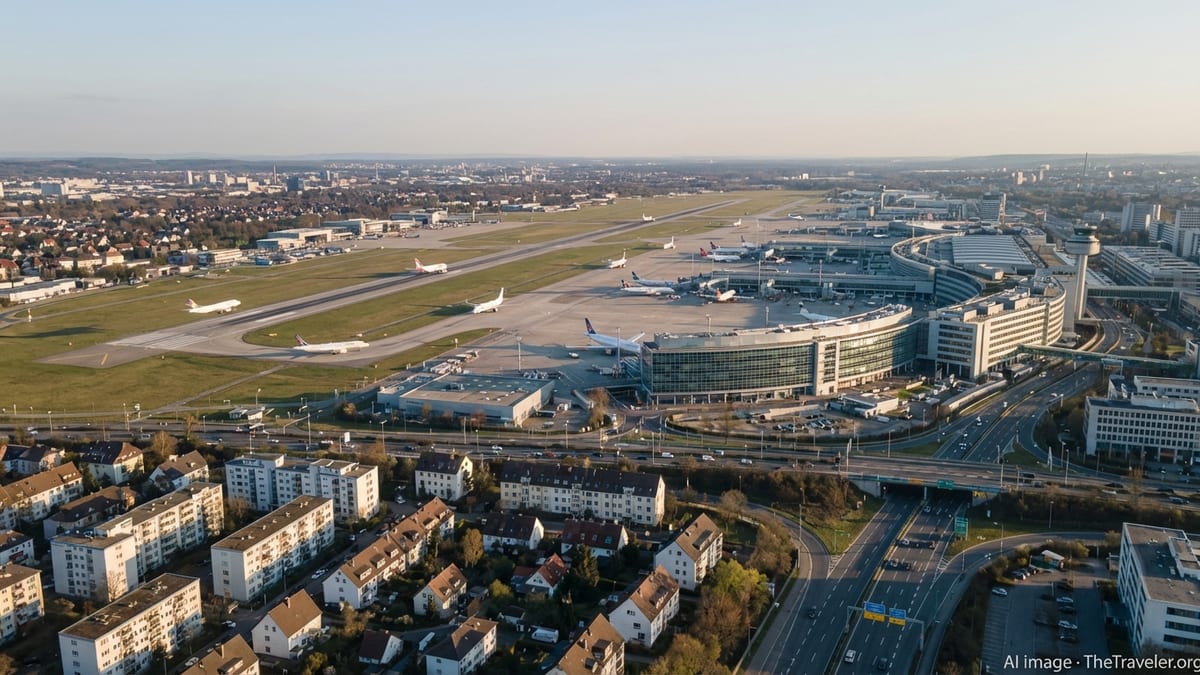
Airports Warn of Patchwork Rules on Noise
The Brussels based association representing more than 600 airports says the EU’s existing Noise Balanced Approach Regulation already provides a clear blueprint for managing aircraft noise while safeguarding the economic role of aviation. The problem, it argues, is not the law itself but how unevenly it is being applied by member states.
In recent months, several governments and local authorities have moved to tighten night curfews, cap flights or restrict specific types of aircraft around major hubs and regional gateways. According to ACI Europe, some of these measures have been proposed or adopted without fully exploring alternative mitigation tools or conducting the socio economic and cost effectiveness assessments required under EU rules.
Director General Olivier Jankovec has cautioned that such unilateral decisions risk eroding Europe’s competitiveness at a time when other global regions are investing heavily in aviation capacity. Limiting runway movements or shrinking operating hours, he says, can quickly translate into lost routes, reduced frequencies and fewer choices for passengers and businesses that depend on air links.
The concern is particularly acute for regional airports that serve as lifelines for trade, tourism and employment. When capacity is curtailed through blunt restrictions rather than balanced planning, ACI Europe warns, the impact can ripple far beyond the airport perimeter into local supply chains and labour markets.
How the EU Noise Balanced Approach Is Meant to Work
The Noise Balanced Approach, developed under international civil aviation guidelines and embedded in EU legislation, is designed to ensure that noise is tackled systematically before authorities resort to operational bans or flight caps. It structures policy decisions around four main pillars, beginning with efforts to reduce noise at the source.
The first pillar focuses on aircraft technology and fleet renewal. Airlines are encouraged, and in some cases financially incentivised, to introduce quieter next generation jets, retire older models and comply with more stringent noise certification standards. Over time, this gradual modernisation is intended to lower overall noise footprints without reducing airport capacity.
The second and third pillars relate to land use planning and operational procedures. National and local authorities are expected to use zoning rules, building regulations and insulation programmes to shield communities from exposure, while airports and air navigation providers optimise flight paths, runway use and descent profiles to minimise noise over populated areas.
Only once these measures have been fully assessed and implemented where feasible should authorities consider the fourth pillar, operational restrictions such as night flight bans, movement caps or limits on certain aircraft categories. Even then, the regulation requires detailed socio economic analysis to weigh environmental gains against the costs to connectivity, jobs and regional development.
Calls for Consistent Enforcement Across Member States
ACI Europe’s latest intervention comes as the European Commission reviews how the Noise Balanced Approach Regulation is functioning in practice. The association argues that a clearer commitment from Brussels on enforcement is needed to prevent selective or partial application of the rules by national and local authorities.
Industry representatives say that when one country imposes stringent caps without following the prescribed sequence of measures, while another prioritises technological and operational solutions, the result is a patchwork of standards within the single aviation market. Airlines may shift capacity to less restricted hubs, but communities near more tightly regulated airports may not see proportionate noise benefits if decisions are not grounded in comprehensive analysis.
ACI Europe is therefore urging EU institutions to issue practical guidance, strengthen oversight and ensure that all stakeholders, including local communities, are involved in a transparent, data driven process. The aim, it says, is not to weaken environmental objectives but to make sure they are achieved in a way that also preserves the social and economic value of air connectivity.
The association has also floated policy recommendations that emphasise proportionality and predictability in noise rules. Airports and airlines, it notes, plan infrastructure and fleets over decades, and sudden restrictions that bypass the Balanced Approach can disrupt long term investment decisions and undermine confidence in Europe as a stable market.
Airport Efforts to Cut Noise While Keeping Planes Flying
While pressing for consistent regulation, airports point to a range of measures already in place to reduce noise footprints. Many European hubs now make extensive use of continuous descent operations, which allow aircraft to glide down at lower engine power, and performance based navigation, which keeps flight tracks tightly controlled to avoid densely populated areas wherever possible.
Preferential runway schemes and tailored departure and arrival procedures are also being refined to shift noise away from the most sensitive locations. In parallel, differential landing and take off charges are used to reward operators that deploy quieter aircraft or accelerate the retirement of older, noisier types, further nudging the system toward lower noise emissions without curbing traffic outright.
Environmental agencies project that, if current trends in fleet modernisation and operational improvements continue, the number of people in the EU highly affected by aircraft noise could fall significantly by 2030. Airports say this demonstrates that technological innovation and smarter operations, when combined with robust land use planning, can deliver tangible progress without resorting prematurely to capacity cuts.
ACI Europe stresses that these initiatives require long term commitment and coordination between airports, airlines, air navigation services and public authorities. Fragmented or unpredictable policy moves, it argues, risk discouraging such investment just as the sector seeks to recover from recent shocks and support wider European climate and competitiveness goals.
Balancing Community Concerns With Regional Growth
Noise remains one of the most sensitive issues in the relationship between airports and surrounding communities, and ACI Europe acknowledges that public expectations for a quieter environment are rising. The association says the Balanced Approach can only work if residents see concrete benefits and have access to clear information on noise trends and mitigation efforts.
Many airports have introduced real time noise monitoring networks, online flight tracking tools and regular public reporting on noise contours and complaints. Consultative committees bring together local authorities, community groups, airlines and aviation officials to discuss proposed changes to flight paths or operating hours, allowing concerns to be aired and trade offs to be examined before decisions are taken.
For regions that rely heavily on air links for tourism, exports and business travel, the stakes are high. ACI Europe warns that if operating restrictions are applied in isolation from broader economic and social considerations, they could jeopardise thousands of jobs and constrain opportunities for peripheral and less connected areas.
By contrast, the association argues, a consistently applied EU framework that supports quieter aircraft, smarter procedures and better land use planning offers a path to reduce noise exposure while allowing airports to accommodate demand. As Europe debates how to reconcile environmental ambitions with the need for growth, the way it manages aircraft noise at its airports is emerging as a key test of that balance.