

More news on this day
Global airports are managing to keep passengers happier even as the skies grow busier, according to Airports Council International’s newly released 2025 Airport Service Quality Customer Experience Awards, which highlight rising satisfaction scores amid record traffic and marked improvements at border and passport control.
Record Passenger Volumes, Rising Satisfaction
The 2025 ASQ Customer Experience Awards arrive at a pivotal moment for aviation, with ACI World projecting global passenger volumes to reach about 9.8 billion in 2025 and climb to 10.2 billion in 2026. Those figures put airports under intense pressure to move more people, more quickly, without sacrificing comfort or service quality.
Yet the latest Airport Service Quality results indicate that airports are not only coping but outperforming many other sectors on customer experience. ACI World reports that overall passenger satisfaction increased globally despite the continued growth in traffic, a sign that investments in staffing, technology, and terminal upgrades are resonating with travelers.
ASQ is the only benchmarking program based solely on live, in-airport passenger surveys conducted on the day of travel. Nearly 707,000 travelers were surveyed in 2025 across all operating hours, days, and months, giving what ACI describes as the most current and granular snapshot of how passengers actually feel as they navigate terminals, boarding gates, and arrivals halls.
More than half of the world’s air travelers passed through an ASQ-rated airport last year, underlining the program’s reach and the weight that many airport operators place on its findings as they compete for both airlines and passengers.
Border Control Emerges as a Standout Performer
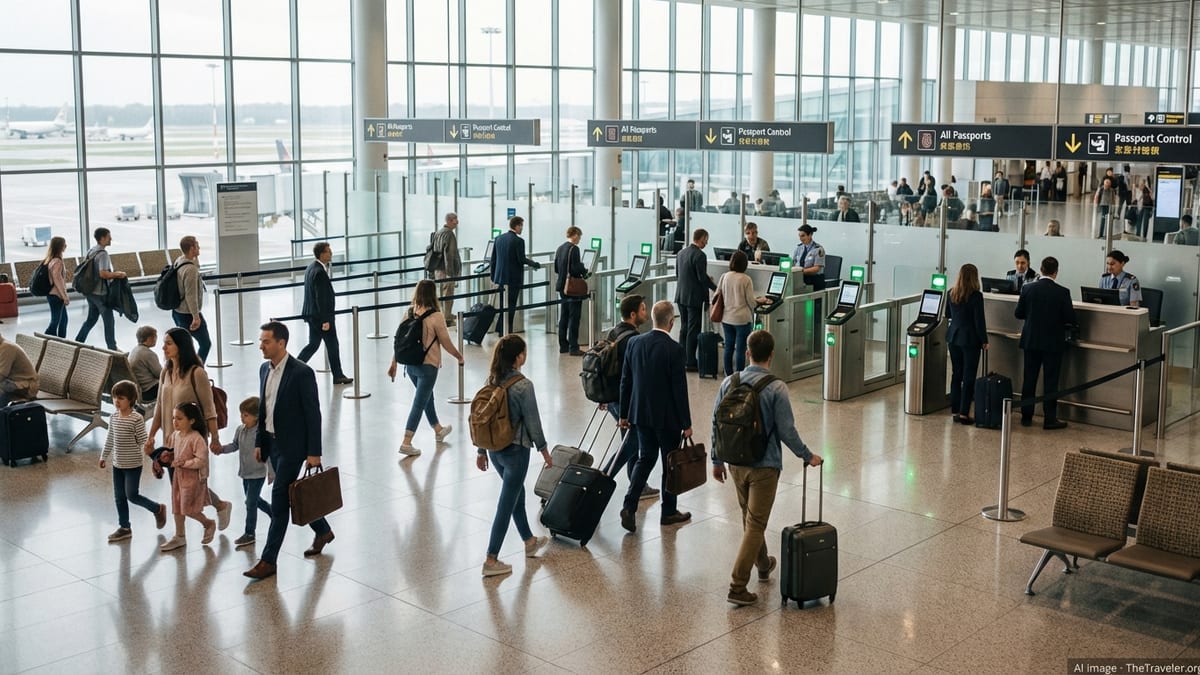
One of the most striking storylines in the 2025 results is at the frontier of the journey: border and passport control. ACI World notes that this touchpoint recorded the largest satisfaction gains globally, reversing a long-standing perception among passengers that immigration and security checks are the most stressful parts of any trip.
Industry officials attribute the progress to a mix of smarter staffing, better-designed queuing areas, and wider deployment of digital tools such as biometric e-gates and mobile pre-clearance platforms. Border agencies and airport operators have also focused on clearer signage, more real-time information on wait times, and more visible assistance for passengers unfamiliar with procedures.
Pedro Alves, a senior executive overseeing border solutions at SITA, the awards’ gold sponsor, said the results show how quickly expectations are evolving. Travelers now look for border processes that are not only fast but also intuitive and reassuring, especially for families, older passengers, and infrequent flyers who can feel overwhelmed by formal checkpoints.
The improved scores at border control are particularly significant given the broader recovery and growth in international travel. With more people crossing borders than at any time since before the pandemic, the gains suggest that technology and training are starting to close the gap between capacity and experience at one of the journey’s most scrutinized stages.
Cleanliness, Ambience and Human Touch Drive Top Airports
The awards also underscore what matters most to passengers beyond pure processing speed. ACI World highlights airport ambience and cleanliness as the strongest overall drivers of satisfaction, reinforcing a trend that gained momentum during and after the pandemic. Travelers continue to prioritize visibly clean spaces, good air circulation, and uncluttered, well-signed circulation areas.
The 2025 awards recognized a record pool of winners: 100 airports worldwide received a total of 195 awards across multiple categories and regions. These included 88 honors for Best Airports at Departures and 6 for Best Airports at Arrivals, as well as specialized categories such as Most Dedicated Staff, Easiest Airport Journey, Most Enjoyable Airport, and Cleanest Airport. Several categories featured more than 35 percent new winners, a sign that competition for the top spots is intensifying.
Behind the numbers are thousands of front-line workers and managers focused on small details that shape how passengers feel in real time. From terminal lighting and acoustics to seating layouts and wayfinding, airports that consistently rank highly in ASQ tend to blend operational efficiency with an atmosphere that feels calm, safe, and welcoming.
ACI World also honored eight airports with its Director General’s Roll of Excellence, recognizing facilities that have demonstrated sustained, high performance in passenger experience over multiple years. For travelers, these names serve as shorthand for a predictable level of comfort and reliability, whether they are starting, ending, or connecting on a journey.
Global Benchmarks as Airports Modernize for the Future
The 2025 ASQ Awards arrive as the program itself marks its 20th anniversary, giving ACI a two-decade data set on how passenger expectations and airport performance have evolved. What began as a relatively niche benchmarking tool has become a global reference point used by operators, regulators, and investors to gauge the competitiveness of hubs from regional gateways to mega-connecting airports.
ACI’s methodology, rooted in statistically robust on-site sampling, allows airports to compare their scores with peers of similar size and region while tracking progress year over year. The organization says insights from ASQ increasingly feed into decisions on capital spending, concession strategies, and staffing models, particularly in customer-facing zones such as check-in, security, border control, and retail.
As construction cranes dot the skylines of many terminals worldwide, the latest results offer a reality check on where modernization efforts are paying off. Projects that prioritize intuitive passenger flows, natural light, and flexible processing areas tend to align closely with the attributes that ASQ respondents reward, from easy navigation to a sense of personal space even at busy times.
For travelers planning trips in 2026 and beyond, the new roster of ASQ award winners provides a snapshot of the airports most successfully blending capacity growth with a better experience at every touchpoint. With traffic poised to set fresh records, the challenge for the sector will be to maintain these satisfaction gains while continuing to harden operations against disruptions and bottlenecks.