

More news on this day
Addis Ababa has joined Nairobi, Johannesburg, Cairo and Casablanca at the forefront of Africa’s fast-expanding aviation network in 2026, as fresh traffic data and new infrastructure spending confirm that the continent’s major hubs are posting double-digit growth and challenging long-established gateways in Europe and the Middle East.
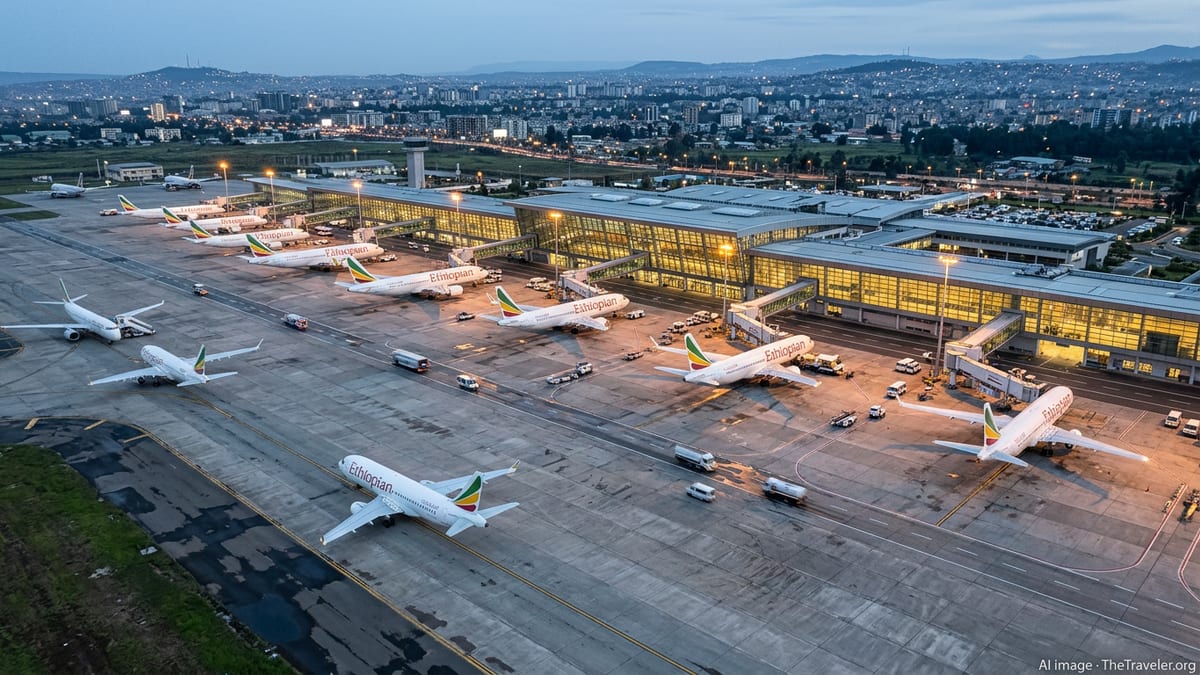
Addis Ababa’s Hub Surges as Traffic Reaches Record Levels
At Addis Ababa Bole International Airport, passenger volumes have climbed to roughly 11.8 million a year, cementing the Ethiopian capital’s position among Africa’s three busiest airports and underlining its status as a rapidly expanding intercontinental hub. The airport’s sustained gains mirror the broader rebound in African air travel, where regional passenger numbers are forecast to grow at some of the fastest rates worldwide in 2026.
Ethiopian Airlines, which operates a classic hub-and-spoke system from Bole, has been central to that upswing. The state-owned carrier carried a record 19 million passengers in 2025, driven by strong demand on intra-African routes and expanding links to the Middle East, Asia and Europe. Its network now spans more than 140 international destinations, including upward of 60 cities across Africa, allowing Addis Ababa to capture connecting passengers who once flew through Dubai, Istanbul or European hubs.
Although monthly flight volumes at Bole can fluctuate, aviation analysts say the underlying trend is clear: Addis Ababa has become a preferred transfer point between Africa and the rest of the world. Competitive fares, improving on-the-ground facilities and the airline’s growing long-haul fleet are drawing both business and leisure travellers, while the city’s position near the geographic centre of the continent keeps flight times and fuel burn relatively low for many connections.
Bishoftu Mega-Airport Signals Ethiopia’s Long-Term Ambition
The rapid growth at Bole is approaching the limits of the airport’s existing capacity, prompting Ethiopia to move ahead with one of the most ambitious aviation projects in Africa: the new Bishoftu International Airport. Located around 40 kilometres southeast of Addis Ababa, the greenfield hub officially broke ground in January 2026 and is slated to open in 2030, with an initial capacity to handle about 60 million passengers a year.
Backed by Ethiopian Airlines and a consortium of development financiers, including the African Development Bank, Bishoftu has been designed with long-term expansion in mind. Plans call for four runways, parking for more than 250 aircraft and an eventual capacity that could reach 100 million passengers or more annually, placing it alongside the world’s largest airports. A dedicated airport city with hotels, shopping malls and logistics facilities is intended to anchor new jobs and investment corridors around the site.
For Ethiopia, the project represents more than just a new terminal and runways. Officials describe Bishoftu as a strategic bet that aviation can drive trade, tourism and services exports in a landlocked economy. With most African traffic growth expected to come from emerging middle-class travellers and new intra-African routes, the country is positioning Addis Ababa and its surrounding region as the continent’s pre-eminent transfer platform for both people and cargo.
Continental Demand Outpaces Global Growth
The rise of Addis Ababa comes as Africa’s aviation market enters a new phase of expansion. Industry forecasts for 2026 point to passenger growth of about 6 percent across the continent, outpacing a global average expected to be just under 5 percent. In some markets, consultancy estimates suggest double-digit annual increases as airlines restore capacity and launch new intra-African and long-haul services.
Yet despite that momentum, Africa still accounts for a small fraction of global air travel and remains highly concentrated around a handful of powerful hubs. Nairobi, Johannesburg, Cairo and Casablanca have long dominated connecting flows into and out of the continent, leveraging strong home carriers and relatively advanced infrastructure. Addis Ababa’s emergence among this group underscores how competitive the race for regional leadership has become, particularly as Gulf carriers and European airlines seek to defend market share.
Analysts say the drivers of demand are diverse: a growing urban middle class, the boom in outbound and inbound tourism, and rising trade in time-sensitive goods such as pharmaceuticals, perishables and e-commerce parcels. As more African states implement open-skies agreements and ease visa regimes, airlines are finding it easier to offer new city-pair combinations that bypass traditional stopovers, reinforcing the importance of Africa-based hubs.
How Addis Ababa Compares with Nairobi, Johannesburg, Cairo and Casablanca
For years, Nairobi’s Jomo Kenyatta International Airport and Johannesburg’s OR Tambo International Airport have served as East and Southern Africa’s principal connecting platforms, anchored by Kenya Airways and South African Airways and their partners. Cairo has become the dominant node in North Africa through EgyptAir, while Casablanca’s Mohammed V International Airport has grown into a major transatlantic and Europe-Africa gateway under Royal Air Maroc.
Addis Ababa’s trajectory is distinct in that Ethiopian Airlines has achieved sustained profitability and large-scale network growth even as some regional competitors restructured or retrenched. That has allowed the Ethiopian hub to win traffic on routes linking West and Southern Africa with Asia and the Middle East, where its schedule density and one-stop timings are increasingly competitive. In key markets such as India and the Gulf, new services to Addis Ababa have turned the city into a preferred transfer point for travellers with origins and destinations across the continent.
Infrastructure upgrades have also played a role in closing the gap. Bole’s expanded terminal facilities and additional aircraft stands have helped the airport manage rising passenger numbers while Bishoftu is built. Meanwhile, Ethiopian Airlines has continued to invest in modern widebody aircraft, enabling more non-stop routes and higher frequencies that strengthen Addis Ababa’s position relative to Nairobi, Johannesburg, Cairo and Casablanca in the battle for long-haul and premium customers.
Growth Brings Profitability and Policy Challenges
Behind the impressive growth numbers, however, lie persistent structural challenges that continue to weigh on African aviation. Industry bodies forecast that while passenger traffic on the continent will rise faster than the global average in 2026, African carriers are expected to generate only marginal net profits. High fuel prices, limited access to foreign currency, infrastructure bottlenecks and fragmented regulation have all kept costs elevated and yields under pressure.
Addis Ababa’s success has not insulated Ethiopian Airlines from those pressures. The carrier faces the same exposure to volatile input costs and fluctuating demand as its peers, while accelerated investment in Bishoftu and fleet renewal adds to its capital needs. At the same time, the airline must navigate increasingly competitive skies as Gulf and European carriers rebuild capacity and new African entrants launch with leaner cost bases.
Policy makers across the continent are being urged to view Addis Ababa’s rise as a case study in the benefits and risks of aviation-led development. Advocates argue that where governments support open skies, fair competition and targeted infrastructure spending, hubs such as Addis Ababa, Nairobi, Johannesburg, Cairo and Casablanca can act as engines of trade, tourism and regional integration. Without reforms to reduce high charges and regulatory barriers, though, there is a danger that the promise of double-digit traffic growth in 2026 could translate into only thin and fragile financial gains for the airlines that underpin Africa’s connectivity.