

More news on this day
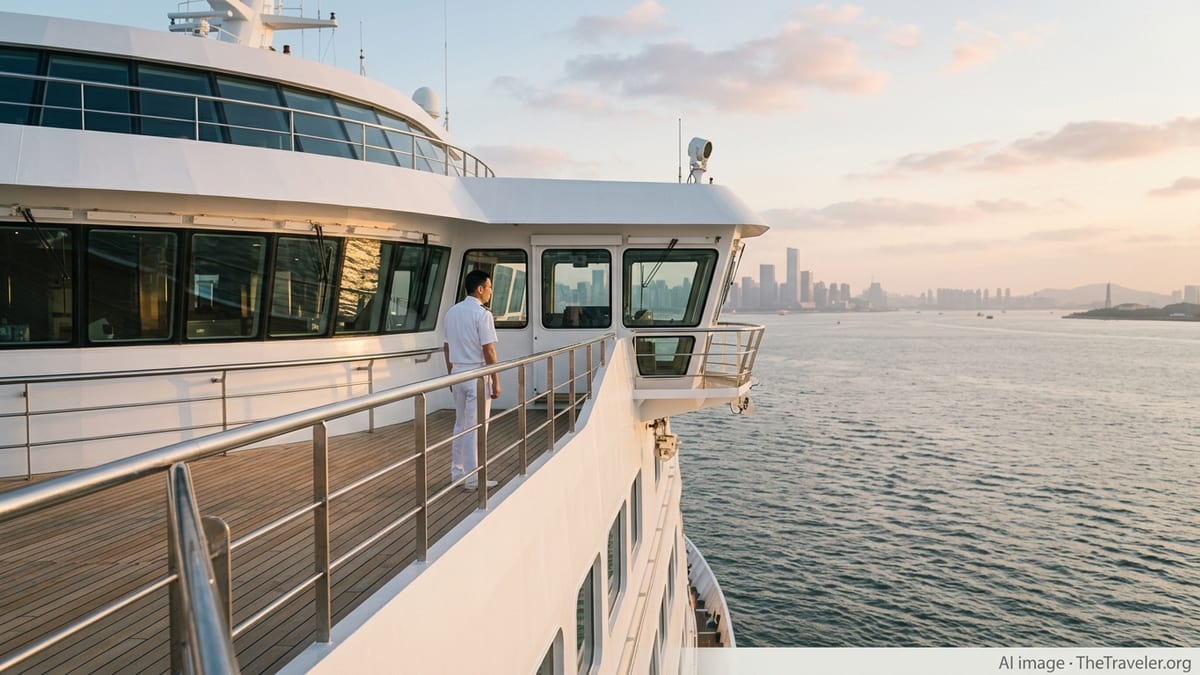
Adora Cruises has appointed its first Chinese captain to command one of its flagship vessels, a move widely viewed as a milestone for China’s emerging, homegrown cruise sector and a signal of how the country intends to shape the next era of luxury cruise travel.
Get the latest news straight to your inbox!
A Milestone for China’s Expanding Cruise Industry
The appointment of a Chinese national to the captain’s chair comes as Adora Cruises accelerates its growth plans in the domestic and regional market. Publicly available information shows that the company, created as a joint venture anchored by China State Shipbuilding Corporation, has been positioned as a flagship brand for China’s cruise ambitions, pairing local shipbuilding with tailored onboard experiences.
Reports indicate that Adora’s fleet strategy centers on vessels purpose-built or dedicated to Chinese travelers, including the domestically constructed Adora Magic City and the recently introduced Adora Mediterranea. The introduction of a Chinese captain to the bridge of a leading ship in this portfolio is seen by industry observers as the next logical step in localizing leadership as well as hardware and hospitality.
The timing aligns with a broader restart of cruising in East Asia, as ports in mainland China, South Korea, and Japan reopen to larger volumes of international passengers. Industry analyses suggest that Chinese travelers are returning to cruise holidays with a strong appetite for short regional itineraries, creating an opportunity for brands that can combine local cultural insight with international standards of safety and service.
Within that context, Adora’s decision to elevate a Chinese officer to the top seafaring role is being interpreted as an effort to showcase local maritime expertise and reassure a fast-growing customer base that the country’s own talent is now charting the course of its cruise development.
Symbolism on the Bridge of a Homegrown Flagship
The symbolism of a Chinese captain at the helm is particularly resonant given the profile of Adora’s fleet. Adora Magic City, built at Shanghai Waigaoqiao Shipbuilding, has been described in open-source coverage as the first large cruise ship constructed in China, designed to carry thousands of guests on regional routes. The vessel’s scale and visibility have turned it into a showcase project for the country’s shipbuilding capabilities.
The appointment of a Chinese captain to a ship of this class underscores how far the industry has advanced from relying primarily on foreign-flag operators and international senior officers. For many years, China’s cruise market largely revolved around imported tonnage and foreign brands adapting their products to Chinese tastes. Now, with a locally assembled bridge team on a domestically built ship, the narrative is shifting toward national capability across the entire value chain.
Observers note that the move also highlights the maturation of China’s maritime training ecosystem. Producing a captain qualified to command a large international cruise ship requires decades of experience, rigorous certification, and extensive exposure to global safety, navigation, and hospitality standards. The promotion signals that these pathways are increasingly being followed within Chinese institutions and companies, rather than only through careers at foreign lines.
For Adora, placing a Chinese captain in charge of a headline-making vessel offers a powerful image for marketing at home and abroad. It allows the brand to emphasize continuity between Chinese heritage, the country’s industrial achievements, and a modern, cosmopolitan onboard lifestyle.
Redefining Luxury at Sea for Chinese Travelers
According to recent industry coverage, Adora’s ships have been developed with Chinese guests in mind, from culinary concepts and entertainment to family facilities and retail offerings. By pairing these tailored experiences with a Chinese captain and an increasingly local officer corps, the company is aiming to create a version of luxury cruising that feels both international and distinctly Chinese.
Inside the ships, this approach is visible in design choices that blend contemporary resort styling with familiar cultural touchpoints. Public information about Adora Magic City, for example, describes large family cabins, extensive shopping arcades, and entertainment venues designed to resonate with domestic leisure trends. The presence of a Chinese captain is expected to complement this environment by reinforcing a sense of cultural familiarity and pride.
Analysts suggest that luxury, in this context, is defined less by overt extravagance and more by seamless service, intuitive design for multigenerational travel, and technology-enabled convenience. Chinese guests are increasingly accustomed to digital-first experiences on land, and cruise operators are racing to match those expectations at sea through mobile apps, smart cabin controls, and integrated payment systems.
With a Chinese captain visible in communications and onboard events, Adora can further differentiate its product from international rivals operating in the region, offering travelers a narrative of sailing on a ship designed, built, and led with their preferences and language at the forefront.
Implications for Global Cruise Competition
The elevation of a Chinese captain within Adora’s leadership ranks carries implications beyond China’s own coastline. Global cruise companies have long regarded the Chinese market as a key driver of future growth, deploying ships designed or refurbished to appeal to local tastes and adjusting itineraries to center on East Asian ports. The rise of a homegrown brand with domestically built ships and local captains adds a new competitive dimension to this landscape.
As Chinese cruise lines expand their reach, regional itineraries in the North Asia and South China Sea corridors could see intensified competition on pricing, onboard experiences, and port selection. Industry observers point out that a brand with strong cultural alignment and local leadership may be better positioned to respond quickly to regulatory changes, evolving consumer behavior, and shifts in outbound tourism policy.
At the same time, the development of Chinese captains and senior officers may influence global talent flows in the cruise sector. As training pipelines mature, Chinese mariners with large-ship experience could become more prominent in multinational fleets, bringing additional diversity and regional expertise to bridges across the world.
For now, Adora’s first Chinese captain serves as a focal point for the narrative that China is moving from passenger source market to full-spectrum cruise power, with capabilities that span ship design, construction, operations, and leadership.
A Glimpse of the Future of Asian Cruise Travel
Looking ahead, the appointment is likely to be seen as an early marker in the next phase of Asian cruise development. Publicly available plans show that Adora has additional large vessels scheduled for delivery in the coming years, and other regional operators are also upgrading their fleets. Together, these investments suggest that the industry anticipates sustained demand for cruising among Asian travelers.
As more ships are based year-round in Chinese and regional ports, cruise routes may increasingly resemble a network of floating resorts linking major tourism hubs. The presence of local captains and crews could influence everything from onboard programming to destination partnerships, helping to curate experiences that combine iconic regional highlights with lesser-known coastal cities eager to attract visitors.
For passengers, boarding a ship commanded by a Chinese captain may symbolize a wider shift in how they experience global travel. Rather than joining a foreign brand’s adaptation of its product, guests are stepping into a cruise ecosystem where leadership, design, and storytelling are rooted in their own culture while still meeting international expectations of safety, comfort, and luxury.
In that sense, Adora’s decision resonates beyond a single captaincy. It offers a preview of how Asian cruise lines, led from the bridge by homegrown talent, could shape the standards, stories, and aspirations of luxury sea travel across the region in the decade ahead.