

More news on this day
China’s Adora Cruises is accelerating a mega ship building program that analysts view as a strategic bid to transform the country from an emerging cruise player into a major force in global luxury sea travel, leveraging new domestically built vessels and deep state-backed industrial capacity.
Get the latest news straight to your inbox!
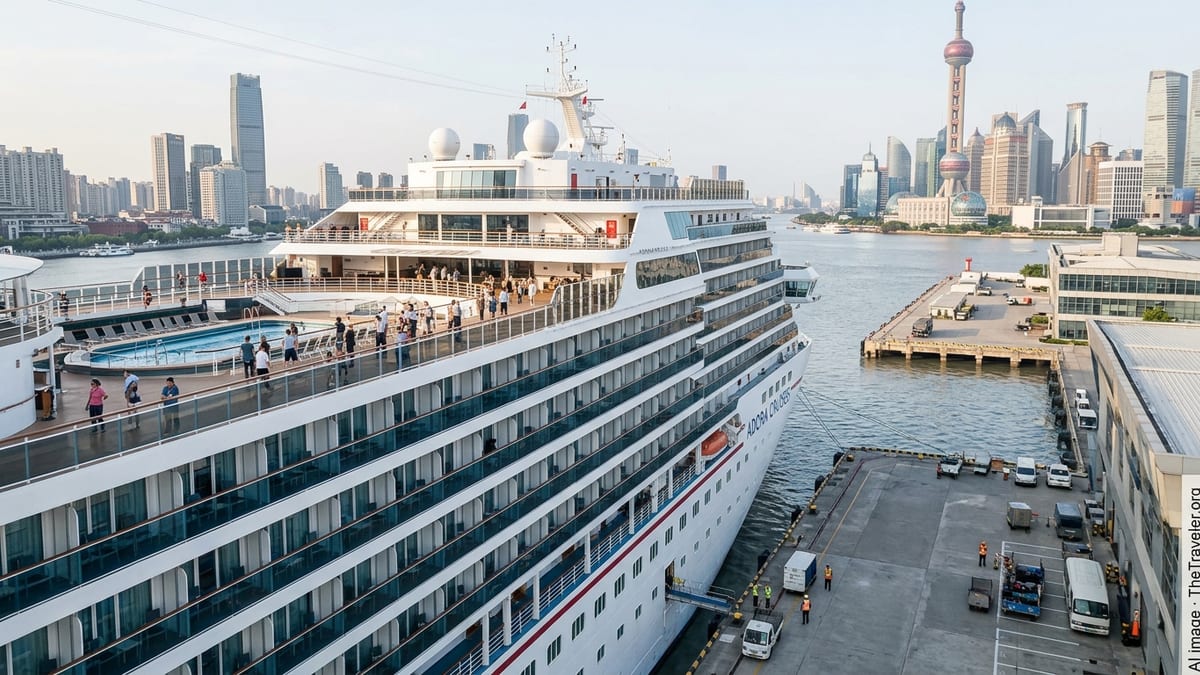
Adora Magic City Showcases China’s New Cruise-Building Muscle
The 135,000-ton Adora Magic City has become the flagship for China’s cruise ambitions, standing as the first large cruise ship designed and built in the country. Publicly available information shows the Vista-class vessel was constructed at Shanghai Waigaoqiao Shipbuilding and delivered in November 2023 before entering regular service from Shanghai in early 2024.
Industry coverage reports that Adora Magic City, with capacity for more than 5,200 passengers and over 2,100 cabins, has quickly ramped up operations on itineraries focused on Northeast Asia. Data cited by Chinese media outlets indicate the ship has already completed dozens of voyages and carried hundreds of thousands of passengers, underscoring robust demand as China’s outbound and domestic cruise markets recover.
Observers view Adora Magic City as a technological and symbolic milestone. Building such a complex vessel has traditionally been the preserve of European yards, and Chinese shipbuilders now point to the project as proof that the country can handle the most sophisticated segments of commercial shipbuilding alongside aircraft carriers and large liquefied natural gas carriers.
The ship’s consistently high load factors and rapid deployment into both international and coastal routes are being watched closely by competitors. If sustained, they suggest that a locally branded, domestically built mega ship can anchor a large-scale Chinese presence in a market long dominated by Western and Japanese cruise groups.
Second Mega Ship Signals Ambition for a Full Adora Fleet
While Adora Magic City grabs headlines, the company’s expansion plans reach well beyond a single vessel. According to shipbuilding data and corporate disclosures, Adora Cruises has a second large ship under construction in China, also based on the Vista-class design and developed in collaboration with international partners including the Italian shipbuilder Fincantieri.
Recent technical documentation on Vista-class derivatives lists a second Chinese-built unit, Adora Flora City, with an estimated gross tonnage of around 142,000 and delivery targeted for the middle of the decade. Industry reports describe the ship as part of a broader multi-vessel program steered by Adora Cruises’ joint venture structure, which links China State Shipbuilding Corporation with Carnival Corporation.
Market analysts interpret this pipeline as evidence that Adora is positioning itself not just as a niche regional player but as an operator capable of fielding a modern, multi-ship fleet in the same size bracket as established global brands. The focus on mega ships signals confidence that demand in China and neighboring markets will support high-capacity vessels optimized for volume, onboard spending, and repeat cruising.
Planning documents and public statements from shipyard and corporate sources suggest that once the first pair of newbuilds is fully deployed, Adora could move toward additional units or larger variants, using common platforms to control costs and accelerate deliveries. Such a strategy would echo the fleet development approaches of leading North American and European cruise groups.
Domestic Shipyards and Policy Support Reshape the Regional Market
Adora’s mega ship expansion is closely tied to China’s broader industrial and tourism policy goals. Government plans have for years identified large cruise ships as a “crown jewel” in high-end manufacturing, and Shanghai Waigaoqiao Shipbuilding has been tasked with mastering design, integration, and interior outfitting at a scale that rivals European competitors.
Reports from Chinese state-linked media highlight how the Adora program draws on a wide network of domestic suppliers, from steel and propulsion systems to hotel services and digital payment platforms. This locally anchored supply chain reduces reliance on foreign technology and simultaneously cultivates a full cruise industry ecosystem, including ports, logistics, catering, and entertainment.
At the same time, Chinese port cities have been investing in terminals capable of handling large-capacity vessels. Facilities at Shanghai’s Wusongkou terminal and newer coastal hubs such as Qingdao and other ports along the eastern seaboard have upgraded berths, customs processing, and passenger services to accommodate mega ships like Adora Magic City and its planned sister vessels.
Publicly available information indicates that these efforts are framed not only as tourism projects but as drivers of regional consumption and employment. With each large vessel projected to support significant onboard and shoreside spending, provincial and municipal authorities regard homeporting agreements and year-round deployment as strategic economic assets.
Competing Visions in the Global Luxury Cruise Segment
Adora’s expansion comes as global cruise companies race to introduce ever larger and more amenity-rich vessels. European and North American brands are rolling out ships exceeding 200,000 gross tons with capacity for up to 7,000 guests, seeking to dominate the premium and mass-market segments with floating resort-style products.
In that context, Adora’s mega ships occupy an upper-middle slot in size but aim to differentiate through localization and integration with China’s broader travel ecosystem. Published coverage notes that itineraries are tailored to Chinese holiday patterns and destinations in Japan, South Korea, and Southeast Asia, while onboard offerings emphasize Chinese cuisine, retail brands, and payment systems familiar to domestic travelers.
Industry commentary suggests that if Adora can maintain high utilization and gradually broaden its customer base to include more international guests, Chinese-built ships could increasingly appear on global booking platforms alongside vessels from established Western brands. Partnerships, charter agreements, or seasonal deployments beyond Asia are seen as longer-term possibilities once operational experience and brand recognition deepen.
However, analysts also caution that China’s cruise sector remains sensitive to geopolitical shifts, regulatory changes, and fluctuations in outbound travel policy. The success of Adora’s mega ship strategy will depend on stable access to regional ports of call and on the continued appeal of cruise travel among China’s expanding middle class.
What Adora’s Growth Means for Future Sea Travel
For travelers, Adora Cruises’ expansion hints at a more diversified global cruise landscape over the coming decade. As Chinese-built ships join those from European and American yards, passengers are likely to see greater choice in itineraries that begin or end in Chinese ports, and potentially new combinations of regional routes across the Western Pacific and Indian Ocean.
Travel industry observers expect competition on price and onboard amenities to intensify as more mega ships enter service worldwide. Adora’s ability to tap China’s vast domestic market for first-time cruisers may allow it to keep sailings competitively priced while still investing in upgraded cabins, technology, and entertainment that appeal to younger and more affluent travelers.
At the same time, the growth of large cruise ships raises familiar sustainability and over-tourism questions. Coastal destinations in Northeast and Southeast Asia are beginning to weigh the economic benefits of cruise calls against local concerns about congestion, emissions, and environmental impact. How Adora and other operators address those issues could shape public perception of mega ship travel in the region.
For now, Adora Magic City and the forthcoming Adora Flora City stand as tangible symbols of China’s determination to secure a place near the top tier of global cruise operators. Their performance in the next few years will offer an early indication of whether China’s shipyards and cruise brands can translate industrial achievement into a lasting presence in world luxury sea tourism.