

More news on this day
Adora Cruises’ second domestically built large cruise ship, Adora Flora City, has floated out at Shanghai Waigaoqiao Shipbuilding, marking a key construction milestone ahead of its planned delivery in late 2026 and reinforcing China’s ambitions to grow its presence in the global cruise tourism market.
Get the latest news straight to your inbox!
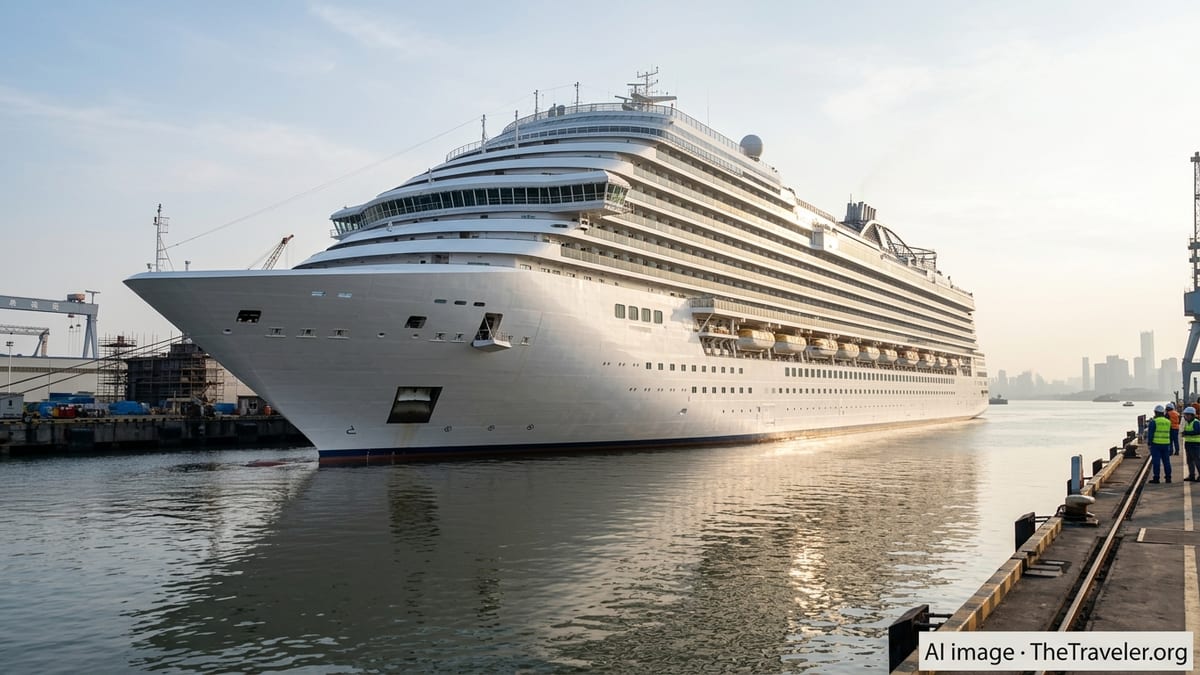
New China-Built Giant Reaches Float-Out Stage
The float-out of Adora Flora City at Shanghai Waigaoqiao Shipbuilding represents the moment the 140,000-plus-gross-ton vessel first touches water, moving from dry dock into the next phase of outfitting and technical trials. Publicly available information from Chinese and international industry coverage indicates that the ship’s structural work is largely complete, with focus now shifting to interiors and systems integration.
Adora Flora City is being built for Adora Cruises, the China-focused cruise brand backed by a joint venture between Carnival Corporation and China State Shipbuilding Corporation. Industry reports describe the vessel as China’s second large domestically built cruise ship, following sister ship Adora Magic City, which entered service in 2023 and has been sailing itineraries from Shanghai and other homeports.
The float-out is viewed in Chinese media and trade publications as confirmation that China’s shipbuilding sector is moving from one-off prototype projects to serial construction of large, complex passenger vessels. The ship is scheduled to leave the dock in 2026, undergo sea trials in mid-2026 and be delivered to Adora Cruises by the end of that year, according to published timelines from the builder and state media.
Design, Capacity and Onboard Experience
According to technical data shared by the builder and summarized in industry analyses, Adora Flora City will measure about 341 meters in length and 37.2 meters in beam, with a gross tonnage of roughly 142,000. The ship is expected to offer 2,144 cabins and capacity for more than 5,200 passengers at double occupancy, making it larger than Adora Magic City and placing it in line with some of the mid-sized ships operated by established global cruise brands.
Early descriptions suggest an interior layout tailored to the preferences of the Chinese cruise market. Reports indicate that dining concepts will emphasize Chinese regional cuisines alongside international options, and that family- and multi-generational travel has been a key design focus. Public spaces are expected to include expansive retail zones, entertainment venues, spa and wellness facilities, and large outdoor deck areas designed for warm-weather sailings.
The ship’s technical platform draws on the Vista-class design lineage co-developed with Italian shipbuilder Fincantieri, adapted by Shanghai Waigaoqiao Shipbuilding for local production. Coverage of the project notes that Adora Flora City incorporates updated energy-efficiency technologies compared with its predecessor, with power and propulsion systems optimized for longer Asian itineraries and higher hotel loads typical of entertainment-heavy cruises.
Anchoring Guangzhou as a Southern Cruise Gateway
Chinese municipal and corporate communications state that Adora Flora City will be homeported in Guangzhou, in Guangdong Province, once it enters commercial service. That deployment is expected to strengthen Guangzhou’s position as a major cruise gateway for South China and the broader South China Sea region, complementing Shanghai’s role in the north.
From Guangzhou, the ship is expected to serve short and medium-haul itineraries to popular regional destinations in Southeast and East Asia, aligning with the government’s broader push to develop the Guangdong-Hong Kong-Macao Greater Bay Area as a tourism and maritime hub. Publicly available planning documents and port announcements emphasize the role of cruise infrastructure in diversifying local economies and attracting higher-spending international visitors.
Industry observers note that basing a new, high-capacity vessel in Guangzhou will likely spur further investment in cruise terminals, logistics and tourism services along the Pearl River Delta. It also positions Adora Cruises to tap into a large catchment area that includes Guangzhou, Shenzhen and nearby cities, where outbound leisure travel demand has been rebounding.
Strengthening China’s Cruise Supply Chain
Reports from Chinese state media and shipbuilding industry briefings highlight Adora Flora City as a showcase for China’s growing domestic cruise supply chain. Shanghai Waigaoqiao Shipbuilding and its parent China State Shipbuilding Corporation have indicated that compared with the first ship, the second vessel uses a higher proportion of locally sourced components and systems.
Analysts tracking the sector note that this shift toward localized sourcing spans everything from interior outfitting and cabin furnishings to technical equipment and engineering services. The project has brought together hundreds of suppliers, according to prior official statements, and is viewed as a catalyst for specialized clusters in marine engineering, digital systems and hospitality fit-out.
The float-out milestone signals that many of these suppliers have passed initial qualification and integration tests on a large, complex project. Trade publications suggest that this experience will make it easier for Chinese yards and partners to bid competitively on future cruise orders, both for domestic operators and, potentially over time, for international brands seeking additional construction capacity.
Implications for Regional Cruise Tourism Growth
The progress of Adora Flora City comes as cruise tourism in Asia is gradually rebuilding. Market data compiled by industry associations and research firms indicates that China’s outbound cruise segment has been recovering from the prolonged pause in sailings earlier in the decade, with capacity returning to key homeports and new itineraries being introduced around Northeast and Southeast Asia.
With Adora Magic City already operating and Adora Flora City scheduled to join the fleet in 2026, Adora Cruises is positioned to expand its presence in the Chinese source market at a time when global cruise brands are also redeploying ships to the region. Some analysts view this as a shift toward a more balanced mix of international and locally branded capacity, with Chinese operators playing a more prominent role in designing products for domestic travelers.
The new ship’s float-out in Shanghai underscores how closely China’s tourism ambitions are tied to its industrial and maritime capabilities. As Adora Flora City moves through outfitting, sea trials and ultimately delivery, the vessel is expected to serve not only as a new option for holidaymakers, but also as a visible symbol of China’s evolving role in the global cruise and shipbuilding landscape.