

More news on this day
Adora Cruises is bringing the Adora Mediterranea back to Dalian as a seasonal homeport, unveiling refreshed itineraries that spotlight South Korea and signal how Northeast Asia’s cruise map is being rapidly redrawn.
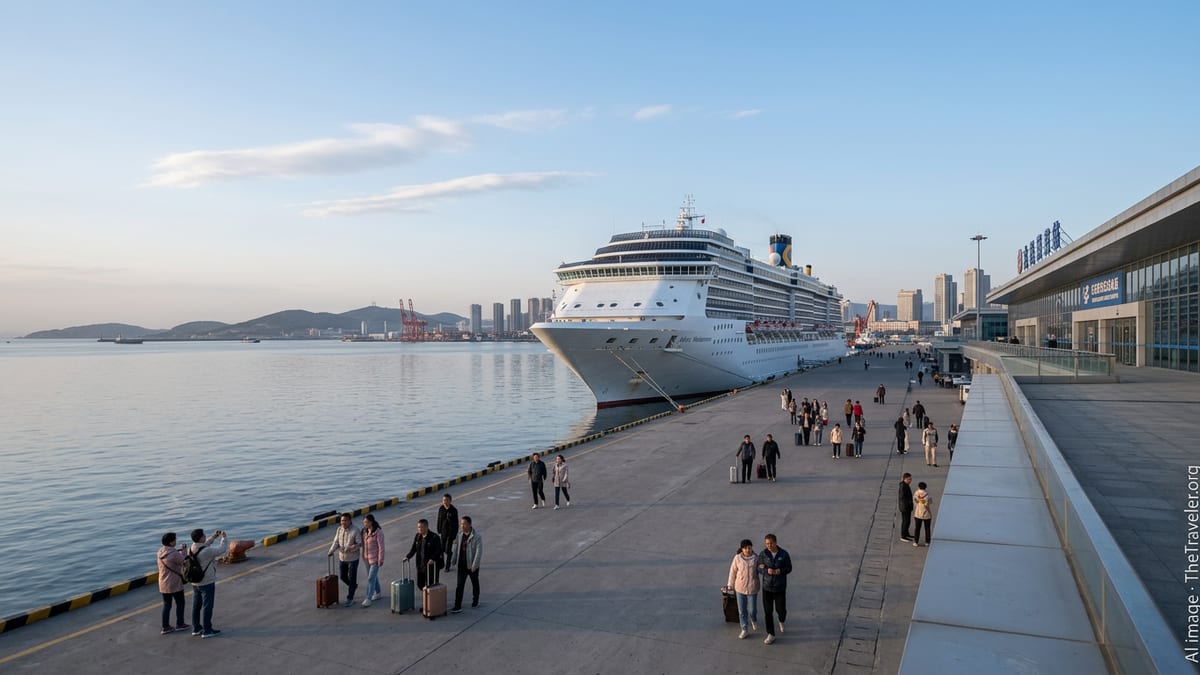
Dalian Welcomes Back International Homeport Operations
The return of the Adora Mediterranea to Dalian marks a key milestone for the Liaoning port, which only resumed regular international homeport cruise operations in 2025 after a five-year suspension. When the 86,000-gross-ton vessel departed Dalian with more than 2,600 passengers for its first international sailing of the season, local officials hailed it as proof that Northeast China’s outbound cruise market has decisively reawakened.
The ship, which measures about 293 meters in length and carries up to 2,680 guests, is scheduled to operate a cluster of five-day, four-night voyages from Dalian across the main summer and early autumn peaks. These short regional sailings are designed to appeal to first-time cruisers from the industrial and port cities of Northeast China, as well as repeat guests who previously relied on flights to Shanghai or Tianjin to reach an international cruise.
Adora Mediterranea’s deployment also strengthens Dalian’s position within a growing web of northern Chinese cruise hubs that includes Tianjin and Qingdao. Together, they form a corridor of homeports catering to the country’s vast Bohai Rim population, with Dalian leaning heavily into its role as a gateway to the Korean Peninsula.
New Emphasis on South Korean Ports
While Adora Mediterranea’s early Dalian sailings combined calls in Japan and South Korea, the line’s latest deployment plans show a clear emphasis on Korean ports such as Jeju. Cruise schedules and company statements for late 2025 and the first quarter of 2026 confirm that Adora is redirecting multiple sailings that once focused on Japan toward South Korea and Southeast Asia instead.
The strategy follows a broader regional trend in which Chinese cruise operators are trimming or cancelling calls at Japanese ports and adding capacity into South Korea. Industry observers note that Jeju, in particular, has emerged as a beneficiary. Ships operated by Adora and other lines are securing longer stays and more frequent rotations at the island’s cruise terminals, giving passengers extended time ashore for shopping, nature excursions and visa-free short breaks.
For guests boarding in Dalian, the updated itineraries translate into more time in Korean destinations relative to traditional circuits that hopped between Japan and South Korea in rapid succession. Travel agents in Northeast China say this is resonating with families and multigenerational groups who want simpler visa arrangements and itineraries with fewer port changes over a four or five night cruise.
Short Breaks Tailored to Northeast China Travelers
Adora Mediterranea’s Dalian program has been carefully calibrated to fit into the travel habits of consumers in Liaoning and neighboring provinces. The five-day, four-night format allows passengers to use a single block of paid leave combined with a weekend, an important consideration in a market where work schedules can be inflexible and school calendars tightly controlled.
Pricing and onboard product are also positioned for this audience. Adora is pairing aggressive early-booking promotions with a heavily Chinese-facing onboard experience, including Mandarin-language entertainment, regional cuisine and duty-free retail aligned with domestic shopping trends. Travel sellers report that these factors, combined with the convenience of embarking directly in Dalian, are converting land-based tourists who might otherwise have opted for package tours to Seoul or Jeju by air.
Logistically, Dalian’s international cruise terminal benefits from strong rail and highway links to surrounding cities such as Shenyang and Anshan, broadening the catchment area for Adora Mediterranea’s sailings. This transportation network has been a central element of port authorities’ efforts to re-establish Dalian as a viable alternative to Tianjin and Qingdao for outbound cruise traffic.
Itinerary Adjustments Reflect Shifting Regional Dynamics
Adora Cruises’ decision to lean into South Korean routes for the Adora Mediterranea from late 2025 into 2026 is part of a wider rethink of its Northeast Asia deployment. The company operates only two ships at present, so each adjustment is closely watched by ports and travel partners. Recent schedule changes have seen Japanese calls reduced or removed in favor of additional Korean and Southeast Asian ports, signaling how geopolitical and commercial considerations are reshaping the regional cruise grid.
Analysts point out that South Korean destinations are moving quickly to capture this redirected demand, enhancing cruise infrastructure and marketing themselves aggressively to Chinese passengers. Jeju is piloting semi-homeport operations, and other ports are streamlining arrival procedures and shore excursion offerings tailored to short, high-volume calls from Chinese ships.
For Dalian, the pivot provides a timely opportunity. By anchoring a series of Korea-focused itineraries on Adora Mediterranea, the port can market itself as the most convenient seagoing bridge between Northeast China and the Korean Peninsula. Local tourism officials are already highlighting cruise options in broader campaigns aimed at reviving cross-border leisure travel after years of pandemic-related disruption.
Competitive Pressures in China’s Rebounding Cruise Market
The redeployment of Adora Mediterranea to Dalian with an enhanced Korean component also reflects intensifying competition within China’s domestic cruise sector. Shanghai, Guangzhou and Tianjin remain the country’s heavyweight hubs, hosting larger vessels and a higher frequency of departures, but second-tier ports like Dalian are staking out niches based on regional access and itinerary specialization.
Adora’s rivals have been announcing their own post-pandemic comeback plans, from coastal repositioning voyages to new Japan and Korea programs that target affluent travelers in major coastal cities. In this environment, securing a marquee international vessel like Adora Mediterranea for seasonal homeporting is a significant win for Dalian, both in terms of passenger throughput and wider tourism spending in hotels, restaurants and attractions.
Industry executives believe that if the Dalian program with Korea-heavy itineraries performs strongly through 2025 and early 2026, it could pave the way for a longer deployment window or even additional capacity in the region. For now, the ship’s return signals that Northeast China’s cruise ambitions are firmly back on track, with the Korean Peninsula set to play an increasingly central role in where passengers from Dalian sail next.