

More news on this day
Adora Cruises has confirmed that the Adora Mediterranea will return to Dalian as a homeport for the 2026 season, introducing a fresh series of short international cruises to South Korea that industry observers say will strengthen Northeast Asia’s emerging cruise corridor.
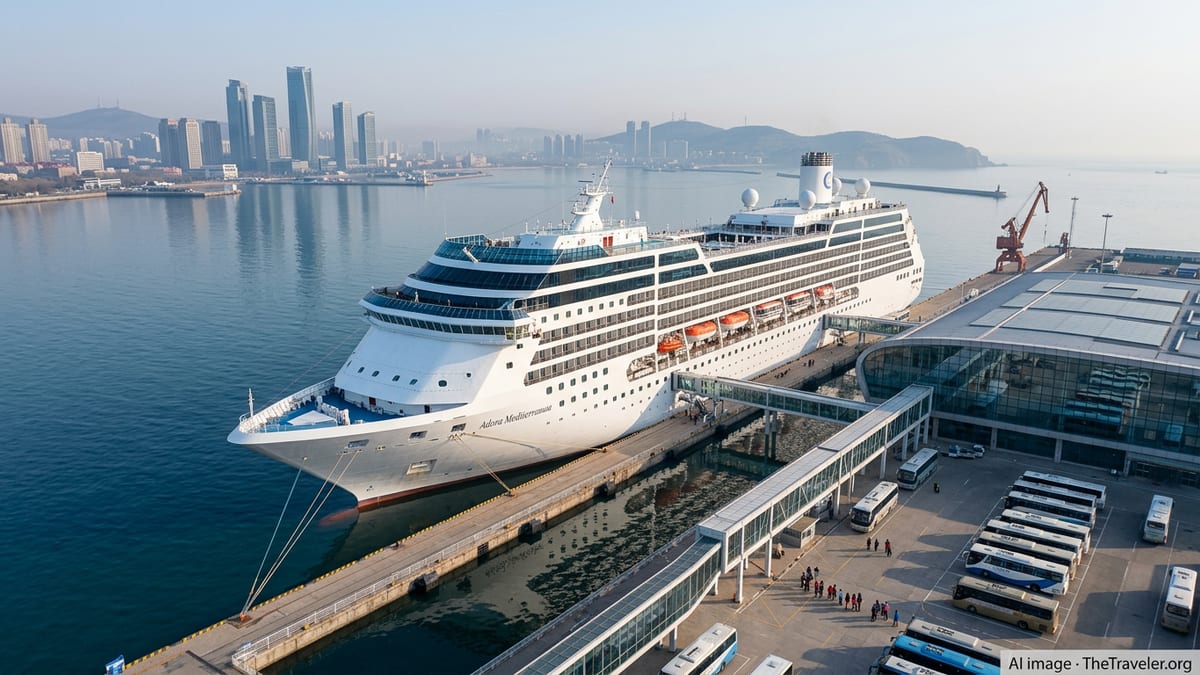
Second Dalian Season Anchors Northern China Strategy
The Chinese cruise brand announced that Adora Mediterranea will operate from Dalian for a second consecutive year, underlining the company’s commitment to developing northern China as a core source market. The move positions Dalian, a major port city in Liaoning province, as a strategic gateway for regional sailings targeting both domestic travelers and international guests.
According to the deployment plan, the 85,000-gross-ton vessel will run a cluster of international voyages in 2026, reflecting growing confidence in demand from Northeast China after the gradual recovery of outbound cruise travel. Company executives have described Dalian as a cornerstone of Adora’s northern deployment and a key testing ground for new short-cruise products tailored to Chinese holiday patterns.
The decision comes as Chinese ports compete to secure year-round and seasonal homeport commitments following the restart of international cruising in the region. By extending Adora Mediterranea’s presence, Adora Cruises signals that it sees sustained potential in Dalian beyond a one-off seasonal trial.
Local port authorities and tourism officials are expected to support the deployment with incentives, streamlined passenger processing and joint marketing campaigns aimed at positioning Dalian as a convenient alternative to more established homeports such as Shanghai and Tianjin.
New Five-Day South Korea Itineraries Highlight Key Ports
The 2026 program from Dalian will feature a series of five-day, four-night sailings focused on South Korea, tapping into Chinese travelers’ strong appetite for short international getaways. The itineraries are scheduled between late May and early June, and again in mid-October, capturing both early summer and late autumn travel windows.
Planned calls include Jeju, the popular resort island known for volcanic landscapes and duty-free shopping; Incheon, the port gateway for Seoul; Busan, South Korea’s largest port city; and Yeosu on the country’s south coast. Together, these destinations offer a mix of urban sightseeing, coastal scenery and shopping experiences that fit well into compact cruise vacations.
By centering the routes on South Korean ports, Adora Cruises is aligning with established travel flows between Northeast China and the Korean Peninsula. The itineraries allow passengers to sample multiple Korean cities without the need for separate flights and hotel stays, while also offering retailers and shore-excursion operators a fresh stream of visitors arriving in concentrated bursts.
Port stakeholders in South Korea are likely to welcome the deployment as they look to diversify source markets and rebuild cruise volumes. Regular calls by Adora Mediterranea can help smooth seasonality and encourage investment in terminal facilities, destination infrastructure and localized shore excursions tailored to Chinese-language guests.
Boost for Regional Cruise Tourism and Port Economies
Industry analysts say the 2026 Dalian deployment will deliver benefits that extend beyond the cruise line itself, feeding into a wider ecosystem of travel agencies, hotels, transport providers and attractions across Northeast Asia. Every turnaround and transit call draws spending from passengers and crew on accommodation, dining, shopping and local tours.
For Dalian, the continued presence of a mid-sized international cruise ship strengthens the case for further investment in waterfront development, passenger facilities and urban tourism branding. Regular cruise homeport operations often catalyze improvements in signage, public transport links and visitor services that also benefit non-cruise travelers.
On the South Korean side, additional calls from a China-based vessel provide incremental revenue at ports such as Jeju and Busan, where duty-free outlets, restaurants and sightseeing operators rely heavily on cruise traffic. The itineraries also create opportunities for cross-border partnerships, such as jointly curated cultural festivals and themed sailings that highlight Korean and Chinese heritage.
Regional tourism bodies have increasingly promoted cruising as a way to bundle multiple destinations into a single trip, encouraging first-time international travelers to venture abroad in a familiar, Chinese-hosted environment. Adora Mediterranea’s 2026 schedule fits neatly into this narrative, offering relatively short, accessible itineraries rather than long-haul voyages.
Adora Cruises Expands Footprint in China’s Cruise Revival
The Dalian program for Adora Mediterranea forms part of a broader expansion for Adora Cruises as China methodically rebuilds its cruise sector. While Adora Mediterranea focuses on northern routes from Dalian, sister ships are being deployed from Shanghai and Guangzhou on itineraries that include South Korea, Japan and Southeast Asia, signaling a multi-hub strategy across the country’s coastline.
Adora Cruises has also been promoting new digital and marketing initiatives, including a month-long livestream campaign designed to explain cruise products, address common concerns among first-time cruisers and showcase onboard experiences. These efforts aim to convert prospective travelers from inland cities and younger demographics who may be curious about cruising but have yet to sail.
As more Chinese-built large cruise ships near completion, Adora’s foreign-built Adora Mediterranea serves as a bridge between international ship design and increasingly localized onboard offerings. The company is emphasizing Chinese-language services, regional cuisine and entertainment options familiar to domestic guests, while maintaining a globally recognized cruise format.
For the wider industry, the 2026 deployment underscores the gradual normalization of cruise operations in East Asia and the reemergence of China as a key source market. While capacity and itineraries remain below pre-pandemic peaks, targeted programs such as the Dalian to South Korea routes suggest lines are now confident enough to commit ships for consecutive seasons in selected ports.
Opportunities and Challenges for Northeast Asia’s Cruise Corridor
Adora Mediterranea’s return to Dalian highlights the growing importance of the Northeast Asia cruise corridor linking ports in China, South Korea and, potentially, Japan in future seasons. Short, cross-border cruises are viewed as a resilient segment, less exposed to long-haul airfare fluctuations and more flexible in responding to shifts in traveler sentiment.
However, operators still face challenges, including evolving health and safety regulations, geopolitical sensitivities and the need to balance port congestion with guest experience. Lines must coordinate closely with authorities on both sides of the Yellow Sea to ensure smooth clearance procedures, reliable berth availability and robust contingency plans for weather or operational disruptions.
Competition among regional ports is also intensifying as cities seek to attract high-profile ships and longer deployment commitments. Dalian’s success in securing Adora Mediterranea for 2026 will likely spur neighboring ports to refine their own offerings, from upgraded terminals to differentiated shore experiences.
Within that landscape, Adora Cruises’ decision to deepen its presence in Dalian, while opening new South Korean itineraries, is being watched as a marker of how quickly Northeast Asia’s cruise market can scale up again. The results of the 2026 season may influence future homeport allocations and the pace at which additional capacity is introduced into the region.