

More news on this day
San Diego’s booming party-boat scene is getting a safety upgrade, as Adventure Cruises San Diego moves to position itself as a compliant, safety-first operator for visitors seeking high-energy private charters on the bay.
Get the latest news straight to your inbox!
Party Boats Surge as San Diego Tourism Rebounds
San Diego Bay has seen a sharp rise in private charter demand as group travel, bachelorette parties and corporate outings return in force. Operators report strong interest in “party at sea” experiences that combine skyline views, music and swimming stops in sheltered coves. For many visitors, a charter yacht has become a signature add-on to a long weekend in the city.
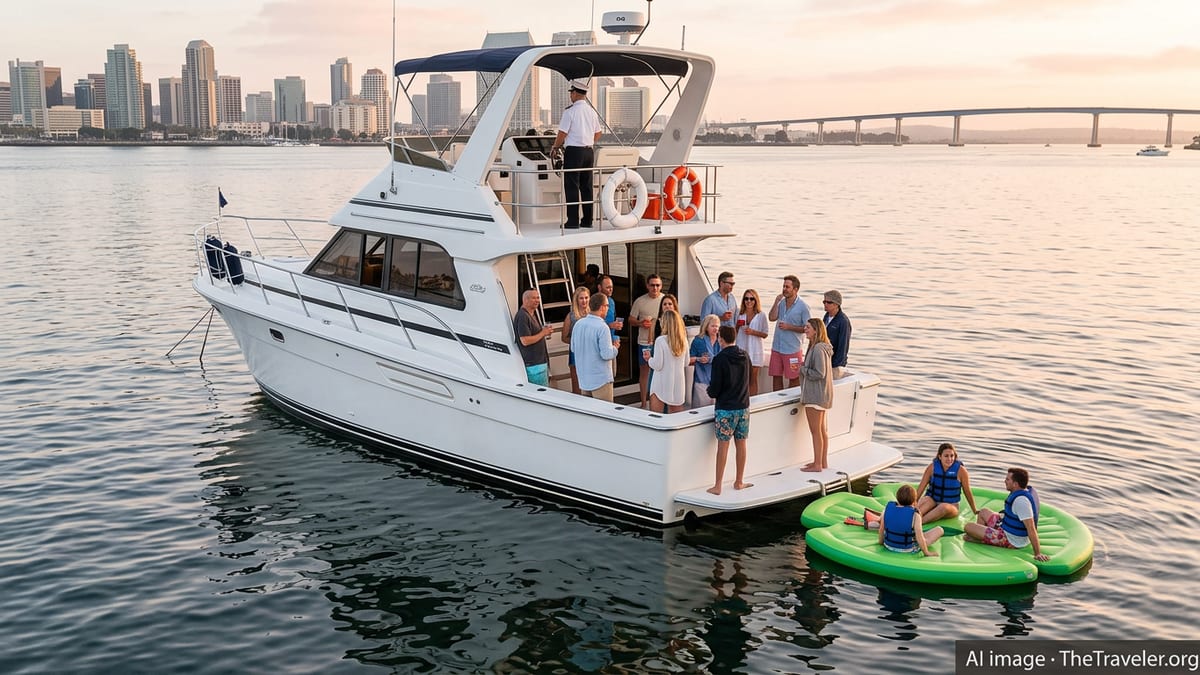
Adventure Cruises San Diego, which promotes linked-up raft‑ups and “Party at Sea” itineraries in Coronado’s Glorietta Bay, is one of several local companies marketing themselves directly to destination travelers rather than just locals. The company offers private cruises that typically start with a scenic run across San Diego Bay before anchoring in calm water where guests can swim, lounge on floating mats and socialize with nearby yachts.
This style of social charter has helped blur the line between a sightseeing cruise and a nightclub outing on the water. Industry operators say that is exactly why clear guardrails around safety, alcohol and passenger conduct are now central to any serious charter offering targeting tourists unfamiliar with the bay and its regulations.
Tourism analysts note that San Diego’s reputation as a relaxed beach city has sometimes led visitors to underestimate how closely its waterways are regulated. That has put new pressure on reputable operators to raise their profile as compliant, safety-forward alternatives to informal or illegal charters advertising on social media.
Stricter Oversight of Charter Safety and Licensing
The regulatory backdrop in San Diego has tightened in recent years as authorities respond to a rise in unlicensed charter activity. The Port of San Diego now requires charter vessels operating in the bay to meet minimum standards that include licensed captains, commercial marine liability insurance, proper documentation and, where applicable, a valid Certificate of Inspection from the United States Coast Guard. ([portofsandiego.org](https://www.portofsandiego.org/coming-and-going/boating-san-diego-bay/charter-vessel-regulations?utm_source=openai))
Federal regulators have also stepped up enforcement. In a recent case, the Coast Guard terminated an illegal small passenger vessel operating in the San Diego area after finding it was carrying paying passengers without a credentialed captain, inspection certificate or required drug and alcohol testing program. Officials warned that civil penalties for illegal operators can reach tens of thousands of dollars per violation. ([news.uscg.mil](https://www.news.uscg.mil/Press-Releases/Article/4179256/coast-guard-terminates-illegal-charter-vessel-operating-in-san-diego/?utm_source=openai))
San Diego’s legitimate charter sector has sought to differentiate itself from that underground market. Companies such as Adventure Cruises San Diego emphasize that their captains hold Coast Guard licenses and that charters are run as private events under clear passenger limits and documented safety plans. The message to visitors is that asking about licensing, insurance and inspection status is no longer optional, especially for groups planning to drink and swim.
Local boating guides urge travelers to view exceptionally cheap offers, vague pick up locations at public docks, or a lack of clear captain credentials as red flags. Established charter businesses are now more explicit about outlining their compliance in predeparture emails and onboard briefings, framing it as part of the premium experience rather than bureaucratic fine print. ([athenaboatrental.com](https://athenaboatrental.com/boat-rentals-in-san-diego/?utm_source=openai))
Alcohol, Behavior and “Party Ready” Rules on the Water
For many visitors, the draw of a San Diego charter is the chance to enjoy drinks against a backdrop of downtown towers and Coronado Bridge views. But core boating laws still apply. California’s boating regulations make it illegal to operate a vessel while intoxicated at a blood alcohol concentration of 0.08 percent or higher, and federal authorities can treat serious violations as criminal offenses. ([navcen.uscg.gov](https://navcen.uscg.gov/sites/default/files/pdf/lnms/D13_LNM_Special_Notice_2025_Special_Notice_to_Mariners_final.pdf?utm_source=openai))
Adventure-focused charter companies are responding by tightening their own alcohol and conduct policies. Sample charter tour rules adopted by operators in the region state that alcohol is only allowed on certain trips, glass containers may be banned for safety and crew reserve the right to cut off service or return to dock if consumption becomes excessive. Clear verbal safety briefings and reiterated rules about staying within designated swim areas are now common on party-oriented sailings. ([sandiegocharters.com](https://www.sandiegocharters.com/information?utm_source=openai))
Adventure Cruises San Diego markets its trips as “party ready” but stresses that the captain has final authority over music volume, passenger movement on deck and time in the water once the boat is at anchor. Industry peers say such language reflects a broader shift toward codifying boundaries that used to be informal. Groups are reminded that crew are not just hosts but safety professionals responsible for navigation, crowd management and emergency response.
Boating safety advocates advise that out of town groups designate a sober trip organizer to liaise with the captain, keep an eye on guests who are less comfortable in the water and support crew instructions. That approach mirrors best practice in nightlife venues on land but is becoming more explicit at sea, where sudden wind shifts or an unexpected wake can quickly destabilize an otherwise relaxed party.
Speed Limits, Swim Stops and Local Waterway Rules
San Diego’s waterways are subject to a patchwork of city, state and federal rules that shape how party charters operate. Within Mission Bay and close to the city’s oceanfront, general speed limits drop to five miles per hour in designated zones near shorelines, swimmers and other boats. The City of San Diego also restricts higher speeds at night, effectively limiting how quickly charter vessels can reposition between locations after sunset. ([sandiego.gov](https://www.sandiego.gov/lifeguards/safety/boatreg?utm_source=openai))
On popular routes between downtown marinas and Coronado anchorages, licensed captains must navigate a busy mix of naval traffic, ferries, sailing schools and recreational boaters. That has encouraged operators like Adventure Cruises San Diego to standardize itineraries, timing their departures to avoid peak congestion and choosing anchor spots where guests can disembark onto floating pads without interfering with navigation channels. ([adventurecruisessandiego.com](https://adventurecruisessandiego.com/?utm_source=openai))
Environmental and wildlife protections add another layer. Charter rules circulated by local companies underscore that federal guidelines on minimum approach distances to marine mammals apply at all times, even when music is playing and guests are in the water. Captains are expected to maintain separation from dolphins, sea lions and migrating whales, and may alter course with little notice if animals surface nearby. ([pacificswim.co](https://www.pacificswim.co/wp-content/uploads/2025/05/CHARTER-TOUR-RULES-AND-CONDUCT-POLICY-2025.pdf?utm_source=openai))
For visitors, the practical takeaway is that a safe charter itinerary may look more conservative than social media posts suggest. Shorter high speed segments, structured swim windows and clearly marked “no go” zones on deck are usually signs that an operator is following local rules rather than limiting the fun.
What Tourists Should Ask Before Booking
Travel experts recommend that tourists treat charter bookings with the same scrutiny they would apply to an adventure tour or zipline excursion. Before placing a deposit, prospective guests can ask whether the captain holds a current Coast Guard license, whether the vessel is inspected or uninspected, what the maximum passenger count is and how alcohol is managed on board. Reputable operators should be able to answer promptly and in writing.
Adventure Cruises San Diego encourages guests to review frequently asked questions covering boarding times, storage for food and beverages, gratuity expectations and policies on behavior. Industry peers say that robust FAQ pages and pre trip emails are now a hallmark of serious operators, especially those catering to bachelor and bachelorette groups that may not have chartered a boat before. ([adventurecruisessandiego.com](https://adventurecruisessandiego.com/faqs-1?utm_source=openai))
Visitors are also advised to pay attention to how and where boarding will take place. Established charter companies typically embark from private marina slips or designated commercial docks, rather than public launch ramps or beachside pick up points that authorities have flagged as common sites for unpermitted activity. The Port of San Diego explicitly bars commercial charter operations from using certain public facilities, another signal travelers can look for when evaluating offers. ([portofsandiego.org](https://www.portofsandiego.org/coming-and-going/boating-san-diego-bay/charter-vessel-regulations?utm_source=openai))
For groups intent on a lively atmosphere, industry insiders stress that safety and celebration are not in conflict. In San Diego’s increasingly regulated charter market, the operators most committed to compliance are often the ones best positioned to deliver a reliable, stress free party on the water, allowing visitors to focus on the skyline, the sunset and the moment rather than the fine print.