

More news on this day
AEGEAN Airlines will launch a new non-stop route between Casablanca and Athens in late October 2026, a twice-weekly service that tightens air links between Morocco and Greece while giving North African travelers easier access to the Greek carrier’s growing European and Middle Eastern network.
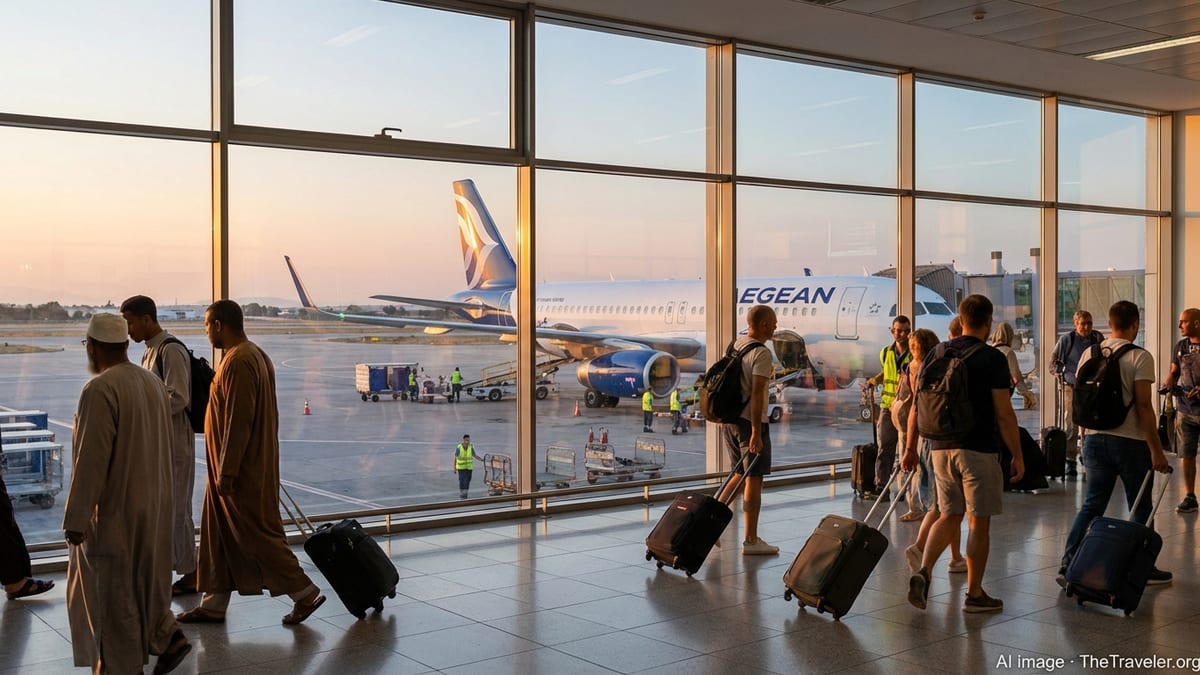
Route Details and Start Date Confirmed
The new Casablanca to Athens service is scheduled to begin on October 25, 2026, with AEGEAN operating two weekly flights between Morocco’s economic capital and the Greek capital. The flights are planned for Mondays and Fridays, creating a consistent pattern designed to appeal both to leisure travelers planning long weekends and to business passengers looking for predictable options at the start and end of the workweek.
According to information shared by Moroccan and regional aviation outlets, the connection will be operated as a direct, non-stop service, allowing passengers to avoid current routings via European hubs or indirect connections through other North African airports. Until now, many travelers between Morocco and Greece have had to rely on at least one stop, commonly in cities such as Paris, Madrid, Rome or Istanbul, extending overall journey times and complicating transfers.
Flight timings are being structured to sync with AEGEAN’s established bank of departures and arrivals at Athens International Airport, enabling passengers from Casablanca to connect onward to destinations across Europe, the Balkans and the Eastern Mediterranean on the same ticket. While the precise seasonal schedule and aircraft rotations may be fine-tuned closer to launch, the airline is clearly positioning the new route as an integral part of its winter 2026 2027 and subsequent summer network.
Early indications suggest that tickets for the Casablanca Athens route will become available well ahead of the inaugural flight, in line with AEGEAN’s usual practice of opening sales months before launch to capture both advance holiday bookings and corporate contracts. Travel agents in both countries are expected to begin packaging the route into city breaks and multi-country itineraries once booking systems are loaded.
Strengthening Morocco–Greece Connectivity
The Casablanca Athens launch marks a significant expansion of direct air links between Morocco and Greece, two tourism-heavy economies that have historically been connected via third-country hubs rather than by point to point services. AEGEAN already serves Marrakech, and the addition of Casablanca deepens the airline’s footprint in the Moroccan market while giving Greece a second direct air bridge into the country.
For Morocco, the route plugs Casablanca directly into one of southeastern Europe’s most important aviation hubs, opening smoother access not only to Greece’s islands and mainland destinations but also to regional markets in the Balkans, Eastern Europe and the eastern Mediterranean basin. For Greece, it offers a more direct path into a large North African source market that has been gaining attention among tour operators and hoteliers looking to diversify beyond traditional European demand.
Tourism bodies on both sides are expected to view the new flights as an opportunity to build reciprocal flows. Greek travelers gain a new non-stop option to experience Casablanca and onward Moroccan destinations such as Rabat, Fez, Agadir and the Sahara gateways, while Moroccan visitors will be able to reach Athens more easily for city tourism, cultural trips and island-hopping holidays. Industry analysts note that the route also reflects steadily rising interest in multi-destination itineraries that combine Mediterranean countries within a single trip.
The move fits into a broader pattern of growing engagement between Morocco and Greece, encompassing trade, tourism promotion and diplomatic ties. Direct air connectivity often precedes or accelerates new commercial relationships, and the Casablanca Athens link is widely seen as a way to lower barriers for small and medium enterprises as well as larger investors seeking face to face contact.
Athens as a Gateway to Europe, the Balkans and the Middle East
By anchoring the new service at Athens International Airport, AEGEAN is deliberately using its main hub to amplify the value of the Casablanca route far beyond point to point demand. Athens has steadily evolved into a key connecting node in the Eastern Mediterranean, offering flights to major capitals across Western and Central Europe alongside robust coverage of Balkan cities and a growing list of Middle Eastern destinations.
Current schedules show AEGEAN deploying its fleet from Athens to a wide portfolio of destinations, including major European hubs and regional centers in Southeast Europe, Turkey and the Levant. In recent seasons the airline has added routes such as Erbil in Iraq and resumed services to cities including Baku and Paphos, and has inaugurated direct flights to Baghdad, underscoring its strategy of reaching deeper into nearby growth markets while strengthening traditional European links.
For travelers originating in Casablanca, this means that a single check in at Mohammed V International Airport can unlock onward same day connections to cities as varied as Berlin, Vienna, Bucharest, Sofia, Tbilisi, Riyadh or Tel Aviv, depending on seasonal schedules. Many of these pairings previously required at least two stops or complex interline arrangements. With AEGEAN in control of both the feeder leg from Morocco and the onward sectors from Athens, itinerary planning, baggage handling and disruption management should become significantly more straightforward.
Travel industry observers note that Athens has benefited from capacity constraints and congestion at some larger Western European hubs, allowing AEGEAN to capture connecting flows that might once have defaulted to legacy carriers in cities such as Paris or Frankfurt. The Casablanca route is expected to feed into that model by channeling Moroccan traffic into AEGEAN’s network at a time when travelers are increasingly looking for alternatives to overcrowded megahubs.
Fleet, Service and Onboard Experience
While AEGEAN has not yet publicly confirmed which aircraft type will operate the Casablanca Athens leg, the airline’s medium haul network is primarily served by Airbus A320 family jets, including next generation A320neo and A321neo models. These aircraft are configured for regional and medium range flights across Europe, North Africa and the Middle East, combining fuel efficiency with cabin layouts suited to both business and leisure travelers.
AEGEAN has consistently emphasized a full service offering in contrast to pure low cost competitors, typically providing a two class cabin with a business section at the front and economy seating behind, along with complimentary or tiered onboard catering depending on fare type and route length. The airline has been repeatedly recognized in European airline rankings for its in flight service, cabin cleanliness and overall passenger experience.
On a sector roughly three and a half to four hours in duration between Casablanca and Athens, passengers can expect a product calibrated to medium haul standards, including full size cabin baggage allowances and options for checked luggage, seat selection and frequent flyer accrual. As a member of a major global airline alliance, AEGEAN also offers through ticketing and mileage earning to alliance partners, which may appeal to internationally mobile passengers traveling beyond Athens.
From an operational perspective, the deployment of modern Airbus narrowbodies on the route should help manage fuel burn and emissions relative to older aircraft, aligning with industry efforts to contain the environmental footprint of expanding networks. AEGEAN has highlighted its investment in newer aircraft generations as part of a broader modernization strategy, and the Casablanca link is expected to benefit from that fleet renewal.
Building on AEGEAN’s Wider Network Expansion
The Casablanca announcement arrives against a backdrop of steady network growth for AEGEAN in recent years, both within Greece and across neighboring regions. The airline has been adding or reinstating routes to destinations in Iraq, Azerbaijan, Cyprus and the Balkans, often with a view to capturing emerging travel demand and diversifying beyond the traditional summer leisure peaks in Western Europe.
In its official communications, AEGEAN has framed this expansion as part of a long term plan to position Athens as a high value hub linking Europe with the Eastern Mediterranean, the Middle East and selected markets further afield. Relaunched services to cities such as Paphos and new links to Erbil and Baghdad illustrate how the carrier is willing to test and develop routes that may once have been considered niche, provided there is evidence of sustainable demand and potential for connecting traffic.
The decision to extend that strategy to Morocco suggests confidence in the underlying market fundamentals, particularly the combination of outbound Moroccan demand for European and Middle Eastern destinations and inbound appetite for Moroccan tourism from Greece and beyond. Sector observers point out that North Africa remains comparatively underserved by direct flights from southeastern Europe, leaving room for carriers like AEGEAN to carve out distinctive niches.
By layering Casablanca into a network that already spans dozens of European and regional cities, the airline also enhances the resilience of its schedule. If demand on a particular route softens, connecting traffic from other markets can help support overall load factors. Conversely, a strong performance from Casablanca could encourage AEGEAN to increase frequencies over time or explore additional Moroccan points.
Opportunities for Tourism and Business Travel
For the tourism sector, the new Casablanca Athens flights arrive at an opportune moment. Both Morocco and Greece have experienced strong post pandemic tourism recoveries, with visitor numbers and hotel occupancy in many destinations now matching or surpassing pre crisis levels. Direct air services often play a decisive role in sustaining that momentum by making it easier for visitors to book short breaks and multi country itineraries.
Greek tour operators are likely to explore packages that position Casablanca as a gateway to wider Morocco, pairing city stays with excursions to coastal resorts or historic imperial cities. Likewise, Moroccan travel agencies may market Athens as an entry point to the Greek islands, leveraging AEGEAN’s dense domestic network to islands such as Santorini, Mykonos, Rhodes and Crete. The Monday and Friday flight pattern also lends itself to four or five day mini breaks, which have grown in popularity among younger and higher spending travelers.
Business travel is expected to benefit as well. Casablanca is a major finance and trade hub in North Africa, home to multinational offices, banks and logistics companies, while Athens houses shipping companies, energy firms and regional headquarters serving southeastern Europe. A direct link shortens travel times for executives, technical staff and entrepreneurs, facilitating everything from site visits and negotiations to participation in conferences and trade fairs.
In addition, universities and cultural institutions in both countries may see new opportunities for academic exchanges, joint programs and cultural events. Direct flights often make it easier to formalize partnerships, as visiting delegations can plan shorter, more flexible trips without relying on complex connections through third countries.
Competitive Landscape and Market Response
The Casablanca Athens route will enter a competitive environment where no other carrier currently offers a non stop service between the two cities, but where indirect options via European and regional hubs are well established. Major European and Gulf carriers have long served both Morocco and Greece, often capturing connecting passengers through their own hubs with large networks and high frequencies.
AEGEAN’s advantage on the new route lies in its ability to offer a single carrier solution that combines non stop flying between Casablanca and Athens with onward connections tailored to both leisure and visiting friends and relatives markets. By timing flights to bank efficiently at Athens and coordinating fares across its network, AEGEAN aims to shift at least some of the traffic that previously routed via Western Europe or the Gulf onto its own metal.
Initial reactions from travel industry stakeholders in Morocco suggest cautious optimism. The route is being welcomed as a long awaited direct link that could unlock new itineraries and stimulate fresh marketing efforts, particularly around cultural tourism and city breaks. However, much will depend on pricing, schedule reliability and the extent to which AEGEAN invests in local sales, distribution and partnerships with Moroccan tour operators.
Analysts will watch closely to see whether the twice weekly frequency is sufficient to capture corporate demand, which often favors daily services, or whether the airline will consider adding more flights if load factors justify expansion. For now, the decision to start with two weekly rotations reflects a measured approach that allows AEGEAN to test the market while limiting exposure.
What Travelers Should Know Before Booking
With the Casablanca Athens route still several months away from its planned October 2026 launch, prospective passengers will want to monitor when the flights appear in airline and travel agency booking systems. Once loaded, travelers should be able to view precise departure and arrival times, aircraft types and available fare classes, including any promotional introductory offers that might accompany the route inauguration.
Passengers connecting onward via Athens will need to pay close attention to minimum connection times and terminal arrangements at Athens International Airport, particularly if traveling during peak summer periods or busy holiday weekends. AEGEAN’s hub operations are designed to facilitate relatively smooth transfers, but recent years have seen occasional congestion and air traffic control related capacity constraints that can result in delays and tighter connections.
Travelers starting their journey in Casablanca should also consider visa requirements for Greece and any onward destinations reached via Athens, as well as Schengen regulations for transit and entry. While the new route simplifies the physical journey, documentation, health and insurance requirements remain the responsibility of individual travelers and can vary depending on nationality and itinerary.
For many passengers in Morocco and Greece, however, the central message is straightforward. From October 2026, the journey between Casablanca and Athens will no longer require a detour through distant hubs or lengthy layovers, signaling a new level of connectivity between the shores of the western and eastern Mediterranean.