

More news on this day
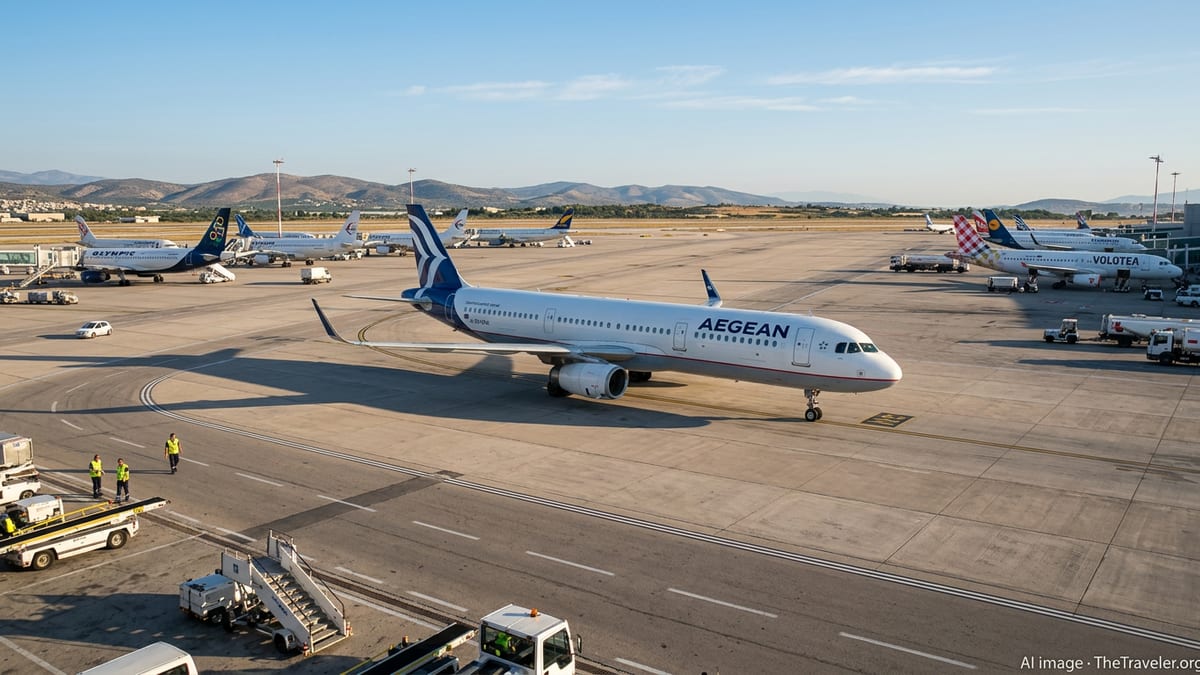
Aegean Airlines is quietly rewriting its long-haul playbook, stepping back from earlier ambitions to deploy the ultra–long-range Airbus A321XLR and instead consolidating its growth around the more conventional A321neo and A321LR variants, a move that could subtly reshape how and where travelers fly to and from Greece in the coming years.
Get the latest news straight to your inbox!
From Ultra Long-Range Vision to a More Conservative Fleet
Publicly available fleet and financial filings over the past two years show that Aegean Airlines had been positioning the A321XLR as a flagship tool for deeper expansion into Asia and other non-European markets. Earlier plans referenced small numbers of XLR aircraft alongside a growing order book of A321neo and A321LR jets, suggesting a strategy built around “special purpose” long-range narrowbodies.
More recent fleet plan disclosures and industry coverage now indicate a different course. References to incoming A321XLR aircraft have largely been overtaken by emphasis on the A321neo and A321LR, with the airline highlighting extended-range A321neo variants but no longer foregrounding the XLR as a cornerstone type. Read together, these signals point to Aegean effectively shelving a distinct A321XLR subfleet in favor of a simpler, more standardized narrowbody lineup.
This shift comes as airlines worldwide reassess long-range narrowbody orders amid evolving regulatory, engine reliability and demand concerns. In that broader context, Aegean’s decision fits a wider industry pattern of trimming or converting A321XLR commitments into more flexible A321neo family aircraft.
Why Aegean Is Steering Away from the A321XLR
The Airbus A321XLR was designed to stretch the A321neo platform to ranges that begin to rival smaller widebody jets. For Aegean, that capability was initially associated with opening routes beyond the airline’s traditional focus on Europe, the Middle East and North Africa, particularly toward markets such as India and parts of Asia.
However, network-planning commentary published in aviation trade outlets has suggested that the additional range of the XLR may not translate into a significant list of new, commercially viable destinations from Athens. For many of the markets Aegean is targeting, the airline can already reach them comfortably with extended-range A321neo and A321LR variants, making the extra capabilities of the XLR less critical than originally thought.
Cost and complexity are another likely driver. Operating a tiny subfleet of XLR aircraft would add training, maintenance and scheduling challenges for only marginal incremental benefit. By focusing on a larger pool of common A321neo and A321LR airframes, Aegean can streamline crew qualification, spare parts, and day-to-day operations, an important consideration for a carrier of its size.
Impact on Routes: Fewer Experiments, More Depth on Key Markets
For travelers, the headline question is whether Aegean’s step back from the A321XLR will mean fewer ultra-long routes from Greece. In practice, most passengers are unlikely to notice dramatic changes. The carrier’s current growth plan is heavily centered on high-demand leisure and business flows within Europe, as well as select longer routes to North Africa, the Middle East and South Asia that remain well within the reach of the A321LR.
Reports on Aegean’s India strategy, for example, link new non-stop services to cities such as New Delhi and Mumbai with extended-range A321neo family aircraft rather than being uniquely dependent on the XLR. That suggests that flagship routes into large, fast-growing markets can still move forward using aircraft the airline is firmly committed to take.
Where the absence of the XLR might be felt is at the fringes of Aegean’s network map. Ultra-long, thinner routes from Athens to secondary cities deeper into Asia, Africa or potentially even further afield would have been more plausible with the extra range and fuel flexibility of the XLR. Without it, the airline is more likely to focus on destinations with stronger demand and proven connecting traffic, leaving some aspirational nonstops unrealized or left to partner carriers.
What It Means for Comfort, Cabins and the Onboard Experience
One concern many travelers have with long-range narrowbody jets is comfort on multi-hour flights. The A321XLR was marketed with a new-generation cabin aimed at long-haul missions, including upgraded lighting, bigger bins and the possibility of lie-flat business seating. Aegean’s move to concentrate on A321neo and A321LR aircraft does not necessarily mean a downgrade on these fronts.
The airline has been clear in publicly available material that its extended-range A321neos and A321LRs are being delivered with upgraded cabins compared with earlier narrowbodies, including enhanced seating, modern inflight entertainment options and refreshed interior design. For passengers on longer flights of five to seven hours, the practical experience may differ little from what an A321XLR cabin would have offered, especially if the seat layout and service concept are tailored for comfort.
For shorter intra-European sectors, the absence of the XLR is even less relevant. The same neo-family aircraft are expected to deliver quieter cabins, better fuel efficiency and, in many cases, refurbished interiors compared with older Airbus models, which should be a net gain for most travelers departing or connecting through Athens and other Greek airports.
How Travelers Should Plan Around Aegean’s New Strategy
For frequent flyers and future visitors to Greece, the practical takeaway is that Aegean is opting for depth rather than extreme reach. Travelers can expect more frequencies and capacity on core European and regional routes, as additional A321neo and A321LR aircraft join the fleet and older jets are gradually retired.
Those hoping for a wave of ambitious ultra-long narrowbody routes from Athens may need to temper expectations. Nonstop links to very distant secondary cities are less likely in the near term, and some journeys may continue to require a connection through major hubs in the Gulf, Western Europe or India, depending on the itinerary.
At the same time, Aegean’s streamlined fleet approach may support more reliable operations, with fewer schedule disruptions tied to managing a very small, specialized aircraft type. For many passengers, that reliability, combined with newer cabins on a growing A321neo and A321LR fleet, will matter more than the specific model name painted on the tail.