

More news on this day
Aegean Airlines has reported a 6 percent annual increase in passenger traffic as demand for Greece from key long-haul and European markets surges, with high-spending visitors from Germany, the United Kingdom and the United States helping to drive record occupancy at flagship luxury properties such as Four Seasons Astir Palace Hotel Athens and international brands including JW Marriott.
Get the latest news straight to your inbox!
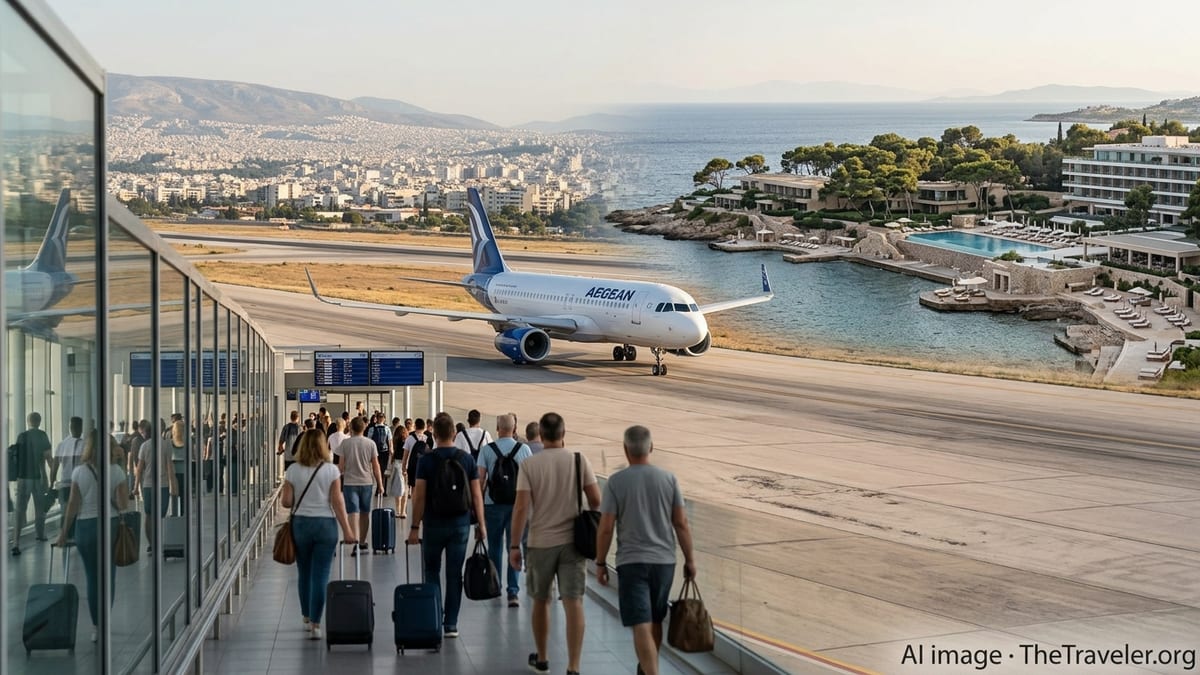
Aegean Extends Passenger Winning Streak
Recent financial disclosures and airline updates indicate that Aegean Airlines continues to build on its post-pandemic rebound, with full-year traffic rising about 6 percent year on year. The carrier handled more than 16 million passengers in 2024, before growing further to roughly 17 million travelers in 2025, according to published financial coverage and market commentary. The latest figures point to healthy demand on both domestic and international routes, supported by the sustained appeal of Greece as a leisure destination.
Company statements and investor materials show that Aegean has expanded capacity by around 6 percent, aligning seat growth with observed demand on core European routes and connecting services into the Greek islands. The airline has focused on strengthening frequencies from major hubs such as London and Frankfurt while maintaining its dominant position at Athens International Airport, which remains the primary gateway for overseas visitors connecting to resort destinations.
Analysts following the Greek aviation and tourism sectors note that the carrier’s performance has been achieved despite higher regulatory and environmental costs affecting European airlines. The 6 percent traffic increase has come alongside record turnover, with Aegean reporting historically high revenue levels and solid profitability, reinforcing its role as a bellwether for inbound tourism trends into Greece.
Germany, UK and USA Lead the Tourism Wave
Publicly available tourism data and industry analyses continue to highlight Germany, the United Kingdom and the United States as three of Greece’s most important source markets. Germany has held its position as a leading market by arrivals, while the UK remains a powerhouse for both package tourism and independent travel. At the same time, the US market has shown especially strong momentum, aided by expanded transatlantic capacity into Athens from various carriers and improved onward connectivity with Aegean’s domestic network.
Travel trade reports suggest that German and British visitors are increasingly looking beyond traditional peak-summer stays, extending demand into the shoulder months of April, May, September and October. This shift supports higher aircraft load factors across a longer season and enables Aegean to deploy capacity more efficiently. It also underpins demand for city breaks and short-stay itineraries that combine Athens with one or two island destinations.
For US travelers, Greece’s status as a high-value, experience-driven destination is particularly evident in booking patterns captured by tour operators and luxury travel agencies. Longer average stays, higher per-trip spending and strong interest in five-star hotels and suites are becoming hallmarks of American demand. This trend reinforces the revenue impact of each additional passenger arriving via Aegean’s growing international network or connecting through its Athens hub.
Luxury Hotels Post Record Occupancy
On the ground, Greece’s upmarket hospitality sector is reporting some of its strongest trading conditions to date. Industry coverage points to record or near-record occupancy levels at leading properties along the Athenian Riviera and in prime island locations, with the Four Seasons Astir Palace Hotel Athens frequently cited as a top performer following global recognition in international hotel rankings. The property’s inclusion among the world’s leading hotels has drawn additional attention from affluent travelers seeking resort-style stays within easy reach of central Athens.
International hospitality groups have been expanding their presence in Greece, with recent openings and pipeline projects under brands such as JW Marriott and other major luxury flags. Sector analyses describe high occupancy and robust room rates at these hotels during peak periods, supported by strong international air access and growing year-round city and conference demand. In popular destinations such as Athens, Santorini, Mykonos and emerging upscale island markets, the combination of limited prime inventory and intense seasonal demand has pushed average daily rates to new highs.
Hotel benchmarking data and operator commentary indicate that high-spend visitors from Germany, the UK and the US are disproportionately represented in the top tiers of the market, occupying suites, villas and premium sea-view categories. This mix is particularly evident in resorts that combine beach access with spa, gastronomy and high-end concierge services, where occupancy has remained elevated even during periods traditionally considered shoulder season.
Air Capacity and Luxury Demand Reinforce Each Other
The interplay between Aegean’s capacity growth and luxury hotel performance has become increasingly clear. By adding seats on routes connecting major European and North American gateways to Athens and key regional airports, the airline has helped unlock additional demand for upscale stays across Greece. At the same time, rising international visibility for properties such as Four Seasons Astir Palace and newly branded JW Marriott hotels has supported premium fare demand on peak flights, particularly in business and higher-yield economy segments.
Travel industry observers note that coordinated promotion of Greece as a year-round destination is also shaping this virtuous cycle. As more high-end travelers visit Athens for cultural weekends, gastronomy-focused trips or off-season wellness retreats, airlines and hoteliers benefit from more balanced utilization of their fleets and room inventories. Aegean’s decision to invest in winter capacity, highlighted in its recent updates, aligns with this strategic push to smooth demand across the calendar.
Market reports further suggest that as Greece’s luxury footprint grows, competition among global hotel brands for prime sites is intensifying, especially in Attica, the Cyclades and the Dodecanese. This competition is likely to encourage continued product upgrades and new openings, driving additional demand from repeat visitors and first-time travelers who view high-quality accommodation as a key part of the Greek experience.
Greece Consolidates Its Position as a High-Value Destination
The combination of Aegean Airlines’ 6 percent traffic growth and record occupancy at flagship luxury hotels underscores how Greece is evolving from a primarily volume-driven market into a more clearly defined high-value destination. Instead of relying solely on growing arrival numbers, policymakers, airports and tourism businesses are increasingly focused on visitor spending, seasonality, and the overall quality of the travel experience.
Analysts argue that sustained investment in aviation capacity, airport infrastructure and high-end hospitality will be central to maintaining this trajectory, especially as competition from other Mediterranean destinations intensifies. With Germany, the UK and the US continuing to deliver large numbers of high-spend visitors, Greece is in a strong position to defend and grow its share of the European and transatlantic leisure markets, while Aegean’s expanding network and modernized fleet provide a critical backbone for that growth.
Current trends suggest that, barring major external shocks, Greece’s tourism ecosystem will remain closely tied to Aegean’s performance. Continued incremental growth in passenger numbers, paired with steady upgrades in hotel quality and service, points to a market that is not only growing, but also maturing into one of Europe’s most resilient and profitable high-end travel destinations.