

More news on this day
AEGEAN Airlines has widened its cancellations of flights to multiple Middle East destinations and introduced flexible rebooking, vouchers and refund options, as heightened regional tensions continue to disrupt air travel in March 2026.
Get the latest news straight to your inbox!
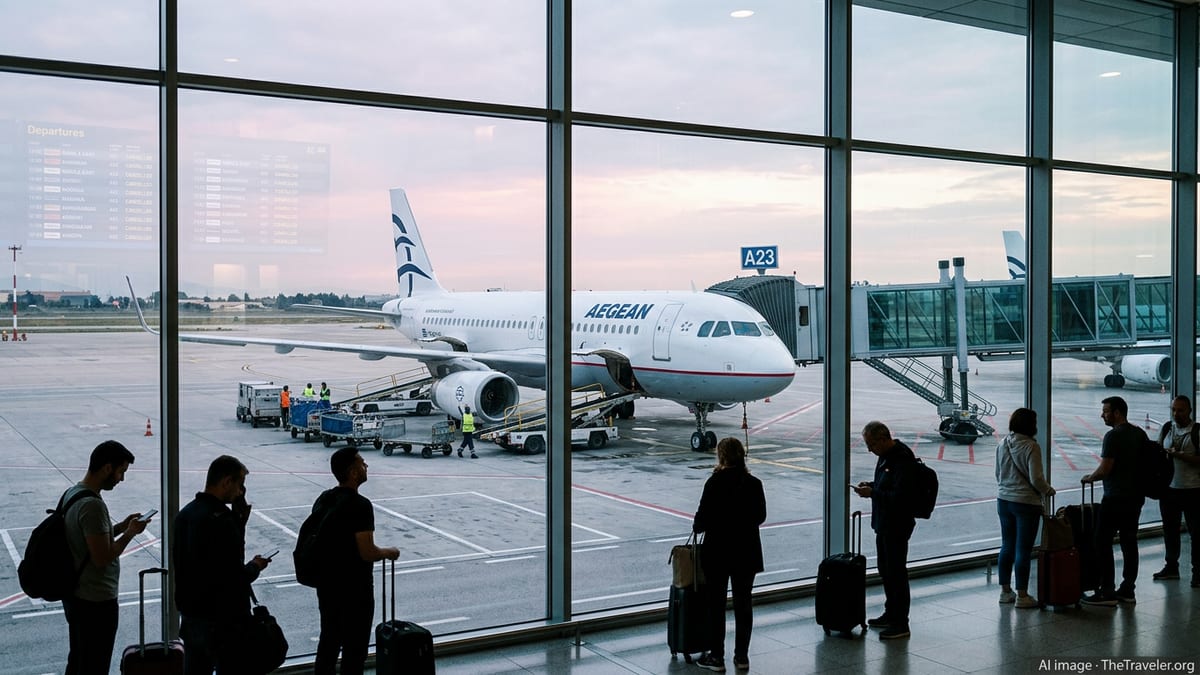
Expanded Cancellations Across Key Middle East Routes
Recent updates from AEGEAN’s public advisories indicate that flights to and from several Middle East cities, including Tel Aviv, Beirut, Erbil, Baghdad, Dubai and Riyadh, are being cancelled or suspended over an extended period in March 2026. The decision follows an escalation of regional instability and airspace disruptions linked to the ongoing conflict involving Israel, Iran and allied forces.
According to information published by the airline and summarized by industry outlets, AEGEAN has progressively lengthened the suspension window on core routes from its Athens hub. Earlier notices focused on near-term cancellations, but more recent announcements extend the impact through late March and into April, affecting both point-to-point services and onward connections for travelers using Athens as a transit gateway.
Specialist aviation coverage reports that services to Tel Aviv, Beirut, Erbil and Baghdad were initially cancelled through mid March, before additional advisories pushed the suspension into the second half of the month. Separate bulletins reference cancellations and schedule adjustments on flights to Dubai and Riyadh, underscoring the breadth of the disruption across the Eastern Mediterranean and Gulf region.
Travel data platforms tracking regional operations note that AEGEAN’s moves align with a broader retrenchment by multiple carriers serving conflict-adjacent markets. Schedules to Israel, Lebanon, Iraq and parts of the Gulf have been scaled back or temporarily halted as airlines reassess routing, crew safety and overflight exposure.
Rebooking Flexibility for Affected Ticket Holders
To accommodate disrupted passengers, AEGEAN has announced a series of rebooking options tailored to specific travel dates and destinations. Publicly available summaries of the policy indicate that travelers holding tickets on cancelled or heavily affected flights to Tel Aviv, Beirut, Erbil, Baghdad, Dubai and Riyadh are being offered the chance to change their travel dates free of rebooking fees within defined windows.
For many itineraries, reports indicate that tickets originally scheduled for travel in March and early April can be moved to later dates in spring 2026, with some notices referencing new travel allowed through the end of May. While fare differences may still apply in certain fare classes, the waiver of standard change penalties provides an important measure of flexibility for passengers whose plans have been upended by the evolving security situation.
Industry news outlets note that AEGEAN’s rebooking framework has been structured around distinct time bands, grouping bookings by origin, destination and outbound date. For example, separate guidance applies to travelers with March departures to Riyadh compared with those holding itineraries to Tel Aviv, Beirut, Erbil, Baghdad or Dubai in late March and early April. This segmented approach is intended to keep options in line with the airline’s evolving operational plans and anticipated restart horizons.
Travelers are being advised, in publicly available guidance, to manage changes through AEGEAN’s online channels or customer service, with emphasis on completing rebookings before the end of each waiver window. Given the fluidity of the regional situation, experts recommend that passengers monitor updates closely, as the airline may refine or further extend its policy if disruptions persist.
Refunds and Credit Vouchers as Alternative Options
Beyond date changes, AEGEAN is also providing alternatives for travelers who prefer not to proceed with their trips under the current circumstances. Based on recent press summaries of official announcements, customers on eligible cancelled flights may choose to cancel their bookings and receive a credit voucher for future travel with the airline, often valid for several months.
In some cases, particularly where flights have been outright cancelled by the carrier, information available through consumer-facing advisories indicates that passengers may be entitled to a full refund in accordance with applicable regulations and the airline’s own conditions of carriage. Independent overviews of AEGEAN’s general refund framework describe refund eligibility when a flight is cancelled by the airline and suitable rebooking cannot be offered or is declined by the customer.
Travel and aviation analysts note that many airlines operating in and out of the region are leaning on credit vouchers and flexible rebooking as primary tools to manage the current wave of cancellations. AEGEAN’s offer of either a later trip or a voucher balances the need to support passengers with the practical constraints of operating in a fast-changing environment, where restart dates remain subject to security assessments and airspace decisions.
Consumer advocates advise travelers to review the specific conditions attached to vouchers, including expiration dates and whether they can be used by the original passenger only. For those who prefer a cash refund and whose flights fall under cancellations initiated by the airline, checking the exact wording of AEGEAN’s latest advisories and fare rules is recommended before making a final choice.
Impact on Travelers Using Athens as a Regional Hub
The cancellations are particularly significant for travelers who rely on Athens as a connecting hub to reach the Middle East from Europe and beyond. AEGEAN has built a network that links numerous European cities with destinations such as Tel Aviv, Beirut, Dubai, Erbil and Baghdad, making the current suspensions a major factor for both leisure and business itineraries.
Travel intelligence providers highlight that many passengers are now being rerouted through alternative hubs in the Gulf, Turkey or Western Europe where capacity remains available. However, publicly available schedule data suggests that options into some conflict-adjacent markets are increasingly limited, with multiple airlines reducing frequencies or suspending service altogether in response to risk assessments.
Reports from regional media describe a patchwork of operational statuses, with some airports remaining open but experiencing frequent schedule changes, while others face intermittent suspensions of inbound and outbound flights. For travelers originating in Greece or connecting via Athens, this environment can complicate onward travel planning, especially for time-sensitive journeys.
Given this uncertainty, travel advisors recommend building in additional flexibility, such as longer connection times, fully refundable accommodation bookings and comprehensive travel insurance where available. AEGEAN’s rebooking and voucher options can help mitigate some of the disruption, but itinerary resilience may depend on carefully coordinating airline, hotel and ground arrangements.
What Passengers Should Do Now
For customers holding AEGEAN tickets to any of the affected Middle East cities in March and April 2026, the most recent published information suggests several immediate steps. First, travelers should confirm whether their specific flight number and date fall within the cancellation or flexibility window, as policies may differ depending on when the ticket was issued and the planned travel period.
Second, passengers are encouraged in public guidance to make use of digital self-service tools where possible, both to avoid call center waits and to secure preferred alternative dates while inventory is still relatively open. With many affected travelers attempting to rebook into a compressed set of future dates, popular periods around holidays and school breaks may fill quickly.
Third, travel experts note that passengers with complex itineraries involving multiple carriers should pay close attention to how changes on the AEGEAN-operated segment interact with separately ticketed connections. In some cases, a change in the long-haul or regional leg may require additional adjustments to positioning flights or rail journeys in Europe.
Finally, observers of the regional aviation landscape stress that conditions remain fluid. While AEGEAN’s current advisory outlines cancellations and flexibility measures through late March and into April, further adjustments are possible if the security situation in the Middle East worsens or stabilizes. Travelers planning new trips to the region may wish to factor this uncertainty into their choice of dates, routing and fare types, favoring options that allow for changes if circumstances shift again.