

More news on this day
Thousands of travelers across Europe and the Middle East are facing severe disruption after AEGEAN Airlines suspended services to Tel Aviv, Dubai and Riyadh amid a rapidly escalating regional crisis that has triggered widespread airspace closures and security restrictions.
Get the latest news straight to your inbox!
AEGEAN Extends Cancellations Across Core Middle East Network
According to publicly available airline advisories and industry coverage, AEGEAN Airlines has progressively widened its cancellations on routes connecting Athens with key Middle Eastern hubs. Recent updates indicate that flights to and from Tel Aviv, Dubai and Riyadh are suspended for much of March, alongside cancellations affecting other destinations including Beirut, Erbil and Baghdad.
The company’s latest notices, issued in early March, attribute the decision to what is described as “ongoing developments” in the region, with risk assessments focused on missile and drone activity, shifting no-fly zones and intermittent airspace closures. Timetables published on booking platforms show no regular AEGEAN services loaded to Tel Aviv, Dubai or Riyadh over the coming weeks, signaling more than a short operational pause.
Aviation analysts note that AEGEAN, Greece’s largest carrier, relies on these routes both for point-to-point traffic and for connecting flows between Europe and the Gulf and Levant. The suspension therefore hits not only local travelers but also passengers transiting through Athens from other European cities, amplifying the disruption across the airline’s wider network.
While some carriers based in the Gulf and Europe have begun operating limited services around closed or restricted airspace, AEGEAN’s decision to hold its Middle East schedule largely offline underlines the continuing uncertainty facing airlines that lack extensive alternative routing options or dedicated overflight corridors.
Travelers Stranded as Cancellations Ripple Through Airports
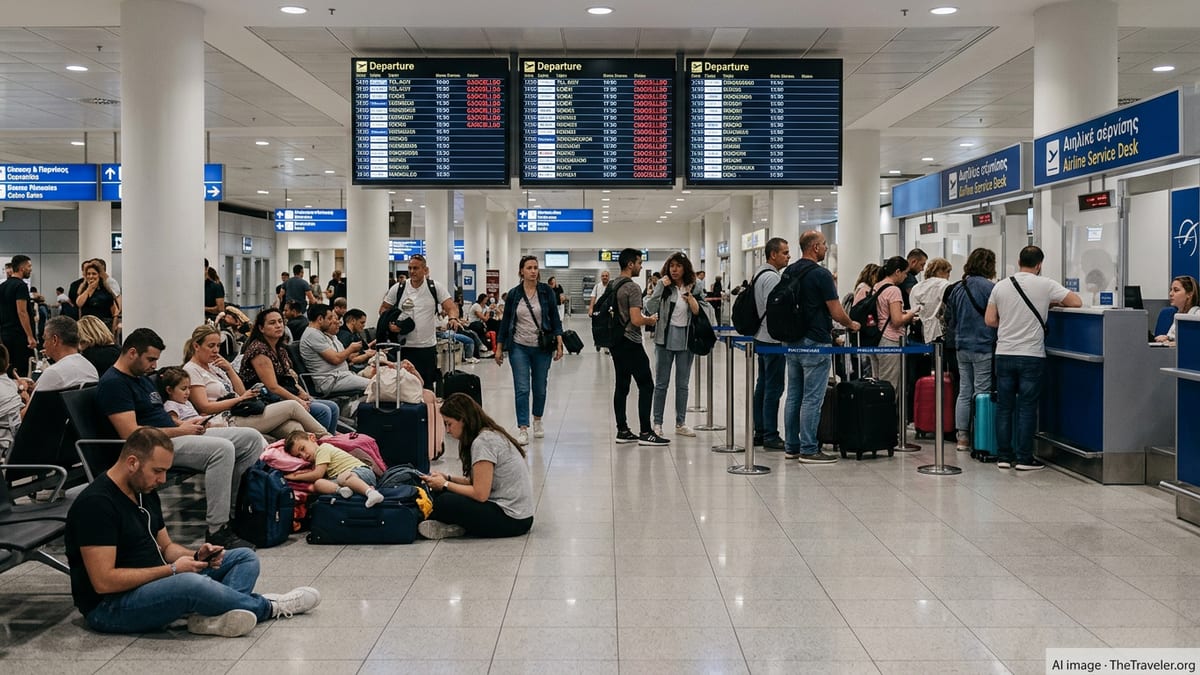
The sudden loss of AEGEAN’s Middle East flights has left thousands of passengers scrambling for alternatives. Reports from major hubs and regional media describe crowded service desks in Athens, stranded groups at Tel Aviv’s Ben Gurion Airport and disrupted itineraries at airports in the United Arab Emirates and Saudi Arabia as travelers attempt to rebook through other carriers.
Publicly available flight-tracking data and airport departure boards show long gaps where regular AEGEAN services to Tel Aviv, Dubai and Riyadh would normally appear. Passengers reaching out on social platforms describe missed onward connections to Europe and North America, overnight stays in transit cities and long waits for rebooking options while call centers and airport agents work through backlogs.
Travel industry trackers indicate that the situation is especially acute for travelers who had used AEGEAN to connect between secondary European cities and Middle Eastern business hubs. With direct alternatives limited and many other airlines operating reduced schedules or fully suspended routes to the region, re-accommodation can involve complex, multi-stop routings that add significant time and cost to journeys.
Hotel operators and local tourism businesses in Athens and other gateway cities are also reporting an uptick in unplanned stopovers as stranded passengers seek last-minute accommodation. This additional pressure comes on top of broader volatility in regional tourism demand linked to the conflict.
Escalating Middle East Crisis Fuels Wider Aviation Chaos
The AEGEAN suspensions are unfolding against a backdrop of rapidly escalating conflict across the Middle East, including the 2026 Iran war and related missile and drone exchanges that have periodically threatened major population centers and critical infrastructure. Travel and security briefings describe temporary closures or restrictions in airspace over parts of Israel, Iran, Iraq and neighboring states, forcing airlines to divert or cancel flights on some of the world’s busiest east–west corridors.
International coverage notes that multiple global carriers have already halted services to Tel Aviv and reduced their presence in Gulf and Levant markets while risk assessments continue. Flight data suggests that routes that would typically traverse contested airspace are being rerouted over longer, more southerly or northerly tracks, increasing flight times and fuel burn for those services that remain in operation.
Industry observers stress that the combination of closed airspace, shifting military activity and rapidly changing security advisories has created a highly unstable operating environment for airlines. For regional carriers such as AEGEAN, whose Middle East routes pass close to or through affected areas, the threshold for suspending services is lower than for long-haul airlines with more flexibility to redesign routings and absorb additional costs.
Travel demand into the affected cities has also fallen sharply as governments issue stricter travel advisories, travel insurers adjust coverage and corporate travel managers scale back itineraries. This drop in demand intersects with operational constraints, further weakening the business case for maintaining regular commercial flights in the short term.
Knock-On Effects for European and Gulf Connectivity
AEGEAN’s withdrawal from Tel Aviv, Dubai and Riyadh has immediate implications for connectivity between Southern Europe and the broader Middle East. Athens typically serves as a bridge for travelers from smaller European markets seeking one-stop access to Gulf financial centers and key cities in Israel and Saudi Arabia.
With these links severed, passengers are increasingly being funneled through alternative hubs such as Istanbul, Cairo and select Western European gateways still running limited Middle East services. Schedules shared by airline alliances and booking platforms show heightened pressure on remaining routes, with some flights reported as heavily booked or sold out days in advance.
Tour operators and corporate travel agencies in Greece and neighboring countries are revising itineraries for spring and early summer, with some moving group trips to alternative destinations altogether. Published travel advisories highlight the risk of sudden schedule changes and urge travelers to build in longer connection times and consider more flexible fare types when booking.
Within the Gulf, the loss of AEGEAN’s Athens links constrains options for travelers connecting onward to popular Greek islands and wider European leisure destinations. This is particularly significant as airlines and tourism boards had been gearing up for the peak holiday planning period, which typically begins in March and April.
What Affected Travelers Can Do Now
Public guidance from AEGEAN and consumer protection agencies indicates that passengers impacted by the suspensions are generally eligible for refunds or rebooking, depending on fare rules and the jurisdiction of purchase. Travelers are being encouraged to use digital channels such as airline apps and websites where possible, as phone lines and airport desks remain congested.
Travel experts advising through media outlets recommend that affected passengers closely monitor their booking status, verify contact details in airline profiles and keep all receipts for incidental expenses in case they are later able to claim reimbursements under local or regional regulations. Those holding separate tickets for onward journeys are advised to proactively contact their other airlines, as misaligned schedules may not be automatically protected.
Insurance providers are updating policy wording in response to the evolving crisis, and travelers are urged to review coverage for conflict-related disruption, missed connections and extended stays. Some policies exclude events linked to declared conflicts, while others may offer limited benefits or require specific documentation such as airline disruption notices.
With no clear timeline for a full restoration of services to Tel Aviv, Dubai and Riyadh, travelers planning journeys through the region in the coming weeks are being urged by travel advisers and publicly available airline guidance to maintain flexible plans, consider alternative routings and be prepared for last-minute changes as the security and airspace situation continues to evolve.